
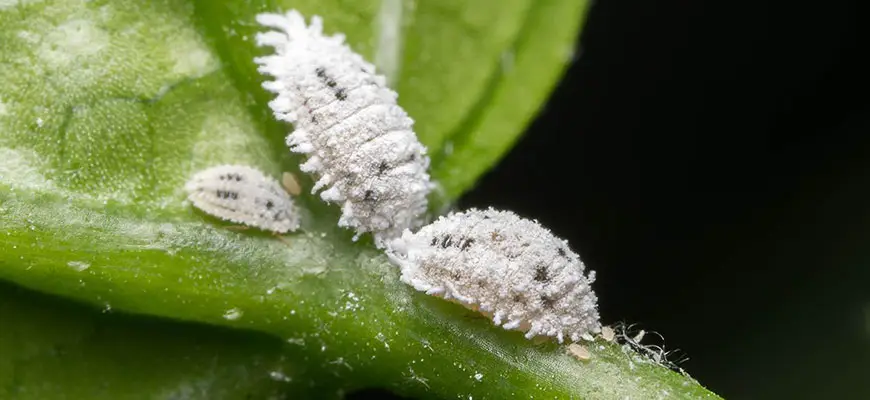
Are you struggling to understand how to get rid of mealybugs in soil or on your plants?
Learning how to get rid of mealybugs is a good idea whether you currently are dealing with them or not because if one day you do deal with an outbreak, you need to act fast to salvage your crop.
These tiny, white bugs have a scaley appearance and leave behind honeydew on your foliage which causes tons of problems.
We’ll teach you how to identify these pesky buggers, along with some best practices for preventing them in the first place.
If you still find an infestation, we have some natural, organic methods for eradicating them.
Before all that, though, let’s start with some general information on this troublesome insect.


What are Mealybugs
These are some pretty creepy-looking critters – it can lead you to wonder, are mealybugs harmful to humans? Fortunately, they won’t harm you – just your plants! Mealybugs are placed in the Pseudococcidae family, which contains more than 300 species of similar insects.
These can be one of the biggest menaces for outdoor growers in particular, but they can wreak havoc indoors as well. In some cases, they’ll even infest a drying crop, which as you can imagine, is terribly frustrating.
They thrive in warm, humid conditions, which makes indoor grow rooms a haven for them. They get their nourishment by sucking juices from foliage and young stems.
They then excrete this sap, known as honeydew, which invites several other pests including ants, wasps, and aphids.
Honeydew can also lead to black sooty mold and other mildews. So the problem with mealybugs is two-pronged – they eat your leaves and then damage them with excrement.
This is why it’s important to stop their damage and remove them as quickly as possible. So how do you identify them, and distinguish them from other pests?
What Is The Life Cycle Of Mealybugs?
The problem with mealybugs is how quickly they reproduce – so let’s quickly take a look at their life cycle. Females can lay as many as 600 eggs at once. These eggs can be identified by waxy sacks on the undersides of leaves.
Once these eggs have been laid, females have about 7 days left before they ultimately die – and the cycle continues, as these eggs hatch and reproduce themselves.
Mealybugs need 30 days to complete their life cycle in a warm, humid climate. There may be 3-4 generations in one outdoor growing season, while they can be troublesome year-round indoors.
How to identify Mealybugs on your plants
Mealybugs are tiny but have some pretty distinctive features. They are usually rounded, soft-bodied, noticeably segmented, and wax-covered. You can also seek them out by looking for the honeydew they leave behind.
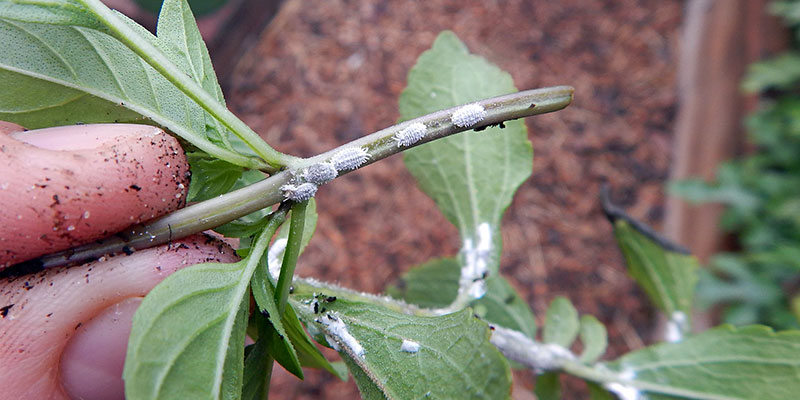
The size of a mature female bug may range between 1/4rd of an inch to 1/3rd.
The nymphs can crawl until they find somewhere on the plant they like, and they will likely spend the rest of their life there. They don’t move around too much once they’ve found a home. But, the rate at which they reproduce can quickly overrun your garden.
Look for egg sacs attached to the undersides of the leaves, twigs, and stem of the plants. However, some species will carry their egg sacs with them until they hatch.
Where exactly to look on the plant to find mealybugs
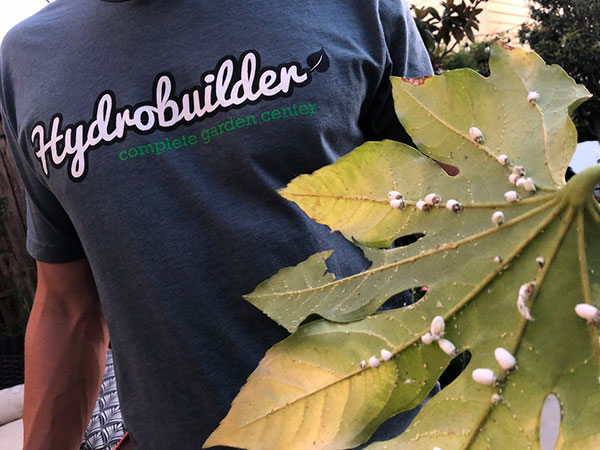
Your first detection of mealybugs will likely not be from seeing the insect, but rather signs of its existence – damage to your plants, honeydew trails, or a white moldy substance similar to powdery mildew.
The best indicator is the white, cottony protectant these bugs cover themselves with while feasting on your plants. Many growers report that they first believed they had PM, but after closer examination, there were mealybugs hiding underneath the mass.
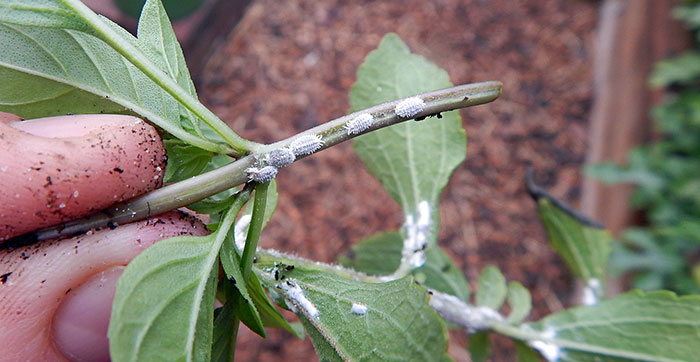
Generally, mealybugs live and feed on plants in clusters or colonies, so look for a grouping of them. They may creep into hiding places such as branch crotches, undersides of leaves, and cracks in the stem.
An abundance of ants and aphids may be another indication that they are around, as they are likely feeding on the honeydew.
What Causes Mealybugs On Plants?
Before we explain prevention and eradication techniques, let’s discuss what causes mealybugs to infiltrate your garden or grow room.
When it comes to outdoor growing, mealybugs may simply be fortunate enough to stumble upon your plants. You are growing in their home, after all, so there is always the possibility.
They also tend to seek out colonies of ants and/or aphids, as these two species protect mealybugs and allow them to thrive.
From an indoor growing standpoint, it is a bit tougher to develop any sort of pest infestation since you can seal your grow from the outside world.
Still, there is no guarantee your grow is safe, and mealybugs love hot, humid conditions, which are pretty typical of a grow room or grow tent. Here are a few other causes of mealybugs:
- Bringing an infected plant or planting material from the nursery to your home.
- Repeated use of potting mixtures or soil without cleansing
- Bringing outdoor potted plants indoors immediately after rain
How to prevent mealybugs
Fortunately, there are a wide range of beneficial bugs and natural pest controls that help you get rid of mealybugs fast.
We always preach an ounce of prevention is worth a pound of cure, so follow these tips to prevent mealybugs in the garden or grow room:
- Carefully inspect all new arrivals, monitor and quarantine clones or mother plants for a bit before introducing them to your other plants.
- You should always check on your plants. Look under leaves and in crevices for any indication that something is off, as early detection is huge.
- Promote beneficial bugs such as ladybugs, lacewing and
- Keep your grow room environment dialed in indoors, as mealybugs are highly reproductive at higher temperatures and humidity. In fact, cold temperatures (below 55 degrees Fahrenheit) can kill them.
- Use a good quality soil with excellent drainage to prevent mold or mildew in the media.
- Keep substantial airflow through plants, either by strategically designing your outdoor garden or adding fans to your indoor grow

How to get rid of mealybugs with organic control methods
If you do experience an outbreak, don’t stress. We are going to teach you how to get rid of mealybugs on houseplants or outdoor plants fast.
If you catch it early, you can simply pick off mealybugs by hand and dispose of them far away from the garden. The population doesn’t start reproducing for around 19 days or so, so you won’t have an infestation right away.
You can also spray or steam the affected area of your plant with water. Give the plant a good dousing to cleanse off any of these pests. If this doesn’t work, here are a few more involved options.
Plant washes & neem oil
Take 5-7ml of any plant soap and mix it with 1 liter of water, and shake well.
Spray on the surfaces of the leaves, branches, underneath of leaves, and tender shoots to wash them completely in the evening.
The next morning, wash the entire plant surfaces using plain water.
The bugs and their honeydew will be unable to stick to your plants, and will wash away.
Repeat the same practice after every 3rd day until you get them fully controlled.
Budget-Friendly Options: Monterey Lawn & Garden or Certis Biologicals Neemix
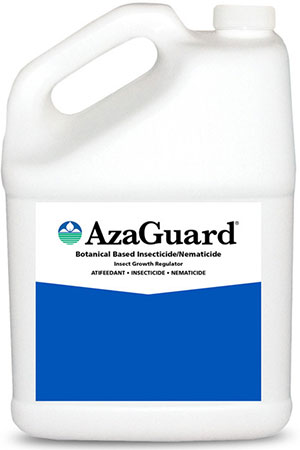
OMRI Listed Option: BioSafe AzaGuard
Apple cider vinegar
Take 1 ounce of apple cider vinegar and mix it with 2-3 ounces of water. Pour this liquid into a garden sprayer and spray in the evening.
Apple cider vinegar stops the molting process of mealybugs, and will also help to kill the majority of pests on the plants.
Apple cider vinegar is completely safe for your plants, and there is no harm to repeat the same mixture on consecutive days.
Diatomaceous Earth (DE)
This sharp, rough media is a great natural way to get rid of mealybugs on your plants by limiting their support from other insects, such as ants.
Simply spread Diatomaceous Earth (DE) around the stem of the plants to stop ants climbing up the plants.
Stopping ants from getting to the mealybugs will help to reduce the infestation.
How To Get Rid Of Mealybugs In Soil Plants
Many times, your infestation occurs right in the soil.
If you want to learn how get rid of mealybugs in soil containers in particular, things will be a bit different. You can try a root drench with one of the products we mentioned above – or even simply try scatterying DE. This may do the trick.
Otherwise, you may need to consider transplanting into a new container with fresh soil, and properly disposing of the infested soil.
Final Thoughts On How To Get Rid Of Mealybugs
Now that you know how to get rid of mealybugs on outdoor plants quickly, along with the steps you can take to prevent them, you don’t have to stress about encountering this pest.
If you want to learn more about the common grow room pests and diseases, check out our complete guide.