

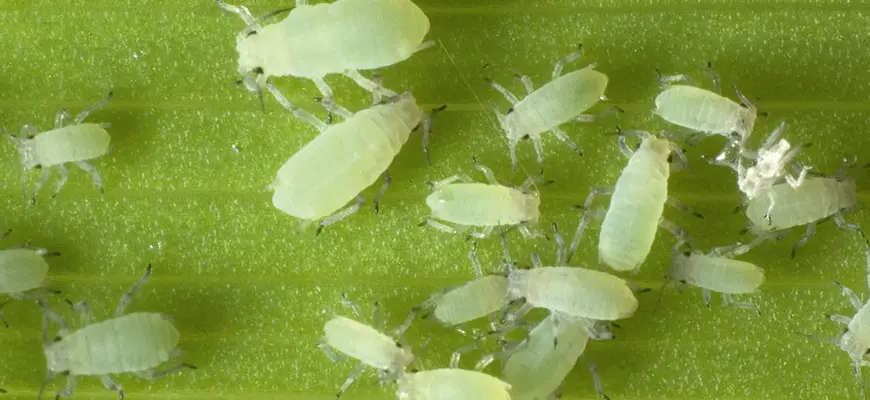
Aphids are one of the most common pests growers encounter — indoors, outdoors, in a 4×4 tent or a commercial greenhouse. These small, soft-bodied insects reproduce fast, feed aggressively, and can escalate from a minor problem to a full canopy infestation within a week or two if not caught early. The good news: aphids are manageable when you know what to look for and act quickly.
This guide covers how to identify aphids, stop an active infestation, and build a prevention protocol that keeps them from coming back. Whether you’re dealing with an outbreak right now or getting ahead of the problem, these are the strategies that work.
These approaches apply to any grow environment — home gardens and grow tents through commercial greenhouses. If you manage a larger operation, see the Commercial-Scale Protocol section at the end of this article.
What Are Aphids?
Aphids are tiny, soft-bodied insects – less than ⅛ inch – with pear-shaped bodies, long antennae, and specialized mouthparts designed to pierce plant tissue and extract sap. Most aphids are green, but depending on species, they can appear yellow, orange, black, gray, or white. All of them feed the same way: by inserting a needle-like beak into vascular tissue and drawing out plant fluids.
Not all aphids have wings in early life stages, but winged forms develop when populations grow dense and food runs out — which is how a localized outbreak on one plant becomes a whole-room problem. Wingless nymphs can’t travel far, but winged adults can cover serious ground.
Aphids are more common outdoors, where they move freely between plants, but indoor grows are not immune. They can enter through intake vents, on clothing, on clones or transplants, or through fresh-cut cuttings. Once inside a sealed environment, they have no natural predators and conditions are often ideal.
Why Aphid Infestations Escalate So Fast
Understanding aphid reproduction is the most important thing you can know about controlling them.
Female aphids reproduce asexually in warm conditions, meaning they don’t need males to birth live nymphs. A single female can produce up to 3–12 nymphs per day depending on temperature and host plant quality. Those nymphs reach reproductive maturity in roughly seven days. One aphid becomes dozens by the end of week one. By week three, under optimal conditions, you’re dealing with thousands.
This rate of multiplication is the reason “wait and see” is never the right call with aphids. An outbreak you notice today was a problem five days ago. Act immediately.
How to Identify Aphids on Plants
Early detection is the single most effective tool in aphid management. By the time you can clearly see an infestation by casual observation, it has been building for days.
Where to look: Aphids prefer the undersides of leaves, especially young growth at shoot tips. Check leaf undersides every few days, particularly on new growth, where the plant tissue is most tender.
What to look for: Pear-shaped bodies, two short tubes projecting from the rear (called cornicles), and long antennae. They are typically clustered — you’ll rarely find just one. Colors vary by species: green, black, white, woolly white (woolly aphids), yellow, and orange all exist.
Signs of secondary damage:
- Curled or cupped leaves — aphids feeding on leaf undersides cause the blade to curl downward as they extract moisture.
- Stunted new growth — aphid colonies on shoot tips directly impact the most actively growing parts of the plant.
- Sticky residue (honeydew) — the clearest secondary indicator. Aphids excrete a sugary substance that coats leaves and surfaces. It is clear at first and feels tacky. Left untreated, honeydew becomes a growth medium for sooty mold.
- Sooty mold — a black, powdery fungal growth that develops on honeydew deposits. It is not a direct pathogen, but it blocks light, impairs photosynthesis, and is a reliable sign of a substantial, established infestation.
- Ant activity — ants actively tend aphids for their honeydew, protecting them from predators and even moving them to fresh plant tissue. If you notice ants concentrated around plants, check aggressively for aphids.
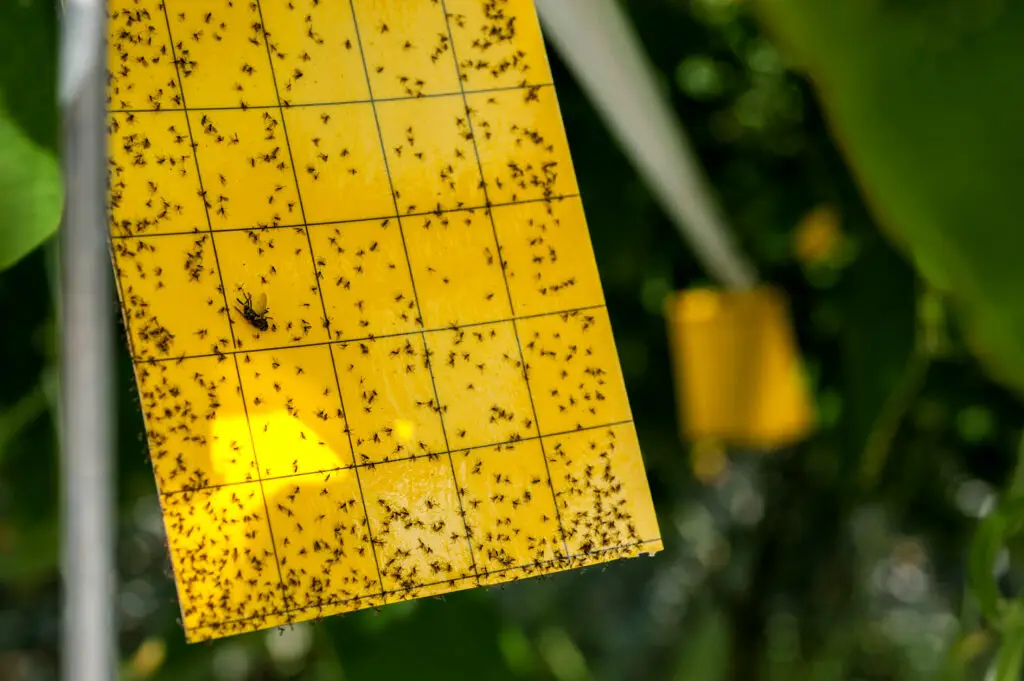
Use a pocket loupe or jeweler’s loupe to inspect leaf undersides – 10x magnification makes early detection dramatically easier. HBX Yellow Sticky Traps deployed throughout the grow space will catch winged aphid adults in transit, giving you an early signal before colonies establish. Place one trap per 10–25 sq ft and check weekly.
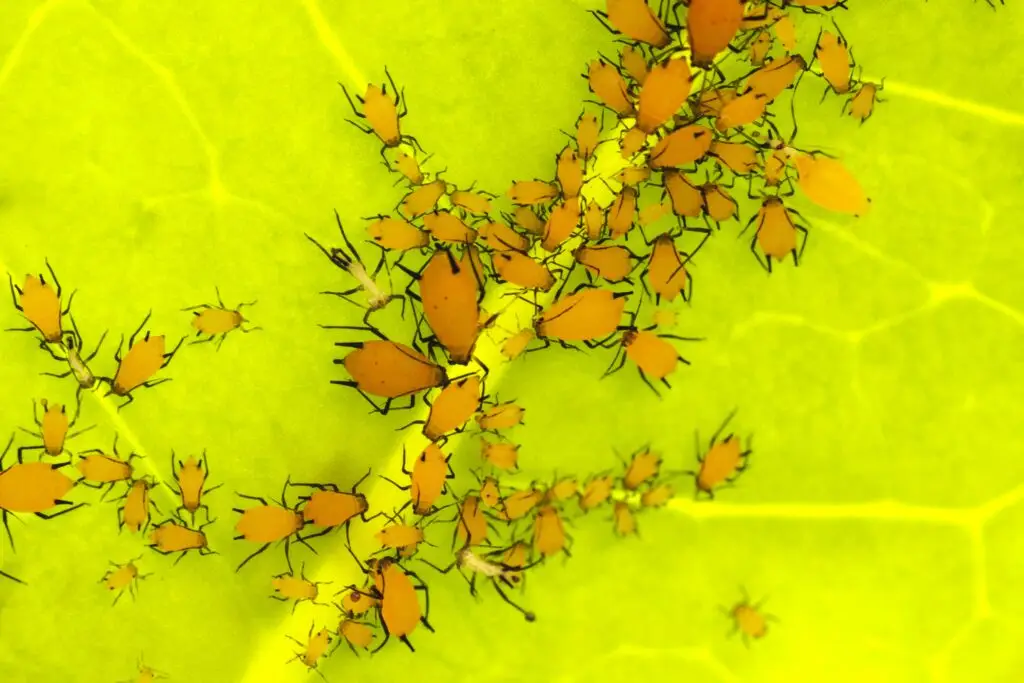
How to Get Rid of Aphids: Treatment Options
The right treatment depends on severity. A localized outbreak caught early can be resolved without sprays. A heavy infestation will require chemical intervention. Here are the options, from lightest to most aggressive.
Physical Removal
For early-stage infestations localized to a few leaves or a single branch, the fastest first step is mechanical: remove the affected tissue. Snip the infested leaves or stems, bag them immediately, and dispose of them outside the grow space. This alone won’t resolve a spreading outbreak, but it eliminates the most concentrated population immediately.
A strong stream of water from a handheld sprayer can also dislodge aphids from plant surfaces. This works on hardier plants in vegetative stages; be cautious with soft new growth and avoid excessive moisture during late flower. Repeat every 2–3 days if using this method.
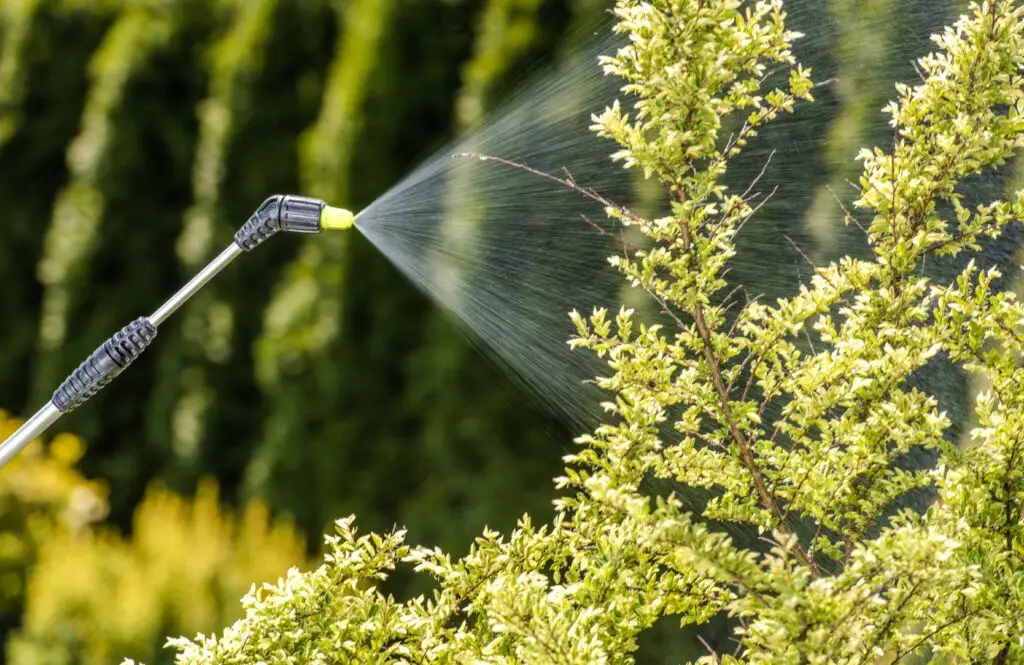
Insecticidal Soap
Insecticidal soap kills aphids on contact by penetrating their soft outer membranes and disrupting cellular function. Unlike some pesticides, it leaves no residue active beyond the wet period — which means coverage is everything.
Dilute per label directions and spray every surface: leaf tops, undersides, stems, and nodes. Early mornings or lights-off periods are ideal to minimize stress and allow surfaces to dry. Repeat applications every 3–5 days are typically needed. Insecticidal soap is compatible with most IPM programs and has no pre-harvest interval in most jurisdictions, but confirm for your specific product.
Neem Oil
Neem oil — specifically the azadirachtin compound it contains — disrupts aphid feeding, molting, and reproduction. It functions as both a repellent and a hormonal disruptor that prevents juvenile aphids from reaching reproductive maturity. It is not a contact killer in the same way insecticidal soap is.
Important: Neem oil is not recommended during late flower stages. The oil can coat trichomes, affect aroma and flavor, and leave residue on buds. If you’re in week 4+ of flower, move to lower-risk options.
BioSafe AzaGuard
BioSafe AzaGuard is an OMRI Listed azadirachtin-based insecticide and nematicide derived from neem seed extract. It controls aphids through anti-feedant and insect growth regulation mechanisms — aphids that feed on treated plant tissue stop feeding and fail to reproduce. AzaGuard is one of the top-performing aphid treatments for indoor cultivation environments, particularly where repeat applications are practical and a residue-restricted crop is involved.
Apply as a foliar spray at label rate, ensuring thorough coverage of all leaf surfaces. Effective against nymphs and adult aphids; less effective as a contact knockdown against heavy established colonies. For best results, combine with a contact-kill option (insecticidal soap or Lost Coast) on the first application, then maintain with AzaGuard preventively.
For thorough canopy coverage, the HBX Pump Sprayer 8 Liter delivers consistent pressure for foliar applications across full-size plants. For spot treatments or smaller areas, the HBX Handheld Pump Sprayer 2 Liter is faster and more maneuverable.
Lost Coast Plant Therapy
Lost Coast Plant Therapy is a concentrated formula combining isopropyl alcohol, soybean oil, sodium citrate, and purified water. It kills aphids on contact by disrupting their protective wax layer and dehydrating the insect. It is effective as a knockdown treatment against established colonies — particularly useful when you need rapid population reduction before transitioning to a residual program like AzaGuard.
Athena IPM
Athena IPM is a potassium silicate-based pesticide and fungicide. Silicate deposits coat leaf surfaces and disrupt soft-bodied insect feeding. It also builds structural cell wall reinforcement in the plant that makes tissue less vulnerable to aphid damage. Athena IPM is well-suited for preventive weekly applications in managed IPM programs, as it treats both aphid and powdery mildew pressures simultaneously.
BioSafe BioCeres WP
BioSafe BioCeres WP is a biological mycoinsecticide based on Beauveria bassiana, a naturally occurring entomopathogenic fungus. It colonizes aphid bodies on contact, disrupting normal function and killing the insect over 3–7 days. BioCeres is a strong option for rotation programs — its biological mode of action is distinct from chemical and botanical insecticides, which reduces the risk of resistance developing in a population.
Condition note: BioCeres applications require moderate temperature (65–85°F) and high relative humidity (70–95% RH) for optimal fungal germination. Applications in low-humidity environments (below 70% RH) will have significantly reduced efficacy; consider misting the canopy or applying late in the dark cycle when humidity rises naturally.


Beneficial Insects
For growers who prefer zero-spray options — or who are deep in flower and cannot apply any foliar products — beneficial insects offer a viable supplemental strategy. Ladybugs, lacewings, and parasitic wasps (Aphidius spp.) prey on or parasitize aphids. Parasitic wasps are particularly effective for aphid-specific control and are available commercially as timed-release sachets.
Beneficial insects work best in greenhouses and outdoor environments with enough space and plant diversity to support a resident predator population. In small sealed grow tents, they have limited effectiveness due to the lack of habitat and difficulty of establishment. Learn more in our guide to beneficial bugs for pest control.
For a full overview of treatment options across multiple pests, see our integrated pest management guide.
How to Prevent Aphids
Controlling an active outbreak is reactive. Building prevention into your routine is far more effective. These are the approaches that consistently keep aphid pressure low.
Monitoring Traps
HBX Yellow Sticky Traps catch winged aphids before they establish feeding colonies. This is the simplest and most overlooked prevention tool — a flying aphid entering a sealed environment is your last opportunity to stop a colony before it starts. Deploy traps throughout the canopy at consistent heights, check weekly, and replace when more than 50% covered.
Environmental Management
Aphids thrive in conditions that are warm, low-airflow, and have dense foliage. The same environmental parameters that support healthy plant growth — 70–80°F, 40–60% RH in veg, 45–55% in flower — are not dramatically outside aphid comfort range. You cannot use temperature or humidity as a primary control mechanism. What you can do:
- Maintain strong airflow — stagnant air encourages aphid colonization and slows the drying of secreted honeydew that attracts ants
- Manage canopy density — heavy defoliation alone won’t solve an infestation, but good canopy airflow limits the microenvironments where aphids concentrate
- Prevent re-entry — use insect screens on all intake vents and air exchange ports. Inspect all incoming clones, transplants, and cuttings before they enter the grow space
- Avoid excess nitrogen — overfertilized plants produce excessive soft, succulent new growth that aphids preferentially target
Preventive Spray Programs
Preventive applications — applied before pressure is visible — are substantially more effective than reactive treatment. Rotating through modes of action (biological, botanical, silicate-based) on a weekly or bi-weekly schedule prevents any single population from building resistance.
A simple rotation for aphid prevention:
- Week 1: Athena IPM (silicate-based, dual aphid + PM coverage)
- Week 2: BioSafe AzaGuard (azadirachtin — IGR/anti-feedant)
- Week 3: BioSafe BioCeres WP (biological — Beauveria bassiana) — apply during high-humidity periods for best fungal efficacy
- Repeat through veg; taper to Athena IPM only after week 3 of flower
Companion Planting (Outdoor and Greenhouse)
For outdoor and greenhouse growers with space for companion planting, certain plants consistently deter aphids: garlic, chives, sage, oregano, and basil all emit aromas that aphids avoid. Planting these as border plants around high-value crops adds a passive deterrent layer at low cost.
Conversely, nasturtium and calendula are strong aphid attractants — they can be planted as trap crops on the perimeter of the garden, drawing aphid populations away from primary plants.
Diatomaceous Earth
Diatomaceous earth is effective against soft-bodied insects on or near the growing medium. Applied to the surface of soil or coco, it punctures the exoskeletons of insects moving through it, causing dehydration. It is most effective against aphids that have reached the roots or are moving through the growing medium.
Prokure for Facility Sanitation
Prokure V is a chlorine dioxide-based liquid sanitizer used for surface decontamination between cycles. While it is not a direct aphid treatment, it eliminates the honeydew deposits and organic residue in your facility that attract insects and harbor eggs between cycles. Incorporating Prokure into your room-turnover protocol removes the residue that makes your space hospitable to repeat infestations.


Dealing With Ants and Aphids Together
If you’re seeing large numbers of ants around your plants, look immediately for aphids — ants actively farm them. They protect aphid colonies from predators and will physically relocate aphids to new plant tissue when a colony gets too large. Controlling aphids without addressing ants is substantially harder.
Orange peel extracts and diatomaceous earth applied around container bases create physical and chemical barriers that discourage ant movement. Alternatively, food-grade ant bait stations placed away from plant tissue can reduce ant populations over several days. Resolve both pest populations simultaneously.
For Commercial Operations: Aphid Management at Facility Scale
Commercial cultivators managing multi-room facilities face different challenges with aphids: population spread between rooms, application logistics across hundreds of canopy square feet, and regulatory constraints on what can be applied during which growth stage.
Monitoring protocol: Deploy HBX Yellow Sticky Traps at one trap per 10 sq ft in active rooms and one per 25 sq ft in vegetation rooms. Create a tracking log — trap data trends tell you whether pressure is increasing or decreasing over weekly intervals.
IPM rotation at scale: Implement a three-product rotation through the vegetative stage, using AzaGuard, BioCeres WP, and Athena IPM on alternating weeks. Commercial OMRI-listed formulations of these products are available in volume. Document all applications with date, rate, product, and growth stage.
Application equipment: For facilities running 2,000+ sq ft of canopy, a dedicated HBX Pump Sprayer 8 Liter per room prevents cross-contamination between rooms with different pressure levels. Always wear HBX Heavy Duty Nitrile Gloves when handling concentrated pesticides — they’re 6 mil, latex-free, and available in cases of 1,000 for full crew outfitting.
Quarantine incoming plants: Every clone, transplant, or genetic coming into the facility should go through a 48–72 hour inspection hold in a quarantine space before entering the main facility. More aphid introductions in commercial facilities come from incoming plant material than from any other source.
Room-to-room biosecurity: Aphids can travel on clothing and tools. Crews moving between rooms with active infestations and clean rooms should change gloves and wipe down tools at minimum. Foot baths and coverall protocols are appropriate in facilities with strict biosecurity requirements.
Shop BioSafe’s full commercial IPM lineup for volume pricing on preventive and treatment products.


Why Shop at HydroBuilder for IPM Products
HydroBuilder stocks the full BioSafe lineup — AzaGuard, BioCeres WP, ZeroTol 2.0, and the complete SaniDate range — alongside HBX application equipment and monitoring tools. Our team sources OMRI Listed, regulator-compliant pest control products used in licensed facilities, and we can support both the home grower managing a single tent and the commercial operation outfitting multiple rooms. If you have questions about what products fit your specific grow stage and environment, our cultivation specialists are available by phone and email.
For other pest challenges, see our complete guide to common grow room pests and diseases.
Aphids on Plants: Complete FAQ for Identification, Treatment & Prevention
Q: What do aphids look like on plants?
A: Aphids are tiny (under ⅛ inch), pear-shaped insects found clustered on leaf undersides and shoot tips. They are most often green but can be black, white, yellow, or orange depending on species. Look for sticky honeydew deposits on leaf surfaces as a secondary indicator of their presence.
Expanded: The most common confusion is between aphids and thrips eggs or spider mite damage. Aphids are visible to the naked eye as distinct individual insects, typically clustered rather than scattered. Unlike spider mites, which leave stippling damage across the whole leaf blade, aphid damage concentrates on shoot tips and curls leaves downward. If you see sooty mold — a black, powdery coating — aphids have been present long enough to build substantial honeydew deposits.
Commercial application: In high-density canopies, aphid colonies establish fastest on the topmost new growth where foliar spray coverage is weakest. Scout from the top of the canopy downward during weekly IPM walks.
Q: What is the fastest way to get rid of aphids?
A: Contact-kill insecticidal products — insecticidal soap, Lost Coast Plant Therapy, or neem oil — provide the fastest population reduction by killing aphids on direct contact. Apply with thorough coverage of all leaf surfaces, particularly undersides where colonies concentrate. Repeat within 3–5 days.
Expanded: “Fast” and “permanent” are different outcomes. Contact sprays can knock down a significant portion of a visible population in one application under ideal coverage conditions, but eggs, protected nymphs, and re-infestations from winged adults require repeat applications and a residual IPM program. Combine a contact knockdown product for the first application with a longer-acting botanical like AzaGuard for follow-up treatments.
Commercial application: In multi-room facilities, simultaneous treatment of all affected rooms within the same 48-hour window prevents re-infestation from adjacent spaces during the treatment period.
Q: Can aphids live in soil?
A: Root aphids — a distinct subset of the aphid family — do live in growing medium and attack root systems directly. They are harder to detect and treat than foliar aphids because they are hidden below the medium surface. Standard foliar treatments do not reach root aphids; soil drenches with azadirachtin-based products (like AzaGuard) or beneficial nematodes are the appropriate treatment.
Expanded: Leaf-feeding aphids occasionally drop to soil or medium surfaces but do not establish colonies there. If you’re seeing plant decline — yellowing, wilting, stunting — without visible foliar aphid colonies, suspect root aphids. Examine roots directly or drench the medium with AzaGuard at soil drench rate per label directions.
Commercial application: Root aphid outbreaks in commercial facilities typically spread through shared medium sources or contaminated irrigation lines. Sanitize reservoir lines between cycles using BioSafe ZeroTol 2.0 and confirm clean medium sources.
Q: Does neem oil kill aphids?
A: Neem oil — specifically azadirachtin — disrupts aphid feeding and molting and prevents juveniles from maturing. It is not a fast contact killer but is highly effective for preventive programs and early-stage infestations. Avoid using neem oil in late flower stages; the oil can affect bud quality.
Expanded: Neem oil products vary significantly in azadirachtin concentration. Higher-concentration formulations like AzaGuard (a pharmaceutical-grade azadirachtin extraction) are more effective than raw cold-pressed neem oil. For flower-stage growers who need aphid control without risking terpene or aroma impact, Athena IPM or insecticidal soap are safer alternatives.
Q: Are aphids harmful to humans or pets?
A: Aphids themselves present no direct threat to humans or pets — they do not bite, sting, or transmit disease to mammals. The pesticide treatments used to control them are another matter: always follow label PPE and re-entry interval requirements.
Expanded: OMRI Listed products like AzaGuard, BioCeres, and insecticidal soap are low-toxicity to mammals and degrade quickly. However, “natural” does not mean “harmless in high concentrations.” Wear gloves and avoid inhaling spray mist regardless of product type.
Commercial application: Maintain a pesticide application log and post-treatment re-entry intervals for all affected rooms. Latex-free nitrile gloves are required for all chemical handling.
Q: How do I get rid of aphids on indoor plants without chemicals?
A: The most effective non-chemical methods are physical removal (cutting infested tissue or water-blasting aphids off leaves), insecticidal soap (soap-based, not synthetic chemical), and beneficial insects such as parasitic wasps or lacewings. Sticky traps catch winged adults before they colonize.
Expanded: For small indoor plants and grow tents, the combination of physical removal plus insecticidal soap handles most early-stage infestations without synthetic chemistry. The challenge is persistence — non-chemical methods require more frequent application. Every 3 days is the minimum interval for insecticidal soap to prevent nymphs from maturing between treatments.
Q: What plants are aphids most attracted to?
A: Aphids target plants with high nitrogen content and soft, succulent growth. Young shoot tips and rapidly growing plants are their preferred feeding sites. In the garden, calendula, nasturtium, and broad beans are strong attractant plants — they’re often planted as trap crops to draw aphid populations away from high-value crops.
Expanded: Overfeeding plants with high-nitrogen nutrients accelerates the production of exactly the soft tissue aphids prefer. Keeping nitrogen in balance — appropriate to growth stage, not excessive — is a genuine preventive measure, not just fertilizer discipline.
Q: How can I tell the difference between aphids and other common pests?
A: Aphids are pear-shaped and cluster, typically at shoot tips and leaf undersides. Spider mites are smaller and leave stippling (tiny yellow dots) across the whole leaf blade. Thrips are elongated and cause silvery streaking on leaves. Whiteflies are white-winged and fly up when the plant is disturbed. Learn more in our guide to common grow room pests.
Q: Will aphids come back after treatment?
A: Yes, unless you implement a preventive program. Contact treatments eliminate the current population but leave eggs, protected nymphs, and winged adults from neighboring plants available to re-establish colonies. Transitioning from a reactive spray to a rotational preventive program — applying OMRI Listed products on a set weekly schedule — is what separates growers who cycle through repeated outbreaks from those who maintain clean rooms.
Q: What time of day should I spray aphids?
A: Apply during early morning or at the beginning of the lights-off period in indoor grows. Cooler temperatures improve foliar spray effectiveness, slow product evaporation, and give leaves time to dry before the next high-humidity period. Avoid applying foliar sprays mid-day under intense lighting — both for product performance and to reduce phytotoxicity risk.