

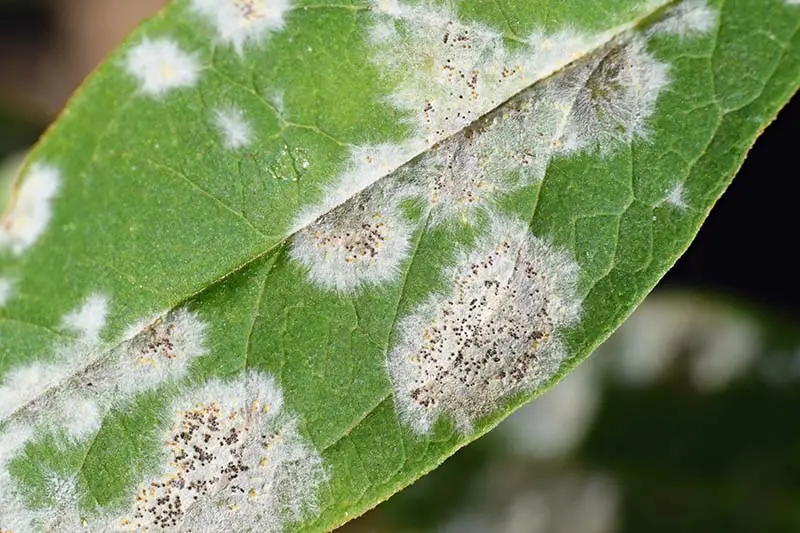
Powdery mildew is one of the fastest-moving fungal threats your garden will face. A clean room at lights-off can show visible white colonies by morning — and if you don’t act within the first 24 to 48 hours, a single infected plant can become a room-wide outbreak. This guide covers everything you need to know about powdery mildew on plants: how it spreads, what conditions allow it to take hold, how to eliminate an active infection, and how to prevent it from returning.
Already dealing with an outbreak? Jump directly to Powdery Mildew Treatment for immediate action steps.
Whether you’re managing a home grow tent or running a licensed cultivation facility, the principles are the same — only the scale and the tools change. Commercial operators should see the For Licensed Cultivators section for IPM protocols and sanitation systems built for multi-room facilities.
What Is Powdery Mildew?
Powdery mildew (PM) is a fungal disease caused by several species of obligate parasites in the order Erysiphales — most commonly Podosphaera and Golovinomyces species in indoor cultivation. Unlike many other plant-pathogenic fungi, PM does not require free water to germinate; it can infect under relatively dry leaf-surface conditions as long as humidity around the foliage is periodically elevated. It thrives in warm conditions, generally around 65–80°F, and develops most aggressively when relative humidity in the canopy stays elevated — especially when it regularly exceeds about 60–70% RH — which is why standard “keep it dry” advice isn’t sufficient on its own.
PM is an obligate parasite, meaning it can only survive on a living host — it cannot persist indefinitely in soil or on inert surfaces. However, dormant spores on old plant debris, dried material, or equipment can remain viable for extended periods and reactivate when conditions become favorable.
Key characteristics of powdery mildew:
- Airborne spore transmission — spores can move on air currents and through HVAC systems into adjacent rooms.
- Does not require free water to germinate (unlike downy mildew or botrytis).
- Develops most rapidly around 65–80°F with elevated humidity, particularly when canopy RH frequently exceeds about 60–70%.
- Suppressed (but not eliminated) at very low humidity and at higher temperatures above about 86–90°F, which can also stress crops.
- Older, lower-canopy leaves are often affected first; infection can then move upward if not controlled.


What Does Powdery Mildew Look Like?

Powdery mildew is visually distinctive and usually easy to identify early if you’re doing daily checks — which you should be. Symptoms appear in this approximate order:
- White or pale gray powdery patches on the upper surface of leaves — the classic diagnostic sign.
- Mottling or faint yellowing around affected areas as the fungus competes for plant resources.
- Pale, stippled, or bleached leaves as infection progresses.
- Spread to new growth, stems, and buds if untreated — upper canopy can eventually be engulfed.
- Wilting and necrosis in late-stage, severe infections.
The white patches are colonies of fungal mycelium and spores, not a residue. Wiping the surface will remove some visible spores but not the infection itself — the hyphal network is embedded in leaf tissue by the time you can see it.
Distinguishing PM from other issues: PM produces dry, powdery white growth on the surface. Downy mildew appears as yellow patches on the top surface with gray-purple growth underneath the leaf. Botrytis (gray mold) presents as a gray, fuzzy growth typically starting in dense bud sites. If you’re unsure, check the underside of the leaf — PM colonizes primarily on upper surfaces, while downy mildew sporulates on the lower surface.
How Does Powdery Mildew Spread?
Understanding transmission routes is essential for effective prevention — especially in multi-room or multi-cultivar facilities.
Primary transmission routes:
- Airborne spores from outside — wind-driven spores enter through air intakes, open doors, or on clothing; this is the most common vector for first-time infections.
- Dormant spores on equipment and surfaces — previous crop debris, containers, grow media, and trellising can harbor dormant spores. Thorough room sanitation between cycles is non-negotiable.
- Clones from other operations — unscreened cuts are one of the highest-risk introduction points, particularly in cannabis cultivation. Always quarantine incoming clones.
- Recirculated air in closed-loop HVAC — in multi-room facilities, shared air handling units can distribute spores across rooms if filtration is inadequate.
- Human vectors — spores on hands, clothing, and tools transfer easily between plants. Gloves and dedicated room attire meaningfully reduce cross-contamination.
Once introduced, PM spreads within a room via air movement — meaning your circulation fans, while essential for other reasons, can spread an active infection faster if spores are already present. If you detect an outbreak, temporarily reduce fan speed and improve filtration before increasing air movement again.
How to Prevent Powdery Mildew
Prevention is where you win the fight against powdery mildew. The three pillars are: environmental control, physical barriers, and preventative biological treatments. Miss any one of them, and the other two become reactive rather than protective.
1. Control Humidity Through the Grow Cycle
The single most important environmental factor in PM prevention is maintaining stage-appropriate relative humidity (RH) with minimal fluctuation. PM colonizes most aggressively when humidity around the canopy is high and fluctuates sharply — particularly during the drop and rebound that occurs when lights shut off and temperatures change.
Target parameters by growth stage (at typical indoor temperatures):
- Propagation/early veg: 65–70% RH
- Mid-to-late veg: 55–65% RH
- Early flower (weeks 1–3): 50–60% RH
- Mid-to-late flower (weeks 4+): 40–50% RH
- Late flower/pre-harvest: 40–45% RH
These ranges balance plant performance with disease suppression and assume good airflow; growers in high-pressure environments may favor the lower end of each range.
For hobby growers, a standalone dehumidifier with a humidistat handles most situations. The Quest Hi-E Dry 195 runs on standard 115V and provides 195 pints/day of capacity; when properly matched to your lighting load and irrigation volume, it is suitable for many hobby-scale rooms such as a well-sealed 4×8 grow space, with a true-capacity rating based on industry standards rather than the inflated figures you see from cheaper units.
For sizing guidance, see our full grow room dehumidifier sizing guide.

2. Maintain Active Air Circulation
Stagnant air is PM’s best friend. Oscillating and circulation fans keep the microclimate around leaves in constant gentle movement, which disrupts the high-humidity boundary layer where spores germinate and prevents moisture from pooling on leaf surfaces.
Best practices:
- Position fans to create indirect movement across the canopy — not direct airflow that desiccates leaves.
- Ensure all canopy levels receive airflow, not just the top.
- Do not point fans directly at plants if humidity is already low, as this can cause windburn and add stress.
Browse oscillating fans or clip-on fans for smaller spaces.
Important: If you have an active PM outbreak, reduce fan speed to avoid distributing spores before treatment is underway. Resume normal airflow once the infection is controlled.
3. Set Up Proper Ventilation — Including Intake Filtration
Your ventilation system doesn’t just remove heat and odors — it helps control the biological profile of incoming air. For PM prevention, intake filtration is as important as exhaust.
A well-designed grow room ventilation system includes:
- Exhaust fan + carbon filter — removes heat, humidity, and odors.
- Filtered intake — a HEPA or high-MERV intake filter is one of the most underutilized PM prevention tools available in many hobby and small commercial setups.
The AC Infinity Premium Grow Room HEPA Intake Ventilation Kit pairs an inline fan with a HEPA filter specifically designed for grow room intake — it captures mold spores, pollen, and particulates before they enter your space. For a complete exhaust solution with fan, carbon filter, and ducting, the AC Infinity PRO Air Filtration Kit, 8″ remains one of the cleanest all-in-one options available.
Target air exchange: aim for complete room air turnover roughly every 3–5 minutes, adjusting for ducting length, filter resistance, and heat load.
For a full walkthrough, see our grow room ventilation setup guide.
4. Manage Canopy Density
Dense canopy creates microclimates with elevated localized humidity, even when room-level RH is on target. Leaf-to-leaf contact gives PM a direct physical pathway between plants without requiring airborne transmission.
- Defoliate strategically — remove large fan leaves blocking airflow through the canopy mid-veg and at the transition to flower. This improves light penetration and air movement simultaneously.
- Space plants appropriately — overcrowding is one of the most common preventable causes of PM in both hobby and commercial settings.
- Remove lower growth — the lowest 6–8 inches of canopy typically receives minimal light and airflow; keeping it clean reduces PM pressure significantly.
Avoid over-defoliation — removing more than about 20–25% of foliage at once can stress plants and set back growth.
5. Preventative Biological Treatments
For growers in high-pressure environments or operating in regions where PM is a persistent seasonal issue, preventative biological sprays applied on a scheduled rotation significantly reduce the likelihood of establishment when combined with good environmental control.
ProFarm Regalia CG Biofungicide uses a Reynoutria sachalinensis (giant knotweed) extract to trigger plants’ own systemic resistance responses, helping them produce disease-fighting biochemicals without conventional synthetic fungicide chemistry. It is OMRI-listed and labeled for greenhouse, ornamental, garden, and cannabis crops, and can be integrated into veg and flower in many programs where permitted by the label and local regulations. Apply every 7–14 days preventatively; reapplication is needed on new growth since the induced protection is not permanently translocated.
Powdery Mildew Treatment
If prevention didn’t hold, early detection and a systematic response will save your crop. The severity of your response should match the severity of the outbreak — and the growth stage determines what tools are available to you.
Step 1: Assess the Severity
Before treating, understand what you’re dealing with:
- Early/isolated — white patches on a few leaves of one or two plants, no spread to buds.
- Moderate — multiple plants affected, some upper canopy involvement, not yet in bud sites.
- Severe — widespread canopy infection, bud site involvement, spore clouds visible when canopy is disturbed.
For early/isolated cases: physically remove affected leaves (place directly into a sealed bag — do not shake them), then treat the entire room as a moderate case regardless.
Step 2: Apply Fungicide — Match the Product to the Stage
Before flower / early flower (weeks 1–3):
BioSafe ZeroTol 2.0 is a broad-spectrum algaecide, bactericide, and fungicide based on hydrogen peroxide and peroxyacetic acid chemistry. It works on contact, killing spores and mycelium on the leaf surface, and can be used in many recirculating hydroponic systems and on growing surfaces when label directions are followed. Apply as a foliar spray or diluted drench at label rates. It is OMRI-listed and breaks down into oxygen, water, and acetic acid derivatives with minimal residue, reducing long-term buildup concerns when used as directed.
Athena IPM combines a blend of essential oils, including rosemary, thyme, and clove, for contact efficacy against a broad range of fungal and pest pressures. It is widely used by licensed operators in mature veg and early flower programs and is compatible with many IPM rotation schedules when applied according to label directions and local regulations.
Mid-to-late flower considerations:
Options narrow significantly once plants are three or more weeks into flower. Focus on oxidizing products such as hydrogen peroxide/peroxyacetic acid blends (for example, ZeroTol 2.0) used at the recommended dilution and applied in lower-humidity conditions to prevent moisture-induced bud damage. Avoid sulfur, copper, and heavy oil-based products in late flower, as they can leave residues or damage quality. If infection is severe in late flower, prioritize lowering humidity, improving air management, and removing heavily infected material over additional spray applications.
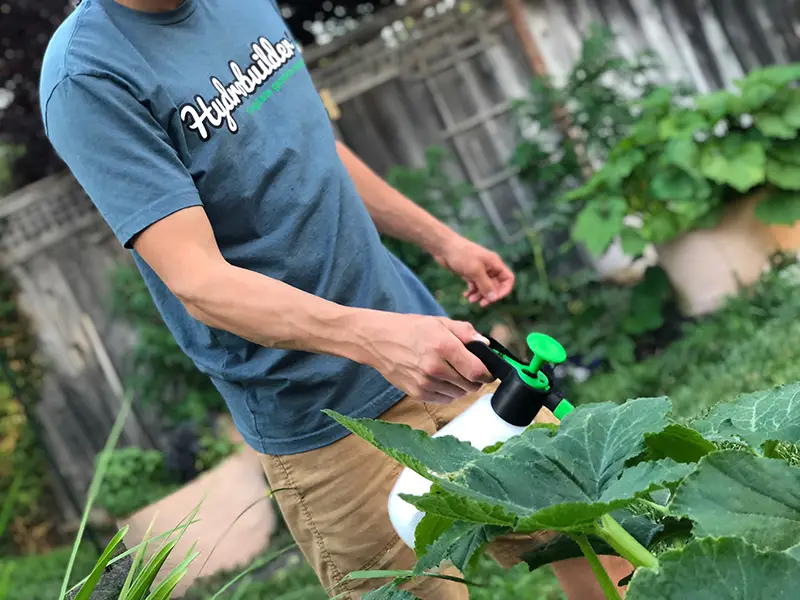
Step 3: Apply Treatments Correctly
Application matters as much as product selection:
- Treat at lights-off or during dark hours to reduce phytotoxicity risk from oil-based products and to slow evaporation, improving contact time.
- Ensure thorough coverage of all leaf surfaces, including undersides, while avoiding runoff into buds in late flower.
- Do not apply within 24–48 hours of harvest unless the label explicitly allows closer intervals; always follow preharvest interval (PHI) guidance.
- Always follow label rates — higher concentrations do not improve efficacy and can cause bleaching or phytotoxicity.
- Rotate modes of action if treating across multiple application cycles to reduce resistance risk.
On home remedies: Baking soda (sodium bicarbonate), hydrogen peroxide, milk spray, and apple cider vinegar are documented in gardening literature and do show some efficacy in low-pressure or outdoor garden applications. They are generally not sufficient for commercial-density infections or high-pressure indoor environments. Use them as a first response if you’re out of options, but reach for a tested biofungicide or oxidizing product as soon as possible.
Step 4: Sanitize the Room
Treating plants without addressing the room is the most common reason PM returns the following cycle. After an outbreak — even one you’ve controlled — thorough room sanitation between harvests is essential.
BioSafe ZeroTol 2.0 applied as a surface spray or fogger addresses hard surfaces, walls, and equipment by oxidizing spores and microbial films. For airborne spore suppression and ongoing facility sanitation, Prokure V delivers chlorine dioxide in liquid form for surface treatment of mold and mildew — a distinct oxidizing mechanism from hydrogen peroxide/peroxyacetic acid products, and useful for areas that can’t be reached with a sprayer when used according to label directions.
For more context on managing overlapping threats, see our integrated pest management guide.

Plants Most Susceptible to Powdery Mildew
Powdery mildew affects a wide range of plant species, but susceptibility varies significantly. Each PM species is somewhat host-specific — the strain affecting cucumbers is not identical to the one affecting roses — but the prevention and treatment principles apply across all.
High-susceptibility crops common in indoor cultivation:
- Cucurbits (cucumber, melons, squash, pumpkins) — among the most susceptible of all vegetables.
- Cannabis — highly susceptible, particularly dense-bud strains with poor airflow characteristics.
- Tomatoes, peppers, and eggplant.
- Beans, peas, and legumes.
- Herbs including basil.
Lower-susceptibility (though not immune): lettuce, most leafy greens, and root vegetables.
Resistance breeding has produced PM-resistant or tolerant varieties of cucumbers, melons, and some squash — if you’re regularly fighting PM on these crops, a varietal switch may be the most efficient long-term solution.


For Licensed Cultivators and Commercial Operations
At commercial scale, powdery mildew moves from a plant problem to a facility risk. A single outbreak in one room can shut down an entire harvest cycle — and in regulated markets, PM-contaminated product fails compliance testing. The following protocols are built for multi-room, high-density facilities.
Environmental Controls at Scale
At 5,000+ square feet of canopy, achieving consistent RH across an entire facility generally requires HVAC-integrated dehumidification rather than standalone units. Key principles:
- Set RH targets at the canopy, not just the room sensor — sensors mounted high near the ceiling will often read lower than the canopy microclimate where PM actually develops.
- Avoid HVAC setpoint swings greater than about 5% RH — transitions between lighting cycles are the highest-risk window for condensation and humidity spikes.
- Closed-loop ventilation requires MERV 13 or higher filtration — spores recirculating through shared air handling systems are a documented outbreak cause in commercial facilities. Filter at the air handler, not just at individual room intake points.
Staged IPM Protocol
A commercial PM IPM program has three phases:
Phase 1 — Prevention (before introduction):
- Quarantine all incoming clones for 7–14 days in an isolated space and inspect daily.
- Apply preventative Regalia CG on a 7–14 day rotation beginning in week 2 of veg, following label directions for greenhouse or cannabis crops.
- Use Prokure G chlorine dioxide gas treatment between cycles for full room sanitation — the fast-release formula is designed to treat enclosed spaces and leaves no rinsable residue when used according to label instructions.
Phase 2 — Containment (active outbreak, veg or early flower):
- Isolate the affected room immediately in a multi-room facility — close doors and, where possible, isolate shared HVAC paths.
- Remove and bag all visibly infected material before spraying to reduce spore load.
- Apply ZeroTol 2.0 at label rate, full canopy coverage, with two applications spaced about 48–72 hours apart as permitted by the label.
- Monitor adjacent rooms with daily visual inspection for 7–10 days post-outbreak.
Phase 3 — Room Turnover:
- Complete surface sanitation with ZeroTol 2.0 via fogger or spray, following label guidance on rates and contact time.
- Perform chlorine dioxide gas treatment (Prokure G) for full airborne sanitation in unoccupied rooms.
- Replace HVAC filters before the next cycle populates.
- Document the outbreak: strain, room, stage, likely transmission vector, products used, and response timeline — a chain of outbreak records will reveal facility-specific pressure patterns over time.
Regulatory Considerations
In licensed cannabis markets, fungicide applications are subject to state-level approved pesticide registries. OMRI-listed biological products such as ZeroTol 2.0 and Regalia CG are widely approved for many greenhouse and specialty crops, but you must always verify against your state’s current allowed product list and the product label for cannabis before application. Athena IPM’s approval status varies by jurisdiction — confirm its inclusion on your local cannabis pesticide list before using it on licensed product.
For complete pest and disease protocols for licensed operators, see our integrated pest management guide for commercial cultivators.
| Severity | Immediate Action | Treatment | Prevention Going Forward |
|---|---|---|---|
| Early (1–2 plants, leaf surface only) | Remove affected leaves, bag them | ZeroTol 2.0 foliar at label rate, full room treatment | Review humidity targets; check intake filtration |
| Moderate (multiple plants, some upper canopy) | Reduce fan speed, improve air exchange | ZeroTol 2.0 + Regalia CG or similar biofungicide rotation | Defoliate; inspect incoming plants/clones |
| Severe (widespread, bud sites) | Isolate room, prioritize humidity reduction | ZeroTol 2.0; minimize oil-based applications in flower | Room sanitation; facility-level air filtration audit |
Values above are generalized and should always defer to product labels and local regulations for specific application rates and permitted uses..
Why Shop HydroBuilder for Powdery Mildew Control
HydroBuilder carries a curated range of biofungicides and sanitation products used by hobby growers and licensed operators alike, including oxidizing chemistries, induced-resistance products, and chlorine dioxide sanitizers from leading manufacturers. Our co-op relationship with BioSafe Systems means we stock their full product lineup — including ZeroTol 2.0, AzaGuard, and SaniDate — and can offer technical support on product selection and application protocols based on label guidance. We also carry Prokure’s complete chlorine dioxide sanitation line for commercial operators managing facility-level IPM programs.
Example: FAQs
Q: What causes powdery mildew on indoor plants?
A: Powdery mildew is caused by airborne fungal spores in the Erysiphales order that land on susceptible plant tissue under favorable environmental conditions. The spores enter through air intakes, on clothing, via unscreened clones, or from dormant material left over from previous crops. They establish most readily when relative humidity around the canopy is elevated — commonly in the 60–80% RH range at typical indoor temperatures — and temperatures are in the 65–80°F range, even if surfaces are not visibly wet, which surprises many growers.
For indoor cultivators, the two most common causes are: inconsistent environmental control (particularly RH swings at lights-off that create short periods of very high humidity near the foliage) and introducing infected or unquarantined plant material into an otherwise clean space.
At commercial scale, shared HVAC recirculation is an underappreciated vector — spores can distribute between rooms through air handling systems that lack adequate MERV 13+ filtration at the handler.
Q: What does powdery mildew look like on plants?
A: Powdery mildew presents as white or pale gray powdery patches on the upper surface of leaves — typically on lower, older growth first, moving upward as infection progresses. The patches are colonies of fungal mycelium and spores and have a dry, talc-like appearance. Unlike downy mildew, which shows yellow patches on top with fuzzy gray-purple growth underneath the leaf, PM’s visible growth is primarily on the upper surface.
Early detection means catching those first small patches before they spread. That’s why daily visual inspection of lower canopy is worth making a fixed part of your routine.
Q: How do you get rid of powdery mildew on plants fast?
A: For early-stage infections: remove affected leaves immediately (bag them — do not compost or shake), then apply BioSafe ZeroTol 2.0 as a foliar spray at label dilution, covering the entire canopy — not just the visibly infected areas. A second application 48–72 hours later, if the label allows, helps address any spores that weren’t killed in the first pass. Simultaneously, drop RH to the lower end of your stage target and verify that air exchange and airflow are functioning at the correct rate.
PM will not reliably resolve on its own in indoor environments. An untreated mild infection can become a severe outbreak within days under favorable conditions.
Q: Will powdery mildew go away on its own?
A: No. Powdery mildew does not self-resolve under typical indoor growing conditions. While very high temperatures (above about 90°F) and very low humidity can inhibit spore production, they also stress your plants and are not a practical long-term control strategy for most crops. Without treatment and environmental correction, PM will spread to additional plants, move up into new growth and bud sites, and ultimately affect yield quality and, in extreme cases, plant survival.
Q: How do I prevent powdery mildew in my grow room?
A: The most effective prevention strategy combines three elements: keeping RH in the stage-appropriate range (roughly 40–70% depending on growth stage), maintaining active air circulation at all canopy levels, and filtering incoming air through a HEPA or MERV 13+ intake filter. Preventative biological treatments like Regalia CG, applied on a 7–14 day schedule where label and regulations permit, add an additional layer in high-pressure environments. Quarantining all incoming clones and avoiding cross-contamination from clothing or tools rounds out a complete prevention approach.
Q: Can powdery mildew spread through the air to other plants?
A: Yes — this is the primary transmission mechanism. PM spores are microscopic and easily become airborne; even normal air circulation in a grow room can distribute them throughout the space within hours. This is why a single infected plant demands an immediate room-wide response rather than spot treatment. In multi-room facilities, shared HVAC systems can move spores between rooms, making effective air filtration at the handling unit level essential for commercial operations.
Q: What are the best fungicides for powdery mildew in a grow room?
A: For indoor growing, the most consistently effective options fall into two broad categories: oxidizing chemistries such as hydrogen peroxide/peroxyacetic acid products (like BioSafe ZeroTol 2.0) for direct contact kill, and induced systemic resistance products (such as ProFarm Regalia CG) for preventative biological protection. Athena IPM, an essential oil-based formula, is widely used by licensed operators in veg and early flower where allowed by local regulations. For facilities using a sanitation layer, Prokure V (chlorine dioxide liquid) addresses surface mold and mildew at room turnover when used according to label directions. Rotating mechanisms of action — rather than applying the same product repeatedly — is best practice for long-term resistance management.
Q: Is it safe to consume plants that had powdery mildew?
A: Plants that had localized PM infections and were successfully treated with labeled, approved products can often continue to harvest, assuming the infection was resolved before bud sites were colonized and the preharvest intervals on any products used were strictly observed. Bud tissue that is visibly infected with PM should not be consumed — the fungal proteins and spores can trigger allergic and respiratory responses. In licensed cannabis markets, mold and mildew testing is typically part of compliance requirements; consult your state’s approved testing thresholds and follow all regulatory guidance before releasing product.
Q: At what humidity does powdery mildew grow?
A: Powdery mildew spores tend to germinate and develop more readily as relative humidity rises above roughly 60% around the canopy, with many crops showing highest disease pressure when humidity near the foliage approaches or exceeds about 70%. Unlike many other fungal pathogens, PM does not require free water and can establish at lower humidity than growers sometimes expect, particularly if there are repeated nightly spikes in humidity. Conditions below about 40% RH strongly suppress PM development but are generally too dry for healthy growth in most stages, so the practical target is stage-appropriate RH management — not simply “low humidity” — combined with eliminating large humidity fluctuations at lights-off.
Q: How do commercial cannabis operations handle recurring powdery mildew?
A: Licensed operators managing recurring PM typically implement three-phase IPM programs: preventative Regalia CG rotations starting in veg, ZeroTol 2.0 as a primary oxidizing treatment tool when infections occur, and chlorine dioxide gas (Prokure G) for full room sanitation between cycles. Environmental protocols — MERV 13+ filtration in HVAC systems, canopy-level RH sensors, and clone quarantine procedures — address the facility-level causes that foliar treatments cannot resolve alone. Regulatory compliance adds an additional layer: product selection must match your state’s approved pesticide registry, and OMRI-listed biologicals are often the most universally approved category for greenhouse and cannabis applications.