


Bone meal fertilizer is one of the most reliable organic sources of phosphorus and calcium available to soil growers. Whether you’re cultivating flowering crops, fruiting vegetables, or bulbs, learning how to use bone meal correctly can meaningfully improve root development, bloom production, and overall plant structure — without synthetic inputs. This guide covers everything you need to know: what bone meal is, how it works, when to apply it, and which products deliver the best results.
Whether you’re tending a backyard garden or managing a soil-based crop operation, bone meal is a foundational organic amendment worth understanding deeply. Commercial growers using organic certification programs will find specific workflow guidance in the “For Commercial Operations” section below.
What Is Bone Meal Fertilizer?
Bone meal is exactly what it sounds like: ground-up animal bones — most commonly beef — processed into a powder, meal, or granule form. Most bone meal sold for horticultural use is steamed before milling. Steaming serves two purposes: it helps release nutrients into a more plant-available form, and it sterilizes the material to help prevent pathogen transfer.
The resulting fertilizer delivers a concentrated dose of organic phosphorus and calcium, along with smaller amounts of nitrogen. A typical bone meal NPK profile runs around 3-15-0, though formulations vary by brand and processing method. Some specialty steamed bone meals, like the FoxFarm Happy Frog formula, incorporate mycorrhizal fungi to further enhance root uptake efficiency.
Bone meal is often confused with blood meal, but the two are very different products. Blood meal is primarily a nitrogen source. Bone meal’s primary value is phosphorus delivery, making it especially useful during flowering and fruiting stages when phosphorus demand tends to peak.
| Amendment | Primary Nutrient | Typical NPK | Release Speed | Best Growth Stage | Vegan? |
|---|---|---|---|---|---|
| Bone Meal | Phosphorus + Calcium | 3-15-0 | Slow (months) | Flowering / Rooting | No |
| Blood Meal | Nitrogen | 12-0-0 | Medium-fast (weeks) | Vegetative | No |
| Feather Meal | Nitrogen | 12-0-0 | Slow (months) | Vegetative (extended) | No |
| Rock Phosphate | Phosphorus | 0-3-0 | Very slow (years) | Pre-season soil building | Yes |
| Fish Bone Meal | Phosphorus + Nitrogen | 5-13-0 | Medium (weeks–months) | Transition / Flowering | No |


Why Phosphorus and Calcium Matter
Phosphorus is critical for energy transfer, photosynthesis, and DNA synthesis within the plant. It plays a particularly important role in root establishment, flower initiation, and fruit set. Plants deficient in phosphorus often display stunted growth, dark or bluish-green foliage, and purple discoloration on leaf stems and veins — especially under cold conditions that impair uptake.
Calcium supports cell wall integrity and membrane permeability, making it essential for structural health throughout the plant’s life. Unlike mobile nutrients, calcium cannot be relocated within the plant once deposited, so a continuous, available supply is necessary. Bone meal addresses both nutrients in a single, slow-release application when conditions support breakdown and uptake.
Before You Apply: Soil Testing and pH
The most important step before applying bone meal is testing your soil pH. Bone meal is only effective in soils with a pH below 7.0. In alkaline conditions (pH above 7.0), the phosphorus in bone meal binds to calcium and magnesium ions in the soil and becomes largely unavailable to plant roots, regardless of how much you apply.
Aim for a soil pH between 5.5 and 6.5 for optimal phosphorus uptake in most soil-grown crops. If your pH is too high, adjust it downward before amending. Similarly, run a basic nutrient test to confirm that phosphorus is actually deficient before adding bone meal — excess phosphorus can suppress mycorrhizal fungi activity and interfere with zinc and iron uptake.
For full guidance on how to amend your soil, including how bone meal fits into a broader organic fertilizer program, see our dedicated soil amendment guide.

The Best Bone Meal Fertilizers for Soil Growers
is one of the most widely used bone meal fertilizers in the market and a reliable choice for growers at any scale. With an NPK of 3-15-0, it delivers a high-phosphorus dose that releases gradually over several months (often around four months) in soil with a pH below 7.0, adequate moisture, and active microbial life. Down To Earth Bone Meal is OMRI Listed for organic use, available in 5 lb, 25 lb, and 50 lb bags, making it practical for home gardens and larger growing operations alike. Application is straightforward: work it into the top few inches of soil at transplant, as a pre-season amendment, or side-dress around established plants at the onset of flowering, always following the specific label directions for your crop and soil test results. Shipment restrictions apply to some states — check the product page for details.
FoxFarm Happy Frog Steamed Bone Meal
takes the classic formula a step further by incorporating mycorrhizal fungi into the product. Mycorrhizae form symbiotic relationships with plant roots, effectively extending root surface area and improving the uptake of phosphorus and water — the exact nutrients bone meal supplies. With a 3-12-0 NPK and fine-screened texture, Happy Frog Steamed Bone Meal mixes easily into soil at transplant or as a top-dress amendment. The case of 12 format is particularly convenient for growers managing multiple beds or containers. The product is OMRI Listed and CDFA certified for organic use, making it suitable for certified organic production when used as directed.
offers a 4-12-0 profile — slightly higher nitrogen relative to the Down To Earth formula, which can be useful when amending lean soils that need a modest nitrogen lift alongside phosphorus. Espoma uses no fillers or sludges, and the formula is manufactured in a solar-powered facility with guaranteed batch consistency. Available in case formats for both 4 lb and 8 lb bags, it’s a practical pick for gardens, shrubs, trees, and container plantings where organic certification or sustainability practices matter.
Down To Earth Bone Meal in 50 lb bulk format suits growers amending at a larger scale with the same trusted formula.
For liquid-format phosphorus supplementation in hydroponic-style drench or fertigation applications, Down To Earth and other manufacturers offer fish bone meal and liquid organic phosphorus sources that can be used where a more immediately plant-available form is desired, provided they are compatible with your irrigation equipment and filtration.
| Product | NPK | Form | Release Speed | OMRI Listed | Best For | Sizes Available |
|---|---|---|---|---|---|---|
| Down To Earth Bone Meal | 3-15-0 | Granule/Meal | ~4 months | Yes | General soil, bulk operations | 5 lb, 25 lb, 50 lb |
| FoxFarm Happy Frog Steamed Bone Meal | 3-12-0 | Fine meal | ~3–4 months | Yes | Transplants, containers, mycorrhizal boost | Case of 12 x 4 lb |
| Espoma Organic Bone Meal | 4-12-0 | Granule | ~3–4 months | Yes | Lean soils needing modest N + P | 4 lb, 8 lb cases |
| Coast of Maine Fish Bone Meal | 5-13-0 | Meal | ~2–3 months | Yes | Higher N needs, faster release | 3 lb |
Supporting Products
Impello Biosciences Tribus Original is a rhizobacteria inoculant that enhances root zone biology, improving the microbial environment that facilitates slow-release nutrient breakdown. Applied as a root drench, Tribus helps maximize the benefit of organic amendments like bone meal by promoting the microbial activity needed to convert slow-release phosphorus into plant-available forms.
Botanicare Cal-Mag Plus provides supplemental calcium and magnesium in a liquid form, which is useful alongside bone meal in gardens where both calcium and magnesium are needed but you want immediately available calcium rather than waiting for bone meal to break down. This is particularly valuable for fruiting crops and in situations where purified or low-mineral water is used.
BioAg Ful-Power is a fulvic acid concentrate that improves nutrient transport and uptake at the cellular level. Added to root drenches or used as a foliar, fulvic acid helps plants better utilize the phosphorus released from bone meal by chelating mineral nutrients and improving membrane permeability.
HGV Condition – pH Down — if your soil tests above 7.0, bone meal won’t perform efficiently. HGV Condition pH Down uses phosphoric acid to safely lower irrigation water pH, and in some programs can be part of a broader strategy to keep soil solution pH within target range, ensuring the conditions bone meal needs to release phosphorus effectively. Always follow label directions and avoid over-acidifying your substrate.


How to Apply Bone Meal: Step-by-Step by Method
| Application Method | Rate | Timing | Notes |
|---|---|---|---|
| Pre-season broadcast | ~10 lbs per 100 sq ft | 2–4 weeks before planting | Till in 6–8 inches deep |
| Transplant hole (container) | 2 tbsp per gallon of soil | At planting | Water in thoroughly |
| Transplant hole (in-ground) | ½ cup per 5-gallon volume | At planting | Mix into surrounding soil |
| Top-dress (flowering stage) | Per label; conservative rates | First signs of budding | Scratch in, water well |
| Bone meal tea (drench) | 2 tbsp per gallon water | As needed | Filter before applying |
| Bulb planting | ½ tsp per medium bulb | At time of planting | Mix into hole, not surface |
As a Pre-Season Soil Amendment
The most effective and common use of bone meal is working it into soil before planting. A widely used general-purpose rate is around 10 lbs per 100 square feet, but growers should verify specific label directions and adjust based on soil test phosphorus levels and crop requirements. Till or rake the product into the top 6–8 inches of soil so the amendment integrates throughout the root zone before plants are established. Bone meal releases phosphorus slowly over several months under adequate soil moisture, temperatures above about 50°F, and active microbial activity — at cooler temperatures, microbial breakdown slows considerably and release will extend further.
At Transplant
For transplanting individual plants, mix bone meal directly into the planting hole. A good starting rate is 2 tablespoons per gallon of soil volume for container plants, or about ½ cup per 5-gallon soil volume for in-ground transplants, unless the product label specifies otherwise. Water in thoroughly after planting to initiate contact between the amendment, soil, and microbes.
As a Top-Dress Amendment
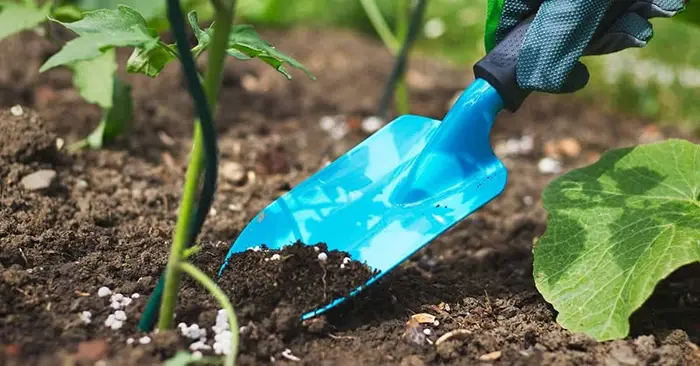
For established plants entering the flowering stage, top-dress bone meal around the drip line of the plant, scratch it lightly into the soil surface, and water in well. Apply at the first signs of bud development or when transitioning from vegetative to generative growth, using label-based rates and adjusting for your soil test phosphorus status rather than automatically applying heavy doses. Because the nutrient is slow-release, don’t expect rapid visible results — bone meal is a marathon input, not a sprint.
As a Bone Meal Tea or Root Drench
Liquid or slurry-style applications of bone-derived products can be useful for soil and soilless media when managed carefully. To make a simple bone meal tea for soil drench use, mix 2 tablespoons of bone meal into 1 gallon of water, stir thoroughly, allow heavier particles to settle or filter the solution, and apply directly at the root zone in beds, raised beds, or containers. This format can make nutrients available somewhat faster than solid surface applications and avoids the pest-attracting aroma of dry bone meal on the soil surface, but it is still not as immediately soluble as true liquid mineral fertilizers. For recirculating hydroponic systems and fine-orifice drip lines, purpose-built fully soluble phosphorus products are generally preferred to avoid emitter clogging and biofilm buildup.
For Bulbs
When planting spring or fall bulbs, add approximately ½ teaspoon of bone meal per medium-sized bulb directly into the planting hole and mix into the surrounding soil, or follow the product’s specific bulb-planting directions. This supports strong root establishment before winter dormancy and positions the plant for vigorous flowering in the first growing season.
What Plants Benefit Most from Bone Meal?
Almost all soil-grown plants benefit from adequate phosphorus, but bone meal has the highest return on investment with these crop types:
Flowering plants — including roses, amaryllis, and flowering annuals — depend heavily on phosphorus for bloom development and density. Alliums (garlic, onions, leeks) build better bulb structure with phosphorus support. Fruiting vegetables, especially tomatoes and peppers, use both the phosphorus and calcium in bone meal to help reduce physiological disorders like blossom end rot and support fruit cell development, assuming overall calcium and moisture management are sound. Root vegetables like carrots and beets benefit from root-zone phosphorus during establishment. Perennials and trees respond well to pre-season bone meal applications that build long-term soil phosphorus reserves, as long as cumulative P levels are monitored over time.
For deeper guidance on how phosphorus interacts with other nutrients and how to identify deficiencies, see our full guide on phosphorus for plants.
Drawbacks and Cautions
Like any fertilizer, bone meal requires thoughtful application. Its slow-release nature means it’s a poor choice for correcting an acute phosphorus deficiency — it simply won’t move fast enough to rescue a plant in immediate distress. For rapid correction, a liquid or fully soluble phosphorus supplement is more appropriate.
Bone meal also carries no potassium (0 in the K position), so it must be paired with other amendments to avoid potassium deficiency in high-demand crops. Review our guide on potassium for plants if you’re building a complete organic soil program. Nitrogen in bone meal is modest (often around 3–4%), so nitrogen-hungry crops in vegetative stage will need supplemental nitrogen from other sources.
Finally, dry bone meal on the surface of soil has a distinctive smell that can attract pets and wildlife. Always work it into the soil or cover it with a thin layer of fresh growing medium rather than leaving it exposed, and store bags sealed and out of reach of animals.
For Commercial Operations
Scaling Bone Meal in Organic Soil Programs
Commercial certified organic operations using bone meal in production soil programs should consider the following workflow:
- Pre-season soil program: Source bulk bone meal (25 lb and 50 lb formats) and apply across beds or fields at rates aligned with both your soil test phosphorus levels and product label recommendations, with 10 lbs per 100 sq ft often representing an upper general-purpose benchmark for low-P soils rather than a universal rate. For large-scale row crop operations, target deep-till incorporation (6–8 inches) to position phosphorus within the root development zone.
- Bloom-stage supplementation: Schedule a top-dress application at the transition from vegetative to generative stage, timed approximately 4–6 weeks before anticipated peak bloom to account for slow release. Use conservative, label-aligned rates per square foot and avoid stacking high applications season after season without soil test confirmation, as phosphorus accumulates over time. Scratch into the surface and water thoroughly.
- Microbial priming: Pair bone meal applications with Impello Biosciences Tribus root drenches or similar biological inoculants to accelerate microbial breakdown of slow-release phosphorus. This is particularly important in colder soil conditions (below about 60°F) where microbial activity — and therefore nutrient release rate — is suppressed.
- pH management: Monitor soil pH at least annually — and monthly in intensive programs — and adjust with tools such as HGV Condition pH Down for irrigation water when soil solution pH trends above about 6.5–7.0. Bone meal efficacy is non-linear with pH — a shift from 6.5 to 7.2 can dramatically reduce phosphorus availability even with adequate amendment rates, so proactive pH management is critical.
- Complementary nutrient stack: Bone meal is a phosphorus-calcium amendment, not a complete fertilizer. Build your base fertility program around a complete dry amendment program (see our dry organic amendments guide), and use bone meal as a targeted phosphorus boost or reserve builder rather than a primary nutrient source.
- Bone meal tea for fertigation: For operations using drip systems or irrigation, bone meal tea prepared at 2 tablespoons per gallon can be pre-steeped, allowed to settle, and carefully filtered (200-mesh minimum or finer) before introduction into non-recirculating drip or injector systems. Even with filtration, some operations may still prefer fully soluble phosphorus sources to minimize emitter maintenance. Always monitor EC after introduction and adjust accordingly, and avoid running particulate-rich solutions through recirculating reservoirs or fine emitters in high-stakes commercial environments.
Why Shop Bone Meal Fertilizers at HydroBuilder
HydroBuilder stocks a curated selection of OMRI-certified bone meal products across multiple brands and sizes, from small bags for home growers to bulk case formats for commercial operations. Every product ships fast with volume pricing available for large orders — request a quote here. Our team of growing specialists can help you build a complete organic soil program. Call us at 888-815-9763 or contact us online. Fast shipping. Expert support. Everything you need to grow.
Bone Meal FAQs
What does bone meal fertilizer do for plants?
Bone meal supplies slow-release phosphorus and calcium — two nutrients critical for root development, flowering, and fruiting. Phosphorus powers energy transfer and bloom production; calcium strengthens cell walls and supports structural integrity. Results from bone meal are gradual rather than immediate, as phosphorus releases over weeks to months as soil microbes break down the material under suitable pH and moisture conditions.
Commercial application: In soil-based organic programs, bone meal is most valuable as a pre-season phosphorus reserve builder and bloom-stage supplement. Pair with rhizobacteria inoculants to accelerate microbial breakdown and improve release rate, and validate application rates with routine soil tests.
How long does bone meal take to work in soil?
Bone meal is a slow-release amendment that typically begins releasing phosphorus within a few weeks of application and continues to release over several months under typical soil conditions (pH below 7.0, adequate moisture, soil temperatures above about 50°F, and active biology). At lower temperatures or in highly alkaline soils, breakdown can extend to a year or longer. It is not a fast-acting solution for acute deficiency correction.
Commercial application: Pre-schedule bone meal applications 4–6 weeks before anticipated high-demand growth periods to ensure phosphorus is available when plants need it most, and avoid relying on bone meal alone for emergency deficiency corrections.
Can you use too much bone meal?
Yes. Over-applying bone meal can drive phosphorus levels high enough to suppress beneficial mycorrhizal fungi in the soil and interfere with uptake of zinc, iron, and copper. Always test your soil before applying and follow label rates — for many garden situations, around 10 lbs per 100 square feet is a common upper-end general amendment rate for low-P soils, but commercial programs should tailor applications to soil test data and crop needs. Phosphorus toxicity, while less common than deficiency, is harder to reverse quickly.
Commercial application: Annual (or more frequent) soil testing is essential in commercial organic programs. Phosphorus accumulates in soil over successive seasons and does not leach like nitrogen. Track cumulative application rates across crop cycles and adjust downward as legacy phosphorus builds.
Is bone meal good for tomatoes?
Bone meal is an excellent tomato amendment when used in balanced programs. It delivers the phosphorus needed for strong root establishment and the calcium that helps reduce the risk of blossom end rot — a common disorder in fruiting vegetables linked to localized calcium deficiency and inconsistent moisture. Apply at transplant and again as plants approach flowering, ensuring soil pH stays between about 5.5 and 6.5 for effective uptake and that overall calcium and irrigation management are dialed in.
What's the difference between bone meal and blood meal?
Bone meal is primarily a phosphorus and calcium source (NPK commonly around 3-15-0). Blood meal is a nitrogen source (NPK often around 12-0-0 to 13-0-0). They serve completely different nutritional roles. Many organic growers use both in rotation: blood meal during vegetative growth when nitrogen demand is high, and bone meal during flowering and rooting phases when phosphorus demand peaks.
Can bone meal be used in hydroponic systems?
Bone meal in dry granule or powder form is generally not suitable for hydroponic recirculating systems, as undissolved particles can clog emitters and pumps and promote biofilm. Liquid bone meal or bone meal brewed as a tea — 2 tablespoons per gallon of water, filtered through a fine (around 200-mesh or finer) screen — can work as a root drench for coco and soilless media or in non-recirculating drip systems, but equipment maintenance and filtration become critical. For true hydroponics, purpose-built fully soluble liquid phosphorus supplements are usually more practical and reliable.
Does bone meal attract pests or animals?
Dry bone meal has an animal-derived scent that can attract dogs, raccoons, and other wildlife if left on the soil surface. Always work bone meal into the top 2–3 inches of soil or cover it with a layer of growing medium after top-dressing. Store unused bone meal in a sealed container away from pets and wildlife.
What is the NPK of bone meal fertilizer?
Most steamed bone meal products carry an NPK around 3-15-0, reflecting their strength as a phosphorus source with modest nitrogen and no potassium. Some formulations, such as Espoma Organic Bone Meal (4-12-0), carry slightly different ratios. Always check the specific product label, and note that fish bone meal products (for example, around 5-13-0) generally offer slightly higher nitrogen as well.
When should I apply bone meal — spring or fall?
Both can be appropriate depending on the crop. For annuals and vegetables, apply at soil preparation in spring before planting. For bulbs, apply at the time of fall planting. For established perennials, shrubs, and trees, apply in early spring and again at first signs of bud development as needed, guided by soil test phosphorus levels. Because bone meal releases slowly, timing it 4–6 weeks ahead of peak nutrient demand periods maximizes its effect.
Does bone meal work in alkaline soil?
Not effectively. Bone meal requires a soil pH below 7.0 to release phosphorus in plant-available forms. In alkaline soils (pH above 7.0), phosphorus binds to calcium and magnesium and becomes locked out of the root zone. If your soil tests alkaline, address pH first using an acidifying amendment or pH-correcting irrigation water before applying bone meal, and consider more soluble phosphorus sources if rapid correction is needed.