

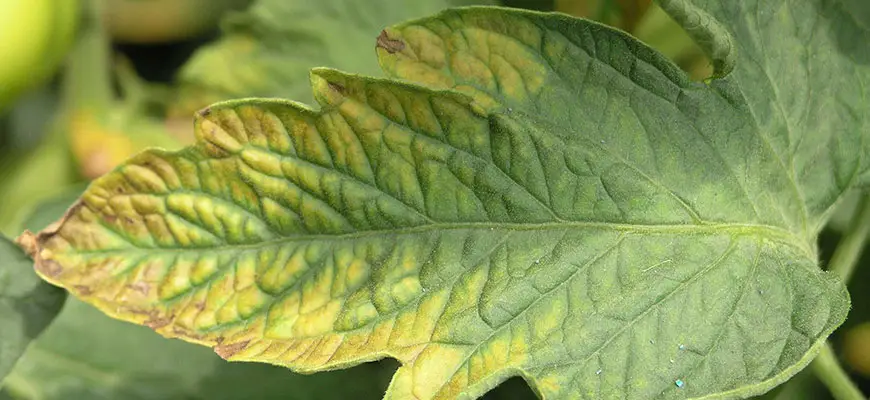
Potassium deficiency is one of the most common nutrient problems growers encounter — and one of the most frequently misdiagnosed. When a plant runs short on potassium (K), it can’t regulate water movement, produce energy efficiently, or build the structural proteins needed for flower development. The result is a cascade of visible symptoms that worsen quickly if left uncorrected.
Whether you’re growing in soil, coco, or a hydroponic system, understanding what potassium does, how to read the signs of deficiency, and how to actually fix it — rather than just throwing more fertilizer at the problem — will save you a lot of yield and frustration.
If you’re newer to nutrient management: most potassium deficiencies in controlled growing environments aren’t caused by a lack of potassium in your nutrient solution. They’re caused by pH being out of range, preventing the plant from absorbing the potassium that’s already there. Check your pH before adding anything.
What Potassium Does for Plants
Potassium is one of three primary macronutrients (alongside nitrogen and phosphorus) and one of the most metabolically active elements in plant biology.
At its core, potassium drives osmoregulation — the process by which plants control water and solute movement across cell membranes. When K is adequate, stomata open and close efficiently, transpiration is regulated, and nutrients move through the vascular system without restriction. When it’s deficient, those systems slow down or break down.
Specific functions include:
- Stomatal regulation: Potassium controls guard cells that open and close stomata. Low K means stomata can’t close properly, which accelerates water loss and heat stress.
- Photosynthesis and sugar transport: K activates enzymes involved in photosynthesis and drives the phloem loading that moves sugars from leaves to developing fruits, flowers, and roots.
- Protein synthesis: Adequate K supports amino acid and protein production — which directly affects tissue density, flower development, and overall vigor.
- Disease resistance: Plants with adequate potassium show improved resistance to certain fungal and bacterial infections, partly because they maintain stronger cell walls and tighter stomatal control.
When Do Plants Use the Most Potassium?
Plants absorb K throughout their life cycle, but two periods stand out. Early vegetative growth drives meaningful K uptake to support rapid cell expansion and root development. The primary high-demand period, however, is mid-to-late flowering, when potassium is critical for carbohydrate production, fruit and bud development, and terpene/resin synthesis — and when the plant’s K requirements increase substantially compared to veg.
This pattern explains a common grower frustration: plants that look fine through early veg suddenly show K deficiency symptoms at week 3 or 4 of flower. The demand spike outpaces the supply, particularly in systems where EC isn’t being stepped up to match the flowering stage.


Identifying Potassium Deficiency: Symptoms by Stage
Potassium deficiency shows up first on older, lower leaves — because potassium is mobile in the plant. When K is scarce, the plant pulls it from mature tissue and redirects it to actively growing shoots. By the time younger leaves show symptoms, you have a serious deficiency.
Early signs (older/lower leaves):
- Interveinal chlorosis — yellowing between the leaf veins while veins stay green
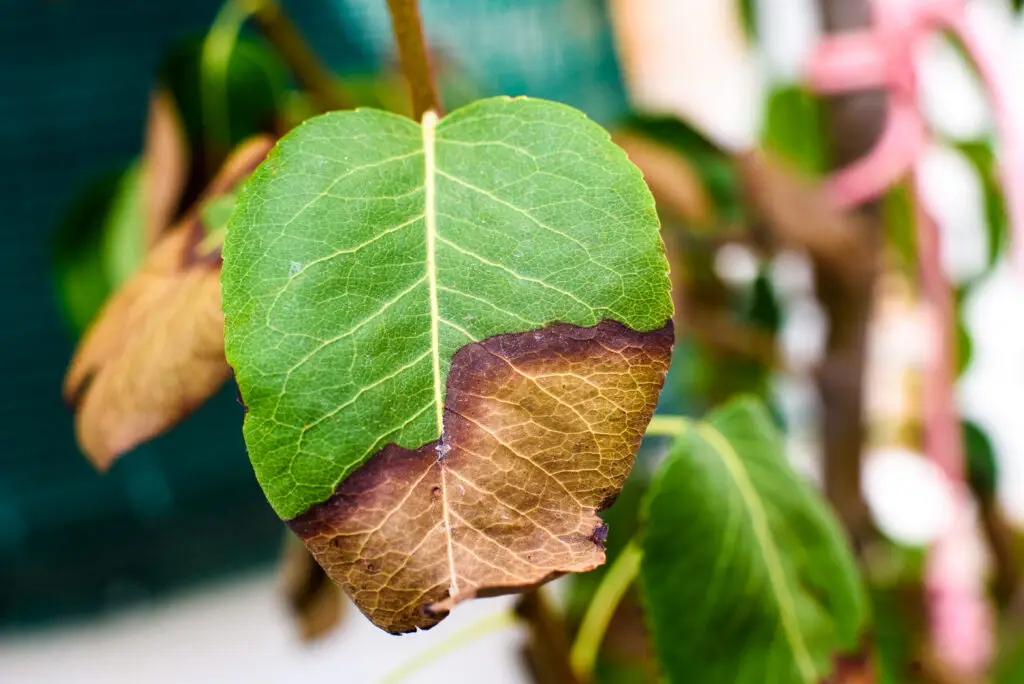
- Leaf edges and tips turn yellow, then brown
- Slight curling or cupping of leaf margins (often downward)
Mid-stage progression:
- Brown, dry necrosis spreads from the edges inward
- Leaves look scorched or “burned” at the margins
- Leaf tips develop rust-colored or purplish-brown necrotic spots
Advanced deficiency:
- Lower leaves die off and drop
- Symptoms progress upward to middle-canopy leaves
- Stems may soften in early stages, then become hard and brittle in severe cases
Potassium Deficiency vs. pH Lockout: Know the Difference
This is the most critical diagnostic step most articles skip. True potassium deficiency (too little K in the solution) looks identical to potassium lockout (K present but unavailable due to pH or ionic antagonism). Treating them differently is essential.
True K deficiency: EC or feeding rate is too low for crop stage; nutrient solution genuinely lacks sufficient potassium.
pH lockout: Maintaining pH within the optimal range is important for overall nutrient availability. For most crops in hydroponic and coco systems, the target range is 5.8–6.2; in soil, 6.0–6.5. While K itself remains soluble across a fairly wide pH range, running outside these windows can compromise uptake of other nutrients that work alongside K, and overall root health will suffer — making apparent K deficiency more likely.
Ionic antagonism (lockout from competing ions): High levels of calcium or magnesium in the solution can competitively block potassium uptake at the root sites. If you’ve been aggressively supplementing CalMag, check your K levels before assuming deficiency.
Diagnostic protocol: Before adding potassium, check and correct pH. Run at 5.8–6.2 for hydro/coco, 6.0–6.5 for soil. Test your runoff EC and input EC. If pH is correct and EC is adequate, then investigate K levels in your nutrient formulation.
Common Causes of Potassium Deficiency
Understanding what causes K deficiency helps you address the root issue rather than just chasing symptoms.
- pH out of range — Most common cause. Correct this first before any other intervention.
- Underdosing during flowering — Many base nutrient programs have adequate K for vegetative growth but become K-short at peak flower demand. Stepping up your feeding rate or switching to a bloom-specific formulation addresses this.
- Calcium/magnesium antagonism — Excessive Ca or Mg can block K absorption. This can happen when growers add heavy CalMag supplementation on top of a nutrient program that’s already calcium-forward.
- Excessive sodium in water supply — In hard water areas, high sodium levels can antagonize potassium at root uptake sites. An RO filtration system removes sodium interference and gives you a clean baseline.
- Root health issues — A damaged or oxygen-depleted root zone can’t absorb any nutrient efficiently, and K deficiency is often the first visible sign. Root rot, salt accumulation, or overwatering will manifest as apparent K deficiency.
- Coco-specific depletion — Raw coco coir naturally holds calcium and releases it slowly. In coco systems, this can create conditions where K is displaced from the exchange sites in the coco itself. Regular coco-specific watering and feeding protocols help prevent this. See our guide to coco vs. soil growing for more.
How to Fix Potassium Deficiency
Fixing potassium deficiency requires diagnosing the actual cause first. The correction strategy differs significantly between a true deficiency and a lockout situation.
Step 1: Adjust pH
If pH is out of range, correct it before anything else. Adding more potassium to a solution with broken pH won’t fix anything — it’ll just raise your EC and potentially create a new imbalance.
For hydroponic and coco systems, HGV Condition – pH Down uses phosphoric acid to lower pH safely without dilution. For raising pH, HGV Condition – pH Up is a 17% KOH (potassium hydroxide) formula — note that dilution is required due to its high reactivity, and it should be added after all nutrients are fully mixed.
Step 2: Evaluate Your Nutrient Program
If pH is correct, evaluate whether your current nutrient program delivers adequate K for your crop’s current stage.
The NPK ratio is your guide: potassium is the third number (K). A bloom formula with a high K number (like 0-10-26) is specifically formulated for peak flower-stage potassium demand. A veg formula used into flower may not supply enough K for the generative phase.
HGV Dry – Flower (0-10-26) is formulated to deliver precise concentrations of phosphorus, potassium, and sulfur optimized for the generative phase. When paired with HGV Base (14.5-0-0), the combined program provides the K levels and calcium balance needed through peak flower demand without creating the ionic antagonism that causes lockout.
For growers new to HGV: the three-part system (Flower + Base, or Grow + Base) is intentionally complete. You don’t need to add separate CalMag or potassium boosters on top of it — the ratios are already optimized.
Step 3: Flush and Reset If Needed
If you have significant salt accumulation or a suspected lockout from ionic imbalance, flushing your plants with pH-balanced water resets the root zone. For soil, flush with 3x the pot volume. For hydro, drain and refill with a fresh, properly pH’d nutrient solution. After flushing, reintroduce nutrients at a moderate EC and monitor recovery over 5–7 days.
Step 4: Kelp and Seaweed Supplementation
For growers looking to support recovery and overall K availability through organic supplementation, kelp and seaweed treatments provide a natural, quick-release K boost alongside a broad spectrum of trace elements and plant-available growth factors.
NPK Industries RAW Dry Kelp is a concentrated, water-soluble kelp powder that works in both soil and hydroponic applications. It can be used as a root drench or, in some cases, as a foliar application during the vegetative phase. It pairs well with compost teas and biological programs.
For soil growers seeking an organic, slow-release potassium source in amendment-heavy programs, Down to Earth Kelp Meal is an OMRI-listed option that works as a soil amendment or compost additive.


Potassium Sources by Growing System
Different growing setups call for different potassium sources. Here’s how to think about K supplementation across the most common systems.
Hydroponic and Coco Systems
In hydro and coco, you control 100% of potassium delivery through your nutrient solution — there’s no soil buffer. This means:
- Use a complete base nutrient with a clearly labeled K value
- Adjust feeding rates by growth stage (veg vs. flower K demand differs significantly)
- Maintain pH at 5.8–6.2 to maximize overall nutrient availability
- Test EC at both input and runoff regularly
A two-part system (Part A + Part B) or three-part system that includes a dedicated bloom formula will naturally scale K delivery to match your crop’s stage. See our guide to mixing plant nutrients for feeding sequence and EC management.
Soil and Amended Growing
In natural soil, up to 95% of potassium is bound in mineral form and unavailable to plants until it’s weathered or released through microbial activity. Effective strategies include:
- Potassium sulfate — More expensive than potassium chloride but preferable because it doesn’t contain chlorine; at higher application rates, potassium chloride can suppress beneficial soil microbial activity.
- Greensand — A mined mineral high in potassium. Slow release; good as a long-term soil conditioner.
- Kelp meal — Fast-acting organic K source. Good for addressing acute deficiencies in amended soil programs.
- Compost — Provides K in water-soluble form alongside beneficial biology, but adds N and P simultaneously, which can complicate targeted correction.
- Wood ash — Hardwood ash is a traditional K source that also raises pH; use cautiously in already-alkaline soils.
For diagnosing whether a deficiency is nutrient-related or pH-related in soil, a soil slurry test or runoff pH test is the most reliable first step.

Potassium Toxicity: Rare but Worth Understanding
True potassium toxicity is uncommon — plants struggle to absorb excess K from a root zone, and the threshold for genuine toxicity is high. However, elevated K can cause secondary deficiencies by antagonizing calcium, magnesium, iron, and zinc uptake.
If you’re seeing calcium or magnesium deficiency symptoms in a plant you’ve been feeding heavily with a high-K bloom booster, check your overall K levels before adding more CalMag. The issue may be antagonism from excess K, not an actual Ca or Mg shortage.
If K levels are genuinely too high (confirmed by solution testing or soil test), flushing your plants with plain, pH-balanced water will help reset ion levels in the root zone. Follow up with a complete nutrient solution at moderate EC once the flush is complete.
Reading NPK Labels for Potassium Content
The K value in any nutrient product is always the third number in the NPK ratio. Higher K numbers indicate more potassium relative to nitrogen and phosphorus.
- High-K bloom formulas (e.g., 0-10-26): Designed for peak flowering stage; high K supports carbohydrate production, bud density, and resin development
- Balanced veg formulas (e.g., 3-6-22): Still contain meaningful K for strong vegetative growth
- High-N veg formulas (e.g., 12-0-0): Calcium/nitrogen-forward, minimal K — supplement with a Part A bloom formula in flowering
When reading product labels, consult the MSDS or full guaranteed analysis for potassium’s exact form (potassium sulfate vs. potassium chloride matters for soil microbial health) and to understand total K delivered per application rate.
For Commercial Operations: Potassium Management at Scale
This section is for licensed cultivators and commercial CEA facilities. Home and hobby growers can find everything they need in the sections above.
Potassium deficiency in a commercial facility is rarely a formulation problem. At scale, the variables that cause K deficiency are almost always systemic: pH drift across irrigation zones, EC inconsistency between tanks, or calcium antagonism from over-supplementing CalMag.
Commercial Diagnostic Protocol
Before adjusting any nutrient formulation, run this sequence:
- Pull input and runoff EC/pH from multiple zones — K deficiency presenting in specific benches or rows often indicates pH drift or irrigation inconsistency, not a formulation issue.
- Check Ca:K ratio in your base program — High-calcium programs that use significant CalMag supplementation can create chronic K antagonism. Target Ca:K ratio of approximately 2:1 to 3:1 in solution.
- Tissue test if you’re seeing facility-wide symptoms — Tissue testing gives you actual K uptake data, not just what’s in solution.
- HydroBuilder’s Grow Diagnostics service offers professional tissue and solution testing with agronomic interpretation.
Potassium in a Commercial Nutrient Program
At commercial scale, program consistency matters more than any single product. HGV Nutrients was built for exactly this use case.
HGV Dry – Flower (0-10-26) provides precise K concentrations formulated for the generative phase. The 0-10-26 profile delivers the P:K ratio that supports dense floral development and secondary metabolite production, including terpene synthesis. In a 25 lb bulk format, it mixes at 2.5 lbs/gallon concentrate for large-scale reservoir management.
HGV Dry – Grow (3-6-22) delivers strong K support through vegetative growth, promoting uniform canopy development and the root architecture needed to sustain peak K uptake in flower.
HGV Dry – Base (14.5-0-0) is the constant in the HGV system — used throughout both veg and flower, it delivers the calcium and nitrogen that pair with Grow or Flower to create a complete, balanced solution. The Ca:K ratio across the full program is optimized to prevent antagonism without CalMag supplementation.
HGV Condition – Level (3% Potassium Silicate) is worth noting here: it delivers potassium in silicate form, which strengthens cell walls and improves stress resistance while providing a mild pH buffer. It must be added first in the mixing sequence to prevent precipitation. For facilities running high stress in flower (high PPFD, high VPD), silica-form potassium has demonstrated benefits for structural integrity.
Commercial accounts with Hydrobuilder get access to bulk pricing and agronomic support for building program-level nutrient SOPs. Contact HydroBuilder’s commercial team to discuss nutrient programs at facility scale.
Why Shop at HydroBuilder for Plant Nutrients
HydroBuilder is a co-op-backed retailer carrying the deepest inventory of commercial-grade nutrients, kelp supplements, and potassium-specific products available online. Our team includes active growers who use these products in real cultivation environments — so product recommendations come from genuine operational experience, not just catalog copy.
We carry HGV Nutrients — a private label line developed over 30+ years of commercial cultivation — alongside professional-grade brands including FoxFarm, NPK Industries, Down to Earth, and Maxicrop. Our commercial accounts get dedicated agronomic support for building or troubleshooting nutrient programs at scale.
Visit Hydrobuilder.com and browse all plant nutrients to find the right K source for your system and stage.
Example: FAQs
Q: What does potassium deficiency look like in plants?
A: Potassium deficiency first appears on older, lower leaves as interveinal chlorosis (yellowing between veins), followed by brown, dry necrosis at leaf tips and edges. Leaves may curl or cup downward. In severe cases, lower leaves die off and symptoms progress upward through the canopy, with stunted overall growth and reduced flower development.
Expanded: Because potassium is mobile in the plant, early K deficiency is hard to distinguish from normal leaf senescence. The key diagnostic marker is the pattern — marginal and tip burn on older leaves while younger tissue remains healthy early on. Advanced deficiency is harder to miss: scorched edges, brittle or soft stems, and in flowering crops, noticeably loose or light bud structure.
Commercial application: At commercial scale, if K deficiency symptoms are appearing in specific zones rather than uniformly, suspect irrigation inconsistency or pH drift before changing your formulation.
Q: How do you fix potassium deficiency in plants?
A: First, check and correct pH — most K deficiency in controlled environments is actually pH-induced lockout, not a true shortage. If pH is correct, evaluate whether your bloom nutrient formula provides adequate potassium for your crop’s current stage, then increase K delivery through a high-K bloom formulation or kelp supplement.
Expanded: Adding more potassium to a solution with out-of-range pH won’t fix the problem. For hydroponic and coco systems, maintain pH at 5.8–6.2 to ensure optimal overall nutrient availability. In soil, maintain pH at 6.0–6.5. Only once pH is confirmed correct should you evaluate the K concentration of your nutrient program.
Commercial application: Facilities experiencing recurring K deficiency should audit their Ca:K ratio. Aggressive CalMag supplementation on top of a calcium-forward base nutrient can create chronic K antagonism. Tissue testing confirms whether the issue is uptake efficiency or formulation.
Q: What causes potassium deficiency in plants?
A: The most common cause is pH being out of range, which can disrupt overall nutrient uptake even when potassium is present in the solution. True causes include under-dosing for crop stage (especially at peak flowering), calcium or magnesium antagonism, root zone damage, or, in soil, excessive binding of K to mineral soil particles.
Expanded: In hydroponic systems, ionic antagonism is often the overlooked factor — high Ca or Mg concentrations actively compete with K at root uptake sites. This is frequently triggered by over-supplementing CalMag rather than integrating calcium naturally through a complete base nutrient. High sodium in source water can also block K absorption; an RO filter solves this.
Commercial application: In coco systems, K depletion from the coco substrate itself is a real phenomenon in early crop cycles. Buffering coco correctly before use — or using pre-buffered coco — prevents this from becoming a recurring deficiency issue.
Q: Can too much potassium hurt plants?
A: True potassium toxicity is rare — plants can tolerate relatively high K levels before showing direct symptoms. However, excess K creates secondary deficiencies by blocking calcium, magnesium, iron, and zinc absorption at root sites. If you’re seeing Ca or Mg deficiency in a plant receiving heavy bloom supplementation, elevated K antagonism may be the cause.
Expanded: Before adding more CalMag to address what looks like calcium or magnesium deficiency, verify that your K levels aren’t already elevated. Conduct a solution EC test and evaluate your NPK ratios. If K is high, flush the root zone with pH-balanced water before reintroducing nutrients at a balanced ratio.
Q: What's the difference between potassium deficiency and pH lockout?
A: The symptoms look identical — both cause marginal chlorosis and necrosis on older leaves. The difference is the cause: true K deficiency means your nutrient solution doesn’t contain enough potassium, while pH lockout means the K is there but unavailable because pH or ionic competition prevents it from being absorbed. Always test and correct pH first before assuming a deficiency and adding more nutrient.
Commercial application: Solution EC testing and a tissue test together give you a definitive answer. High K in solution + K deficiency symptoms in tissue = lockout. Low K in solution + K deficiency symptoms = true deficiency.
Q: When do plants need the most potassium?
A: Plants have two high-K demand periods: early vegetative growth, when rapid cell development drives meaningful K uptake for structural and metabolic support, and mid-to-late flowering, when potassium demand increases substantially to drive carbohydrate production, bud density, and terpene synthesis. The flowering stage represents the peak demand window — many growers under-supply K during this phase because their base veg formula isn’t designed for flower-stage demand.
Q: Is kelp a good source of potassium for plants?
A: Yes — kelp and seaweed extracts provide quick-release, plant-available potassium alongside a broad spectrum of trace minerals and naturally occurring growth factors. Kelp meal works well in soil and amended programs as a dry amendment, while liquid kelp concentrate can be used as a root drench or foliar spray in vegetative growth. It’s particularly useful for organic programs seeking a natural K boost or for supporting recovery from mild K deficiency.
Q: How does potassium deficiency affect flowering plants specifically?
A: In flowering plants, potassium deficiency directly reduces bud density, terpene production, and overall flower quality. K drives the carbohydrate transport system that feeds developing flowers, and it activates the enzymatic processes involved in secondary metabolite synthesis. Commercial flowering crops showing mid-to-late flower K deficiency will typically show lighter, looser bud structure and reduced aromatic intensity — problems that compound across the facility in a multi-room operation.
Commercial application: In licensed cannabis facilities, K deficiency in flower is a margin problem as much as a yield problem. Insufficient K at weeks 4–7 of flower translates directly to reduced terpene expression and lower premium flower yield.
Q: What pH range should I maintain to avoid potassium lockout in hydroponics?
A: For hydroponic and coco systems, maintain solution pH between 5.8 and 6.2 for optimal overall nutrient availability. In soil, the effective range is 6.0–6.5. Outside these windows, uptake of multiple nutrients can be compromised, which may present as apparent K deficiency even when solution K levels are adequate. Use a calibrated pH meter and check pH at both input and runoff regularly — pH drift is the leading cause of apparent K deficiency in controlled environments. See our guide to measuring and adjusting pH for more.
Q: How long does it take for plants to recover from potassium deficiency?
A: Plants typically begin showing visible recovery within 5–10 days of correcting the underlying cause (pH correction or nutrient adjustment). Existing necrotic damage on affected leaves won’t reverse — those leaves are permanently damaged. What you’re watching for is the halt of symptom progression and healthy growth on new tissue. In severe deficiencies, full canopy recovery can take 2–3 weeks.
Commercial application: If a flowering crop is 3–4 weeks from harvest and K deficiency symptoms appear, prioritize pH correction and a nutrient step-up over aggressive intervention — recovery time may exceed your crop cycle. At that stage, preventing further progression matters more than attempting reversal.