

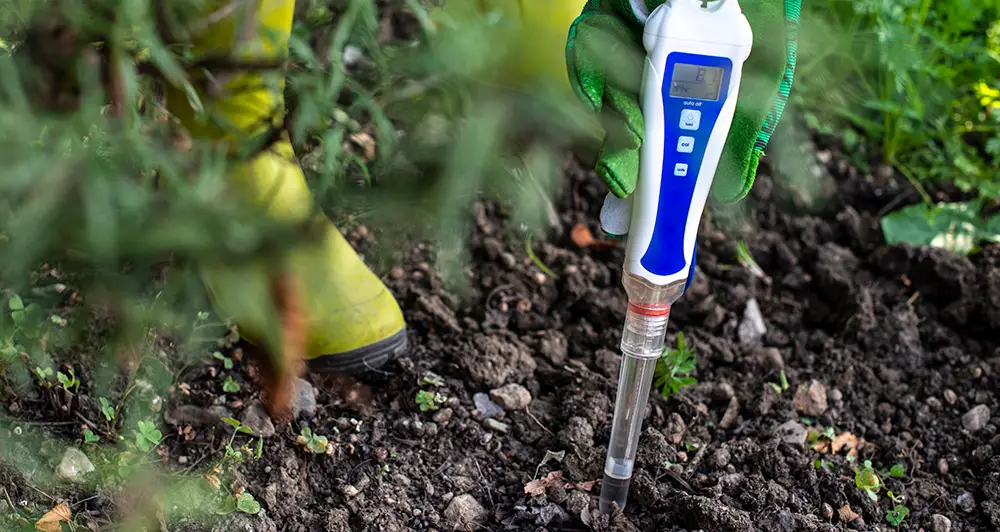
pH is one of the most controllable variables in your grow — and one of the most commonly overlooked causes of avoidable yield loss. Get it within the correct range, and your plants can efficiently absorb the nutrients you provide. Get it wrong by even half a point for your specific medium, and key nutrients become much less available at the root zone no matter how much you add. This guide covers what pH is, why it matters, how to test and calibrate accurately, how to adjust safely, and how to keep it stable across the entire grow cycle.
Whether you’re running a soil garden, a coco setup, or a recirculating hydro system, the core chemistry is the same — but the optimal target ranges are not.
What Is pH and Why Does It Matter for Plant Growth
pH measures the concentration of hydrogen ions in a solution on a logarithmic scale from 0 to 14. A pH of 7.0 is considered neutral, values below 7.0 are acidic, and values above 7.0 are alkaline (also called basic). Because the scale is logarithmic, a solution at pH 5.0 is ten times more acidic than one at pH 6.0, not just slightly more acidic.
For plants, pH matters because it directly influences nutrient solubility and root uptake. Most macro and micronutrients are only readily water‑soluble and plant‑available within specific pH windows. Outside those windows, nutrients such as nitrogen, phosphorus, potassium, calcium, iron, and manganese can form less soluble compounds or change chemical form at the root interface. The plant then registers this as a deficiency even when the nutrients are physically present in your reservoir or soil. This phenomenon is called nutrient lockout, and in controlled‑environment agriculture a substantial share of apparent deficiency symptoms are ultimately traced back to pH drift rather than underfeeding.
Optimal pH Ranges by Grow Medium
The right target pH depends on your grow medium and irrigation strategy. These targets are not interchangeable. Applying hydroponic pH targets to a soil grow — or vice versa — is a common mistake that creates exactly the deficiency symptoms you’re trying to avoid.
Soil
Target range: 6.0 – 7.0, with 6.2 – 6.8 as the practical sweet spot for most soil‑grown crops, including cannabis.
Soil has natural buffering capacity from organic matter, microbial populations, and mineral interactions. This buffering is what makes soil relatively forgiving — it resists rapid pH swings from a single irrigation. However, that same buffering means corrections take longer to take effect, so amending soil pH is measured in days and multiple waterings or irrigations rather than hours.
For cannabis specifically in soil, keeping the root zone between roughly 6.0 and 7.0 aligns with most nutrient availability charts used in horticulture. Iron and manganese availability tends to drop sharply as pH rises well above 7.0, while phosphorus solubility declines more quickly as pH falls significantly below about 6.0, so extended time outside this band increases the risk of lockout.
Coco Coir
Target range: 5.8 – 6.3, with 5.9 – 6.1 as a tight daily target for most cannabis and high‑value crops in coco.
Coco has much lower buffering capacity than a well‑amended soil and behaves more like a hydroponic substrate, which is why pH corrections in coco usually show up within one to two irrigations. Because coco is typically watered at high frequency, even modest pH drift can compound quickly over time, so aiming for a tighter band than you would in soil improves consistency.
One important coco‑specific note: calcium and magnesium uptake are particularly sensitive to both pH and cation exchange behavior in coco. Keeping pH between about 5.9 and 6.1, combined with appropriate Ca/Mg supplementation and attention to source‑water hardness, tends to optimize Ca/Mg availability, which is why many coco‑related “deficiencies” are ultimately traced back to pH management and base water quality rather than the absolute amount of supplement applied.
Deep Water Culture (DWC) and Recirculating Systems (NFT, RDWC)
Target range: 5.5 – 6.2, with 5.8 – 6.0 as a widely used operating range for cannabis in DWC and similar recirculating systems.
Pure hydroponic systems have essentially no buffering capacity in the root zone. The pH in a recirculating reservoir can shift close to a full point overnight in small or heavily fed systems as plants absorb nutrients and exchange ions. Daily monitoring is standard practice in DWC and other recirculating systems, not a nice‑to‑have. In larger RDWC or NFT systems, pH stability is tightly linked to reservoir management — topping off with pH‑adjusted water rather than plain water helps prevent concentration‑driven drift.
Rockwool and Inert Hydroponic Media
Target range: 5.5 – 6.5, typically aligned with the same target range you use for your hydroponic nutrient solution.
Rockwool has a naturally alkaline pH when new, commonly in the 7.0–8.0 range depending on brand and batch, due to residual lime from manufacturing. It must be pre‑soaked in pH‑adjusted solution (around 5.5 – 6.0) before use to bring the media into a suitable range. Skipping this step is one of the most common reasons new rockwool grows underperform or show stress during the first two weeks.
Summary pH Range Table
| Grow Medium | Acceptable Range | Optimal Sweet Spot |
|---|---|---|
| Soil | 6.0 – 7.0 | 6.2 – 6.8 |
| Coco Coir | 5.8 – 6.3 | 5.9 – 6.1 |
| DWC / Recirculating Hydro | 5.5 – 6.2 | 5.8 – 6.0 |
| NFT | 5.5 – 6.5 | 5.8 – 6.2 |
| Rockwool | 5.5 – 6.5 | 5.8 – 6.0 |
| Aeroponics | 5.5 – 6.0 | 5.8 – 6.0 |
These ranges reflect common practice for cannabis and similar high‑value crops, with the understanding that specific cultivars and nutrient programs may tolerate slightly different setpoints within the same general bands.
What Happens When pH Is Too High or Too Low
pH Too Low (Acidic)
Below the optimal range for your medium, availability of phosphorus, calcium, and magnesium typically decreases, and some micronutrients can become excessively soluble, increasing toxicity risk. You may see symptoms including interveinal chlorosis (yellowing between leaf veins), purple stems, reduced root mass, and slow overall growth. In recirculating systems, persistently low pH can also correlate with increased biological pressure from organisms such as Pythium when other environmental conditions favor disease.
pH Too High (Alkaline)
Above the optimal range, iron, manganese, zinc, and boron become progressively less available, often leading to vivid chlorosis on new growth while older leaves remain comparatively green — a pattern growers sometimes mistake for simple nitrogen deficiency. As pH moves much above 7.0 in most soilless and hydroponic systems, availability of phosphorus and several other elements also declines, and certain combinations (for example phosphorus with calcium) may precipitate into less soluble forms.
The Nutrient Lockout Trap
The critical mistake is assuming every visual deficiency is caused by underfeeding. When a grower sees deficiency‑like symptoms and immediately increases the rate of the suspected nutrient while the root‑zone pH is out of range, the extra nutrient often does little or nothing for the plant and instead increases salt load or precipitation risk. The correct sequence is always: verify pH first, adjust pH into the correct range for your medium, then evaluate whether additional supplementation is actually needed.
See our full guide to diagnosing nutrient deficiencies for symptom‑by‑symptom identification tied to pH trends across different media.
How to Test pH: Pens vs. Drops vs. Strips
Getting an accurate pH reading starts with using a tool appropriate to your application and required precision.
Digital pH Pens and Meters
Digital pH meters are the standard in any serious growing operation. Quality pens read to two decimal places, respond within seconds, and when properly calibrated, are typically accurate to about ±0.02–0.05 pH across their working range. For hobby growers checking a single reservoir, a good handheld pen is usually sufficient. For commercial operations monitoring multiple zones or reservoirs, inline and continuous‑monitoring solutions become important for process control.
The most commonly used pH pens at this scale:
Bluelab pH Pen — The workhorse for hobby and small commercial grows. Rugged, water resistant, and straightforward to calibrate. The checkmark indicator on the display tells you when recalibration is due based on usage time.
Bluelab OnePen pH/EC/Temp Meter — Combines pH, EC, and temperature in a single probe, which is useful when you’re tracking nutrient concentration and solution temperature alongside pH. This is particularly useful in coco and hydro applications where EC and temperature management is critical.
For growers who want a fully featured benchtop solution with data logging and Wi‑Fi connectivity, the Bluelab Guardian Monitor With Wi-Fi provides continuous reservoir monitoring and trend data across pH, EC, and temperature.
For a broader comparison of available meters at different price points and feature sets, see our complete guide to the best pH testers for soil and hydroponics.


pH Drop Tests (Liquid Indicator)
pH drop tests use a colorimetric chemical indicator — you add a few drops to a water sample, compare the resulting color to a reference chart, and read the approximate pH. Typical accuracy is around ±0.5 pH, which is adequate to confirm whether you are broadly in or out of range but not precise enough for fine adjustments in systems where you care about differences of a few tenths. They are useful as a quick field check or backup when a digital pen is unavailable or awaiting calibration.
The General Hydroponics pH Control Kit includes both a test indicator and pH Up/Down solutions — a complete starter setup for growers new to pH management.
pH Test Strips
pH test strips use treated paper that changes color in contact with the sample; you then compare this color to a printed scale. Strips are generally the least accurate option for horticulture — practical resolution is typically 0.5 to 1.0 pH — but they’re inexpensive and can be useful for rough checks in soil and irrigation water where you only need to know if you are near neutral versus strongly acidic or alkaline. For hydroponic or coco applications where you need to keep the root zone within a narrow band (for example 5.8–6.2), a calibrated digital pen is strongly recommended over strips.
How to Calibrate Your pH Pen
A pH pen that hasn’t been calibrated recently can be more problematic than having no meter at all, because it gives a false sense of accuracy. Calibration corrects for electrode drift caused by age, residue buildup, and temperature variation. This section applies to most digital pH pens including Bluelab, Hanna, and similar meters.
What You Need
- Clean distilled or RO water (for rinsing)
- pH 7.0 calibration solution
- pH 4.0 calibration solution (or pH 10.0 if you regularly measure above 7.0)
- Storage solution (to store the probe between uses)
Bluelab 7.0 pH Calibration Solution and Bluelab 4.0 pH Calibration Solution are available individually or as part of maintenance kits.
Never reuse calibration solutions. Once used, buffer solutions are exposed to contamination and CO2 absorption from the air. Pour out a small amount into a separate cup for each calibration, use it, and discard after use.
When to Calibrate
- Before first use
- At least every 30 days during regular use; heavy‑use commercial environments may choose to check calibration weekly
- After changing batteries (where applicable)
- After deep cleaning the probe
- Any time readings appear inconsistent or do not match expectations, or when they disagree with a known‑good reference solution
Calibration Steps (Two-Point)
Step 1: Clean the probe. Rinse the probe tip in clean distilled or RO water. If the probe appears cloudy or has visible deposits, clean it per the manufacturer’s instructions before calibrating.
Step 2: Hydrate the probe. If the probe has been stored dry or is new, hydrate it in pH 7.0 solution or dedicated storage solution for 15–30 minutes before calibrating to recondition the glass membrane.
Step 3: First calibration point — pH 7.0. Rinse the probe in clean water. Place the probe tip in pH 7.0 calibration solution and wait for the reading to stabilize. Press the CAL button according to your meter’s instructions until the display confirms acceptance at 7.0.
Step 4: Rinse. Rinse the probe in clean distilled water between calibration solutions. Cross‑contaminating buffer solutions can distort their pH and compromise calibration.
Step 5: Second calibration point — pH 4.0 or 10.0. Place the probe in pH 4.0 calibration solution (or pH 10.0 if you routinely measure alkaline solutions). Wait for the reading to stabilize, then initiate calibration for the second point. When the display confirms acceptance at 4.0 or 10.0 and shows the appropriate indicator, the two‑point calibration is complete.
For three-point calibration: Repeat with pH 7.0, then 4.0, then 10.0 in sequence if your meter supports it. Three‑point calibration is useful when you require maximum accuracy across a wide working range.
Step 6: Store properly. Never store the pH probe dry. Use a proper probe storage solution — such as Bluelab KCl storage solution or a small amount of pH 7.0 buffer — to keep the probe membrane hydrated between uses. A dried‑out probe tends to give erratic readings and usually has a shortened service life.
How to Measure pH: Solution, Soil, and Runoff
Measuring Nutrient Solution (Hydro and Coco)
- Stir or agitate your reservoir or mixed nutrient solution thoroughly before testing, as nutrients can stratify.
- Rinse the probe in clean water, then submerge the tip in the solution.
- Hold the probe in a central location away from edges, air stones, and feed lines to avoid localized variations.
- Wait for the reading to fully stabilize — this typically takes 10 to 30 seconds, depending on the meter.
- Record the reading and compare it with your target range for the specific system.
Measuring Soil pH
Soil pH is measured differently depending on your tool. For a standard liquid pH pen, collect a small soil sample, mix it with distilled or RO water at roughly a 1:1 ratio by volume, stir well, let it settle for a minute, then test the liquid portion. A dedicated soil pH pen like the Bluelab Soil pH Pen or Hanna GroLine Direct Soil pH Tester can be inserted directly into moist growing medium following the manufacturer’s guidelines.
Measuring Runoff (Coco and Soil)
Runoff pH tells you what is happening at the root zone — not just what you’re adding to the top of the pot. In coco especially, testing runoff is important because the medium can drift independently of your input solution.
Pour a measured volume of pH‑adjusted nutrient solution or water into the container and collect the water that drains from the bottom. Test the pH of that runoff. If your runoff pH is significantly lower than your input pH (more than about 0.3–0.5 points), the root zone is trending acidic. If it’s higher, the medium is trending alkaline relative to your input. You can then adjust subsequent irrigations to gently steer the root zone back into the ideal band.
Tracking input versus runoff pH over time is one of the most reliable early‑warning tools for root zone issues — and one of the practices that separates consistent growers from reactive ones.
How to Adjust pH: pH Up, pH Down, and Avoiding Overshoot
The Tools: pH Up and pH Down
pH adjusters are concentrated acid or base solutions used to raise or lower the pH of your nutrient solution. The most commonly used products in horticulture are based on phosphoric acid for pH Down and potassium hydroxide for pH Up.
HGV Condition – pH Down — A phosphoric acid‑based product formulated for direct use without further dilution. It is designed to lower solution pH and help stabilize the root zone environment when used as directed.
HGV Condition – pH Up — Contains 17% potassium hydroxide (KOH) as an effective pH raiser. Because of its high reactivity, you should dilute it in a small volume of water before adding it to your reservoir and always add it after all nutrients are fully mixed to minimize localized reactions.
HGV Condition pH products are compatible with most major nutrient lines, not just HGV nutrients, when used as directed on the label.
For commercial‑volume operations, both products are available in larger container sizes. General Hydroponics pH Down and General Hydroponics pH Up are widely used alternatives with similar roles.


The Adjustment Process
Add nutrients first, then adjust pH. Nutrients can change the pH of water significantly, especially concentrated multi‑part formulations. Add all nutrients to your water, mix thoroughly, and then take a baseline pH reading before adding any adjuster.
Go slowly. pH adjusters are highly concentrated. Start with a small dose (for example, 1 mL per gallon as a test baseline with a given product), thoroughly mix, then re‑test before adding more. It is far easier to add a bit more adjuster than to correct an overshoot.
Do not chase your pH with the opposite adjuster. If you overshoot — for example, dropping below your target by adding too much pH Down — avoid immediately adding pH Up to correct. Repeated Up/Down additions increase salt load and can cause localized precipitation of nutrients, making the solution less stable. Instead, dilute the overall solution by adding fresh water, or start a fresh batch if the total volume and crop value make that practical. This is particularly important in smaller reservoirs where composition can shift quickly.
Allow mixing time. After adding an adjuster, mix thoroughly and wait 2–3 minutes before testing. Large reservoirs especially need time to fully incorporate the adjuster before you can get a representative reading.
Record your adjustments. Track how much adjuster you add per gallon to reach your target pH with a given water source and nutrient recipe. Once you’ve dialed in your specific water and formula, adjustments become repeatable — you’ll have a good estimate of how much you need before you even test, and unexpected changes in required dose can be an early indicator of a water‑quality or meter‑calibration issue.
pH and Nutrient Availability: Understanding the Chart
Most growers have seen a nutrient availability chart — the one that shows different nutrients as bars of varying thickness across a pH scale. While exact curves vary with the medium and nutrient formulation, the main takeaways are similar across cannabis and many other crops.
- Nitrogen, phosphorus, and potassium are broadly available across roughly 6.0–7.0 in soil, with availability declining more noticeably below about 5.5 and above about 7.5.
- Calcium and magnesium are most available between approximately 6.0 and 7.5 in soil and soilless mixes, with significant lockout risk at lower pH values.
- Iron, manganese, zinc, copper, and boron tend to be most available in the 5.0–7.0 range, with iron becoming notably more difficult to uptake above roughly 7.0 in many media.
- Molybdenum is an outlier — its availability generally increases at higher pH, which is why mild molybdenum deficiency is relatively uncommon in slightly alkaline soils even when other micronutrients are limited.
For cannabis growers, the overlap zone where all essential nutrients are reasonably available at the same time is narrower than many people assume. In hydroponic nutrient solutions used with inert media, a practical compromise range where most nutrients remain soluble and root‑available is about 5.8 – 6.2, which is why common recommendations for DWC cluster around 5.8–6.0 rather than a wider range.
For more on the relationship between pH, nutrients, and feeding strategy, see our guide on nutrients and pH.
Common pH Problems and How to Fix Them
Problem: pH Keeps Dropping in the Reservoir
This is one of the most common complaints in DWC and recirculating systems. As plants take up nutrients — especially ammonium‑based forms of nitrogen — they can release hydrogen ions into the solution, lowering pH. CO2 from root and microbial respiration dissolves into the water to form carbonic acid, and algae growth can also contribute to acidification in reservoirs that are exposed to light.
Fixes:
- Increase reservoir top‑off frequency so that solution volume does not drop too low between fills. As reservoir volume falls, remaining solution becomes more concentrated and pH swings can accelerate.
- Keep the reservoir light‑proof or covered to prevent algae growth.
- In larger systems, consider automated pH dosing tied to continuous monitoring rather than relying on infrequent manual corrections.
- Review your nutrient program; switching from formulas with a higher proportion of ammonium nitrogen to more nitrate‑dominant formulations can significantly reduce downward pH drift in hydroponics.
Problem: pH Crashes After Transplant into Coco
This is a coco‑specific phenomenon. New coco, even when pre‑rinsed and “buffered,” can temporarily alter solution pH as it exchanges cations with the root zone and solution, particularly in the early stages after transplant.
Fix: Pre‑soak and buffer your coco thoroughly before transplanting. Water heavily with nutrient solution adjusted to about 5.8–6.0 until runoff pH is stable over at least two consecutive irrigations. Check both input and runoff pH for the first week so you can see when the medium has settled into its working range.
For a full deep‑dive into managing coco as a medium, including calcium and magnesium management in relation to pH, see our guide to growing in coco.
Problem: pH Pen Reads Inconsistently
Erratic or clearly incorrect readings from a digital pH pen are almost always a calibration or probe‑maintenance issue before they are a true meter failure.
Fix sequence:
- Clean the probe with the manufacturer’s recommended cleaning solution or a mild acid/alkali regimen, then rinse thoroughly with distilled water.
- Hydrate the probe for 15–30 minutes in pH 7.0 solution or dedicated storage solution.
- Recalibrate using fresh buffer solutions at the points recommended for your meter.
- If accuracy is still poor after a fresh calibration using known‑good buffers, the probe itself has likely reached the end of its service life. Most pH probes are consumable items with a typical lifespan of 1–2 years with regular use; replacing the probe is usually all that is needed.
Problem: Soil pH Won't Change Despite Amendments
Soil is highly buffered and resists rapid pH changes. Single applications of pH‑adjusting materials (sulfur to lower pH, lime to raise pH) often take weeks to produce measurable change in the root zone, especially in high‑CEC soils.
Fix: Re‑test 7–10 days after applying amendments and continue to water with appropriately pH‑adjusted irrigation water to help drive the change through the profile. For significant shifts in heavily buffered soils, multiple amendment applications over several weeks or months may be needed, and soil testing through a lab can help avoid overshooting.
Tips for Keeping pH Stable Long-Term
Know your source water. Hard water with high alkalinity will constantly push your solution pH up and act as a buffer against pH change. Test your tap or well water for both pH and alkalinity at least once (or use an RO system) so you know your starting point every time you mix nutrients.
Always pH‑adjust your top-off water. Topping off a reservoir with plain water dilutes nutrients and shifts pH simultaneously. pH‑adjust every top‑off addition, even between full reservoir changes, to keep overall pH in your desired band.
Track input and runoff pH together. The difference between them tells you how the medium is behaving. A growing gap indicates that something is accumulating or being consumed in the root zone — usually salts, bicarbonates, or organic acids.
Calibrate your pen regularly. As a baseline, calibrate monthly during active use. In high‑value or mission‑critical operations, more frequent checks can be warranted. A pen that reads 0.2 high means every “correct” reading you’ve made was actually 0.2 pH above target, which can matter in sensitive hydro systems where you’re aiming for a tight 5.8–6.0 band.
Keep notes. The amount of pH Down needed to reach target in your specific water with your specific nutrient formula tends to be consistent from batch to batch. Recording this eliminates guesswork and provides an early warning when the required dose suddenly changes, indicating possible water‑quality or equipment issues.
For large operations: Automated pH dosing integrated with your fertigation system eliminates manual correction. The TrolMaster Aqua-X Drop-In/Inline pH Sensor provides continuous reservoir pH monitoring compatible with TrolMaster automation systems, enabling automated alerts and corrections when pH drifts outside set parameters.
For Commercial Operations: pH Management at Scale
At commercial scale, pH errors compound quickly. A half‑point drift in a 500‑gallon reservoir affects every plant on that irrigation line at once. Manual daily monitoring can work for small facilities, but larger operations benefit from systematic, instrumented approaches.
Zone-level monitoring becomes important in multi‑zone facilities. A centralized reservoir at the correct pH can still deliver out‑of‑range solution to specific zones if distribution plumbing, substrate, or localized fertigation practices push pH in one direction. Testing runoff or substrate solution at representative points in each zone — not just the central reservoir — is a baseline best practice.
Automated inline pH monitoring — using sensors like the TrolMaster Aqua-X Inline pH Sensor — allows real‑time alerts and automated dosing integration without manual reservoir testing at every irrigation event. This kind of inline monitoring is standard in many commercial coco drip‑to‑waste and rockwool operations.
Dosatron-integrated pH dosing offers an efficient approach for large‑volume operations. By using proportional injection with Dosatron units, pH adjusters can be dosed inline as part of the fertigation stream, reducing the need for manual correction of large batch tanks and supporting consistent pH at the point of delivery. For more on this approach, see Dosatron maintenance and SOPs.
Staff training on pH protocols — including calibration frequency, buffer solution handling, sampling technique, and runoff testing — is a major lever for commercial success. High‑quality equipment only delivers value when it is used consistently and according to best practices.
BioSafe CalOx for soil pH management in large outdoor or greenhouse soil operations: Biosafe CalOx pH Liquid Lime is a calcium‑based alkalinity adjuster that raises pH in soil and organic media more quickly than many dry lime applications when used according to label directions.
For more detail on crop steering and substrate management in commercial coco and rockwool systems, see our guide on crop steering in coco and rockwool.
Why Shop for pH Equipment at Hydrobuilder
Hydrobuilder carries a full ecosystem for pH management — digital pens, inline sensors, calibration solutions, storage solutions, pH adjusters in retail through commercial volumes, and replacement probes. When a pH pen probe fails mid‑grow, having the Bluelab Replacement pH Probe in stock matters. When you’re scaling a commercial facility and need HGV pH Down in 55‑gallon format, Hydrobuilder’s commercial accounts team can help you source the right volume and configuration for your fertigation system. Our team is reachable at 888-815-9763 or via the commercial accounts page for volume pricing and facility setup support.
pH For Plants: FAQs
What is the best pH for cannabis in hydroponics?
The optimal pH for cannabis in many hydroponic systems is typically 5.8 – 6.0, which is where the availability curves of most essential nutrients overlap well for common nutrient formulas and inert media. The acceptable operating range for cannabis is generally 5.5 – 6.2; staying within the tighter sweet spot helps reduce the risk of pH‑induced lockout at either extreme.
Expanded context: Cannabis in DWC, NFT, and other recirculating systems is particularly sensitive to pH drift because there is no buffering from bulk substrate. In smaller or heavily fed systems, a single overnight swing from 5.8 to well above 6.3 can trigger visible iron or manganese deficiency symptoms within a few days if not corrected. Monitoring daily in recirculating systems and considering automated pH dosing in facilities running large plant counts or high crop value is standard practice.
Commercial application: In commercial facilities, pH control bands are often set tighter than the acceptable range — for example, a target of 5.9 ± 0.1 with alarms at 5.7 and 6.1 — to give operators time to correct before reaching levels where nutrient solubility and uptake become compromised.
What pH should I water my plants with?
You should water plants with pH‑adjusted water that matches your growing medium: 6.0 – 6.8 for soil grows, 5.8 – 6.2 for coco, and roughly 5.5 – 6.2 for hydroponic systems using inert media. Plain tap water often runs between about 7.0 and 8.0, which is higher than ideal for most growing applications and will gradually push substrate pH upward if used without adjustment.
Expanded context: The pH of your input water interacts with the buffering capacity of your medium. In soil, a few off‑target waterings are usually tolerated because the soil moderates rapid change. In coco and hydro, each irrigation has a more direct impact on root‑zone pH, so consistent adjustment of every feed or irrigation event is important for stability.
Commercial application: Commercial operations benefit from knowing their source water’s alkalinity (bicarbonate/carbonate buffering), not just its pH. High‑alkalinity water requires more pH Down per gallon to reach target, regardless of starting pH. RO systems or blending with treated water can reduce variability and simplify pH management at scale.
Why does my pH keep dropping in my hydroponic reservoir?
pH drops in hydroponic reservoirs primarily because plants release hydrogen ions as they absorb cations, especially ammonium‑form nitrogen, and because CO2 dissolved from respiration forms carbonic acid. Algae and microbial activity in reservoirs exposed to light can also contribute to acidification. The smaller the reservoir relative to plant mass and feed strength, the faster pH tends to drop.
Expanded context: Maintaining reservoir volume by topping off frequently reduces pH swings because the solution remains more dilute and thermally stable. Running nitrate‑dominant nutrients instead of ammonium‑heavy formulas and minimizing light exposure to reservoirs can significantly slow downward pH drift in DWC and other hydroponic systems.
Commercial application: Commercial facilities with large reservoir volumes relative to canopy size generally experience slower pH movement, but corrections there involve larger quantities of adjuster. Automated dosing systems with continuous inline pH monitoring are widely adopted in such environments to maintain stable conditions without constant manual intervention.
How often should I calibrate my pH pen?
As a baseline, calibrate your pH pen at least once per month during active use. You should also recalibrate before the first use of a new pen or new grow, after thoroughly cleaning the probe, after changing batteries where applicable, and any time readings seem inconsistent or differ from a reliable reference.
Expanded context: A pH pen that drifts even 0.2 without being recalibrated means you’ve been running off‑target for potentially weeks without realizing it. Because a two‑point calibration typically takes only a few minutes, it is one of the highest‑leverage maintenance tasks in the grow room or fertigation room.
What causes nutrient lockout related to pH?
Nutrient lockout occurs when the pH of the root zone moves outside the solubility and uptake range for specific nutrients. Many nutrients form less soluble compounds or shift to less available ionic forms at pH extremes; for example, phosphorus can precipitate with calcium at higher pH, and iron becomes significantly less available above about 6.5–7.0 in many media. Plants show deficiency symptoms even when the nutrients are present because the roots cannot chemically access them.
Expanded context: A key diagnostic clue for pH‑induced lockout versus true deficiency is whether symptoms respond more to pH correction than to increases in nutrient dosage. If adding more iron produces little change but adjusting pH into the optimal band resolves yellowing over several days, the underlying cause was likely pH‑related lockout rather than insufficient iron in the solution.
Can I use pH adjusters in organic grows?
Standard synthetic pH Up (potassium hydroxide) and pH Down (phosphoric acid) are plant‑safe and widely used, but some organic certification programs place restrictions on their use. Natural‑leaning alternatives include citric acid to lower pH or potassium silicate products to gently raise pH, though they often have weaker buffering and may require more frequent small adjustments. In well‑built living soils, microbial activity and organic matter interactions can moderate pH shifts, so only minor correction is typically needed.
Expanded context: When using potassium silicate products, always follow the manufacturer’s mixing order — they are usually added to water before calcium‑rich nutrients to minimize precipitation and cloudiness. Citric acid solutions can be used for small pH corrections but may be consumed more quickly by microbes, so they are best suited to systems where you adjust pH shortly before use rather than long‑term storage.
What is the difference between pH pens, pH drops, and pH strips?
Digital pH pens are the most accurate and practical option for serious growing, generally achieving accuracy in the ±0.02–0.05 range when properly calibrated. Liquid pH drop tests provide moderate‑accuracy, color‑based readings (often within ±0.5 pH) and can be adequate for quick checks or hobby setups. pH test strips are typically the least precise (±0.5 – 1.0 pH) and are best viewed as a rough screening tool rather than a fine‑control instrument, especially in hydroponics and coco where tight control is beneficial.
How do I test the pH of my soil?
To test soil pH with a standard liquid pH pen, collect a representative soil sample, mix it with an equal volume of distilled or RO water, stir, let it settle for about 60 seconds, then test the liquid portion. A direct‑insertion soil pH pen can be pushed into moist soil or coco to obtain a reading without mixing with water, following the manufacturer’s instructions for depth and contact. For ongoing monitoring in coco and soil in containers, regularly tracking runoff pH at each watering often provides the most actionable picture of root‑zone conditions over time.
What happens if I overshoot when adjusting pH?
If you overshoot your target pH, avoid immediately adding the opposite adjuster (for example, pH Up after too much pH Down). This back‑and‑forth approach increases salt concentrations and can destabilize the solution chemistry. Instead, dilute the solution with fresh water closer to neutral, mix thoroughly, and then re‑test and make smaller corrective adjustments as needed. If the reservoir volume is small and the crop risk is low, starting a fresh batch is often the cleanest solution.
How do I keep pH stable in coco?
Consistency is the key to stable pH in coco. Always adjust your irrigation water or nutrient solution into the target range before each watering, test runoff at regular intervals to track root‑zone trend, and avoid frequent changes in nutrient brands or formulas that can shift solution pH characteristics. Coco’s relatively low buffering capacity means it responds quickly to your inputs, which is both its advantage for rapid correction and its challenge if your practices are inconsistent.