

If you’re waking up to ragged holes in your lettuce or seedlings and can’t figure out why — earwigs are one possible culprit among several night‑feeding pests.
Earwigs — also called pincher bugs — are one of those garden pests that looks more dangerous than they actually are. But knowing how to get rid of earwigs effectively still matters: when populations spike, these nocturnal insects can chew irregular holes in leaves, flowers, and seedlings overnight, leaving growers puzzled about the cause. In dense growing environments, they may also shelter in container media and root zones, where their activity can disturb young plants — a concern for any indoor or greenhouse grower managing high‑value crops. Whether you’re working a backyard vegetable bed or a commercial facility, the right combination of cultural controls, biological treatments, and targeted products can help bring populations down and keep damage within acceptable thresholds.
This guide covers identification, prevention, and proven elimination methods for all growers — with a dedicated commercial-scale protocol at the end.
What Are Earwigs (Pincher Bugs)?
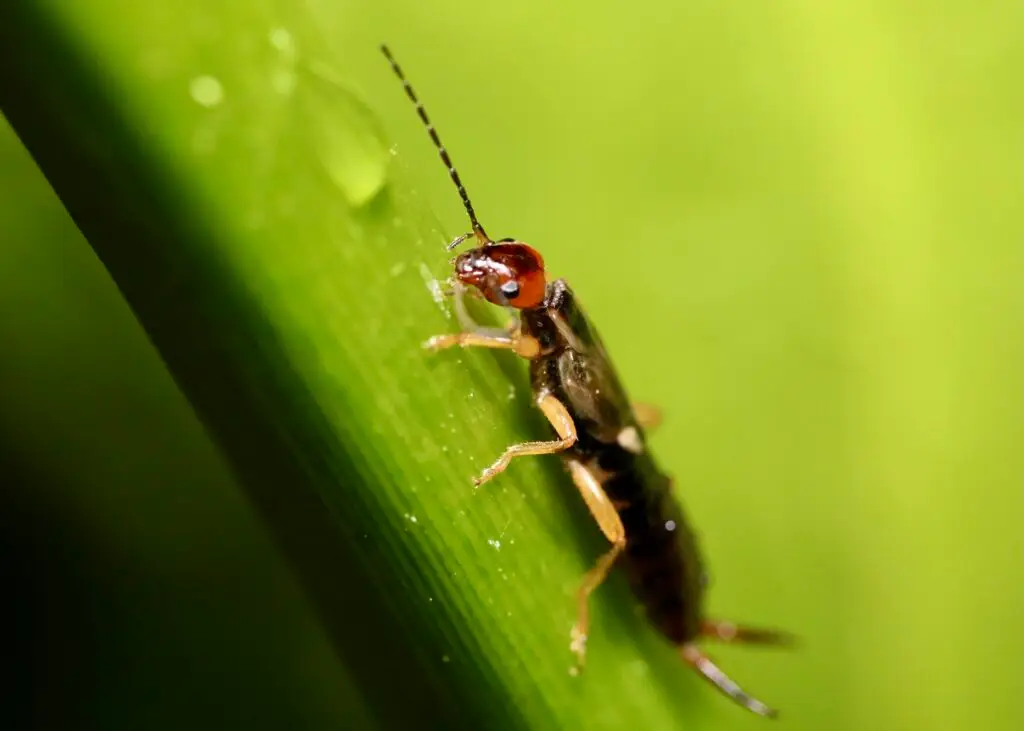
Earwigs are fast-moving, reddish-brown insects about ¾ inch long with distinctive forceps-like appendages (cerci) at their rear. Those pincers look alarming but pose no significant threat to humans — earwigs use them defensively and for mating, not for biting people.
The most common North American species is Forficula auricularia, a European earwig that arrived in the early 1900s and is now widespread across the United States and Canada. Earwigs are nocturnal, hiding during the day beneath pots, mulch, wood piles, leaf litter, and any damp, dark surface. At night they emerge to feed — primarily on decaying organic matter, but also on live plant tissue when populations are dense or food is scarce.
Nymphs resemble adults but are smaller, and they reach maturity in roughly ten weeks after several molts under favorable conditions.
Are Earwigs Bad for Your Garden?
Earwigs are primarily decomposers — they feed on decaying wood and plant matter and, in moderate numbers, can actually be beneficial by consuming aphids, scales, mites, and other soft-bodied pests. Problems arise when populations become large enough to turn to live plant material for food.
When food is scarce or earwig numbers are high, they can chew on lettuce, celery, dahlias, strawberries, fruit trees, and ornamentals — leaving ragged, irregular holes in leaves and flowers. Tender seedlings are especially vulnerable. In container and grow-room environments, dense populations can also work their way into growing media as harborage and occasionally disturb root zones, especially around newly established plants. An infestation is rarely garden-ending, but it can degrade yields and plant appearance if left unaddressed. The goal in most gardens and IPM programs is population management and damage prevention, though some sensitive commercial operations may target very low or near‑zero thresholds in high‑value crops.
How to Identify an Earwig Infestation
Identifying an earwig infestation can be tricky because the damage mimics other common pests. Key signs include:
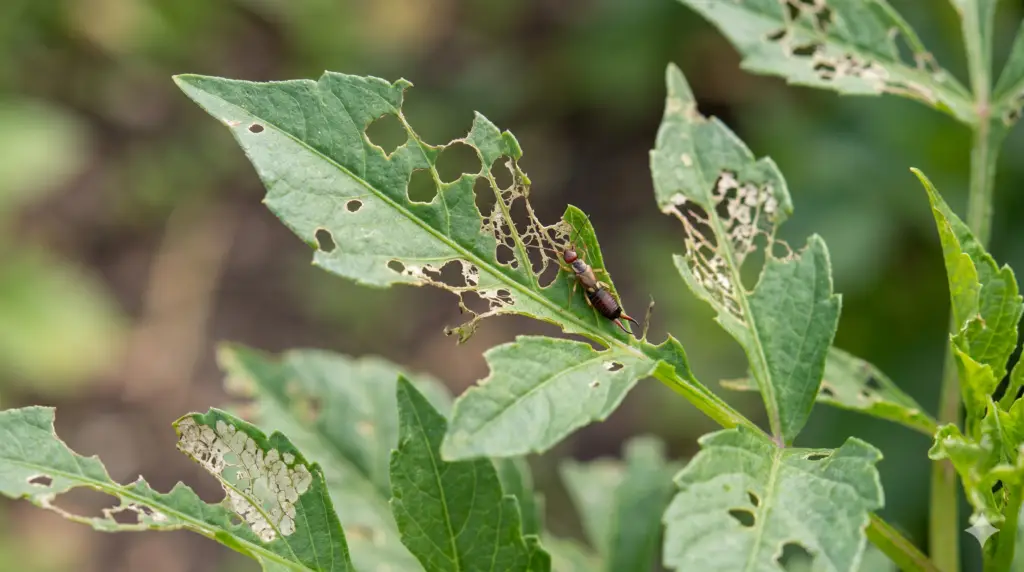
- Jagged leaf holes that appear overnight. Earwigs feed after dark and retreat before sunrise, so damage often seems to materialize between garden checks. The holes are irregular and ragged — different from the cleaner feeding patterns left by many caterpillars or the stippling caused by spider mites. If you’re seeing damage alongside fine webbing, check our guide to spider mites to rule that out first.
- Small dark excrement pellets on leaves. Earwig frass looks like tiny black or brown pellets and may be found on or near damaged foliage.
- Earwigs beneath pots and containers. Lift garden pots or containers during the day — earwigs often cluster in the damp soil directly underneath. This is one of the easiest ways to confirm an infestation.
- Increased activity after rain. Damage tends to spike following wet weather, as earwigs move out of waterlogged soil in search of drier shelter sites.
- If you’re unsure whether earwigs are the culprit, sticky monitoring traps placed around the base of plants will capture them and confirm their presence.
HBX Yellow Sticky Traps can be deployed around perimeter plantings at roughly one trap per 10–25 sq ft as a general guideline for establishing a baseline read on pest pressure; adjust density per your IPM plan or consultant guidance.
Why Do I Have So Many Earwigs in My Garden?
Earwigs are present in nearly every healthy garden — a handful is normal and often beneficial. Heavy infestations usually trace back to one or more environmental factors:
Excessive moisture. Earwigs thrive in damp conditions. Overwatering, poor drainage, or a rainy season creates ideal habitat. Water in the morning when possible, allowing soil to dry before nightfall. Earwig populations tend to increase in wet years — during high-rainfall periods or in overwatered beds, increase monitoring frequency and consider preventive measures rather than waiting for visible damage.
Dense organic matter. Large mulch piles, stacked firewood, and thick leaf litter all provide prime earwig harborage. Keep mulch layers to 2–3 inches maximum and clear dead plant material regularly to reduce hiding spots.
Ivy and dense hedgerow plantings. Earwigs frequently colonize ivy growing against walls and dense hedges, which offer cool, moist shelter. Avoid planting susceptible crops immediately adjacent to these areas.
Egg masses in the soil. Females lay clusters of round, white-to-tan eggs in protected underground cavities, and a single female can lay several dozen eggs. These hatch in about a week to two weeks depending on temperature, which is why populations can grow quickly. Tilling in early spring and fall in outdoor beds can disrupt some egg masses and expose them to predators, though this may not be appropriate in no‑till, living‑soil, or erosion‑prone systems where soil structure is a priority.
How to Prevent Earwig Infestations
Prevention focuses on eliminating favorable conditions before populations build:
- Manage moisture carefully. Don’t overwater, and water in the morning so soil surfaces dry by nightfall, which makes beds less attractive to earwigs and other moisture‑loving pests.
- Reduce harborage sites. Keep mulch depth at 2–3 inches, remove dead plant debris promptly, and avoid leaving boards or other flat objects on bare soil overnight, since these create ideal daytime hiding spots.
- Use physical barriers. Petroleum jelly or diatomaceous earth applied around the base of seedling stems can create a physical barrier that discourages earwig movement onto plants, especially in small beds and containers.
- Implement an IPM framework. An integrated pest management (IPM) strategy combines cultural controls, biological tools, and targeted treatments into a coordinated defense. For earwigs, this means monitoring traps, beneficial insects, and spot treatments — rather than calendar-based chemical applications. The same framework that protects against earwigs will help you manage the most common grow room pests and diseases more broadly.
How to Get Rid of Earwigs in the Garden Naturally
Even with strong prevention practices in place, outbreaks happen. Here’s how to clear them using natural and minimally invasive methods.
Monitoring and Traps
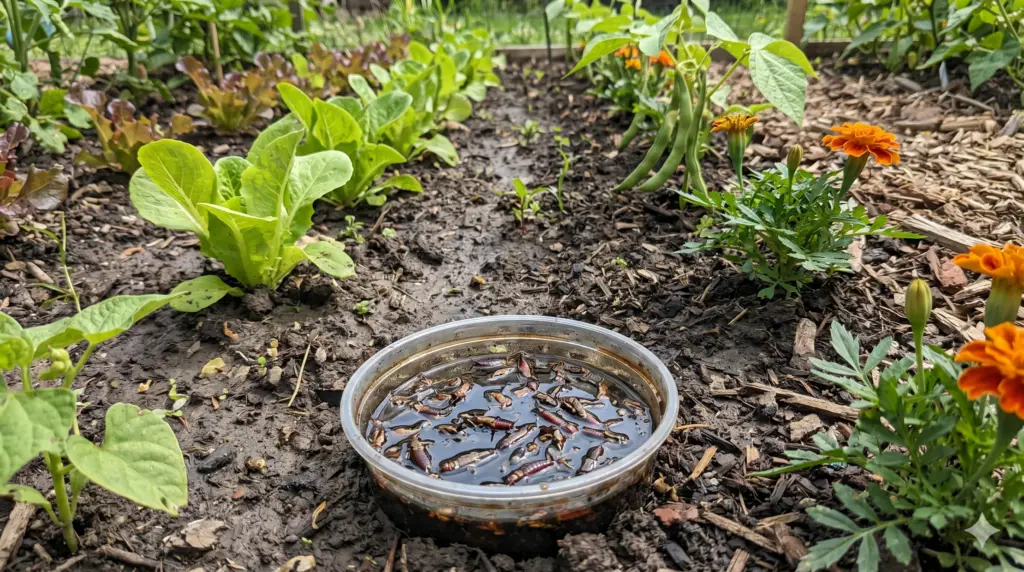
Before treating, confirm earwigs are the problem. Place oil traps near suspected areas: combine equal parts vegetable oil and soy sauce in a shallow container with a perforated lid (holes large enough for earwigs to enter). Set them at soil level between plants and check each morning, disposing of captured insects and refreshing the bait as needed.
HBX Yellow Sticky Traps placed around bed perimeters also intercept earwig movement and help you gauge population density before committing to a treatment program.
Diatomaceous Earth
Diatomaceous earth (DE) is a widely used, low‑residual option for earwig and other crawling insect control. DE is a powder made from fossilized algae with microscopic sharp edges that damage the protective outer layer of crawling insects — causing dehydration and death when they walk through it — without relying on conventional chemical toxicity. Apply a thin ring around plant bases, along bed borders, and near known harborage sites where earwigs are likely to travel. DE must stay dry to be effective, so reapply after rain or irrigation, and avoid creating airborne dust or applying on windy days to minimize inhalation risk and non‑target exposure.
Insecticidal Soap
Insecticidal soap is a contact-kill option derived from potassium salts of fatty acids. It works by penetrating the insect’s outer coat and disrupting cell membranes, leading to desiccation and death on contact. Unlike many broad-spectrum pesticides, it breaks down relatively quickly and leaves minimal residual when used as directed. For a full breakdown of application rates and timing, see our guide on how to use insecticidal soap.
- Lost Coast Plant Therapy is a versatile insecticidal soap–type pest wash made from natural soap, citric acid, and plant oils. It is marketed for contact control of soft-bodied insects and is approved for use in many organic programs; always verify current OMRI or organic certification listings for your operation. Apply at 2–4 oz per gallon of water using a pump sprayer as an example rate, coating all leaf surfaces including undersides, and always follow the product label for specific crops, pests, and spray intervals. Lost Coast can be incorporated into an IPM program against a broad range of soft-bodied pests — including those that may co‑occur with earwigs such as aphids and mites — when used with proper coverage and label‑compliant practices.
- BioSafe AzaGuard delivers insect management using azadirachtin (derived from neem seed) as both an insecticide and nematicide. Azadirachtin functions primarily as an insect growth regulator — disrupting molting, reducing feeding, and preventing immature insects from maturing — which can help suppress populations that include juvenile stages. Apply as a foliar spray or soil drench at label-specified rates (often around 1–2 oz per gallon of water as a general example) to target surface and soil-phase insects, and always consult the current label for allowed crops, application intervals, and re‑entry intervals. AzaGuard is OMRI-listed and approved for organic production when used in accordance with its label.
- PyGanic Gardening 5.0 EC is a USDA Organic / OMRI-listed pyrethrin concentrate derived from chrysanthemum flowers. Pyrethrins can provide rapid contact knockdown of earwigs and a wide range of other crawling and flying insects when sprayed directly onto pests. Apply at label-approved rates (often 1–2 oz per gallon in many garden scenarios) in the evening — just before earwigs become active — for maximum efficacy, and carefully follow all label directions, restrictions, and local regulations regarding pyrethrin use. Pyrethrins break down quickly in sunlight and generally leave minimal residual.
- BioWorks SuffOil-X is a highly refined, OMRI-listed petroleum oil that suffocates soft-bodied insects and their eggs on contact. It can be used as part of a perimeter spray or drench program around bed borders to disrupt insect harborage zones where label allows. Dilute at 1–2% in water as a general example and apply with a pump sprayer, following label guidance on compatible crops, temperature limits, and spray intervals to avoid phytotoxicity. SuffOil-X is also a useful rotation tool alongside AzaGuard and PyGanic to reduce resistance pressure when integrated according to an IPM plan and product labels.
- ARBICO Organics Triple Threat Beneficial Nematodes combines three nematode species (Steinernema feltiae, Steinernema carpocapsae, and Heterorhabditis bacteriophora) for broad-spectrum soil pest suppression. Beneficial nematodes are microscopic roundworms that actively hunt and parasitize soil-dwelling insect stages — including larvae of several pest groups — without directly harming plants when used as directed. Mix with water and apply as a soil drench when soil temperature is between about 50–90°F, and follow the product label for target pests, rates, and irrigation requirements after application. Nematodes are particularly useful for persistent infestations where surface treatments alone are not preventing re‑emergence from the root zone.


Natural Predators — Bringing the Fight to Earwigs
Earwigs have relatively few highly specialized natural predators, but several generalist natural enemies are worth encouraging in your garden.
Tachinid flies are among the more commonly documented natural enemies of earwigs and many other insects. These parasitoid flies lay their eggs on or inside hosts, with larvae consuming and ultimately killing the host. Attract them by interplanting with nectar-rich flowers such as dill, fennel, calendula, and sweet alyssum, which provide adult food sources.
Toads and frogs are among the most effective opportunistic predators of earwigs and other ground-dwelling insects in outdoor beds — a single toad can consume many insects per night. Encouraging toad habitat (shaded, moist areas near the garden that are free of synthetic pesticide residues) provides persistent, low-maintenance biological control.
Ground beetles and birds (such as robins and sparrows, and chickens where appropriate and permitted) also feed heavily on earwigs and other soil-surface insects as part of a broader diet.
For a deeper dive on incorporating beneficial insects and predators into your IPM program, see our complete guide.
Environmental Monitoring
Earwig activity correlates directly with moisture and temperature, which also drive many plant disease and pest dynamics. An Thermo-Hygrometer placed in your grow space or greenhouse gives you Min/Max temperature and humidity readings to spot the damp, cool overnight conditions that favor earwigs and other pests. Keeping nighttime humidity in a crop‑appropriate range — often below about 60% RH in many enclosed growing environments to limit disease and pest pressure — removes one of the primary triggers for high moisture–associated pest activity; always align humidity targets with your specific crop and cultivation system.
Application Equipment
Consistent coverage is as important as product selection for effective pest management. For treating garden beds, raised beds, or greenhouse perimeters, the HBX Pump Sprayer 8 Liter delivers steady pressure for thorough foliar and soil applications across larger areas when properly calibrated. For targeted spot treatments or smaller planting areas, the HBX Handheld Pump Sprayer 2 Liter provides precise control without overspray, which is especially useful when treating sensitive crops or working around beneficial insects.
For large commercial facilities running multiple products in rotation, dedicated, clearly labeled sprayers for different product categories (e.g., oils vs. soaps vs. biologicals) help prevent cross‑contamination and ensure each material is applied according to label directions.


For Commercial Operations: Earwig Management Protocol
Commercial cultivation facilities — particularly those with soil-based beds, greenhouse ranges, or outdoor production — can face recurring earwig pressure that benefits from a structured, rotation-based approach integrated into their broader IPM program.
Monitoring baseline: Deploy HBX Yellow Sticky Traps at approximately one trap per 10–25 sq ft around bed perimeters and entry points as a starting guideline, then adjust based on consultant recommendations and facility layout. Check weekly and establish an action threshold (for example, a set number of earwigs per trap per week) that triggers an active treatment response appropriate for your crop and risk tolerance.
Treatment rotation (7–14 day cycle):
- Week 1: Lost Coast Plant Therapy at a label-compliant rate (commonly 2–4 oz/gal in many scenarios) — contact spray targeting surfaces where earwigs and co‑occurring soft-bodied pests are active.
- Week 2: BioSafe AzaGuard at label-approved rates (often around 1–2 oz/gal) — growth regulator/systemic activity that helps disrupt development of juvenile stages.
- Week 3: PyGanic 5.0 EC at label-approved rates (commonly 1–2 oz/gal) — pyrethrin-based contact spray for rapid knockdown when direct coverage is achieved.
- Week 4: SuffOil-X perimeter spray or soil drench at 1–2% in water (per label) — suffocant targeting harborage zones and egg masses on accessible surfaces, applied under appropriate temperature conditions to avoid crop injury.
Adjust rotation length and product mix based on label restrictions, local regulations, crop sensitivity, and consultation with your IPM advisor.
- Biological program: Apply ARBICO Triple Threat Nematodes as a soil drench monthly during the active growing season (soil temp typically 50–90°F) where compatible with your production system. Nematodes help address soil-phase populations of multiple insect pests, reducing the likelihood of repeated surface infestations when used as part of a broader biological program.
- Sanitation: Use BioSafe ZeroTol 2.0 according to its label as an algaecide/bactericide/fungicide on approved hard surfaces, greenhouse structures, and irrigation components to reduce algae and microbial growth that thrive in the same high-moisture conditions earwigs favor. Follow all label directions for dilution, contact time, compatible materials, and safety precautions, and avoid applying to sites or in ways not specified on the label.
- Environmental control: Maintain nighttime humidity within a crop‑appropriate range, often below about 60% RH in many enclosed structures to limit disease and moisture‑associated pest pressure, using dehumidification and ventilation where needed. Use the HBX Thermo-Hygrometer to track overnight conditions across multiple rooms and identify humidity zones driving pest pressure so that environmental controls can be targeted efficiently.
- PPE: Staff handling AzaGuard, PyGanic, SuffOil-X, ZeroTol, or any other concentrated pesticide should wear HBX Heavy Duty Nitrile Gloves or equivalent chemical-resistant gloves, along with any additional personal protective equipment specified on each product label (such as eye protection, coveralls, or respirators where required). The 6 mil construction provides robust barrier protection while maintaining the dexterity required for precise mixing and application work.
Why Shop Pest Control Supplies at HydroBuilder?
HydroBuilder carries a broad selection of OMRI-listed and organic-approved pest control products, along with many conventional tools that can be integrated into IPM programs for both hobby and commercial growers. Whether you need a single bottle of insecticidal soap for a home garden or a full rotation of biologicals and contact sprays for a commercial facility, our inventory is built around solutions that are widely used in real cultivation environments.
Final Thoughts
Earwigs are a manageable pest when addressed through the right combination of cultural controls, monitoring, and targeted treatments. Start with identification — confirm that earwigs, rather than slugs, caterpillars, or other pests, are causing damage using traps, nighttime inspections, and visual clues. Reduce moisture and harborage conditions to make your garden less inviting. Then layer in biological and contact-kill treatments as needed, using a rotation approach and label‑compliant application to stay ahead of resistance and minimize non‑target impacts. Most backyard and small‑scale infestations can be brought under control relatively quickly with consistent application and good sanitation, while commercial operations benefit from structured, data‑driven IPM programs.
Frequently Asked Questions About Earwigs in the Garden
Q: Are earwigs harmful to plants?
A: While earwigs primarily feed on decaying organic matter and can play a beneficial role by consuming aphids and other small pests, they can damage plants when food is scarce or populations are high — chewing irregular holes in leaves, flowers, and fruit. Tender seedlings, lettuce, strawberries, and dahlias are among the most vulnerable. In container or grow-room environments, heavy populations can also take shelter in media and may disturb young root zones, especially around seedlings and transplants.
Commercial note: Establish sticky trap monitoring thresholds before populations reach damaging levels. In leafy green and seedling production, even moderate earwig pressure can cause economic damage quickly by compromising marketable foliage.
Q: What is the fastest way to get rid of earwigs?
A: For rapid knockdown where label allows, pyrethrin-based products like PyGanic 5.0 EC applied in the evening can provide fast contact kill when directed onto active earwigs. Insecticidal soap products (such as Lost Coast Plant Therapy) can also work on contact when sprayed thoroughly onto the insects. For soil-phase populations and juvenile stages, a BioSafe AzaGuard drench applied according to label instructions helps disrupt development over subsequent days by interfering with molting and maturation.
Commercial note: Evening application maximizes contact with active earwigs while minimizing direct exposure to pollinators. Combining a knockdown spray with a nematode soil drench provides simultaneous above- and below-ground action within a compliance‑focused IPM program.
Q: Will diatomaceous earth kill earwigs?
A: Yes, food‑grade diatomaceous earth can help kill earwigs and other crawling pests when they walk across treated areas. DE damages the waxy exoskeleton of crawling pests, causing them to dehydrate and die over time. Apply around plant bases and bed perimeters in dry conditions — it must stay dry to remain effective, so reapply after rain or irrigation — and avoid creating airborne dust or applying where it could impact non‑target beneficial insects.
Commercial note: DE is most practical as a perimeter or hotspot barrier in contained structures or small outdoor blocks. At large outdoor scale, rotation with contact sprays and biological controls is typically more efficient for ongoing suppression.
Q: Do earwigs bite humans or pets?
A: Earwigs may defensively pinch with their cerci if handled roughly, but they do not bite in the way that many people fear, and they are not known to transmit diseases to humans or pets. They are primarily a plant and nuisance pest rather than a direct human or animal health concern.
Q: How do I get rid of earwigs in the soil?
A: Reduce soil moisture where possible, avoid over-mulching, and break up dense, wet surface organic layers to make the environment less favorable. In suitable systems, shallow cultivation or aeration can help expose some eggs and nymphs to predators, though this may not be appropriate in no‑till or living-soil operations. A soil drench of beneficial nematodes (such as ARBICO Triple Threat) targets certain soil-dwelling insect stages in the root zone, and BioSafe AzaGuard applied as a drench at label-specified rates can reach susceptible soil-phase insects as part of an integrated program.
Commercial note: Monthly nematode applications during the growing season, where compatible with your system, maintain biological pressure on soil pest populations and can reduce reliance on repeated chemical interventions.
Q: What plants repel earwigs or attract their natural predators?
A: Anecdotally, some growers report that aromatic herbs including basil, rosemary, and thyme may help deter earwigs from adjacent plantings, though this is not a stand‑alone control method. More reliably, interplanting with dill, fennel, calendula, and sweet alyssum provides nectar and pollen resources that support tachinid flies and other beneficials that can parasitize or prey on a range of pests, including earwigs. Encouraging toads (via moist shaded habitat) and ground beetles (via undisturbed soil edges and reduced broad-spectrum pesticide use) provides additional biological pressure with little ongoing effort.
Q: Can earwigs be beneficial insects?
A: Yes — in small numbers, earwigs can be genuinely useful. They consume aphids, mites, and other soft-bodied pests and help accelerate decomposition of organic matter, contributing to nutrient cycling in the garden. Problems arise when populations grow large enough to turn to live plant material and begin causing visible crop damage. The goal in most IPM programs is to keep populations below damage thresholds, rather than to eradicate earwigs completely.
Commercial note: In facilities running broader biological IPM programs, very small earwig populations may be tolerated if monitoring shows no crop damage and beneficial insect activity is high. Establish clear trap-count action thresholds to avoid disrupting beneficial insects with unnecessary treatments.
Q: How can I tell the difference between earwig damage and slug damage?
A: Both pests feed at night and can produce irregular holes in foliage, but they leave different clues. Slugs typically leave a shiny mucus trail on leaves and soil, while earwigs do not. Earwigs often leave small, dark frass pellets near feeding sites, whereas slugs leave soft droppings that are less conspicuous. Confirm with oil traps (which capture earwigs) or beer traps (which attract slugs) placed at soil level to identify the correct pest before selecting a treatment.
Q: Are earwigs worse in wet years or after heavy rain?
A: Yes, earwig populations and damage often increase in wet years and following extended periods of rain. Rainy seasons, overwatered gardens, and poorly drained beds create ideal habitat and can drive earwigs up out of saturated soil in search of drier shelter — which is when plant damage often spikes around crowns and lower foliage. During high-moisture periods, increase monitoring frequency and apply diatomaceous earth or perimeter sprays preventively in high‑value areas, always in accordance with product labels and your IPM plan.
Q: How do I prevent earwigs from coming back after treatment?
A: How do I prevent earwigs from coming back after treatment? Combine moisture management (morning watering, improved drainage), harborage reduction (thin mulch, debris removal), and companion planting that supports beneficial predators like tachinid flies and ground beetles to keep long‑term pressure low. Maintain a sticky trap monitoring program year-round so population spikes are caught early, before they require aggressive treatment.
Commercial note: A documented monitoring program with weekly trap data creates an early-warning baseline that allows facilities to intervene at defined thresholds, rather than reacting after visible crop damage appears.