

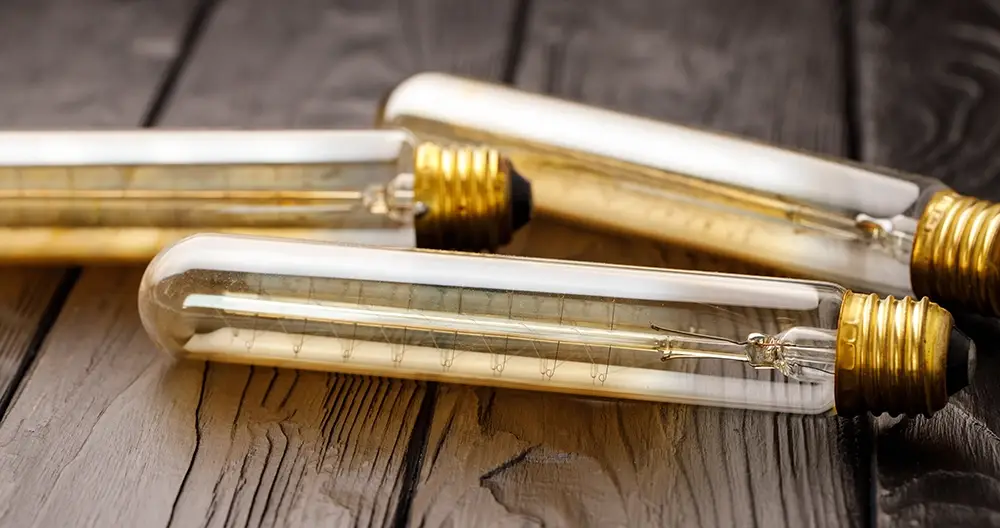
If you’re running HID lighting — HPS, metal halide, CMH, or fluorescent — understanding your grow light bulbs is one of the highest-leverage things you can do for your yields. The right bulb choice affects spectrum, coverage, and efficiency from day one, but what erodes performance most silently isn’t bulb failure: it’s lumen (or PPF) depreciation over time. Your bulb can still fire, still look bright, and still be costing you yield because its output may have quietly dropped 20–30% below its initial level by the time it reaches the end of its recommended service life.
This guide covers the full picture: how each bulb type works, what spectrum and wattage to expect, how long each technology realistically lasts in cultivation settings, and how to replace them safely when the time comes. Whether you’re managing a single 4×4 tent or a multi-bay commercial room, the fundamentals are the same — only the scale and stakes change.
Running an LED fixture? LEDs don’t have replaceable bulbs — their diodes are integrated into the fixture. This guide is focused on HID and fluorescent technologies. For LED guidance, see our best LED grow lights breakdown.
Understanding the Two Things That Matter Most: Wattage and Spectrum
Before breaking down individual bulb types, two factors determine whether a bulb is right for your situation: how much light it produces relative to your space, and what spectrum of light it delivers at each growth stage.
Wattage and Coverage
Wattage determines how much area a bulb can cover effectively, but hanging height, reflector design, and target PPFD all matter just as much. For HID lighting (HPS, MH, CMH), a useful rule of thumb is roughly 30–50 watts per square foot at the canopy — with the low end appropriate for early veg and the high end for heavy-flowering crops, high‑demand cultivars, or CO₂-enriched rooms. Fluorescents are less intense and require significantly more wattage per square foot to achieve comparable PPFD; most growers use them exclusively for seedlings, clones, and early propagation rather than as a primary light source through flowering.
For a 4×4 space (16 sq ft), a 600W HID fixture can cover the footprint well for flowering, and a 1,000W DE HPS or CMH can also work when hung high enough and managed carefully for heat and intensity. For a 4×2 (8 sq ft), a 315W CMH or 600W SE HPS is more proportionate. Oversizing generates unnecessary heat and can drive PPFD past optimal ranges; undersizing limits yield and canopy density.
Use our grow light coverage calculator to dial in wattage for your specific dimensions.
Spectrum and Growth Stage
Light spectrum — often expressed as color temperature in Kelvin (K) for HID and fluorescent sources — governs how plants grow at each stage.
Blue spectrum (5,000–6,500K): Drives compact, dense vegetative growth. Plants receiving adequate blue light develop tight internodal spacing, thicker stems, and more leaf mass — which supports more flowering sites later. Metal halide and many CMH bulbs operate with substantial blue content in this range by default.
Red/warm spectrum (2,000–3,200K): Signals reproductive growth. Red-heavy light mimics late-season sun angles and helps trigger and support flowering, fruiting, and resin development. HPS bulbs are built around this spectrum, which is why they dominate traditional bloom rooms.
Full spectrum (around 3,000–4,200K for CMH): CMH and LEC technology bridges both ranges with a more complete, sun-like spectrum. A 3,100K CMH can run veg-through-flower without a bulb swap; a 4,200K CMH leans slightly more toward vegetative structure and mother plant maintenance.
Single Ended (SE) HPS and Metal Halide Bulbs
Single ended HID bulbs — available in HPS and metal halide — are the entry point for many HID growers. They connect to the fixture at one end and are compatible with a wide range of ballasts and reflectors. They’re the right choice for smaller spaces, beginners, or growers who want proven, straightforward technology without the complexity of double ended setups.
HPS (High Pressure Sodium) — SE: Warm spectrum centered around roughly 2,000–2,200K. HPS is dominant in bloom rooms because the red-heavy output drives flowering and fruit development efficiently. The tradeoff: the blue-spectrum deficit means plants grown under HPS-only lighting from seed may stretch more than ideal during veg.
Metal Halide (MH) — SE: Blue-white spectrum at approximately 4,000–6,500K, depending on the bulb. MH produces compact vegetative structure and supports aggressive branching. It is generally less efficient than HPS watt-for-watt for flowering applications but is a strong choice if you’re running a two-bulb veg/flower approach.
Conversion bulbs: These allow you to run MH spectrum on an HPS ballast (or vice versa) without swapping your ballast, using specialized arc tube and ballast-matching designs. They are useful for growers who want to optimize spectrum per stage without investing in a second ballast, but you should always verify compatibility with your specific ballast.
SE bulbs are commonly available from around 100W up to about 1,000–1,100W, giving you flexibility for both small tents and mid-size grow rooms. If you’re at the limits of an SE fixture’s coverage area, double ended may be worth evaluating — but for most home growers, SE is practical and cost-effective.
Expect to spend roughly $0.05–$0.15 per watt for SE HPS and MH bulbs, depending on brand and whether you buy individual lamps or bulk packs.
Double Ended (DE) HPS and Metal Halide Bulbs
Double ended bulbs connect to the fixture at both ends — a design that allows them to run at higher internal pressure, produce more uniform light distribution, and maintain output intensity further into their lifespan compared to many SE equivalents. A 1,000W DE HPS typically outperforms a 1,000W SE HPS in both intensity and efficiency, which is why DE technology became standard in many commercial production environments.
Coverage and wattage: DE bulbs are commonly available in 600W, 750W, and 1,000W horticultural configurations. They’re optimized for larger canopy footprints — a 1,000W DE HPS fixture typically covers around a 4×4.5 to 5×5 area for high-intensity flowering, and can be used over slightly larger footprints in lower‑intensity or mixed‑light setups when hung higher. For smaller spaces, a DE fixture can be harder to hang at a safe distance without sacrificing uniformity or overdriving PPFD.
Spectrum: DE HPS bulbs generally run at about 2,000–2,100K with a red-heavy spectrum suited to flowering. DE metal halide options offer a 4,000–6,000K range for veg and early generative applications.
Safety note: Because DE bulbs operate at higher internal pressure and typically run hotter and more exposed (often in open reflectors rather than behind air‑cooled glass), always follow the fixture manufacturer’s instructions for shielding and working distance. Some DE fixtures require or strongly recommend tempered or UV-filtering glass shields, particularly when fixtures are close to canopy or staff work under the lights; others are designed as open fixtures for maximum output and rely on mounting height and PPE to manage UV exposure. Always power down and allow full cool-down before handling DE lamps.
Top picks:
The Matrix 1,000 Watt Double Ended HPS Bulb runs at 1000W with a 2100K color temperature, placing its spectral output deep in the red range that drives aggressive flower development and dense canopy production. Designed for use in compatible double-ended fixture platforms, it delivers the high-intensity photon output that commercial flowering rooms depend on throughout the bloom cycle. That 2100K rating sits lower than most standard HPS lamps, pushing even more energy into the red wavelengths growers target during peak flower set and ripening.
The Philips 1,000 Watt HORTI MASTER GreenPower Plus Double-Ended HPS Bulb is one of the most widely used DE HPS bulbs in commercial production — designed specifically for horticultural applications with high lumen and PPF maintenance over the lamp’s service life. For a high-performance single-bulb alternative, the Ushio 1,000 Watt Pro Plus Double-Ended HPS Bulb delivers proven output at approximately 2,100K. The Agrosun 1,000 Watt Double-Ended HPS Bulb rounds out the DE HPS category as a reliable production-tier option.
For DE metal halide, the Iluminar 1,000 Watt Double-Ended Metal Halide Bulb, 4,000K is in stock and well-suited for veg rooms running DE fixtures.
Expect to spend roughly $0.05–$0.20 per watt for DE HID bulbs, with pricing varying by brand and pack size.


Ceramic Metal Halide (CMH/LEC) Bulbs
CMH — also called LEC (Light Emitting Ceramic) — is one of the most technically advanced HID bulb technologies in horticulture. Unlike standard MH bulbs that use a quartz arc tube, CMH uses a ceramic arc tube. The ceramic material tolerates higher internal temperatures and pressures, which produces a more complete, sun-like spectrum with a high CRI, often in the 90–95 range — compared to roughly 20–30 for HPS lamps. That full-spectrum output includes UV and far-red wavelengths that standard HPS and many MH bulbs can’t produce at comparable levels.
Why CMH matters in practice:
- More complete spectrum supports quality metrics that pure HPS often can’t match — terpene expression, resin density, and color development all benefit from UV and the broader spectral range, assuming the rest of the environment is optimized.
- CMH lamps typically maintain output longer than standard HID — many 315–630W CMH systems keep at least ~80% of their original intensity out to around 20,000 hours, although high-value cultivators often replace earlier to preserve peak PPFD.
- No need for veg/flower bulb swaps with a 3,100K CMH — the spectrum works across the full cycle, though some growers prefer a 4,200K bulb for veg-only and mother rooms where structure and branching matter most.
Common wattages and spectrums:
The 315W CMH is the most widely used configuration for home and boutique commercial growers — it typically covers about a 3×3 to 4×4 footprint at productive PPFD levels and runs efficiently on most appropriately sized circuits. DE CMH options at 630W can cover roughly 4×4 to 5×5 footprints, and 1,000W DE CMH fixtures are available for larger bays and higher mounting heights.
Spectrum selection:
- 3,000–3,100K: Full-cycle bulb with slightly more red. Runs veg through harvest and is a good default if you’re using one bulb for the whole grow.
- 4,200K: Broader, slightly bluer spectrum. Preferred for veg rooms and mother plant rooms where tight internodes and branching are the priority.
Popular options:
The Iluminar 315 Watt CMH Bulb, 3,100K and Iluminar 630 Watt Double-Ended CMH Bulb, 3,000K are both in stock and well-regarded in production environments. The Iluminar 1,000 Watt Double-Ended CMH Bulb, 4,200K is available for large DE CMH fixtures.
Expect to spend roughly $0.20–$0.30 per watt for CMH bulbs, depending on wattage and brand tier.


Fluorescent Tubes (T5, T8, CFL)
Fluorescent grow lights — T5, T8, and compact fluorescent (CFL) — operate at much lower intensity than HID options, which makes them unsuitable as primary lights for high-yield flowering crops but extremely well-suited for specific applications: seedling starts, clone propagation, mother plant maintenance, and hardening off transplants.
T5 fluorescents are the most capable fluorescent option for horticulture. They produce a diffuse, even light that can be placed just a few inches (often 2–6 inches) from the canopy without significant heat stress — a critical advantage when working with tender cuttings or newly sprouted seedlings. T5 fixtures cover their footprint evenly and are energy-efficient for the light they produce relative to other fluorescent formats. For propagation rooms, T5 is a common standard.
CFLs work at the smallest scale — a single plant in a closet or an auxiliary propagation setup. They’re inexpensive, run on standard household sockets, and require no external ballast. The limitation is intensity: even at 40–65W, their canopy penetration is shallow, and they’re not practical for any plant past early veg in yield-focused grows.
Fluorescent bulbs are available in a wide spectrum range — 3,000K, 5,000K, 6,400K, and 6,500K being the most common color temperatures for horticulture. For propagation and veg, 5,000–6,500K is the standard range. A warmer 3,000K fluorescent is useful for maintaining mother plants that will later flower or for supplemental side lighting.
Expect to spend roughly $0.20–$0.60 per watt for T5 fluorescent lamps and fixtures, depending on brand, fixture size, and whether you’re buying replacement bulbs or complete units.
For more on setting up a propagation space, see our how to clone a plant guide.
How Long Do Grow Light Bulbs Actually Last?
This is where many growers lose yield without realizing it. The question isn’t “when will my bulb stop working?” — it’s “when does my bulb’s output drop below the threshold where I’m still paying the same electricity cost for meaningfully less light?” That threshold is typically when output falls to around 75–80% of original intensity for most commercial growers, though some will tolerate more depreciation depending on margins and crop sensitivity.
SE HID Bulbs: Typically 9–12 Months of Heavy Use
When operated properly (stable voltage, appropriate ballast, adequate ventilation), a single ended HID bulb — HPS or MH — is commonly replaced within about 9–12 months of continuous cultivation use to maintain strong intensity. In terms of hours, many HPS and MH horticultural lamps are rated in the 10,000–20,000 hour range, but growers often replace sooner because output declines well before catastrophic failure. SE MH bulbs generally depreciate faster than SE HPS; tests show MH output can drop substantially more than HPS by the end of its rated life. If you run an 18/6 veg schedule followed by 12/12 flower, you’re accumulating hours faster than calendar time suggests, so tracking hours is key.
DE HID Bulbs: Often 12–18 Months in Commercial Rooms
Double ended bulbs maintain output longer due to their higher-pressure design and optimized arc geometry. A well-managed DE HPS under proper conditions can often run 12–18 months in commercial production before the output-versus-cost calculus tips toward replacement, even though many lamps are rated for 20,000+ hours of service life. This is one of the core economic advantages of DE over SE for commercial applications — fewer replacement cycles over a production year when targeting consistent PPFD.
CMH Bulbs: Longer Service Life, Often 12–18+ Months
CMH bulbs experience less lumen depreciation per hour than either HPS or standard MH in many tests. Ceramic arc tube construction reduces electrode deterioration — a primary driver of output loss in gas-discharge lamps. Many CMH grow lights are rated for 20,000–24,000 hours while maintaining at least 80% of original intensity out to around 20,000 hours, but most high-value cannabis operations still replace bulbs approximately every 12–18 months of heavy use to keep PPFD tight for quality and yield. A 315W CMH bulb running 18 hours/day averages more than 6,500 hours per year; most growers replace at roughly 12–18 months as a precaution even when output appears stable.
Fluorescent T5: Typically 10,000–20,000 Hours of Useful Life
T5 fluorescents are solid for longevity, but not limitless. Many horticultural T5 bulbs have an expected life around 20,000 hours, with some rated closer to 10,000 hours in higher-output formats. Over this rated lifespan, output depreciation is noticeable, and many growers choose to replace lamps earlier if propagation success or vegetative vigor declines. The relatively low replacement cost makes proactive replacement easy — many propagation operations swap T5 bulbs on an annual or biannual cycle regardless.
The Key Variable: Hours, Not Calendar Time
All of the above timelines assume consistent daily operating schedules. If you run 24/0 during veg, you’re accumulating about 8,760 hours per year. At 18/6, it’s around 6,570 hours. If you take breaks between grows or run a 12/12 light-dep cycle, your bulbs accumulate hours more slowly and can stay in service across more calendar months. Track operating hours — not just purchase date — for accurate replacement planning.
Conditions That Accelerate Depreciation
Several environmental and electrical factors shorten bulb life meaningfully:
- High ambient temperatures: Bulbs operating in a room above roughly 85°F (29°C) degrade faster. Proper ventilation and, where applicable, air-cooled reflectors help protect bulb integrity.
- Excessive humidity: RH consistently above about 70% can introduce moisture stress on sockets and electronics and may correlate with faster corrosion or contamination.
- Power fluctuations and dirty power: Voltage spikes and sag are common causes of premature bulb and ballast issues. A quality ballast with voltage regulation and proper electrical design mitigates this.
- Frequent cycling: Turning HID bulbs on and off multiple times per day accelerates electrode wear. Let bulbs cool completely before restarting — never interrupt a running lamp mid-cycle if avoidable.
Warning Signs Your Bulb Needs Replacing
Visual inspection alone isn’t a reliable indicator — a bulb can appear fully functional while operating at 70% or less of its original output. Rely on these signals instead:
Reduced yield with identical conditions: If your genetics, feeding program, and environment are consistent cycle over cycle but yields are trending down, declining light output is a primary suspect. This is one of the most common — and most overlooked — warning signs.
Slower canopy growth rate during veg: Plants taking noticeably longer to fill their canopy footprint, or developing loosely spaced internodes despite adequate temperature and nutrition, may be responding to light deficiency caused by bulb depreciation.
Visible color shift: As HPS bulbs age, their spectrum can shift slightly and room appearance changes. If your bloom room looks noticeably dimmer or more orange than usual, the bulb is aging out and likely below its original PAR.
Flickering, slow startup, or arc instability: These indicate the arc tube or electrode is failing, or that ballast and lamp are not operating correctly. Replace the bulb immediately and confirm ballast health — don’t wait for the cycle to finish.
Hours logged exceed technology guideline: If you’ve hit the typical service window on an SE or DE HPS running long daily schedules (for example, around 9–12 months for SE HPS at 18+ hours/day), treat it as end-of-life for consistent production regardless of appearances.
The most accurate method is measuring PPFD with a PAR meter at canopy height at the start of each cycle and comparing to your baseline. A reading more than about 20% below your original baseline at the same hanging height is a clear replacement indicator.
How to Replace Your Grow Light Bulb Safely
Replacing a grow light bulb is straightforward, but doing it correctly protects both your equipment and your plants. Here’s the correct sequence:
Step 1: Power Down and Cool the Fixture Completely
Never handle a bulb while the fixture is powered. Switch off the ballast at the source and unplug the power cord from the wall — don’t rely solely on a timer or smart plug. HID bulbs run extremely hot; allow at least 20–30 minutes of cool-down before touching the fixture. Attempting to handle a hot bulb risks burns and, in some cases, arc tube rupture.
Step 2: Choose the Right Replacement Bulb
Match wattage, base type, and ballast compatibility exactly. If your fixture shipped with a specific bulb, using the same brand and model is the safest approach — you know it’s been validated for that fixture. If you’re upgrading brands, confirm ballast compatibility and whether the ballast is designed for SE, DE, CMH, or standard MH/HPS. Never mismatch wattages (for example, a 600W ballast with a 1,000W bulb) — this can fail to ignite properly, damage the ballast, or damage the lamp.
When in doubt, reach out to our team — our growers can confirm compatibility before you order.
Step 3: Handle with Gloves — Every Time
The natural oils from your skin on the glass surface of an HID bulb can create hot spots when the lamp heats up. These hot spots can contribute to arc tube stress or premature failure. Always use clean latex or nitrile gloves when handling bulbs. This applies to SE, DE, and CMH. If you accidentally touch the glass, wipe it down with a lint-free cloth and isopropyl alcohol before installation.
Step 4: Install and Secure
SE bulbs: Screw into the socket base until snug. Don’t overtighten, as this can crack the base or damage the socket threads.
DE bulbs: Insert the lead wires at both ends of the bulb into the fixture’s DE sockets carefully. Both ends should seat without forcing. Once both ends are in, slide or latch the fixture sockets inward until they click into the locked position. Never bend the lead wires excessively — if an end won’t seat, check alignment rather than applying force. Install any required glass or shielding that your fixture calls for, and verify that end clips are secure.
CMH bulbs: CMH bulbs require a compatible CMH-specific ballast — they cannot be run on a standard MH or HPS-only ballast without risk of damage or improper operation. Confirm your ballast is CMH-rated and matched to the lamp wattage before installing.
Step 5: Test Before Resuming the Grow Cycle
Power the fixture back on in an empty or unoccupied room and observe for the first few minutes. Confirm stable arc ignition, no flickering, and proper color output. Allow the bulb to run through its first full warm-up cycle before evaluating color and intensity at canopy height.
For more on how to install double ended grow lights, see our guide on grow light reflectors, cords, and sockets.
Tips for Extending Bulb Life
A few operational habits extend bulb life meaningfully without sacrificing output:
Keep the grow room cool. Bulb manufacturers rate lifespan at specific ambient temperatures, often around 77°F (25°C) near the ballast or fixture. Rooms running consistently above about 85°F (29°C) will see noticeably shorter bulb cycles. Invest in adequate ventilation and, where suitable, air-cooling — your bulbs and your plants will last longer.
Use a voltage regulator or quality ballast. Power fluctuations and voltage spikes are a primary cause of premature bulb and ballast failure. Digital ballasts with built-in voltage regulation help protect bulb integrity. For commercial rooms running multiple fixtures, a dedicated electrical design with proper amperage allocation prevents voltage sag during ignition.
Don’t restart immediately after shutdown. Hot restrike — attempting to re-ignite a hot HID bulb — stresses the arc tube and electrodes. Let bulbs cool fully before restarting whenever possible.
Clean reflectors regularly. Dust and residue on reflectors or lenses reduce light output without any change to the bulb itself. A clean reflector at the start of each cycle ensures you’re actually getting the light your bulb produces onto the canopy.
Log hours, not dates. Track hours on each bulb, not just calendar time. A bulb that runs 12/12 accumulates hours at half the rate of a 24/0 veg bulb. Growers who track hours replace bulbs at the right time — not too early and not long after output has dropped below optimal.
For Commercial Operations: Bulb Management at Scale
Multi-light facilities face different bulb management challenges than a single-tent hobby grower. Replacing all bulbs in a bay simultaneously — rather than individually as they fail — is standard practice in commercial production for three main reasons: output uniformity across the canopy, predictable replacement cost, and reduced labor and disruption.
A facility running forty 1,000W DE HPS fixtures on a roughly 12–18 month replacement cycle should be budgeting bulb replacement as a fixed, planned cost rather than a reactive expense. Carry an inventory buffer of at least 10% of your fixture count to cover premature failures or accidental damage without disrupting crop cycles.
Bulk purchasing: The Philips 1,000 Watt HORTI MASTER GreenPower Xtra Double-Ended HPS Bulb, Case of 50 is available for operations purchasing at production volume — designed specifically for commercial horticultural applications with consistent batch-to-batch spectral performance and strong lumen maintenance.
For facilities evaluating a transition away from HPS bulbs entirely, see our analysis of the best LED grow lights for production environments, or our LED vs HPS comparison if you’re weighing the capital and operational cost tradeoffs.
Our commercial supply division, HBX Commercial Supplies, can assist with bulk pricing, project planning, and fixture-to-bulb compatibility for large-scale builds.
Shop All Grow Light Bulbs
Ready to find the right replacement or stock up before your next cycle? Browse our full selection of HPS, MH, CMH, and fluorescent grow light bulbs — filtered by wattage, spectrum, and technology.
Grow Light Bulbs: FAQs
How often should I replace my grow light bulbs?
Replacement timing depends on bulb technology, quality, and daily hours of use. As a general horticultural guideline, single ended HPS and MH bulbs are often replaced every 9–12 months under typical 12–18 hour-per-day schedules to maintain strong light intensity. Double ended HPS commonly extends to about 12–18 months in commercial rooms, while many CMH bulbs can run 12–18+ months and still maintain high output, even though they may be rated for 20,000–24,000 hours. Fluorescent T5 tubes usually offer around 10,000–20,000 hours of useful life. Track accumulated hours — not just calendar time — for accurate planning.
What's the difference between HPS and metal halide grow light bulbs?
HPS bulbs produce a warm, red-heavy spectrum around 2,000–2,200K, which efficiently drives flowering and fruit production. Metal halide produces a blue-white spectrum in roughly the 4,000–6,500K range, which promotes compact, dense vegetative growth and strong structure. Many growers use MH during veg and switch to HPS at flower transition. CMH offers a full-spectrum alternative that can work across both stages without bulb swaps, provided you choose an appropriate color temperature.
Is CMH better than HPS for growing?
CMH outperforms HPS in spectrum quality and typically in longevity, while HPS still tends to win on raw lumen or PPF output per dollar at high wattages like 1,000W. CMH produces a broader, more sun-like spectrum — including UV and far-red wavelengths — with a CRI often in the 90–95 range versus roughly 20–30 for HPS, and CMH bulbs usually maintain output longer. HPS remains standard in many large commercial bloom rooms optimized strictly for yield and existing infrastructure, whereas CMH is often the better choice for smaller operations prioritizing resin quality, color, and terpene expression.
Can I use any bulb in my HID fixture?
No. Wattage must match the ballast exactly — a 1,000W ballast requires a 1,000W bulb, and a 600W ballast requires a 600W bulb. CMH bulbs require a CMH-specific ballast and cannot be run on a standard MH- or HPS-only ballast. DE bulbs require DE-compatible fixtures designed for double ended lamps. Conversion bulbs (MH to HPS or vice versa) are available for specific ballast types but must be matched carefully. When uncertain, contact Hydrobuilder before purchasing.
What wattage grow light bulb do I need?
A general target for HID lighting is about 30–50 watts per square foot at the canopy, with higher density appropriate for flowering crops, high-yield targets, and CO₂-enriched environments. A 4×4 space (16 sq ft) often performs well with a 600–1,000W HID fixture when mounted at the correct height and managed for heat. For CMH, a 315W typically covers 3×3 to 4×4 effectively. Use our grow light coverage calculator to dial in your specific dimensions.
Why is my grow light bulb still on but my yields are declining?
Lumen or PPF depreciation is a very likely cause. HID bulbs lose output steadily from day one — often reaching 20–30% below original intensity over their service life while still appearing functional to the eye. If you haven’t replaced your bulbs within their recommended window (for example, around 9–12 months for SE HPS under heavy use or 12–18 months for DE), declining yields with consistent genetics and feeding are a strong signal it’s time to replace and re‑establish your baseline PPFD.
Do I need to wear gloves when changing a grow light bulb?
Yes, it is strongly recommended every time. Skin oils on HID bulb glass can create localized hot spots that may contribute to stress on the arc tube and can shorten lamp life. Use clean latex or nitrile gloves when handling any HPS, MH, or CMH bulb, whether new or used, and clean the bulb with a lint-free cloth and isopropyl alcohol if it’s accidentally touched.
What grow light bulbs work best for seedlings and clones?
Fluorescent T5 tubes in the 5,000–6,500K range are a standard for propagation because they provide gentle, diffuse light that can be placed close to tender tissue without causing excessive heat stress. CFLs can also work at small scale. Avoid relying on full-power HID lighting for propagation unless fixtures are dimmed and hung very high, as even the lowest-wattage HPS or MH fixtures can be too intense and too hot for seedlings and fresh-rooted clones.