

Container gardening is one of the most versatile and accessible ways to grow — whether you’re cultivating herbs on a balcony, vegetables in a small backyard, or high-value crops in a controlled indoor environment. With the right containers, soil, and watering approach, you can create a controlled root-zone environment that can produce healthier plants and competitive yields compared to many traditional in-ground gardens when conditions are optimized. This guide walks you through everything you need to know, from picking the best pot type to managing nutrients and environment across your entire grow.
If you’re new to growing, you might also want to explore our guide to grow media and soil types to understand how container choice and media selection work together.
Whether you’re a backyard gardener starting with a handful of pots, or a commercial cultivator managing hundreds of containers per cycle, the fundamentals of container growing are the same — and this guide covers all of it.
Choosing the Right Container: A Complete Overview
Container growing gives you direct control over the root zone environment — one of the most critical factors in plant health. When plants grow in the ground, their roots encounter unpredictable soil conditions, inconsistent drainage, and competition from weeds. In a container, you choose the soil or soilless mix, control drainage, manage the nutrition, and — if you’re using fabric containers — actively promote a stronger, more fibrous root structure.
Containers also make pest and disease management significantly easier. Isolated root zones help limit soil-borne pathogen spread between plants, and container growing supports cleaner, more targeted IPM protocols. Staying on top of common grow room pests and diseases is far more manageable when plants are separated and accessible from all sides.
Add Your Heading Text Here
The container you choose determines how well your root zone performs throughout the grow. Not all pots are created equal — material, size, and drainage design all affect oxygenation, moisture retention, and root structure.
Fabric Pots: The Best All-Around Choice for Root Development
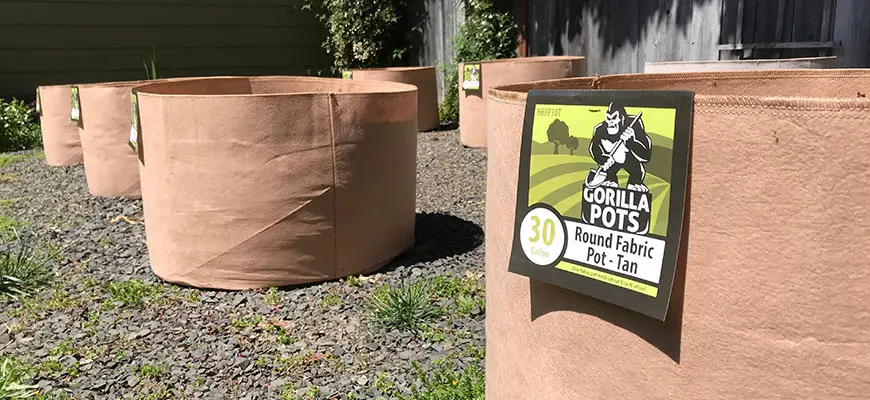
Fabric pots generally provide significant advantages over traditional plastic containers when it comes to root-zone aeration and overall root health under comparable conditions. The porous, nonwoven fabric construction allows air to penetrate the root zone naturally — and when roots reach the wall of the container, they are air-pruned rather than forced to circle back on themselves.
Covert Fabric Pots with Handle are built from thick 300G nonwoven fabric with durable stitching and integrated handles, providing the structural integrity to hold up over multiple growing cycles. Every size includes handles, making transport, transplanting, and canopy management significantly easier. These containers are available in multiple sizes up to 15 gallons, with single units and multi-pack options (including bulk packs) to accommodate both hobby and commercial-scale operations.
Air pruning works like this: as roots extend outward to the fabric wall, the low-humidity air at the fabric surface desiccates the root tip. This triggers lateral branching — the plant responds by producing many more fibrous feeder roots, which are far more efficient at absorbing water and nutrients. Under optimal nutrition and watering conditions, the result is a denser, healthier root system that supports vigorous vegetative growth and heavier harvests compared to severely root-bound plants in solid plastic containers.
Beyond root development, Covert Fabric Pots naturally improve drainage. Water and excess moisture can exit through the fabric walls and base, reducing overwatering risk and helping the media dry out at an appropriate rate between feeding cycles when irrigation is managed correctly. They’re also lightweight, foldable for easy storage, and reusable with proper cleaning between cycles.
Covert Fabric Pots are available in: 1, 2, 3, 5, 7, 10, and 15 gallon sizes, with individual units, multi-packs, and bulk packs of up to 100 depending on the size selected.
For sizing guidance, see the container sizing section below.


Pro Cal Premium Nursery Pots: The Reliable Plastic Standard
When you need a cost-effective, durable plastic container that stacks efficiently and handles high-volume growing, Pro Cal Premium Nursery Pots are a proven benchmark. These injection-molded nursery containers have heavy-duty wrap-around rims that are easy to handle and strong enough to support heavy plant material, with superior drainage engineered into both side and bottom drain designs. Squat models offer a wider base that’s ideal for shallow-rooted plants, better stability in high-traffic grow rooms, and improved capture of irrigation water during each watering cycle. Available sizes commonly range from 1 to 20 gallons, making them a trusted choice for nursery professionals and home growers alike.
The primary limitation of plastic pots is that roots will eventually begin circling the container walls rather than being pruned. This is why transplanting on schedule is critical when growing in plastic — watch for roots emerging from drainage holes as your signal to size up.
Plastic Grow Bags: Volume-Efficient Growing for Greenhouse and Outdoor Operations
Plastic grow bags offer a compact, volume-efficient container solution that is widely used in greenhouse and outdoor drip irrigation systems. The flexible walls conform closely to the media, and when properly filled and supported, they provide a stable, cost-effective alternative to rigid pots for many crops.
Hydrofarm Plastic Grow Bags are a high-volume, cost-efficient container option widely used in greenhouse drip irrigation applications. The white outer layer reflects light and helps keep root zone temperatures cooler than dark-colored containers — an important advantage in heated greenhouse environments or warm-climate outdoor grows. Pre-punched drainage holes allow free runoff, the bags stand upright when filled, and they’re available in bulk pack quantities that make scaling straightforward for high-throughput operations. Compatible with bedding plants, tomatoes, peppers, cucumbers, and many other row crops grown under drip irrigation, these are a practical alternative to rigid plastic pots when per-unit cost and volume efficiency are primary considerations.
Container Sizing Guide
Matching container volume to plant size is one of the most impactful — and most overlooked — decisions in container growing. Plants grown in containers that are too large will be prone to overwatering, as the media surrounding underdeveloped roots stays wet too long, while plants in containers that are too small will become root-bound and stunt.
General sizing guidelines by plant type:
- Herbs and small annuals: 1–3 gallon containers
- Tomatoes, peppers, cucumbers: 5–10 gallon containers
- Cannabis and other heavy feeders: 3–7 gallon (short cycle or SOG); 7–15 gallon (long cycle or large plants)
- Trees and perennials: 15+ gallon
The transplant sequence: Most experienced growers start seedlings or clones in very small cells or 1-gallon containers, transplant to 3–5 gallon at early vegetation, and make a final transplant to their target size before the root system fills the container. Each upsize should generally be only one to two container sizes at a time — jumping too large creates a media-to-root imbalance that makes overwatering almost inevitable.
If you’re growing auto-flowering varieties or want to eliminate transplant steps, start in a 7–10 gallon container from the beginning. Water in a tight circle close to the stem at first, expanding the watering zone gradually as the plant grows into the container. Growth may start slightly slower, but you eliminate the risk and labor of mid-cycle transplanting entirely.
For seedlings and early-stage propagation, HBX Seedling Trays provide the sturdy, reusable platform you need before the first transplant into containers. Their super-thick construction holds up to repeated use without cracking or bowing under the weight of wet media.
The Right Soil for Container Growing
Container plants need a growing mix that does two things well simultaneously: retain adequate moisture between waterings, and drain excess water quickly enough to prevent anaerobic root zone conditions. Standard garden soil dug from the ground fails on both counts — it compacts in containers, restricts drainage, and may introduce pathogens and pests.
Use a soil or soilless mix specifically formulated for containers. Roots Organics Original Potting Soil is a proven coco-based container mix for many crops. It begins with a high-quality coco fiber base that is repeatedly washed for an extremely low EC, then composted for over 24 months and blended with perlite, peat, pumice, and a range of organic amendments such as worm castings, bat guano, and fish bone meal to promote strong root development. The low initial EC and well-aerated structure make it suitable for fast-growing, heavy-feeding plants when paired with an appropriate nutrient program and irrigation schedule.
For additional drainage control, many growers amend their container soil with perlite at a ratio of 20–30% by volume. This is especially valuable in dense mixes or in climates where containers dry more slowly, while in fabric pots that already promote faster dry-down, you can fine-tune perlite levels to prevent containers from drying out so quickly that you’re watering multiple times per day in hot or low-humidity conditions.
One common mistake is adding gravel or stones to the bottom of containers in hopes of improving drainage. Research consistently shows this creates a perched water table that actually retains moisture higher in the media column — the opposite of the intended effect. Skip the gravel layer entirely and invest that effort into choosing the right mix from the start.
Want a deeper dive into how media choice affects your grow? Our definitive guide to grow media covers soil, coco, perlite, and hydroponic substrates in detail.


Watering in Containers: Key Principles
Watering is where many container gardens live or die. Container plants dry out faster than in-ground plants, and this rate increases with temperature, humidity, plant size, airflow, and media type. There is no universal watering schedule that applies across all of these variables — the right cadence is something you develop through observation and consistent monitoring.
The general rule: water when the top 1–2 inches of media feel dry to the touch. Lift the container to check weight if unsure. A wet container is noticeably heavier than one ready to water, and with experience, growers develop an intuitive feel for when the plant needs a drink.
Avoiding overwatering: Overwatering is one of the most common container growing mistakes. Waterlogged media deprives roots of oxygen, promotes fungal growth, and creates conditions where root pathogens such as Pythium can thrive. Fabric pots reduce this risk compared to solid plastic by allowing more lateral aeration and drainage, but overwatering is still possible — especially early in the cycle when the plant is small relative to container volume. When in doubt, it is safer to wait slightly than to water too frequently.
Watering technique: Water slowly and evenly across the media surface until runoff appears from the base of the container — this helps ensure the entire root zone is saturated and reduces the likelihood of dry pockets developing. Allow the container to fully drain before placing it back on a saucer. A plant saucer under each container catches runoff, protects floors and bench surfaces, and keeps your growing area clean between waterings.
Feeding Container Plants
Container-grown plants have a finite nutrient reservoir. As roots consume available nutrients and repeated watering flushes soluble compounds out of the media, supplemental feeding becomes necessary at a cadence that matches your plant’s growth stage and the nutritional content of your starting mix.
The type of fertilizer that works best depends on your soil and grow style. In pre-amended organic soils like Roots Organics, manufacturer guidance typically recommends beginning supplemental feeding 10–21 days after transplanting, then adjusting rate and frequency based on plant response. In coco-based or perlite-heavy soils with low initial buffering and fewer pre-loaded nutrients, many growers begin feeding at low EC from early in the cycle to prevent deficiencies, gradually increasing strength as plants mature.
For growers running a straightforward container program, HGV offers a dry water-soluble three-part system (Grow, Flower, Base) designed for commercial simplicity — available in 5 lb. bags for smaller operations and 25 lb. bulk formats to match larger scale. HGV nutrients are available at Hydrobuilder.com as part of a complete nutrient and fertigation program for container and hydroponic growers.
Check out our full guide on plant nutrients for a complete breakdown of feeding strategies by media type and growth stage.
Common Container Problems and Solutions
Root circling and root binding occur in plastic pots when roots reach the container wall and grow back on themselves. Symptoms include wilting despite adequate watering, yellowing leaves, and stunted growth. Prevention is straightforward — transplant before the root system fills the container, or switch to fabric pots that air-prune roots and dramatically reduce this problem at the source.
Overwatering is one of the most common container growing mistakes. Waterlogged media deprives roots of oxygen, promotes fungal growth, and invites root pathogens like Pythium. If your containers never seem to dry out between waterings, check drainage holes for blockage, consider amending your media with additional perlite, or reduce feeding volume and/or frequency.
Nutrient lockout can develop in containers that have been heavily fed over multiple cycles, as salt accumulation in the media interferes with uptake. Flush the container with clean, pH-corrected water — targeting 6.0–6.8 for soil-based grows — at roughly 2–3× the container volume, then resume feeding at a reduced rate and monitor plant response.
Heat stress in the root zone is a common problem in outdoor or greenhouse environments where dark containers absorb sunlight. For most common vegetables and high-value annual crops, ideal root zone temperatures are roughly 65–75°F (18–24°C). Use lighter-colored containers, elevate containers off hot ground surfaces, or choose fabric pots, which dissipate heat more effectively through passive air exchange at the container wall.
For Commercial Operations: Scaling Container Growing
Large-scale container grows demand operational efficiency — container selection, transplant workflow, watering infrastructure, and media volume all multiply quickly when you’re managing hundreds or thousands of containers per cycle.
Container standardization simplifies every downstream decision. Selecting one or two container sizes across your facility makes irrigation design, fertigation programming, and canopy management more predictable and repeatable. For cannabis and similar high-value crops, 5-gallon fabric pots are one of the most commonly standardized sizes in commercial indoor facilities — balancing root volume, canopy development, and space efficiency. The Covert Fabric Pot with Handle, 5 Gallon — Pack of 100 is built for exactly this application, with bulk quantities and uniform sizing that reduce per-unit cost and simplify tracking across multiple rooms.
Watering automation is the single largest labor-saving step available to commercial container operations. Drip irrigation delivers consistent moisture at programmed intervals, eliminating much of the variability from hand-watering and dramatically reducing labor hours per cycle. At commercial scale, consistent dry-down between feeds is as important as the feeds themselves — standardized containers with consistent media volume make this far easier to achieve room to room.
Container sanitation between cycles is non-negotiable in commercial settings. Fabric containers should be allowed to dry completely, brushed free of root debris, and treated with a peroxide-based sanitizing solution or similar disinfectant before reuse. Proper sanitation helps prevent carryover of Pythium, Fusarium, and other soil-borne pathogens that can devastate subsequent crops.
Bulk media purchasing reduces per-unit cost significantly at commercial scale. Roots Organics Original Potting Soil is available in pallets of 70 bags, reducing the cost and logistics burden of repeated small reorders and helping ensure media consistency across all containers in a facility.
For a look at how container growing integrates into broader hydroponic and soil-based cultivation strategies, see our Hydroponics 101 guide.
Why Shop at HydroBuilder for Containers and Growing Supplies?
HydroBuilder is a leading hydroponics and growing supplies retailer in the United States, carrying a wide selection of containers — from Covert Fabric Pots and Pro Cal nursery pots to Hydrofarm grow bags — alongside the grow media, nutrients, and tools your operation needs. Our expert growing staff is available at 888-815-9763 to help you dial in your container setup, whether you’re growing on a windowsill or outfitting a commercial facility.
Example: FAQs
Q: What type of pot is best for container gardening?
Fabric pots are the best all-around choice for most container gardeners who want maximum root aeration and reduced risk of root circling. Their porous construction naturally air-prunes roots, limiting the circling that can restrict growth in solid plastic containers and encouraging a denser feeder-root network under proper watering and nutrition. Fabric pots also help reduce overwatering risk by allowing lateral moisture movement and gas exchange through the container wall, while for situations requiring stackability or very high-volume cost efficiency, Pro Cal premium plastic nursery pots and Hydrofarm plastic grow bags are reliable alternatives.
Q: How often should you water container plants?
Water when the top 1–2 inches of media are dry — which varies with container size, plant stage, temperature, airflow, and humidity. In hot environments above about 80°F (27°C), especially in full sun and smaller pots, containers may need watering daily or more, whereas in cooler or more humid conditions, every 2–3 days is more typical; always water to runoff, allow full drainage, and remember that fabric pots often dry faster than sealed plastic containers.
Q: What size container do I need for tomatoes?
Tomatoes generally perform best in containers of 5–10 gallons minimum, depending on variety and training style. Determinate bush varieties can manage in 5-gallon pots, while indeterminate types usually benefit from at least 10 gallons for maximum production, with consistent moisture and supplemental fertilization throughout the season because the root zone in containers dries and depletes nutrients more quickly than in-ground soil.
Q: Can I use regular garden soil in containers?
No — regular garden soil tends to compact in containers, restrict drainage, and may introduce pests, weed seeds, and pathogens. Always use a potting mix or container-specific soil blend formulated with drainage-improving components like perlite, coco fiber, or pumice, since a quality container mix with the right air-to-water balance is one of the most important investments in your container garden.
Q: Do fabric pots dry out faster than plastic pots?
Yes. The porous fabric allows moisture to escape through the walls and base more quickly than a solid plastic container, so media in fabric pots typically dries faster under the same conditions. This is beneficial for root health — the dry-down cycle promotes oxygen exchange in the media — but it does mean you’ll often water more frequently, especially in hot, low-humidity environments where daily watering for containers in full sun is common, while larger containers with greater media volume dry more slowly than smaller ones.
Q: What is air pruning and why does it matter?
Air pruning occurs when a root tip reaches the porous wall of a fabric pot and encounters the low-moisture air at the container surface, which desiccates the tip and causes it to die back. In response, the plant produces lateral branches behind the pruned tip, gradually creating a dense, fibrous root network with many active root tips; this increased root surface area supports more efficient water and nutrient absorption and can directly contribute to more vigorous growth and higher yields when other environmental factors are optimized.
Q: How do I prevent root rot in containers?
Root rot in containers is strongly associated with chronically saturated media and inadequate drainage, which create low-oxygen conditions that favor pathogens like Pythium. Prevention starts with using a well-draining container mix with adequate perlite, ensuring all drainage holes remain clear, and watering only when the top layer of media has dried, while fabric pots further reduce root rot risk by improving aeration and drainage; in commercial settings, clean pH-balanced water, proper fertigation management, and thorough container and equipment sanitation between cycles are also essential.
Q: How do I know when to transplant to a larger container?
Transplant when roots begin emerging from the drainage holes at the base of the container or when you see roots visibly circling near the top of the media. For plastic pots, this typically happens every few weeks during vigorous vegetative growth depending on species and container size, while fabric pots often allow slightly longer container times because air pruning reduces the tight root spiraling that forces urgent transplanting in plastic.
Q: What is the best potting soil for containers?
The best container potting soil balances moisture retention with rapid drainage and good aeration. Look for soils built on perlite, coco fiber, peat, and/or pumice with organic amendments, such as Roots Organics Original Potting Soil, whose coco-perlite structure, low baseline EC, and long composting process are designed to support healthy root development from transplant through harvest in both soil and near-soilless container programs when paired with an appropriate feeding schedule.
Q: Can I grow hydroponically in containers?
Yes — many hydroponic systems use containers, from net pots in DWC and NFT systems to larger coco-filled containers in drip or runoff-to-waste setups. Fabric pots can work well in drip-irrigated hydroponic configurations when paired with appropriate trays or tables, and for system-specific guidance, see our types of hydroponic systems guide.