

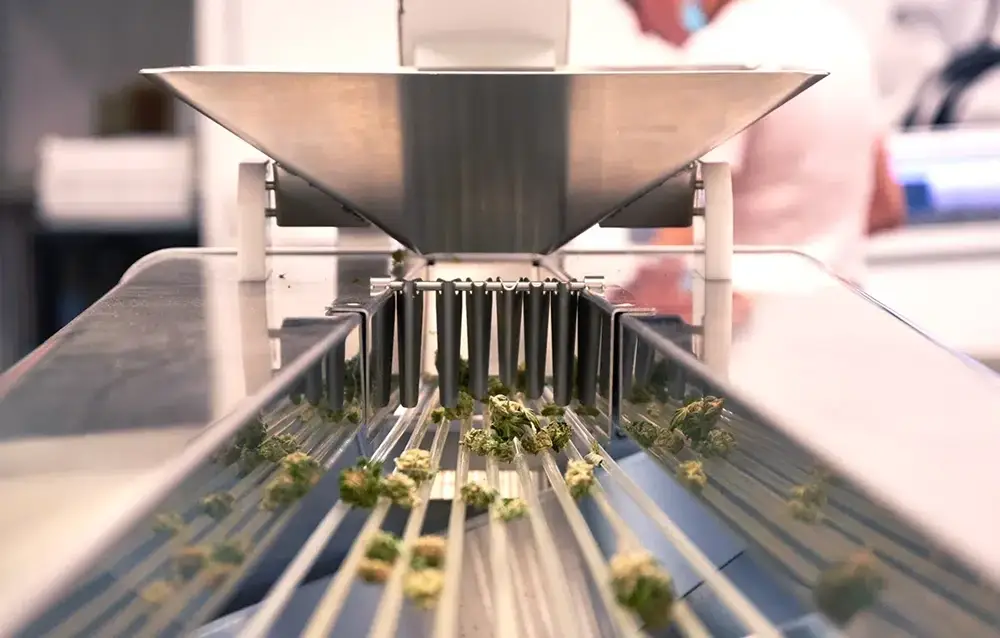
A bud sorter (also called a harvest sorter) grades dried, trimmed flower by size — separating premium colas from mid-size buds, smalls, and shake in a single pass instead of by hand. For any operation moving real harvest volume, from a few pounds a week up to hundreds of pounds a day, sorting is the step that turns an inconsistent, hand-graded batch into a repeatable, sellable grade structure.
Equipment in this category covers a genuinely wide range. Manual sifting kits start under $200 and work fine for boutique operations and serious home growers processing a few pounds at a time. Fully automated conveyor systems built for licensed processing facilities run into the tens of thousands of dollars. This guide breaks down how bud sorters actually work, where sorting fits in your harvest line, and which type matches your volume — not just your budget.
How Does a Bud Sorter Work?
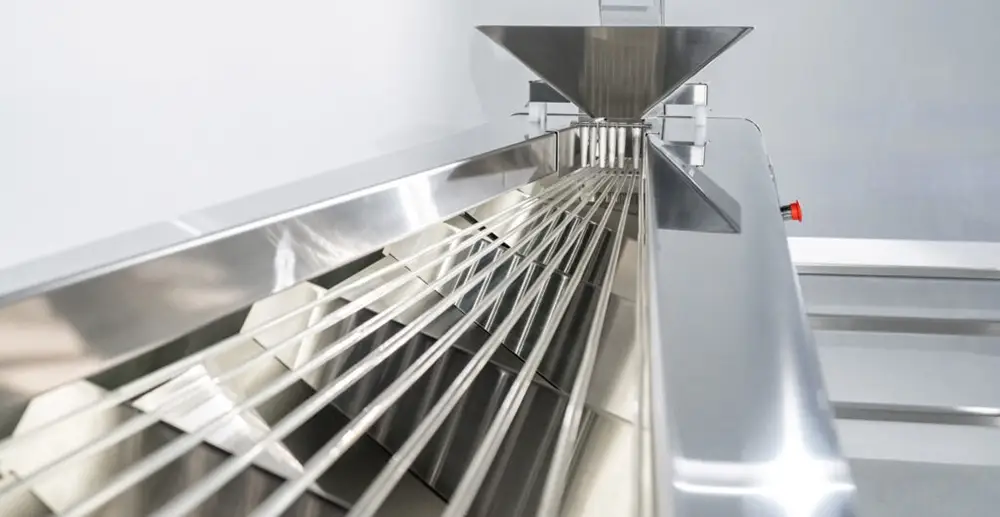
Most bud sorters separate flower by size using a series of screens or grates with progressively smaller openings. Material is fed across the top screen and works its way down: large, whole colas stay on top while smaller buds and shake fall through to lower collection points. Common grate sizes run from about 1/4″ up to 1–1.25″, and the output from each level becomes its own consistent grade — A-bud, mid, smalls, and shake — priced or processed separately.
The mechanism used to move material across those screens is where sorters differ the most:
- Manual gravity/brush systems use no motor at all — an operator moves product across stacked, angled grates by hand.
- Vibratory screen systems shake material across the screens using motor-driven vibration.
- Conveyor and band systems move flower on a moving belt or set of adjustable bands, with no vibration at all.
That last distinction matters more than it sounds. Vibration-based sorting can be harder on trichomes, since agitation is exactly what knocks resin heads loose. Conveyor and continuous-belt sorters (like the GreenBroz Precision Bud Sorter and Mobius M9 below) are built specifically to move product gently instead of shaking it, which is why manufacturers market them around trichome preservation rather than just raw speed.
Where Sorting Fits in Your Harvest Workflow
Sorting happens after trimming and before packaging — but exactly where in that window is a genuine judgment call, and it’s worth knowing both options exist rather than assuming there’s one right answer.
Sort before drying if your priority is separating material by size as early as possible, particularly if you’re feeding a bucker and trimmer in a continuous line and want size-graded batches heading into the dryer.
Sort after drying, before curing if your priority is curing consistency. Larger, denser buds and smaller buds don’t dry and cure at the same rate — mixed-size batches make it harder to hit a consistent moisture target across the whole lot. Sorting first lets you cure each size grade separately (in your wet trim vs. dry trim workflow, this timing question compounds with your trim-timing decision) in dedicated containers.
Either placement is legitimate. What doesn’t work well is skipping the decision entirely and sorting whenever it’s convenient — that’s usually a sign sorting was bolted onto an existing line instead of planned into it. If you haven’t nailed down your bucking machine and trimming machine steps yet, get those settled first — sorter placement depends on how material is already moving through your line. For the drying and curing side of that decision, our beginner’s guide to harvest, drying, and curing covers the moisture targets that make size-based curing worthwhile in the first place.
Do You Need a Machine, or Can You Sort by Hand?
Hand-sorting works fine below a certain volume and stops working cleanly above it. A single operator hand-sorting typically manages somewhere in the range of a few pounds per hour, depending on how many grades they’re separating into and how careful they’re being with the buds. That’s a real option for a boutique harvest or a serious home grow processing a pound or two at a time.
Above that volume, hand-sorting becomes the bottleneck in the room. It’s slow, results vary operator to operator, and every touch is a chance to compress a bud or knock trichomes loose. Once you’re running a bucking and trimming line that’s consistently producing more material than one or two people can grade by hand in the same shift, a sorter — even a manual, no-motor one — starts paying for itself in throughput and consistency, not just labor cost.
The honest middle ground: a manual sifting box or stationary flow-through system gets you most of the consistency benefit of a powered sorter without the equipment cost, as long as your volume is moderate. It’s a legitimate stopping point, not just a stepping stone to something bigger.
What Mesh Size Should You Use?
Grate and mesh sizing is what actually defines your grade boundaries, and it’s worth setting deliberately rather than using whatever the machine ships with. The most common breakpoints in commercial sorting are 1/4″ (the smalls/shake threshold), 1/2″, 3/4″, and 1″–1.25″ for top-tier flower — a 4-grade system built around those sizes (roughly: fines under 1/4″, smalls 1/4″–1/2″, mids 1/2″–3/4″, and A-bud above 3/4″) is a reasonable starting point for most cannabis and hemp operations.
The right sizing ultimately depends on how your buyers or internal packaging spec define grades. If your top-shelf packaging line requires a minimum bud size, size your top grate to that spec exactly — sorting to a size you can’t sell as a premium grade doesn’t help you.
Can You Sort Both Wet and Dry Material?
Mostly no — bud sorters are built for dried, trimmed flower, and running wet material through one is a real limitation worth planning around. Wet buds are heavier, stickier, and clump together on the grates, which throws off sizing accuracy and creates a mess that slows down cleaning between batches.
A handful of manual box-style sorters are marketed as wet-or-dry capable, and for light, occasional use that’s fine. But for consistent grading, especially on anything powered, plan to sort after your material is dry. If wet-sort capability matters to your workflow, confirm it directly with the manufacturer spec sheet before buying — don’t assume a “wet or dry” claim on a manual kit extends to every machine in the category.
Comparing Bud Sorters by Scale
Here’s how the category breaks down, roughly in order of scale and investment. Throughput figures below are manufacturer-published maximums — actual output depends on your operator, material density and moisture, and which grate or band size you’re running, so treat these as ceilings, not guarantees.
| Sorter | Mechanism | Rated Throughput | Investment Tier | Best For |
|---|---|---|---|---|
| Bubble Magic Bud Sorting Kit | Manual stacked-grate box, no power required | Hand-fed, batch by batch | Boutique | Boutique operations and serious home growers processing a few pounds at a time |
| EZTRIM Bud Sorter | Manual — gravity and soft brushes move flower across angled stainless grates, no motor | Up to 70–90 lbs/hr (full size); 22 lbs/hr (Mini) | Entry-Commercial | Entry-commercial operations that want structure and consistency without automation |
| Grow1 Stainless Steel Harvest Sorting System | Manual flow-through stainless system with sealable bins, handles wet or dry | Batch-based | Entry-Commercial | Small-to-mid operations wanting a repeatable stationary setup, sized small/medium/large |
| CenturionPro Harvest Sorting Machine | Powered, sorts into 4 sizes (Bigs/Meds/Smalls/Fines), variable speed, GMP/FDA-compliant construction | Up to 125 lbs/hr (dry) | Mid-Commercial | Mid-tier facilities standardizing grading without committing to a full conveyor line |
| Toms Tumbler / Python Industries Harvest Sorting Machine | Powered silicone-band conveyor with digital speed control, 5 adjustable sizes | Up to 500 lbs/hr per manufacturer spec | Mid-to-High Commercial | Facilities wanting Mobius M9-class throughput at a lower entry cost |
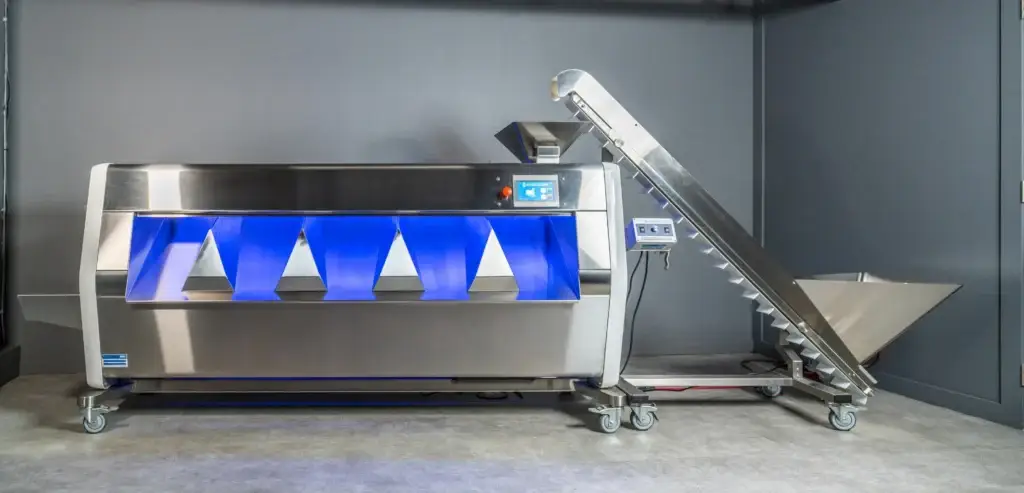
| GreenBroz Precision Bud Sorter | Powered conveyor and band system, no vibration; 316 stainless steel and polyurethane | 90+ lbs/hr (1.5+ lbs/min) | High-Commercial | Facilities prioritizing gentle handling and trichome preservation over raw top-end speed |
| Mobius M9 Harvest Sorting Machine | Powered continuous belt sorter — 9 belts, 78" total sorting zone, 5 customizable sizes | Up to 440 lbs/hr per manufacturer spec | Facility-Scale | High-volume, GMP-certified processing operations that need the category's fastest continuous throughput |
A closer look at the three worth spotlighting:
EZTRIM Bud Sorter is the honest entry point into purpose-built sorting equipment. There’s no motor, no belt, nothing to maintain beyond keeping the grates clean — just gravity and soft brushes moving product across stainless screens sized 1/4″ up. If your operation has outgrown a manual box but doesn’t need or want a powered machine yet, this is where to start. The Mini variant scales it down further for tighter spaces.
GreenBroz Precision Bud Sorter is built around one specific priority: gentle handling. Its conveyor-and-band system moves flower with zero vibration, which is the whole pitch against vibratory screen sorters that can knock trichomes loose. At 90+ lbs/hr with an HMI touchscreen controlling conveyor and band speed independently, it’s sized for facilities that have outgrown manual sorting but care more about preserving bag appeal than hitting the absolute highest throughput number in the category. It’s made in the USA.
Mobius M9 Harvest Sorting Machine is the throughput ceiling. Nine sorting belts across a 78-inch sorting zone put it at 440 lbs/hr — roughly 4-5x the GreenBroz Precision Sorter’s rated capacity — with five customizable sorting sizes and GMP-ready stainless construction. This is equipment sized for licensed facilities processing serious daily volume, not a step up from a mid-tier operation; the price reflects that.


What Do You Do With the Smalls and Shake?
The smaller grades a sorter separates out aren’t waste — they’re a different product with a different destination. Popcorn buds and smalls commonly go into pre-roll production, while shake and trim get routed to extraction. Sorting is what makes that routing efficient instead of something you sort out by hand after the fact.
If pre-rolls are part of your product line, it’s worth planning the sorter’s smallest grade cutoff around what your pre-roll process actually needs — see our best pre-roll machines guide for how that downstream step works, so you’re sizing the sort with the destination in mind rather than adjusting after the fact.
How to Choose the Right Bud Sorter: A 4-Step Framework
- Calculate your realistic per-cycle harvest volume. Not your theoretical max — the pounds you’re actually processing per harvest cycle, since that’s what determines whether hand-sorting, a manual kit, or a powered machine makes sense.
- Match throughput to your processing window. Divide your per-cycle volume by the hours you realistically have to sort it (not your total shift — the portion actually dedicated to sorting) to get your required lbs/hr, then compare that against the manufacturer-rated throughput in the table above, not the manufacturer’s absolute maximum.
- Decide how much gentle handling matters to your product. If you’re grading for a premium flower line where bag appeal and intact trichomes drive price, weight conveyor/band systems over vibratory ones. If you’re grading primarily for extraction or bulk sale, that tradeoff matters less.
- Budget for the full tier, not just the machine. Powered sorters need floor space, a power circuit, and a cleaning routine — factor that in before comparing sticker prices across tiers.
Scaling Sorting Capacity for a Commercial Harvest Line
Sorting capacity only matters relative to what’s feeding it. A 440 lbs/hr sorter paired with a bucking and trimming line that only produces 100 lbs/hr of trimmed material isn’t adding throughput — it’s sitting idle most of the shift. Before sizing a sorter, map your bucking and trimming line’s realistic hourly output first, then choose sorting capacity that keeps pace with it rather than overshooting for a number on a spec sheet.
For facilities running multiple harvest days back to back, sorter placement in the physical layout matters as much as its rated speed. A sorter positioned between trimming and a wet/dry curing split (see the workflow section above) needs floor space for both incoming trimmed material and outgoing size-graded bins — undersizing that staging area creates the same bottleneck a slow machine would.
Labor reallocation is the real ROI lever here, not just speed. Moving two or three people off hand-sorting and onto quality control, packaging, or trimming support typically has more impact on total post-harvest throughput than the raw lbs/hr difference between a mid-tier and flagship sorter. Run that calculation — heads freed up multiplied by their hourly cost — before defaulting to the highest-throughput machine in the category.
Why Shop Bud Sorters at Hydrobuilder
Every product and price referenced in this guide reflects live, verified inventory at the time of publication — not a catalog snapshot that may be months stale. Our Learning Center team works across the full post-harvest line, from bucking and trimming through sorting, drying, and curing, so recommendations here account for how a sorter actually fits the rest of your equipment, not just its own spec sheet. If you’re sizing a full harvest line rather than a single machine, our team can help you match sorting capacity to the rest of your setup.
Bud Sorters: FAQs
How does a bud sorter work?
A bud sorter separates dried, trimmed flower by size using screens or grates with progressively smaller openings — material moves across them and falls through the opening that matches its size. Manual systems move product with gravity and brushes; powered systems use vibration or a moving conveyor/band instead. Commercially, this single pass replaces hand-grading and produces consistent size grades ready for separate pricing or packaging.
At what point in the harvest workflow does sorting happen?
Sorting happens after trimming and before final packaging, but the exact timing relative to drying varies by operation. Some processors sort before drying to feed a continuous bucking-and-trimming line; others sort after drying and before curing, since different bud sizes need different cure times. Commercially, this decision should be made deliberately based on your line layout, not left to whichever step is easiest to slot sorting into.
What mesh size should I use for sorting?
Common grate sizes run from 1/4″ up to 1–1.25″, typically set up as a 4-grade system (fines, smalls, mids, A-bud) using breakpoints around 1/4″, 1/2″, and 3/4″. The right sizing ultimately depends on how your buyers or your own packaging line define grade boundaries. Commercially, size your top grate to match your premium packaging spec exactly, since a grade you can’t sell as top-shelf isn’t adding value.
Can I sort both wet and dry material with a bud sorter?
Generally no — most sorters are built for dried, trimmed flower, since wet buds are heavier, stickier, and clump on the grates in ways that throw off sizing accuracy. A few manual box-style kits are marketed as wet-or-dry capable for light use. Commercially, plan to sort dry material only unless you’ve confirmed wet-sort capability directly against the manufacturer’s spec sheet for your specific machine.
Do I need a bud sorter, or can I sort by hand?
Hand-sorting works for boutique or serious home-grow volumes — roughly a few pounds per hour per operator — but becomes a bottleneck above that. A manual sifting kit or stationary flow-through system is a legitimate middle step before investing in a powered machine. Commercially, once your trimming line consistently outpaces what one or two people can hand-grade per shift, a sorter starts paying for itself in throughput.
When should I sort — before or after drying?
Both are legitimate, and competitors online disagree because both are used in practice. Sorting before drying suits a continuous bucking-trimming line; sorting after drying and before curing suits operations prioritizing consistent moisture content within each size grade. Commercially, base this on your existing line layout rather than defaulting to whichever is more common online.
What size bud sorter do I need for my harvest?
Size to your realistic per-cycle harvest volume divided by your actual sorting window — not your equipment’s theoretical maximum. A boutique harvest of a few pounds needs a manual kit; a facility processing hundreds of pounds per cycle needs a powered conveyor system rated well above its per-hour need, not right at it. Commercially, undersizing creates a new bottleneck; oversizing wastes capital that could go toward complementary equipment.
How much does a commercial bud sorter cost?
Commercial-grade powered sorters in this guide range from about $10,995 (CenturionPro) to $29,400 (Mobius M9), with manual entry-commercial options like the EZTRIM Bud Sorter starting around $2,759. Boutique manual kits start under $200. Commercially, budget beyond the machine itself for floor space, a dedicated power circuit, and a cleaning routine, since those affect total cost of ownership.
What happens to the smalls and shake a sorter separates out?
Smaller grades aren’t discarded — smalls and popcorn buds commonly go to pre-roll production, while shake and trim get routed to extraction. Sorting makes that routing efficient instead of manual after the fact. Commercially, size your sorter’s smallest grade cutoff around what your pre-roll or extraction process actually needs, so the sort output lines up with its downstream use.