

Choosing between wet trim vs dry trim is one of the most consequential decisions you’ll make at harvest — and once you layer in the hand trimming vs. trimming machine question, you’re navigating a three-way trade-off between quality, speed, and labor cost. This guide covers all of it: what separates the two trimming timing methods, how hand tools and automated trimmers perform in each scenario, and which combination makes the most sense for your operation’s scale, climate, and end-product goals.
Whether you’re trimming a few plants under a grow tent or running a multi-room commercial facility, the right approach depends on factors specific to your grow. Read on for an honest breakdown of both methods — and the tools that make each one work.
What Is the Difference Between Wet Trimming and Dry Trimming?
Wet trimming means cutting fan leaves and manicuring bud immediately after harvest, before the plant dries. Dry trimming means hanging plants whole to dry first — typically 10–14 days at 60–65°F and 45–55% RH — and manicuring afterward.
The distinction sounds simple, but it has cascading effects on terpene preservation, drying speed, mold risk, workspace demands, and how well your trimming equipment performs.
Wet Trimming: Pros, Cons, and When to Use It
Wet trimming is faster and more forgiving in tight, humid conditions. The leaves are pliable and easy to remove before they shrink and curl around the bud during drying. For large operations that need to move product quickly, or for grows in high-humidity climates where mold risk is a real concern, wet trimming is often the practical choice.
Advantages of wet trimming:
- Fan and sugar leaves are easier to remove while still supple — no fighting shrunken, curled foliage
- Faster drying time once trimmed, since moisture-retaining leaves are already removed
- Significantly less drying space required — you’re hanging buds, not whole plants
- Reduced mold risk between stems and flowers in humid environments (above 60% RH during drying)
- Greater “bag appeal” — buds puff out slightly, appearing rounder and fuller
- Trichomes adhere more readily to wet surfaces, which can improve efficiency with wet-capable trimming machines
Disadvantages of wet trimming:
- The slower, leaf-on drying process that dry trimming enables does a better job of preserving terpenes; trimming wet and drying fast accelerates chlorophyll breakdown and can leave a harsher flavor profile
- The work is front-loaded — everything must happen immediately after harvest, which creates a high-intensity bottleneck
- Wet, sticky plant material gums up scissors and tumbler surfaces rapidly; cleaning frequency increases significantly
- If drying conditions aren’t well-controlled after a wet trim, buds can over-dry or case-harden on the outside while moisture remains inside
Best suited for: Humid climates (sustained RH above 60% during drying), large-volume commercial operations where space and speed are prioritized over maximum terpene expression, or situations where the product will be processed (extraction, concentrates) rather than sold as premium flower.
Dry Trimming: Pros, Cons, and When to Use It
Dry trimming is the method most often associated with premium-quality flower. Hanging plants whole allows moisture to escape gradually through the remaining leaf material, which slows the drying process and gives terpenes more time to develop and stabilize. The result — when drying conditions are managed properly — is a smoother, more aromatic end product.
Advantages of dry trimming:
- Slower drying rate means terpenes are better preserved; the leaves act as a buffer against rapid moisture loss
- Trichomes harden and become less tacky during the dry, which significantly reduces buildup on scissors and tumbler surfaces — less downtime for cleaning
- Less time pressure after harvest; you work on your schedule rather than immediately at chop
- When done by machine, dry-specific tumblers are optimized to handle the brittle bud structure without knocking off trichomes
Disadvantages of dry trimming:
- Requires substantially more drying space — entire plants or large branches must hang for 10–14 days, depending on environment
- Dried trichomes are fragile; rough handling or aggressive machine settings can cause trichome loss
- In climates where humidity can’t be held below 55% RH during the hang period, mold becomes a serious risk, particularly in dense bud sites and where airflow is insufficient
- The process is longer overall, which delays time to market
Best suited for: Controlled drying environments (60–65°F, 45–55% RH, good airflow), smaller operations with adequate hang space, and any grow prioritizing boutique-level terpene expression and bag appeal for premium-priced flower.
Pro tip: Many experienced growers — especially at commercial scale — use a hybrid approach: remove large fan leaves immediately at harvest (wet), then hang whole plants or large branches to dry before completing the manicure. This reduces post-dry workload without sacrificing the slower dry that preserves terpene quality.
Hand Trimming vs. Trimming Machines: Which Approach Is Right for You?
The wet vs. dry decision determines when you trim. The hand vs. machine decision determines how you trim. They’re independent variables — you can hand-trim wet, machine-trim dry, or mix and match. Here’s how each method stacks up.
Hand Trimming: The Case for Scissors
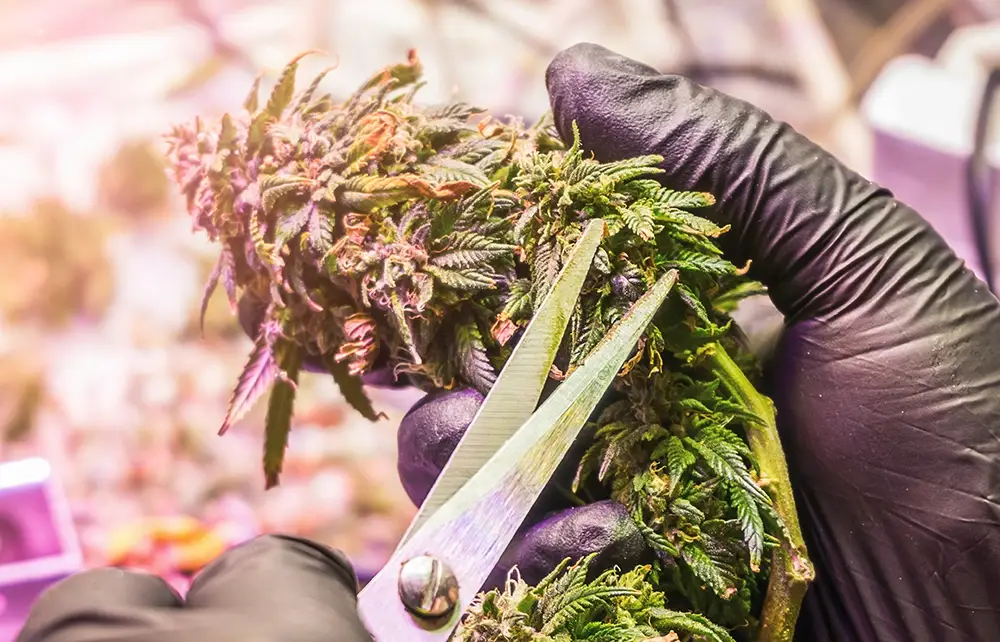
Hand trimming produces the most precise, aesthetically refined bud. A skilled trimmer can work around irregular shapes, preserve more intact trichome heads, and exercise real-time judgment about what to remove and what to leave. For premium-market flower, connoisseur grows, and any situation where presentation quality directly affects price, hand trimming is difficult to beat.
Advantages of hand trimming:
- Highest achievable precision — no machine replicates the judgment of a skilled trimmer
- Maximum trichome and resin preservation when performed carefully
- Low capital investment — quality scissors and a good trim tray are accessible at any budget
- Works well for both wet and dry harvest, with minor technique adjustments
- Quiet operation; no noise or vibration concerns
Disadvantages of hand trimming:
- Not scalable. A single trimmer processes roughly 1–2 lbs per hour depending on skill and strain density; a commercial harvest measured in hundreds of pounds cannot be hand-trimmed by a small crew in a reasonable timeframe
- Physically demanding — hand and wrist fatigue is real, as is back strain during long sessions
- Labor costs are significant if you hire a trim crew; reliability and consistency vary
- Scissors require frequent cleaning during a wet trim session
Hand trimming essentials: At minimum, you need quality trimming scissors, a trim tray to catch kief and leaf material, scissor cleaner or isopropyl alcohol, and gloves.
HBX Titanium Curved Precision Garden Trimming Scissors are purpose-built for harvest work — the titanium-coated blades stay sharper longer and resist resin buildup better than standard stainless. For a complete setup, HBX Premium Hand Trimming Kit includes scissors, a trim tray, gloves, and scissor cleaner — everything a solo trimmer needs in one purchase.
Need a trim tray to catch and collect kief during the process? The Harvest More TrimBin is the top-selling trim tray on HydroBuilder, with a built-in 150-micron filter screen that separates trim from fine trichome powder automatically.


Trimming Machines: Speed, Scale, and ROI
At a certain harvest volume — roughly 5+ lbs per harvest for most growers — trimming machines become not just convenient but necessary. The ROI calculation is simple: if a trimming machine processes 10–15 lbs per hour and replaces hours of paid labor, it often pays for itself within one or two harvests. That math gets more compelling the larger your operation grows.
Modern trimming machines have closed a significant gap with hand trimming in terms of finish quality, particularly on the dry side where purpose-built tumblers and adjustable speed controls allow dialing in results closely matched to hand-quality standards.
Advantages of machine trimming:
- Processing speed is 10–25x faster than hand trimming, depending on machine and bud structure
- Consistency across a full harvest batch — no fatigue-related variation late in the trim session
- Reduced labor cost and crew management overhead
- Machines can trim wet, dry, or both (depending on model)
- Most machines collect trim separately for downstream use in extraction
Disadvantages of machine trimming:
- Significant upfront capital investment
- Requires storage space when not in operation
- Machine trimming rarely achieves hand-trim quality on complex or irregular bud shapes
- Requires regular cleaning, blade sharpening, and preventive maintenance
- Noise is a factor in some facilities
Top Trimming Machine Picks
Mobius M108S Trimming Machine
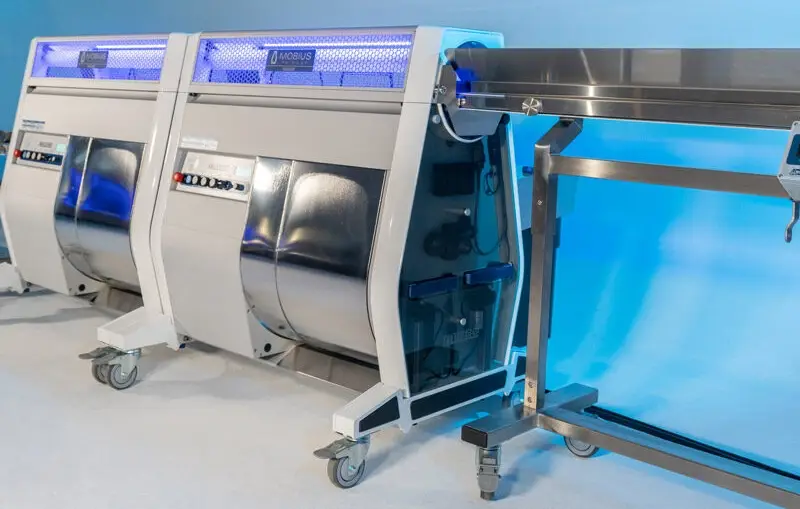
The Mobius M108S Trimming Machine is the top-performing trimming machine in the HydroBuilder catalog and the standard for large-scale commercial operations. Built with Mobius’s signature TriFlex blade system, the M108S uses three independent blade cartridges flexed against each other to deliver a scissor-quality cut while minimizing trichome damage compared to traditional tumbler designs. It processes 66–120 lbs per hour in wet-trim configuration and 30–60 lbs per hour dry, and supports both wet and dry operation. For high-volume facilities where quality is non-negotiable, the M108S is the benchmark.
Centurion Pro Tabletop + Bucking Machine Bundle
For mid-size operations and growing commercial growers who need machine efficiency without committing to a full facility-scale system, the CenturionPro Tabletop Trimming Machine & Bucking Machine Bundle offers exceptional value. The Tabletop handles both wet and dry trim with CenturionPro’s dual-purpose Hybrid Tumbler, while the included bucking machine accelerates the destemming step that precedes trimming — the combination meaningfully reduces total harvest processing time per pound. It’s one of HydroBuilder’s consistently top-selling trimming bundles for reason.
Additional Trimming Machine Options
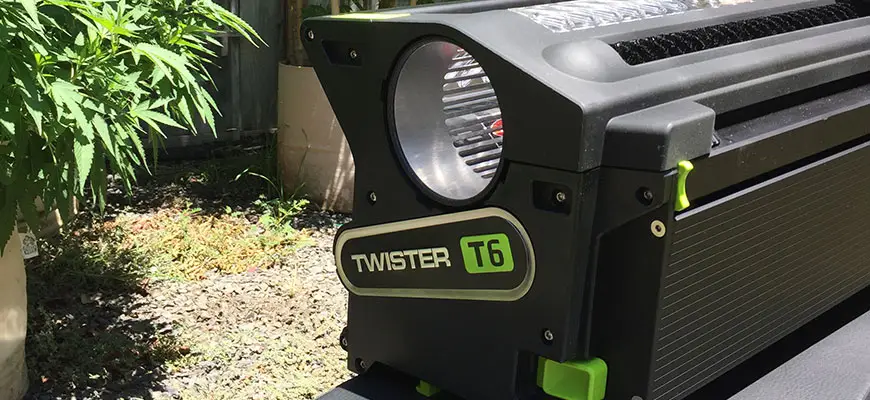
For dry-trim-focused operations at smaller scale, the Mobius TD15 Dry Trimming Machine is a highly regarded choice — compact, reliable, and specifically engineered to minimize trichome damage on dried flower. The Centurion Pro Dry Batch Model 0 offers a batch-style workflow that works well for operations processing multiple strains sequentially. For brand variety, the Twister T4 VSC Trimming Machine with Trim Saver Vacuum is a longtime favorite, known for Twister’s StaySharp blade system and compatibility with both wet and dry trim.
Before making a trimming machine investment, check out our best trimming machines guide for a deep-dive comparison across brands, sizes, and price points.


Cleaning and Maintenance: Both Methods Require It
Regardless of whether you’re hand-trimming or running a machine, cleanliness and maintenance are non-negotiable — not just for equipment longevity, but for product quality and contamination control between strains and grow cycles.
For trimming machines: Follow the manufacturer’s schedule precisely. The Twister T4 and Mobius machines require blade inspection and cleaning between every session, and more frequent cleaning during wet trim operations where resin builds up rapidly on tumbler surfaces. If a tumbler is dropped or damaged, pull it from service immediately — a warped tumbler will affect cut quality and can cause internal damage. Filter bags (Mobius and Twister both use them) should be inspected and replaced on schedule; clogged bags reduce airflow and trim quality.
For hand trimming tools: Scissors and pruners need to be wiped down with isopropyl alcohol or dedicated scissor cleaner regularly throughout the session — every 20–30 minutes during a wet trim is a reasonable baseline. Between grow cycles, full disinfection is required. Using scissor cleaner designed for resin removal is far more effective than solvents alone. Plant material left on blades will decay and introduce biological contamination the next time those tools are used.
For crew or multi-trimmer operations, the HBX Heavy Duty Premium Black Nitrile Gloves are available by the case for commercial-volume use — 6 mil thickness handles the combination of resin exposure and tool handling without sacrificing dexterity.
Which Method Is Best for Commercial Harvests?
For commercial operations, the wet vs. dry and hand vs. machine decisions come down to throughput requirements, product positioning, and drying infrastructure.
Wet trimming + machine: The dominant approach in high-volume licensed facilities where speed-to-market and labor efficiency take priority. Wet-capable machines like the CenturionPro line and Twister T4 process large volumes immediately after harvest. The trade-off is some terpene loss relative to a slower dry — a factor that matters less if the product is destined for extraction or low-cost wholesale markets.
Dry trimming + machine: The path to premium-quality machine-trimmed flower. A controlled drying environment (60–65°F, 45–55% RH, 10–14 days minimum) followed by a dry-batch machine like the Mobius M108S or Centurion Pro Dry Batch machines can produce results that approach — and in some assessments match — hand-trim quality at scale.
Hybrid workflow: Remove large fan leaves immediately at harvest (reduces drying time without forgoing the slow cure), hang whole branches or plants for a 10–14 day dry, then run through a machine or hand-finish for manicuring. This is increasingly the standard workflow in boutique and craft-tier commercial operations.
Hand finishing over machine pre-trim: Many commercial operations use machines for the bulk trim and then employ a small hand-finishing crew for top-shelf or dispensary-display product. The machine gets you 80% of the way there; hands get you the last 20%.
For Commercial Operations: Workflow at Scale
Recommended commercial harvest sequence:
- Buck first. Use a dedicated bucking machine to remove flower from stems before trimming. This dramatically increases throughput entering the trimmer.
- Remove fan leaves immediately. Whether you’re trimming wet or dry, fan leaves should come off at harvest — they add moisture and volume with no product value.
- Establish drying environment before harvest. For dry trim workflows, your drying room should be at 60–65°F, 45–55% RH with adequate airflow (gentle circulation, not direct) before the first plant comes down.
- Select machine by volume and method. Match machine throughput to your harvest volume and trim method (wet vs. dry). Undersized machines create bottlenecks; oversized machines increase acquisition cost without yield.
- Clean continuously. Build cleaning intervals into your workflow protocol, not as an afterthought. During wet trim, cleaning every 30–45 minutes of machine run time is typical. Dry trim allows longer intervals.
- Sort post-trim. A bud sorter downstream of your trimmer separates A/B/C grades automatically, enabling tiered pricing without manual sorting labor.
For an overview of the full harvest process from a commercial perspective, see our beginner’s guide to harvesting, drying, and curing.
Whether You Trim Wet or Dry — We Have the Supplies
We carry a complete range of wet trimming machines and dry trimming machines alongside hand trimming tools, trim trays, gloves, and cleaning supplies for every approach and every scale. Questions about which trimming solution fits your operation? Call 888-815-9763 or reach us at support@hydrobuilder.com.
Wet Trim vs. Dry Trim, Hand Trimming & Machines: FAQs
Is it better to trim wet or dry?
Dry trimming generally produces higher-quality flower when the drying environment can be properly controlled (60–65°F, 45–55% RH). The slower moisture loss preserves terpenes and prevents harsh flavor from residual chlorophyll. Wet trimming is the better choice in humid climates where mold risk is high during long hang-dries, for large-volume operations where drying space is limited, or when product is destined for extraction rather than premium flower markets. Most commercial growers use a hybrid approach.
Does wet trimming preserve trichomes better than dry trimming?
Wet trimming keeps trichomes intact and less fragile during the cutting process — they’re still supple and adhere well. But the faster drying that follows a wet trim can reduce overall terpene quality. Dry trimming produces more brittle trichomes at the time of trimming, but the slower hang-dry that precedes it better preserves terpene development. Net result: for final flower quality, controlled dry trimming with a gentle machine or careful hand-trimming typically wins.
What's the difference between wet and dry trimming machines?
Wet trimming machines use tumblers with wider openings and blade geometries designed to handle sticky, pliable plant material. Dry trimming machines use tighter tolerances, more delicate blade contact, and gentle tumbling action optimized for the brittle structure of dried flower. Some machines — including most CenturionPro and Twister models — are designed to operate in both modes with different tumbler attachments or speed settings.
How long does it take to hand trim a pound of flower?
A skilled hand trimmer working on well-structured bud typically processes 1–2 lbs per hour. Dense, leafy strains can take considerably longer. Beginner trimmers may average under 1 lb per hour until technique improves. This is why hand trimming becomes economically impractical at commercial volumes — a 100-lb harvest requires 50–100+ trimmer-hours, not counting fatigue-related slowdown.
At what harvest size do you need a trimming machine?
Most growers find that 5–10 lbs per harvest is the inflection point where a trimming machine pays for itself within one or two cycles. Below that threshold, a skilled hand trimmer (yourself or a helper) is often more cost-effective given the acquisition and maintenance cost of even entry-level machines. Above it, machine trimming typically reduces total labor cost and time significantly enough to justify the investment.
Can you use a trimming machine for both wet and dry trimming?
Many commercial trimming machines — including the CenturionPro Tabletop, Twister T4, and Mobius M108S — are compatible with both wet and dry trim with appropriate tumbler selection and speed settings. Some machines are dry-only (Triminator Dry series, Centurion Pro Dry Batch models). Check the manufacturer’s specifications before purchasing if operational flexibility is important to your workflow.
What's the best way to clean trimming scissors?
Isopropyl alcohol (91%+) or dedicated scissor cleaner is most effective for dissolving resin buildup on trimming scissors. During a wet trim session, wipe blades every 20–30 minutes to maintain cut efficiency. Between grow cycles, full disinfection with a botanical sanitation product prevents cross-strain contamination. Titanium-coated blades like those on HBX Titanium Trimming Scissors accumulate resin more slowly than uncoated stainless, reducing cleaning frequency.
Is wet trimming harder than dry trimming?
Wet trimming is physically easier in some ways — the leaves are pliable and remove more readily. But it’s more demanding logistically: it front-loads all trimming work immediately after harvest, creates a messier workspace, and requires more frequent cleaning of scissors and machine surfaces. Dry trimming takes more time overall (waiting for the dry) but is less intense in any single work session.
How do commercial growers handle wet vs. dry trimming at scale?
Most licensed facilities above a certain volume run wet trim for the bulk of their harvest — it’s faster, requires less hang space, and gets product to the next processing step quickly. Operations positioning flower for premium dispensary markets often use a hybrid approach: rough-trim wet, hang-dry for a full 10–14 days, then machine or hand-finish to achieve the manicure quality the market expects. Boutique craft producers more commonly run full dry trim with machine finishing or hand finish.
What hand trimming tools do you need for a full harvest?
For a complete hand-trim setup, you need quality curved trimming scissors (for close bud work), a flat-blade or straight scissors (for fan leaves), a trim tray with a kief-catching screen, nitrile gloves, and scissor cleaner. The HBX Premium Hand Trimming Kit packages all of these together for a complete single-purchase setup. For operations with multiple trimmers, the 2-person kit and scissor packs of 12 are the efficient commercial buy.