
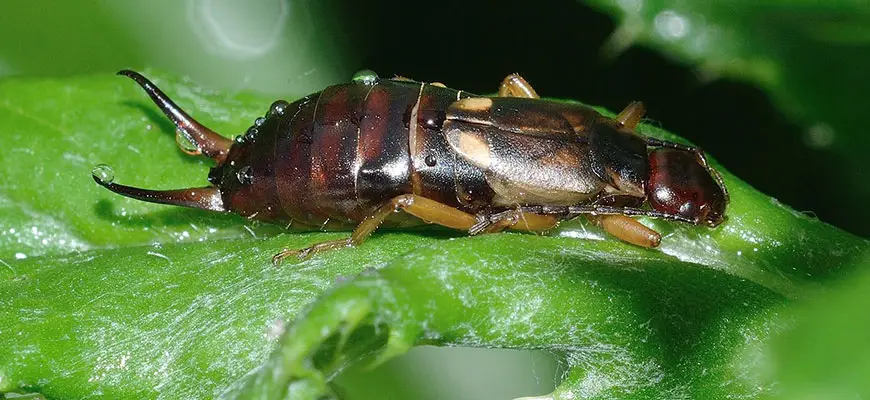
They creep, they crawl, and they’re gross to look at. If you’re looking for information on how to get rid of earwigs in the garden naturally, you’re not alone.
Many gardeners worry about earwigs in garden areas, but the good news is that these pests are rarely harmful to plants.
In fact, most of the time earwigs are nothing more than an eyesore, as they don’t usually feast on plants.
However, that’s not to say that you have to keep them around! Consider these tips for getting rid of these pests, and you’ll find that you can keep them out for good.


What Are Earwigs?
No matter where you live, you’re likely to find earwigs. These bugs are also known as pincher bugs. They’re more likely, however, to live in warm, humid environments.
Although they’re present just about everywhere, they’re difficult to spot. As nocturnal creatures, they like to hide out beneath plant material, decaying wood piles, and rotting logs, and in other dark places.
They also move incredibly fast! Nevertheless, you may find them scurrying among your plants or occasionally in your basement or woodpile.
In North America, the most common species of the earwig is Forficula auricularia. This European based species likely arrived in the early 1900s and is now found in most places in the United States and in Canada.
At about ¾ inch long, these red-brown pests have forceps-like appendages on their rears. These terrifying-looking pincers are scary for sure, but fortunately don’t cause any injury to humans. They run quite quickly and although they can fly, this is rare.
Nymphs look just like adult earwigs, only smaller. They only take about ten weeks to reach adulthood after they’ve shed several sets of skin.
Are Earwigs Bad For Your Garden?

Earwigs are nocturnal by nature, primarily decaying wood and plant matter. They are most active at night. They aren’t one of the most common garden pests – but they can be bad news for your plants.
If given the opportunity (or if other foodstuffs are in short supply), earwigs have been known to turn into vegetables, ornaments, and fruit trees for a snack. Earwigs prefer lettuce, fruit, celery, and flowers, but earwigs eat plenty of other plants as well.
How To Identify An Earwig Infestation In The Garden
Identifying an earwig infestation in the garden can be challenging since many of the signs of infestation mimic those presented by other pests.
You might notice that the leaves of your plants are suddenly jagged and full of holes. This often occurs seemingly overnight, as earwigs live beneath pots or the soil during the day and emerge at night to eat.
You may notice bits of earwig excrement on your plants, too. These look like tiny black pellets.
Damage is more likely to occur after rainy weather when earwigs clamber up out of the ground in search of dry shelter. They can sometimes be found beneath your garden pots, too. You can often find them throughout the home and garden.
Why Do I Have Lots Of Pincher Bugs In My Garden?
In most cases, earwigs are found in just about every healthy garden. There are some conditions that may make you more likely to experience an outbreak, though.
In most cases, earwigs are found in just about every healthy garden. There are some conditions that may make you more likely to experience an outbreak, though.
For instance, they are particularly attracted to moist material. You may have more earwigs during rainy years or in damp areas.
Similarly, they may be more common if you have large piles of mulch or firewood. They are also commonly found on ivy or hedges growing on a wall. So it’s best to avoid growing plants near these if you are worried about earwigs hopping between plants.
Earwigs are creatures that will eat practically anything, but you may find that they are more common on the following plants and food sources:
However, part of learning how to get rid of pincher bugs naturally is learning how to find and eradicate their eggs.
Where Do Earwigs Lay Eggs?
Although some insects will lay their eggs just about anywhere, female earwigs are quite picky about this.
They usually do so in protected areas that aren’t likely to be distributed. So, investigate cracks and crevices, under wet leaves, or between layers of mulch.
Earwig eggs are round and either white or tan. One female will lay up to 50 eggs at a time, though this can depend on the species.
These eggs hatch in just a week, making it difficult for some gardeners to control earwig infestations.


How To Prevent An Earwig’s Infestation In The Garden
There are several ways you can prevent an earwig infestation in the garden. As we mentioned earlier, these bugs are more common in rainy weather and during wet periods, so plan accordingly.
Don’t overwater your garden and if you do water, do so in the morning so there’s plenty of time for the soil to dry out before nightfall. Properly watering your plants sounds really simple, but, it’s important that you actually learn the dos and don’ts.
If you use mulch, resist the urge to pile it up high. Keep your garden space as clean as possible, removing dead plants and plant parts.
This will help reduce the number of hiding spots that earwigs have to choose from.
Implement An IPM Strategy
An IPM strategy, or integrated pest management, is something commercial growers and hobbyists alike should strive to implement.
This is a holistic pest prevention and control approach, where you draw from many different areas to build a strategy to decrease your likelihood of developing an outbreak. And if you do develop one anyway, you’ll be set up to take care of it quickly.
You can read all about integrated pest management in our blog post, but it consists of things as simple as keeping the garden clean and your plants healthy, to preventative spraying, and beneficial bugs.
How To Get Rid Of Earwigs In The Garden Naturally
Even if you keep your garden nice and clean, spray, and do all the things we outlined above, it’s entirely possible to deal with an earwig outbreak.
So, let’s cover best practices on how to get rid of pincher bugs naturally. This pest can start munching on your fresh foliage, and even burrow into your media and feast on your roots, so you need to act fast.
Start With Insect Traps
To make sure it’s actually earwigs causing damage, you may want to put out earwig traps to attract earwigs monitor their populations.
You can lay these out between your plants, or even directly in your potted plants. Check the traps each morning and get rid of the earwigs you find.
Natural Home Remedies To Get Rid Of Earwigs In The Garden
If it is earwigs to blame for the damage to your plants, you might try spreading petroleum jelly or Vaseline around the base and stems of your plants.
In most cases, earwigs won’t crawl over it. But for something a bit stronger and more effective, try diatomaceous earth.
You can also use an oil pit trap. Combine equal parts of vegetable oil and soy sauce in a small container, then secure a lid with holes punched into the top.
These holes should be large enough for the earwigs to crawl through (the oil should stop them from escaping).
Change out the mixture and dispose of the dead earwigs as needed. There are even beneficial nematodes you can use.
These serve as a wonderful alternative to chemical pesticides. Some gardeners report that earwigs are attracted to lights, so getting rid of any lighting in your garden may also help.
Try Diatomaceous Earth
Diatomaceous earth, or DE, is an incredibly effective natural way to get rid of earwigs naturally.
Put some around the base of your plants in dry weather – you may have to reapply whenever it rains.
Bring Beneficial Bugs Such As The Tachinid Fly To The Fight
Beneficial bugs are an incredibly effective, organic approach to pest removal. Try fighting fire with fire, by bringing helpful insects to your garden.
Earwigs only have one natural predator, the tachinid fly. You can attract this fly to reduce earwig population by planting species like dill, fennel, calendula, and alyssum.


Does Soapy Water Kill Earwigs?
If you do happen to find pincher bugs, many gardeners recommend using soapy water to kill them.
To do this, simply drop earrings that you find into a bucket. It should kill them on contact. Arguably even more effective than soapy water is alcohol.
Alcohol acts as a surfactant, penetrating an insect’s coat of armor and killing on contact. You can use rubbing alcohol or ethanol. If you want to use the best kind of soap to kill earwigs, though, you’ll want to give insecticidal soap a shot.
This is a completely natural, safe pest control method that washes the bugs right off your plants, killing them in the process. These tend to be botanical, meaning derived from plants, so you aren’t bringing any potentially harmful chemicals to your garden.
For more information on what exactly this product is, when to use it, and how to use it, check out our complete guide on insecticidal soap.
What Is The Best Pesticide To Kill Earwigs?
If you can’t afford to waste any time cleaning up your earwig outbreak, you are likely wondering, what is the best pesticide to kill earwigs?
Some of the most common pesticides for killing earwigs include malathion, pyrethrins, permethrin, bifenthrin, and azadirachtin. The following products are great options that include one or more of these active ingredients:
-
- General Hydroponics AzaMax Concentrate: OMRI Certified, broad use pesticide (includes azadirachtin)
-
- PyGanic Gardening Insecticide: Made from botanically-derived active ingredients— pyrethrins, extracted from daisy flowers and is OMRI listed for organic gardening.
-
- Certis Biologicals Des-X Organic Insecticidal Soap Concentrate: Fogger that can be left in grow room, greenhouse, or outdoors near plants to kill earwigs with no residuals or phto-toxicity (includes Pyrethrum)
Final Thoughts On How To Get Rid Of Earwigs In The Garden
Now that you know how to get rid of earwigs in the garden naturally, you don’t have to stress should your plants show signs of an outbreak!
Fortunately, by following the tips above, you can end the vicious cycle of trial and error and banish these many-legged beasts for good.
Shop for all of your pest control supplies and gardening needs at Hydrobuilder, and you can get started immediately. We offer the best prices and best customer service for anything your green thumb desires.