Leafminers are one of the most visually distinctive pests you’ll encounter in an indoor garden or greenhouse — their larvae tunnel through leaf tissue and leave unmistakable serpentine trails that no other pest produces. Left unmanaged, leafminers compromise canopy photosynthesis, create entry points for fungal infection, and can render portions of a crop unsafe to consume. Whether you’re managing a home grow tent or a commercial indoor facility, early detection and a structured integrated pest management (IPM) approach are your best defense.
This guide covers everything you need to know about leafminer biology, accurate identification, prevention strategies, biological controls, and the organic spray treatments that work — including a commercial-scale IPM workflow for professional operations.
What Are Leafminers?
Leafminers are not a single species but a category of insect larvae — including flies (Diptera), moths (Lepidoptera), and beetles (Coleoptera) — that hatch from eggs deposited inside leaf tissue and feed between the upper and lower leaf surfaces. It’s the larval stage, not the adult, that causes the characteristic tunneling damage.
Several species are common in indoor growing environments:
- Liriomyza trifolii (American serpentine leafminer) — the most commonly encountered species in cannabis cultivation and greenhouse crops; produces winding, serpentine trails
- Liriomyza bryoniae (tomato leafminer) — frequent in greenhouse vegetable production
- Phyllocnistis citrella (citrus leafminer) — targets citrus and some ornamentals, produces tight spiral mines
Understanding which family your leafminer belongs to matters for treatment selection — particularly when considering Bt (Bacillus thuringiensis) applications (more on that below).
Identifying Leafminer Damage
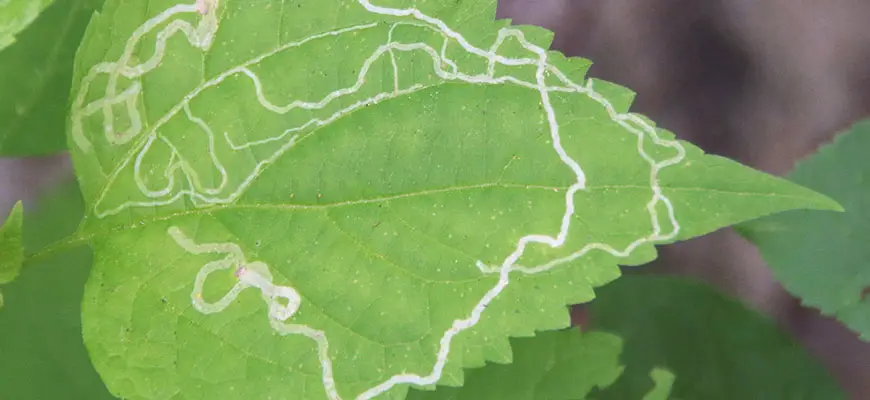
Leafminer damage is highly distinctive. Key identification markers include:
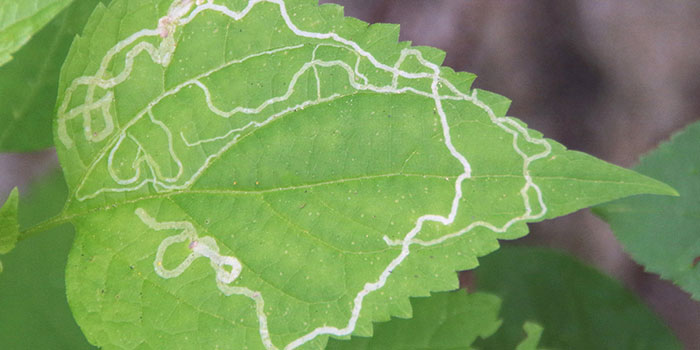
Serpentine (winding) trails on leaf surfaces — the signature symptom of fly-family leafminers like Liriomyza species. Trails start narrow and widen as the larva grows.
Blotch mines — irregular, patch-like areas of discolored tissue, more common with moth-family leafminers.
Frass deposits — dark specks of larval excrement visible through the leaf surface inside the mine.
Entry and exit holes — tiny puncture marks where eggs were deposited (oviposition sites) or where larvae will emerge.
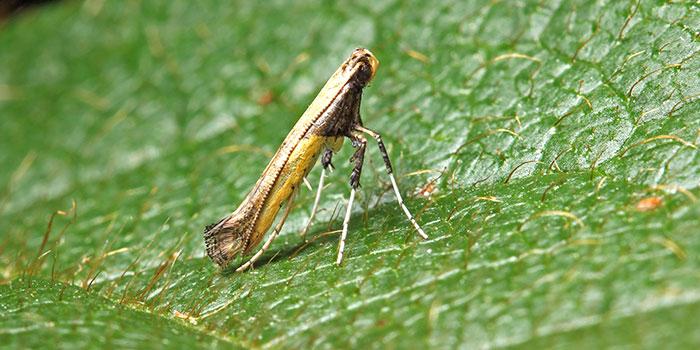
Adult leafminer flies are small (1.0–2.0 mm), often with yellow and black patterning. Monitoring adult populations with HBX Yellow Sticky Traps gives you early warning of population buildup before larval damage becomes widespread. Place traps at canopy level and check them weekly.
Prevention: Stop Leafminers Before They Start
Prevention is substantially more cost-effective than eradication. The following measures reduce leafminer pressure across any growing environment:
Quarantine all incoming plant material. New clones, transplants, and cuttings are a primary introduction vector for leafminers. Isolate incoming material for 7–10 days and inspect all new foliage before introducing plants to your main space.
Install physical barriers. Insect mesh over ventilation intakes (150–200 micron) prevents adult flies from entering enclosed growing spaces. For outdoor and greenhouse growers, row covers over vulnerable crops during peak adult flight periods provide meaningful protection.
Sticky trap monitoring. Hang HBX Yellow Sticky Traps at canopy height throughout your grow space. A sudden increase in adult trap counts is your first signal to move from monitoring to active control before larvae establish.
Crop rotation and sanitation. Leafminers can overwinter as pupae in soil and growing media. Thoroughly cleaning grow spaces between cycles — including disinfecting surfaces with BioSafe SaniDate 5.0 — reduces carryover from one crop to the next.
Environmental management. Leafminer adults are more active under warm, dry conditions. Maintaining appropriate temperature and humidity with an HBX Thermo-Hygrometer lets you track environmental conditions that influence pest pressure.
These strategies work at any scale — from a home grow tent to a multi-room commercial facility. For growers managing larger operations, the Commercial Workflow section at the end of this article covers facility-scale protocol integration.
Biological Control: Using Beneficial Insects to Manage Leafminers
Biological control is the most sustainable and canopy-safe approach to leafminer management — and for enclosed environments like grow rooms and greenhouses, it’s often the most effective long-term strategy.
Diglyphus isaea — The Primary Biocontrol Agent for Leafminers
ARBICO Organics Diglyphus isaea are the gold standard parasitic wasp for leafminer control. These 2mm ectoparasitoids locate leafminer larvae within their mines, inject a paralyzing toxin that stops feeding immediately, and lay 1–5 eggs alongside the paralyzed larva. The hatched wasp larvae then consume the leafminer from the outside in — a process called ectoparasitism. Adults also engage in host-feeding, directly killing additional larvae.
What makes Diglyphus particularly effective: They parasitize early-stage (1st and 2nd instar) larvae before substantial leaf tissue damage occurs. Under optimal conditions, a single female can neutralize approximately 360 leafminer larvae across her adult lifespan of 2–3 weeks.
Application guidance:
- Release rate: 500–1,000 wasps per acre every 2 weeks; plan for 2–3 separate releases to establish a colony
- Optimal conditions: 75–90°F, up to 80% RH. Performance will be reduced at temperatures below 65°F or above 95°F
- Timing: Release at first sign of leafminer damage. Early releases establish better than late rescue applications
- Method: Release in the early morning or late afternoon, distributing the vial gradually across the canopy
- Compatibility note: Diglyphus establish best when synthetic insecticide applications cease. If a knockdown spray is required before release, allow sufficient residual time per product label before introducing beneficials
- isaea can manage 18 known leafminer species across 4 genera, including Liriomyza trifolii — the most prevalent cannabis leafminer species.
Browse the complete selection of beneficial insects to build a full biocontrol program.
Other Beneficial Insects
While Diglyphus provides targeted leafminer control, other beneficial insects can support broader IPM programs.
- Green lacewings (Chrysoperla species): Larvae can help reduce pests on leaf surfaces, including potentially leafminer eggs before larvae enter leaves.
- Parasitic nematodes: May help target pupae in soil, with variable efficacy depending on species and conditions.
- Predatory beetles: Provide general pest suppression that may indirectly reduce leafminer populations.
Browse the complete selection of beneficial insects to build a comprehensive IPM strategy tailored to your operation.
Organic Spray Treatments for Leafminer Control
When leafminer populations exceed economic or aesthetic thresholds — or when biological controls need reinforcement — the following OMRI-listed organic treatments are the most effective options available.
BioSafe AzaGuard — Azadirachtin IGR (Primary Treatment)
BioSafe AzaGuard is a 3% azadirachtin formulation — a naturally derived insect growth regulator (IGR) extracted from neem tree seeds. As the highest-selling pest control product in the Hydrobuilder catalog, it’s the most trusted leafminer treatment for indoor and commercial growers.
How it works against leafminers: Azadirachtin is most effective at the early larval stage (1st and 2nd instar). It disrupts the hormonal signaling that regulates molting, preventing larvae from progressing to the next developmental stage. Because it acts as an IGR rather than a direct contact toxin, timing application to coincide with early larval presence (indicated by fresh, narrow mines) maximizes efficacy.
Translaminar activity: Unlike pure contact sprays, AzaGuard has some translaminar movement into leaf tissue — meaning thorough canopy coverage, including leaf undersides where eggs are deposited, will deliver the active to larvae feeding within the mesophyll. This is a meaningful advantage over products with zero systemic activity.
Application notes:
- Always follow label dilution rates — do not apply a blanket concentration without consulting label guidance, as plant tolerance varies
- Apply at 7–10 day intervals as part of a rotation program
- Can be drenched into growing media to control root-zone pests simultaneously
- OMRI-listed; compatible with most organic production programs
Spinosad compatibility: If rotating AzaGuard with spinosad (see below), allow 3–5 days between applications. Do not tank-mix the two without label confirmation.
Monterey Garden Insect Spray with Spinosad — Rotation Partner
Monterey Garden Insect Spray with Spinosad is a fermentation-derived biological insecticide that provides direct knockdown of leafminer larvae. Spinosad is explicitly labeled for leafminers and is OMRI-listed for organic production.
Important compatibility note for growers using biocontrol: Spinosad is moderately harmful to adult Diglyphus isaea and other parasitic wasps on initial contact. If you’re running a Diglyphus program alongside spinosad, time applications carefully:
- Apply spinosad only when Diglyphus populations have not yet been released, or during a gap between release cycles
- Spinosad’s residual activity on plant surfaces is approximately 5–7 days under typical greenhouse conditions; allow this window to pass before re-releasing beneficials
- Spinosad degrades quickly under UV exposure; indoor growers will see longer residual activity than outdoor growers
- Always confirm compatibility with your biocontrol supplier before combining programs
For cannabis and other crops subject to state residency testing, spinosad has pre-harvest interval (PHI) requirements — review the label and your state testing compliance guidelines before applying during late flower stages.
Lost Coast Plant Therapy — Contact Treatment
Lost Coast Plant Therapy is a contact spray combining plant-based essential oils, soap, and isopropyl alcohol that suffocates soft-bodied insects and their eggs on contact. While it does not have translaminar activity and cannot reach larvae inside established mines, it’s effective as a preventative surface treatment applied at first signs of adult activity, and can reduce egg hatching when applied early.
Application rate: 1 oz per gallon of water. Avoid applying when temperatures exceed 80°F to prevent phytotoxicity.
A Note on Bt for Leafminers
Bacillus thuringiensis (Bt) is frequently listed as a leafminer treatment — but this requires an important qualification that most guides skip. Bt is only effective against Lepidoptera (moth) leafminers, such as Phyllocnistis citrella. It has no efficacy against fly-family (Diptera) leafminers like Liriomyza trifolii and Liriomyza bryoniae — which are the species most commonly encountered in cannabis cultivation and commercial greenhouse grows.
If you’re dealing with Liriomyza species (indicated by serpentine trails rather than blotch mines, and confirmed by adult fly appearance), Bt will not provide meaningful control. Confirm your species before investing in a Bt program.
Supporting Tools and Sanitation
Application equipment: For whole-canopy coverage in larger spaces, the
HBX Pump Sprayer 8 Liter provides consistent pressure for thorough leaf underside coverage — essential when targeting egg deposits and early larvae. For spot treatments and smaller spaces, the HBX Handheld Pump Sprayer 2 Liter is well-suited for targeted application.
Post-treatment sanitation: After an active leafminer infestation, disinfecting hard surfaces, tools, trays, and equipment prevents pupae and adults from persisting in your facility between crops. BioSafe ZeroTol 2.0 is OMRI-listed and effective for facility sanitation on tools, benches, and growing surfaces.
For hydroponic systems, consider adding HGV Condition – Clear to your post-crop system flush protocol. While it does not treat leafminers directly, maintaining clean irrigation lines reduces biofilm accumulation — important for preventing secondary fungal and bacterial issues that leafminer wound sites can invite.
Quick Reference: Physical Removal for Small Infestations
When catching an infestation early — a few trails on a handful of plants — physical intervention is faster than a full spray program:
- Pinch mines along the trail path between your forefinger and thumb. This crushes larvae inside the leaf without applying any product.
- Remove heavily infested leaves. If damage covers more than 30–40% of a leaf’s surface, removing the leaf reduces the larval population and eliminates oviposition sites.
- Bag and dispose removed material in sealed bags — do not compost. Leafminer pupae can survive composting and re-establish.
This approach works well for home growers catching a light infestation in a vegetative crop. It is not practical as a sole control strategy at commercial scale or with established infestations.
What to Do If You Find Leafminers on Your Plants
A structured response sequence matters more than any individual product. Here’s the logical decision tree:
Light infestation (a few trails, no secondary infection): → Pinch mines physically, remove affected leaves, deploy HBX Yellow Sticky Traps, begin Diglyphus isaea preventative release
Moderate infestation (multiple plants, active trail expansion): → Apply BioSafe AzaGuard at early larval stage, increase sticky trap density, begin Diglyphus release 7–10 days after azadirachtin application (post-residual window)
Heavy infestation (widespread canopy damage, multiple generations detected): → Apply spinosad for knockdown if Diglyphus not yet established; rotate to azadirachtin at next application window; establish Diglyphus post-spinosad residual period; review intake screening and sanitation protocol
For Commercial Operations: Facility-Scale Leafminer IPM Protocol
Commercial cultivators managing 1,000+ sq ft of canopy face leafminer challenges that require systematic scouting and rotation discipline, not reactive spraying.
Weekly Scouting Protocol
- Assign dedicated scout time (minimum 1 hour/week per 1,000 sq ft)
- Use an HBX Thermo-Hygrometer to log environmental conditions at scout time — elevated temperature correlates with faster leafminer development
- Record trap catch counts from HBX Yellow Sticky Traps weekly; plot trends to detect population buildups 2–3 weeks before canopy damage becomes visible
- Inspect 10–15% of plant foliage per room per scout session; focus on upper canopy new growth where oviposition is most frequent
Treatment Action Thresholds
Establish economic thresholds to avoid unnecessary applications that destabilize your biocontrol program:
- Low (monitoring only): 1–2 adult flies per sticky trap per week, no active mines visible
- Moderate (biocontrol activation): 3–5 adults per trap per week, isolated trail damage; begin Diglyphus releases
- High (spray intervention): 5+ adults per trap per week, expanding trail damage across multiple plants; apply AzaGuard, plan Diglyphus re-release post-residual window
4-Week Rotation Template
Cannabis-Specific Compliance Notes
For cannabis cultivators subject to state testing requirements:
- Azadirachtin (AzaGuard): Review your state’s allowable pesticide list and PHI requirements. Most state programs allow azadirachtin; confirm current status with your compliance team.
- Spinosad (Monterey Garden Insect Spray): Check pre-harvest interval against your harvest schedule. Residues can be detectable; time applications to allow adequate clearance.
- Diglyphus isaea: No pesticide residue concerns — biological controls do not trigger testing failures.
Maintaining a spray log documenting product, dilution rate, application date, and application method is best practice regardless of state requirements.
End-of-Cycle Sanitation Sequence
- Remove all plant material; bag and seal for disposal
- Apply BioSafe SaniDate 5.0 to all hard surfaces — floors, walls, benches, trays, tools
- Fog with BioSafe ZeroTol 2.0 if leafminer or secondary fungal pressure was present during the cycle
- Flush irrigation lines with HGV Condition – Clear before introducing the next crop
- Replace sticky traps with fresh units before new crop introduction
Why Work With HydroBuilder for Your IPM Program?
HydroBuilder stocks the full spectrum of leafminer management tools — from ARBICO Organics beneficial insects and BioSafe pest controls to HBX monitoring and application equipment — backed by expert grower support. Commercial accounts have access to dedicated account representatives, volume pricing on IPM consumables, and custom quote requests for facility-scale programs.
If you’re unsure which pest is affecting your crop, our Grow Diagnostics service can help you get an accurate identification before committing to a treatment program.
For related pest management guides, see: