

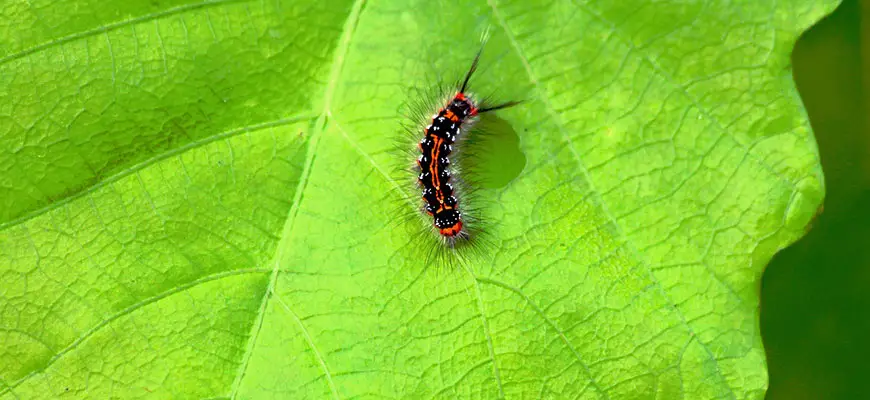
Caterpillars are one of the fastest-acting pests in the garden. A moderate infestation of hornworms or loopers can strip a plant’s foliage in 48 to 72 hours, leaving little time to react once populations establish. Knowing how to get rid of caterpillars on plants — and more importantly, how to identify them correctly before you act — is what separates a manageable setback from a lost crop.
This guide covers identification, prevention, biological controls, and targeted chemical intervention for growers at any scale, from a backyard vegetable bed to a protected growing environment.
Whether you’re managing a small garden or a large grow, the same IPM principles apply — identify the species, escalate from least to most invasive, and protect beneficial insects throughout.
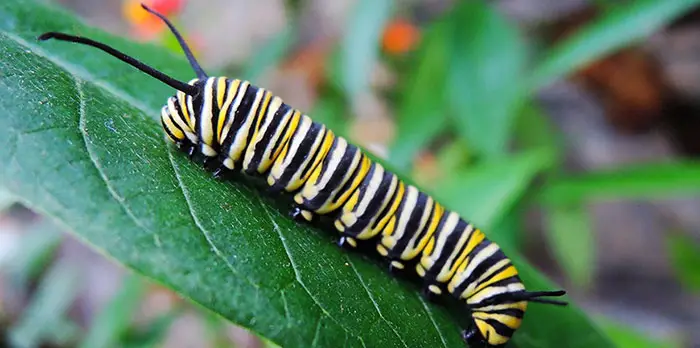
How to Identify Caterpillars and the Damage They Leave
Caterpillar damage is distinctive once you know what to look for. Plants show jagged or scalloped leaf edges, holes chewed through leaf tissue (not just surface stippling, as with mites), or entire shoots clipped at the base. Leaves that appear to be “fastened” or folded with silk webbing, or that curl into tubes, indicate leafrollers or webworms working inside a protective structure.
The damage pattern often tells you more than the pest itself:
- Ragged holes in leaf centers or edges → loopers, armyworms, or imported cabbage worms
- Shoots or stems cut at soil level → cutworms, which feed at night and hide in soil during the day
- Skeletonized leaves or webbed leaf clusters → tent caterpillars or fall webworms
- Deep, excavated feeding on buds and flowers → corn earworm/tomato fruitworm (Helicoverpa zea)
- Irregular tunneling inside fruit → European corn borer or codling moth larvae
Inspect plants at dawn and after dusk using a flashlight, when many species are actively feeding. Check both the upper and lower leaf surfaces, and look in the soil around the base of your plants if you suspect cutworms.
Not Every Caterpillar Is a Crop Enemy
Before you treat, identify. Several common garden caterpillars are larvae of beneficial pollinators — most importantly, Monarch butterflies (Danaus plexippus), which feed exclusively on milkweed and are unlikely to appear on crop plants. Black swallowtail larvae target dill, parsley, and fennel specifically; Eastern tiger swallowtail larvae feed on cherry and tulip tree. These are worth protecting.
The pest species most commonly affecting crops are:
| Species | Primary Crops Affected | Key Identifier |
|---|---|---|
| Imported cabbage worm | Brassicas, kale, cabbage | Velvety green; white butterfly adult |
| Tomato hornworm | Tomatoes, peppers, eggplant | Large, green, white diagonal stripes |
| Corn earworm / fruitworm | Corn, tomatoes, squash | Tan/green/striped; enters fruit from tip |
| Fall armyworm | Grasses, corn, leafy greens | Inverted Y on head; brown/striped |
| Cabbage looper | Brassicas, lettuce | Arching "loop" motion when crawling |
| Cutworm (several spp.) | Broad host range | Smooth, gray/brown; soil-dwelling |
| Leafroller | Many host plants | Leaves fastened together with silk |
How to Prevent Caterpillars in the Garden
Prevention is most effective when applied before eggs are laid. The adult stage — typically a moth or butterfly — deposits eggs on leaf surfaces, often in clusters. Disrupting the egg-laying opportunity reduces the need for reactive treatment.
Rotate crops yearly. Caterpillar species show strong host-plant fidelity. Imported cabbage worms follow brassicas; hornworms follow Solanaceae. Moving crop families to new beds each season breaks the overwintering site-to-host cycle and reduces local population buildup.
Use floating row covers before egg-laying begins. Fine-mesh row covers (17–30 g/m²) physically exclude adult moths and butterflies from reaching foliage. Install at transplant time, before any evidence of eggs, and remove only for pollination if plants require it. Once eggs are present under the cover, the barrier is counterproductive.
Companion plant with repellent species. Caterpillars avoid the volatile compounds in lavender, sage, rosemary, dill (when flowering), and peppermint. Interplanting these along row edges creates olfactory disruption that discourages egg-laying, though effectiveness is moderate and should not replace other control methods.
Scout regularly. The most cost-effective prevention is consistent monitoring. Set HBX Yellow Sticky Traps throughout your garden at a rate of one trap per 25–50 sq ft — while they do not catch caterpillars directly, they catch adult moths and can signal population pressure before eggs are laid. Physical leaf inspections twice weekly, checking leaf undersides and bases, are essential during warm months (65–90°F / 18–32°C) when oviposition is highest.
How to Get Rid of Caterpillars on Plants: IPM Escalation Ladder
The correct approach follows an integrated pest management (IPM) framework: start with the least-invasive method, escalate only when needed, and preserve beneficial insects throughout. Rushing to chemical controls when manual removal would suffice creates unnecessary resistance pressure and disrupts natural predator populations.
For a broader overview of IPM principles across all pest types, see our Integrated Pest Management guide.
Step 1: Manual Removal (Minor Infestations — Under 5 Caterpillars Per Plant)
Inspect plants in the early morning when caterpillars are most visible and slower-moving. Check both leaf surfaces, growing tips, and soil near the base. Hand-pick every caterpillar and egg cluster you find, depositing them into a bucket of soapy water.
For silk tents or nests (tent caterpillars, fall webworms) on nearby trees, use a long stick to puncture the tent and remove the entire structure in the morning before caterpillars disperse. Take removed material well away from the garden.
This method is effective for low-pressure situations and costs nothing. It works best when detection is early — the reason daily scouting matters so much.
Step 2: Biological Controls — Beneficial Insects and Parasitic Organisms
Several natural enemies are highly effective against caterpillars and should be deployed before moving to chemical intervention. Our guide to beneficial bugs covers these in detail.
Parasitic wasps (Trichogramma spp.) are among the most effective caterpillar biocontrols available. They parasitize caterpillar eggs before larvae emerge, preventing the infestation before it starts. Trichogramma is available commercially and can be released at rates appropriate to garden size, following label guidance.
Ichneumon wasps parasitize larvae and pupae of many pest caterpillar species and are non-aggressive to humans. Attracting them with flowering plants in the carrot family (parsley, fennel, dill, cilantro allowed to bolt) provides free, resident biocontrol.
Nematodes (Steinernema feltiae or S. carpocapsae) are effective against soil-dwelling species like cutworms, applied as a soil drench in moist conditions at 55–75°F (13–24°C).
Step 3: Botanical and Biological Sprays
When pest pressure is moderate, targeted organic sprays applied correctly can eliminate infestations without disrupting the broader beneficial insect community.


Bacillus thuringiensis var. kurstaki (Btk) — The Frontline Biological Insecticide
Lorem ipsum dolor sit amet, consectetur adipiscing elit. Ut elit tellus, luctus nec ullamcorpe
Btk is the single most effective and selective treatment for caterpillar infestations. It produces proteins toxic to Lepidoptera larvae (caterpillars specifically) but harmless to humans, bees, birds, and other insects. Caterpillars stop feeding within hours of ingestion and die within 2–5 days.
Monterey Lawn & Garden B.t. Biological Insecticide is the standard recommendation for most gardens. Apply when larvae are small (first to second instar — less than ½ inch long) for best results. Mix per label (typically 1–4 tsp per gallon), and apply to all leaf surfaces in the evening or on overcast days to prevent UV degradation of the active ingredient. Reapply every 5–7 days while pressure persists, or after rainfall. Btk has no pre-harvest interval restrictions on most edible crops — confirm label for your specific application.
Critical application note: Btk must be ingested to work. Thorough leaf coverage — top and bottom — is essential. A missed leaf underside means caterpillars feeding there won’t be exposed.r mattis, pulvinar dapibus leo.
Azadirachtin (Neem-Based)
Azadirachtin, the active compound derived from neem tree seeds, disrupts caterpillar molting and feeding through insect growth regulation. It is most effective as a preventive or early-intervention tool rather than a knockdown treatment for established infestations.
BioSafe AzaGuard (azadirachtin 1.2%) is a FIFRA-registered, OMRI-listed insecticide and nematicide with a broad pest label that covers caterpillars (Lepidoptera larvae), thrips, aphids, whiteflies, and soil-dwelling pests. Apply at 1–2 fl oz per gallon at canopy temperatures below 90°F (32°C), in the early morning or evening. AzaGuard works best as part of a rotation with Btk to prevent resistance.
For simpler neem oil applications (non-AzaGuard), Dyna-Gro Pure Neem Oil Concentrate is a concentrated, cold-pressed option that doubles as a leaf surface conditioner. Note that straight neem oil contains relatively low azadirachtin concentrations compared to standardized extracts like AzaGuard.
Spinosad — For Heavy Pressure and Faster Knockdown
When caterpillar pressure is high or larvae have grown past the first instar stage, spinosad provides faster knockdown than Btk while remaining OMRI-listed and relatively low-impact to beneficial insects (when dry).
Monterey Lawn & Garden Insect Spray with Spinosad is effective against loopers, armyworms, leafminers, and multiple caterpillar species. Apply in the evening; spinosad is toxic to bees when wet but safe after drying (2–3 hours).
Mycoinsecticides — For Commercial and Resistant Populations
BioSafe BioCeres WP is a wettable powder mycoinsecticide based on Beauveria bassiana, a naturally occurring entomopathogenic fungus. It infects caterpillars on contact, delivering systemic kill within 3–7 days. BioCeres WP is particularly valuable when incorporated into rotation schedules to prevent resistance to Btk or spinosad, and it is effective against multiple life stages. Apply when relative humidity is above 60% (75–90%+ optimal) and temperatures are 65–85°F (18–29°C) for optimal fungal germination.
Product Spotlight: Application Equipment Matters
The best spray product applied poorly will underperform every time. Caterpillar control requires full canopy coverage, including leaf undersides — where most larvae are active. The HBX Pump Sprayer 8 Liter provides consistent, adjustable pressure for broad-coverage foliar applications across larger gardens and commercial rows, with enough volume to complete full-canopy applications without constant refilling. For spot treatments or small garden areas, the HBX Handheld Pump Sprayer delivers precise control without overspray.
Browse our full pest control and garden care products for a complete selection of biologicals, Bt products, and spray equipment.


For Commercial Operations: Caterpillar Management at Scale
Commercial growers face caterpillar pressure differently than home gardeners — primarily because pest populations migrate from surrounding fields and landscapes at scale, and because a cutworm outbreak or armyworm migration can affect multiple acres in a single night.
Scouting protocol: Assign weekly plant inspections across all blocks, checking 5–10% of plants per zone. Document catch numbers from HBX Yellow Sticky Traps weekly — a sudden spike in adult moth catches is your advance warning of incoming egg-laying pressure.
Treatment threshold: In commercial vegetable production, economic thresholds typically are 1–2 caterpillars per plant in leafy greens or brassicas, or 5–10% foliage damage before initiating chemical treatment. Early Btk applications prevent reaching these thresholds.
Spray rotation for resistance management: Rotate between Btk (Monterey B.t.), spinosad (Monterey Spinosad), azadirachtin (BioSafe AzaGuard), and mycoinsecticide (BioSafe BioCeres WP) on a 7–10 day cycle. Using the same active ingredient repeatedly selects for resistant populations.
PHI and registration: Confirm each product’s pre-harvest interval and state registration for your crop type before commercial application. Btk has zero-day PHI on most edible crops; spinosad varies by formulation and crop.
For a complete IPM framework adaptable to commercial operations, see our outdoor growing guide and our overview of common grow room pests and diseases.
Related Caterpillar Species: Cabbage Worms
Imported cabbage worms (Pieris rapae) and cabbage loopers (Trichoplusia ni) deserve their own focus if you’re growing brassicas. Both respond well to Btk as a primary treatment. See our dedicated guide on how to get rid of cabbage worms for species-specific scouting and timing advice.
Why Shop Pest Control at Hydrobuilder
Hydrobuilder carries a curated selection of commercial-grade IPM products — biologicals, OMRI-listed sprays, and application equipment — chosen because they work in professional growing environments, not just residential gardens. Our team has direct relationships with brands like BioSafe, ProFarm, and Monterey, which means we can source products that aren’t always available through standard retail channels.
If you’re working through a complex pest situation or building a multi-pest IPM program, our team of growers is available by phone at 888-815-9763 or via our contact page. We’ll help you identify the right rotation, confirm label compliance for your crops, and put together the right product kit.
Caterpillars on Plants: FAQs
What is the fastest way to get rid of caterpillars on plants?
Manual removal is immediate for small infestations. For established populations, spinosad (Monterey Insect Spray) provides the fastest knockdown among OMRI-listed options — caterpillars stop feeding within minutes and die within 24–48 hours. Apply in the evening for best efficacy and minimal impact to pollinators.
Does Bt (Bacillus thuringiensis) really work on caterpillars?
Yes — Btk is one of the most selectively effective pest control tools available for Lepidoptera larvae. It works by producing proteins that destroy the gut lining of caterpillars specifically. It has no effect on bees, birds, humans, or most beneficial insects. Efficacy depends on thorough leaf coverage and application when larvae are small (first/second instar). UV breaks down Btk within 24–48 hours; reapply after rain or every 5–7 days under pressure.
Are there natural predators I can use to control caterpillars?
Yes. Trichogramma parasitic wasps target caterpillar eggs before they hatch and are commercially available. Ichneumon wasps, ground beetles, and birds (nuthatches, warblers, chickadees) prey on larvae. Attracting these by growing flowering plants in the carrot family (parsley, fennel, dill) and avoiding broad-spectrum pesticides supports natural population control. See our guide to beneficial bugs.
Can I use neem oil to kill caterpillars?
Neem oil containing azadirachtin disrupts caterpillar molting and feeding, but it is primarily an insect growth regulator rather than a direct knockdown treatment. It is most effective on young larvae and as a preventive application. Concentrated azadirachtin extracts like BioSafe AzaGuard are significantly more potent than standard neem oil for caterpillar control.
How do I tell the difference between cutworm damage and other caterpillar damage?
Cutworms cut stems at or just below the soil line, leaving the plant toppled and severed. Other caterpillars feed on foliage and leave the plant standing with ragged or missing leaves. If seedlings are being cut at the base overnight, cutworms are the likely culprit — apply Steinernema carpocapsae nematodes as a soil drench or use a surface Btk application in the evening.
When should I apply Bt for caterpillars?
Apply in the evening or on overcast days to prevent UV degradation, and when larvae are in their earliest instars (less than ½ inch long). Btk must be ingested to work — larvae that feed after application are exposed; larvae already past active feeding are not. Reapply every 5–7 days and after any rainfall.
Can caterpillars damage cannabis or indoor crops?
Caterpillars are almost exclusively an outdoor pest. They cannot access properly sealed indoor growing environments. Outdoor cannabis, hemp, and food crops are at risk during moth flight seasons (typically late spring through early fall, depending on climate). Hornworm damage on cannabis is particularly damaging during flower; scout weekly through late summer.
What is the best caterpillar spray for organic growers?
Btk products (Monterey B.t.) and azadirachtin-based products (BioSafe AzaGuard) are both OMRI-listed and widely accepted in certified organic production. Btk is more selective and typically the first choice; azadirachtin provides longer residual activity and broader pest coverage. Rotating between the two reduces resistance risk.