

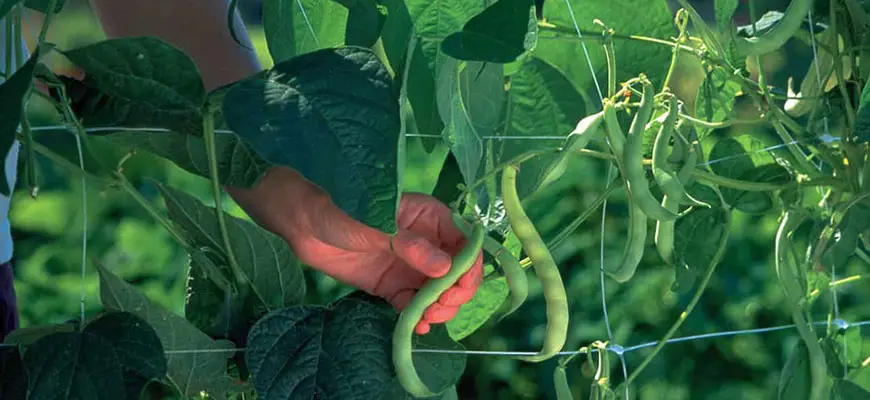
Trellis netting is the single most impactful structural tool in any garden — and one of the most under-discussed. Whether you’re running a compact sea of green (SOG) in a 4×4 tent, training a full SCROG canopy in a dedicated flower room, or supporting heavy vining crops in a greenhouse row, trellis netting keeps plants upright, maximizes light penetration, and prevents the stem snap that can wipe out weeks of growth during late flower. Choosing the right netting format, mesh size, and installation hardware makes the difference between a canopy that holds through harvest and one that collapses under its own weight.
Whether you’re a first-time home grower or you manage a multi-room commercial facility, this guide covers everything: netting types and constructions, training methods, installation hardware, accessory products, and a full comparison table to match the right format to your setup.
Why Trellis Netting Matters
Trellis netting does three jobs at once. It trains growth direction before stem structure is fully set. It distributes bud weight across a rigid grid instead of letting individual stems bear the full load of dense flowers or heavy fruit. And it defines your canopy plane, keeping your productive zone at a consistent, light-optimized height throughout the grow.
Without support, plants with dense tops — cannabis, tomatoes, cucumbers, peppers — are vulnerable to stem snap during late flower when bud mass increases rapidly. A single branch failure in a heavy SCROG at week six can cost a significant portion of harvest. Netting installed at the right height and anchored properly prevents that entirely.
Two orientations cover the vast majority of use cases:
Horizontal trellising spreads the canopy outward into a flat plane. It is the backbone of SCROG, keeps all bud sites at a uniform distance from overhead lights, and is the primary method for maximizing yield per light in controlled indoor environments.
Vertical trellising directs plants upward along a wall, fence, or post. It is the natural fit for vining crops — cucumbers, beans, indeterminate tomatoes — and for outdoor or greenhouse environments where height is available and floor space is limited.
HBX Trellis Netting: The Full Lineup
For growers who want commercial-grade construction across every format, HBX offers the most complete trellis netting lineup available for indoor and greenhouse cultivation. Two construction types — rigid plastic and soft mesh — across four widths and three run lengths, all UV-resistant, field-tested, and engineered for multi-season reuse. Every HBX netting option pairs directly with HBX Cable Ties for rapid, secure installation.
HBX Heavy-Duty Plastic Trellis Netting
Rigid plastic is the workhorse of canopy management. The semi-rigid grid holds its shape under heavy bud load without sagging, installs fast with cable ties along any support structure, and cleans up easily between cycles. The 6-inch square format is the industry standard for flowering crops.
HBX Heavy-Duty Plastic Garden Trellis Netting, 6 Inch Square, 48 Inch × 328 Foot
— The 4-foot width × 328-foot run covers six to eight 4×4 tent canopies from a single roll. The right entry point for home growers and small single-room setups where buying bulk yardage creates unnecessary waste.
HBX Heavy-Duty Plastic Garden Trellis Netting, 6 Inch Square, 48 Inch × 3330 Foot
— The same 4-foot width in a full commercial bulk run. For operations that standardize on 4-foot netting across multiple rooms, a single roll outfits an entire facility without mid-season reorders.
HBX Heavy-Duty Plastic Garden Trellis Netting, 6 Inch Square, 79 Inch × 328 Foot
— The 79-inch (6.5-foot) width is the greenhouse and commercial grow room standard — wide enough to span a full 5-foot bench row with overlap at both sides for clean tie-off. The 328-foot run suits mid-size operations evaluating the wider format.
HBX Heavy-Duty Plastic Garden Trellis Netting, 6 Inch Square, 79 Inch × 3330 Foot
— The full commercial scale option: 6.5-foot wide, 3,330-foot bulk run. Large indoor operations and multi-bay greenhouse facilities use this format to outfit multiple rooms from a single roll order, eliminating reorder gaps mid-cycle.
HBX Heavy-Duty Mesh Trellis Netting
Soft woven mesh flexes during installation, making it easier to weave branches through the grid and work around irregular infrastructure. Particularly useful in low-clearance environments, oddly shaped spaces, or when you’re working a net into a canopy that’s already partially developed.
HBX Heavy-Duty Mesh Garden Trellis Netting, 6 Inch Square, 5 Foot × 60 Foot
— Covers two to three 4×4 tent canopies or a single 5×10 pass. The right size for growers trying mesh for the first time, running a compact setup, or supplementing a plastic-netting system with mesh in specific zones.
HBX Heavy-Duty Mesh Garden Trellis Netting, 6 Inch Square, 5 Foot × 350 Foot
— Enough to outfit a full grow room or a greenhouse bench row. For medium-scale operations that prefer mesh construction without the cost commitment of a 3,000+ foot bulk roll.
| Product | Type | Width | Run | Best For |
|---|---|---|---|---|
| HBX Plastic 48" x 328' | Rigid Plastic | 4 ft | 328 ft | Home tents (4x4 to 5x5), small grow rooms |
| HBX Plastic 48" x 3330' | Rigid Plastic | 4 ft | 3,330 ft | Commercial bulk — rooms standardized on 4 ft |
| HBX Plastic 79" x 328' | Rigid Plastic | 6.5 ft | 328 ft | Greenhouse bench rows, mid-size commercial rooms |
| HBX Plastic 79" x 3330' | Rigid Plastic | 6.5 ft | 3,330 ft | Large facilities, multi-bay greenhouses |
| HBX Mesh 5' x 60' | Soft Mesh | 5 ft | 60 ft | Single tent, irregular spaces, mesh preference |
| HBX Mesh 5' x 350' | Soft Mesh | 5 ft | 350 ft | Medium rooms, multi-tent, greenhouse row mesh |


Plastic vs. Mesh: Which Construction Is Right for Your Grow?
The choice between plastic and mesh comes down to your training style, your setup size, and how long the net needs to hold its position.
Choose rigid plastic when you’re running SCROG and need the grid to hold its geometry under full flowering load for 10–14 weeks. Plastic installs faster with cable ties, stays taut across longer spans with fewer mid-point tie-offs, and is straightforward to clean and reuse. It’s also the better choice for large commercial rooms where installation speed matters.
Choose soft mesh when you prefer to weave branches through the grid during active training rather than resting them on top. Mesh is more forgiving when working around irregular tent pole placement, and easier to handle when adding a net layer to a canopy that’s already growing into the space. Both constructions are heavy-duty — support strength between the two formats is comparable under real grow conditions.
Other Trellis Netting Options Worth Knowing
HBX is the primary recommendation across both plastic and mesh formats — but for growers looking for alternative bulk roll options or specific configurations not covered by the HBX lineup, a few third-party products are consistently strong performers.
DL Wholesale VineLine White Plastic Trellis Netting, 5′ × 3300′ is one of the highest-unit sellers in the entire trellis category. The 5-foot width fills the gap between HBX’s 4-foot and 6.5-foot options, making it a practical choice for rooms built around 5-foot bench rows or grow tent configurations that run slightly wider than a standard 4×4. Also available in a 6.5-foot × 3300′ bulk roll for facilities that prefer that width in the VineLine format.
For operations running tighter plant spacing — dense SOG configurations at 4–6 inches center-to-center — DL Wholesale VineLine 4-Inch Square Netting, 5′ × 3300′ provides more grid points per square foot for plant separation and stem support. The 4-inch square format is noticeably tighter during branch threading but holds dense canopies with more individual contact points.
Grower’s Edge Commercial Grade Trellis Netting, 6.5′ × 3280′ is a strong commercial alternative for facilities standardizing on 6.5-foot width bulk rolls. Strong unit velocity among commercial buyers who want a named commercial-grade format with consistent grid construction across multi-room orders. Also available in a 4-foot × 3280′ version for narrower room configurations.
Grower’s Edge Soft Mesh Trellis Netting, 5′ × 750′ is the top-selling soft mesh option for commercial growers who want a mid-run bulk soft mesh product — longer than HBX’s 350-foot mesh roll but without the cost commitment of a 3,500-foot run. Its unit sales volume reflects consistent demand from commercial operations that rotate mesh netting between cycles.
FloraFlex Commercial Trellis Netting, 5′ × 3500′ is a purpose-built commercial option from a brand with strong credibility in controlled-environment cultivation. The 3,500-foot run is slightly longer than competing bulk rolls, which can be meaningful for large facilities calculating exact per-room yardage across many rooms.
The Critical Hardware: HBX Cable Ties (Zip Ties)
Netting without proper anchoring hardware is just a loose grid. Cable ties — what most growers call zip ties — are the fastener that turns a roll of netting into a structurally sound canopy support system. They anchor netting to your frame, maintain tension across the full run, and hold every adjustment you make throughout the grow cycle.
HBX Multiuse Cable Ties, 8 Inch, Nylon 6/6, 50 lb. Capacity — Pack of 1,000 are the standard pairing for any HBX trellis netting installation. At 8 inches of length and a 50 lb. pull rating, they handle every attachment scenario a netting installation requires — tent pole tie-offs, overhead beam anchors, mid-span reinforcement, and height adjustments throughout the grow.
Step-by-Step: Installing Trellis Netting with Cable Ties
- Anchor the perimeter first. Run a cable tie through a netting grid square and around your support structure — tent pole, beam, or racking bar — at every corner and at every pole intersection along the outer edge. This sets your tension baseline before you work inward.
- Add interior tie points every 12–18 inches. Any span longer than 18 inches between fixed support points will sag under canopy load in late flower. For each gap, add a cable tie from the netting to the nearest rigid point — a cross-beam, cable run, or horizontal bar.
- Check tension before flipping to flower. Press down on the net at mid-span — it should have minimal give. Add tie points wherever sag is visible. A net that sags at flip will be under real stress by flower weeks 5–8.
- Use cable ties to fine-tune netting height. If the net needs to sit higher than your current support allows, loop a cable tie through the grid and around the support to create a fixed standoff at the exact height you need.
At commercial scale, plan for approximately 150–200 cable ties per 100 square feet of netting across all anchor, mid-span, and adjustment points. Keeping a standing inventory of 1,000-count packs eliminates supply interruptions between room turns.
For facilities that also need overhead hanging infrastructure, DL Wholesale Jack Chain, 200 ft. is one of the top-selling garden tools on the site — used to hang lights, fans, and to create the overhead attachment points that cable ties then connect to when suspending horizontal trellis netting from above.


Training Methods: SOG and SCROG
Understanding your training strategy shapes every netting decision — format, width, run length, and number of layers.
Sea of Green (SOG)
SOG fills your grow space with as many plants as possible — typically clones or seedlings at 1–2 plants per square foot (up to 4 per square foot in dense micro-clone configurations) — and pushes them into flower at a compact size, usually 12–18 inches tall. Each plant produces one dominant cola. Cycles are fast; total room output per cycle is high.
With SOG, netting performs primarily a support function rather than a training function. A single horizontal net layer installed at canopy height as plants develop keeps plants upright, prevents lateral movement as bud weight develops, and stops adjacent plants from tangling. The 4-foot HBX Plastic Netting in either the 328-foot or 3,330-foot run is the practical fit for most SOG tent and small-room setups. Dense SOG configurations with tight plant spacing may benefit from a 4-inch square grid — DL Wholesale VineLine’s 4-inch format provides more separation and individual stem contact points at tight spacing. For a full dive into this strategy, see our sea of green guide.
Screen of Green (SCROG)
SCROG is the high-yield alternative: fewer plants, a longer vegetative period, and extensive horizontal training to fill the entire light footprint. A net is installed at 8–16 inches above the growing medium — low enough that branches can be tucked and directed outward as the plant grows. Target 70–80% net fill before transitioning to flower.
With SCROG, the net is active training infrastructure — it must hold its grid geometry and maintain tension across a full 10–14 week flowering cycle. This is where the rigidity of HBX Plastic Netting genuinely earns its place. Many experienced SCROG growers run two net layers: a training layer installed during late veg to direct growth outward, and a support layer added at flip at 6–8 inches above the first to carry the load as buds develop mass through the back half of flower. See our complete plant training guide for a full SCROG setup walkthrough.
Bamboo Stakes and Other Plant Support Methods
Not every plant needs a net. For single-stemmed plants — tomatoes, peppers, tall flowering annuals, herbs, and houseplants — bamboo stakes are the right tool.
GROW!T Natural Bamboo Stakes, 8 Foot — Pack of 25 are consistently the most-purchased plant support item in this category by unit count — practical across greenhouse rows, raised bed vegetable gardens, and retail nursery operations alike. The 8-foot height suits commercial tomato and pepper production where plants are grown in a vertical cordon style to significant heights. A 6-foot version is available for shorter growing systems and raised beds.
When securing a stem to a bamboo stake, use a loose figure-eight wrap with soft plant tie or a cable tie with intentional slack — a tie that fits correctly at week two can cut into stem tissue by week six as the stem grows in diameter. Check and loosen ties on a regular schedule.
Plant Yo-Yos
Yo-yos are spring-loaded clip devices that suspend from overhead infrastructure and extend down to support individual branches or stem tips. They’re most useful for targeted late-stage support when a specific heavy branch has grown beyond your netting coverage, or when you need to lift a branch tip to equalize canopy height without reworking the entire net. The retractable coil mechanism provides constant gentle upward tension and adjusts automatically as the branch grows.
Soft Plant Ties
For vining crops with multiple climbing attachment points — cucumbers, squash, melons, beans — layering soft ties at one-foot vertical intervals along a wire or netting run provides consistent support across the plant’s full climbing height. Use a loose figure-eight wrap at each point rather than a direct loop to avoid pressure points as stems expand.
Trellis Mounts for Bench Systems
For greenhouse bench operations, Botanicare TriLock Trellis Mount, 2 Mounts are a high-demand accessory for growers running slide bench systems. They provide a fixed, repeatable mounting point for trellis netting that stays in position across crop cycles without improvised rigging — a genuine time-saver at commercial scale. The unit count for this product reflects consistent repeat purchasing from commercial greenhouse operations.


Canopy Training Techniques That Work With Your Netting
Trellis netting is most effective as part of an integrated canopy management approach. Two techniques work directly alongside your net to produce the even, productive canopy SOG and SCROG both depend on.
Topping
Topping removes the dominant apical shoot, redirecting the plant’s energy to all remaining lateral branches equally. The result is a multi-top plant with a flat canopy profile that fills a SCROG net efficiently and distributes weight evenly across tie points. Plants recover within days to a week; lateral branches accelerate almost immediately after.
Precise cuts are important here — a torn or crushed stem creates an entry point for pathogens and extends recovery time. HBX Heavy Duty Bypass Pruner is designed specifically for this kind of work in horticulture and indoor cultivation environments, delivering the clean cuts that minimize stem damage and promote faster recovery.
Defoliation and Lower Canopy Cleanup
Removing large fan leaves that block light penetration, and cleaning out lower growth receiving no usable light, concentrates plant energy on the productive upper canopy your netting is supporting. This is ongoing work through veg and the first weeks of flower.
For detailed precision work in tight canopy spaces — removing individual leaf petioles without disturbing adjacent branches — HBX Titanium Curved Trimming Scissors provide access and control that larger bypass pruners can’t deliver inside a dense net. Titanium-coated blades resist sap buildup, and the curved blade profile navigates confined spaces without snagging neighbouring growth.
For a full overview of bending, tying, and advanced canopy methods, see our low-stress training (LST) guide.
| Product | Type | Width | Run | Grid | Best For |
|---|---|---|---|---|---|
| HBX Plastic 48" x 328' | Rigid Plastic | 4 ft | 328 ft | 6" | Home tents (4x4 to 5x5), small grow rooms |
| HBX Plastic 48" x 3330' | Rigid Plastic | 4 ft | 3,330 ft | 6" | Commercial bulk — rooms standardized on 4 ft |
| HBX Plastic 79" x 328' | Rigid Plastic | 6.5 ft | 328 ft | 6" | Greenhouse bench rows, mid-size commercial rooms |
| HBX Plastic 79" x 3330' | Rigid Plastic | 6.5 ft | 3,330 ft | 6" | Large facilities, multi-bay greenhouses |
| HBX Mesh 5' x 60' | Soft Mesh | 5 ft | 60 ft | 6" | Single tent, irregular spaces, mesh preference |
| HBX Mesh 5' x 350' | Soft Mesh | 5 ft | 350 ft | 6" | Medium rooms, multi-tent, greenhouse row mesh |
| DL Wholesale VineLine 5' x 3300' | Rigid Plastic | 5 ft | 3,300 ft | 6" | 5 ft bench rows, bulk commercial alternative |
| DL Wholesale VineLine 6.5' x 3300' | Rigid Plastic | 6.5 ft | 3,300 ft | 6" | High-volume commercial, greenhouse rows |
| DL Wholesale VineLine 4" sq. 5' x 3300' | Rigid Plastic | 5 ft | 3,300 ft | 4" | Dense SOG, tight plant spacing |
| Grower's Edge Commercial 6.5' x 3280' | Rigid Plastic | 6.5 ft | 3,280 ft | 6" | Commercial grade bulk, multi-room facilities |
| Grower's Edge Soft Mesh 5' x 750' | Soft Mesh | 5 ft | 750 ft | 6" | Commercial mesh mid-run, rotation cycling |
| FloraFlex Commercial 5' x 3500' | Rigid Plastic | 5 ft | 3,500 ft | 6" | Commercial CEA, longest bulk run available |
For Commercial Operations: Scaling Your Plant Support System
Standardize on one width across your facility. Choosing one width — either 4-foot or 6.5-foot — as your room standard simplifies purchasing, storage, and installation crew training. Mixed-width inventory creates waste and slows installation. Most facilities on standard 5-foot bench rows choose 6.5-foot netting for the overlap at tie-off; facilities running 4-foot vertical rack zones often prefer the 4-foot width for a clean fit.
Reuse protocols. HBX Plastic Netting is UV-resistant and engineered for multi-cycle reuse. At cycle end: remove plant material, rinse with clean water, inspect for structural damage, and store rolled. Facilities operating under strict IPM protocols or third-party certification may opt for single-use netting — full replacement between crops eliminates cross-contamination risk from the netting itself.
Bench mounting. For operations running Botanicare slide bench systems, the TriLock Trellis Mount provides fixed, repeatable netting attachment points that remain in place across cycles without improvised hardware — a meaningful time savings when turning rooms on a schedule.
Cable tie inventory. At commercial scale, plan for 150–200 HBX Cable Ties per 100 square feet of netting. A 1,000-count pack covers a single medium-size room. Facilities running multiple rooms benefit from keeping standing inventory to avoid mid-installation supply gaps.
Why Shop Trellis Netting at HydroBuilder?
HydroBuilder carries the complete HBX trellis netting lineup alongside every major third-party format the industry uses — from compact 60-foot mesh rolls for home tents to 3,500-foot commercial bulk runs for multi-bay greenhouse facilities. Whether you need one roll for a 4×4 or are outfitting a 10,000-square-foot operation, the full range is here. Browse the complete Trellis Netting & Plant Support collection or reach out to our commercial team for bulk pricing and project support.
Example: FAQs
Q: What trellis netting do I need for a 4×4 grow tent?
For a standard 4×4 tent, the HBX Heavy-Duty Plastic Trellis Netting in the 48-inch × 328-foot format covers the tent width precisely. A single roll provides enough netting for six to eight complete canopy installations — multiple grow cycles from one purchase.
Expanded: Install horizontally at 8–16 inches above containers for SCROG training, or at canopy height as plants develop for SOG support. Anchor to all four tent pole corners with HBX Cable Ties, then add mid-span tie points wherever the netting spans more than 18 inches without a fixed support. Check and tighten tension before transitioning to flower.
Commercial application: Facilities running 4×4 production zones in vertical rack systems benefit from the 4-foot bulk roll (3,330 feet) to supply multiple racks from a single roll order without reordering mid-cycle.
Q: What is the difference between plastic and mesh trellis netting?
Plastic trellis netting is semi-rigid and holds its grid shape under heavy bud load — ideal for SCROG and long flowering cycles. Mesh netting is flexible, easier to weave branches through, and better suited to irregular spaces or growers who prefer to work the net into an existing canopy. HBX offers both constructions in heavy-duty formats with 6-inch squares.
Expanded: Rigid plastic installs fastest with cable ties and maintains tension across long spans with fewer mid-span tie points. Soft mesh requires slightly more tie points to prevent drift under load but is significantly easier to handle during active training. Support strength between the two is comparable under real grow conditions — the choice is primarily about installation preference.
Commercial application: Most commercial facilities standardize on plastic netting for consistent grid geometry, fast multi-room installation, and straightforward multi-cycle reuse. Soft mesh is common in operations that rotate netting between cycles and prefer a format that’s easier to strip and replace quickly.
Q: How do you attach trellis netting with zip ties?
Thread an HBX Cable Tie through a grid square and around your support structure — tent pole, overhead beam, or racking bar — then cinch tight. Anchor all perimeter corners first, then add tie points every 12–18 inches along each support member. Check tension at mid-span and add tie points wherever the net shows sag before flipping to flower.
Expanded: 8-inch, 50 lb. rated cable ties are the standard for trellis netting installation. They’re long enough to loop through the grid and around most commercial infrastructure, and the 50 lb. rating exceeds the point load any single tie will experience under normal canopy conditions. At commercial scale, a pack of 1,000 ties covers a full medium-size room across all anchor and adjustment points.
Q: How do you set up trellis netting for SCROG?
Install a horizontal net at 8–16 inches above the growing medium during late vegetative growth, before plants reach net height. Weave or tuck branches outward through grid squares as they grow. Target 70–80% net fill before flipping to flower. Anchor to all support points with cable ties and consider adding a second support layer at flip for a two-net SCROG setup.
Expanded: Timing is critical — a net installed too high provides no training benefit during the stretch phase. Measure from container tops, not the floor. For a two-layer system, install the training net first, then add the support net at flip height (typically 6–8 inches above the training net). Begin training at least 4–6 weeks before your target flip date to achieve full net coverage. For a detailed walkthrough, see our plant training guide.
Q: What size trellis netting squares should I use?
6-inch squares are the industry standard for flowering crops — cannabis, tomatoes, cucumbers — providing enough structure to support stems while allowing easy access for training and maintenance. 4-inch squares suit denser SOG configurations with tighter plant spacing and more individual contact points per square foot. HBX trellis netting is available in 6-inch squares across all formats; DL Wholesale VineLine is available in 4-inch squares for SOG-specific setups.
Q: Can trellis netting be reused between grows?
HBX Heavy-Duty Plastic Trellis Netting is UV-resistant and designed for multi-season reuse. At cycle end, remove plant material, rinse clean, inspect for structural damage, and store rolled. Mesh netting can also be reused if structurally intact. Facilities under strict IPM protocols may opt for single-use netting to eliminate cross-cycle contamination risk — in which case, bulk roll formats offer the lowest cost per use.
Q: What is the difference between SOG and SCROG?
SOG (sea of green) fills your space with many small plants for fast cycles and high turnover per year. SCROG (screen of green) trains fewer plants over a longer veg period to fill the entire light footprint for maximum yield per cycle. SOG prioritizes harvest frequency; SCROG prioritizes yield per run. Both depend on trellis netting, but SCROG uses the net as its primary training infrastructure rather than just a support tool. See our full sea of green guide for a complete breakdown.
Q: When should I put up trellis netting?
For SCROG: install when plants are 4–6 nodes tall and in active vegetative growth — typically at least 4–6 weeks before your target flip date — so branches have time to fill the net. For SOG: install at or shortly after transplant so the net is in place as plants grow into it. For vining crops: install at transplant time so plants can begin climbing immediately — early installation prevents the tangled catch-up work of netting an already-vining plant.
Q: What are bamboo stakes used for in the garden?
Bamboo stakes support single-stemmed plants — tomatoes, peppers, tall herbs, and houseplants — by providing a rigid vertical anchor along the central stem. They’re the right tool when a plant needs upright support but isn’t spreading wide enough to benefit from netting. GROW!T Natural Bamboo Stakes in 6-foot and 8-foot lengths are the most popular options for greenhouse and raised-bed production.
Q: Do I need any other tools besides trellis netting for canopy management?
Cable ties (zip ties) are essential for anchoring netting to any support structure — without them, netting won’t stay taut or hold its installation position through a full flower cycle. For active canopy management, a reliable bypass pruner handles topping and branch removal, while curved trimming scissors provide precision access inside a dense net for defoliation work. HBX covers all three: netting, cable ties, pruner, and trimming scissors as a complete canopy management toolkit.