

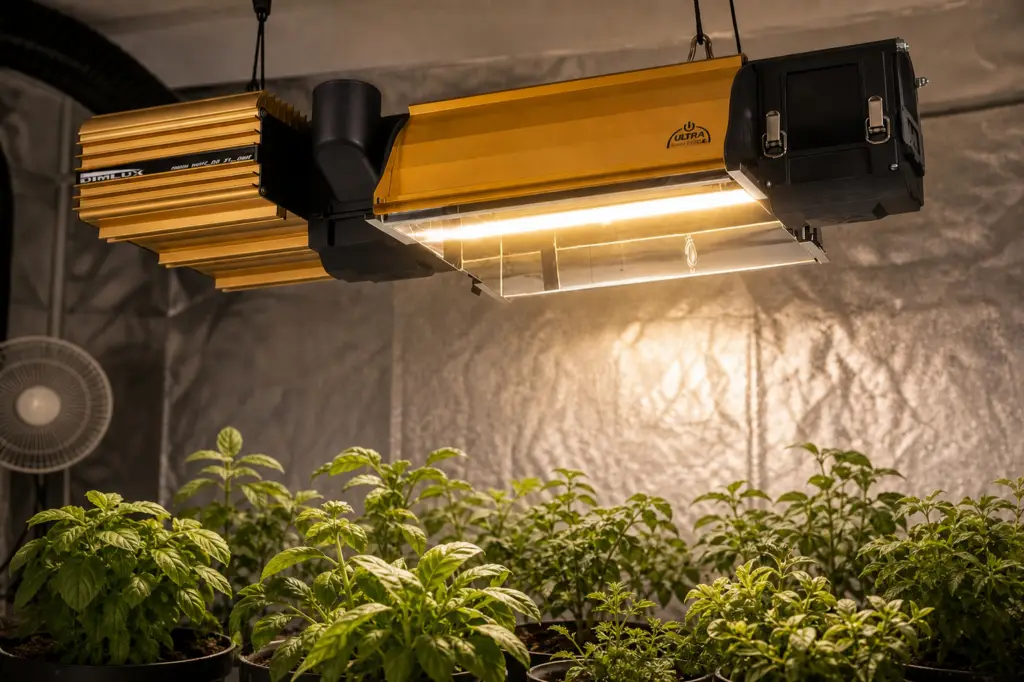
HPS grow lights remain one of the most proven flowering technologies in indoor cultivation. High-pressure sodium’s red-biased spectrum drives dense bud development and deep canopy penetration that newer growers often underestimate — and experienced commercial operators have been extracting big yields from since long before LED dominated the conversation. Whether you ultimately choose HPS, LED, or a hybrid approach, understanding current-generation 1000W HPS systems is still commercially relevant for many rooms.
If you’re evaluating the best HPS grow lights for a new build, an expansion, or a cold-climate room where HPS heat is an asset rather than a liability, this guide covers everything that matters: fixture selection, bulb performance, ballast control, heat management, and when it makes sense to bridge HPS with supplemental LED.
Whether you’re running a personal grow tent or managing multiple flowering rooms, HPS still has a legitimate place in your toolkit — and the right fixture makes a real difference.
Why 1000W Double-Ended HPS Still Belongs in the Conversation
Double-ended (DE) HPS fixtures typically produce about 10–30% more light output than equivalent single-ended (SE) designs at the same input power, with better arc efficiency, stronger UV and IR output, and longer bulb lifespan when run on quality ballasts. A well-built 1000W DE fixture running a premium horticultural bulb can deliver on the order of 2,000–2,100 µmol/s PPF — competitive with many commercial-tier LEDs in terms of total photon output, at a lower upfront fixture cost.
Where HPS holds ground over LED:
- Deep canopy penetration — HPS produces intense point-source light that drives photons into lower and inner bud sites in a way diffuse LED arrays sometimes do not match without careful layout or supplemental lighting.
- Lower upfront cost — a complete 1000W DE fixture often runs in the roughly $250–$500 range, whereas many comparable commercial LED fixtures typically land closer to $800–$1,500 depending on brand, spectrum, and controls.
- Cold-climate advantage — in grow rooms where ambient temperatures run cool (for example, 55–65°F in winter), HPS heat load can offset some space heating requirements, while LEDs in those environments generally require separate heating to keep canopy in range.
- Proven bulb ecosystem — premium DE HPS bulbs from brands like Philips and Ushio are widely available, have well-documented performance characteristics, and can be swapped quickly without changing the fixture.
The tradeoff is real: HPS runs hotter, consumes more watts per µmol delivered than the latest high-efficiency LEDs, and requires regular bulb replacement to maintain peak PAR levels. In warm climates or rooms without efficient HVAC and dehumidification, those costs add up and can erode HPS’s capital-cost advantage. That context should inform your choice — and we’ll call out where HPS makes the most sense throughout this guide.
How to Choose the Right 1000W DE HPS Fixture
Before comparing specific models, understand the three levers that separate entry-level from professional-grade HPS:
Ballast quality and dimming range. A digital, high-frequency ballast runs cooler, typically extends bulb life, and produces a more stable arc that helps maintain consistent PPF over time. Premium fixtures like the DimLux MKII offer multiple dimming steps from 600W up to a 1,200W boost mode — useful for dialing back intensity during heat stress events, ramping plants in early flower, or pushing boost mode at peak bloom when your environment can support it. A fixed 1,000W ballast is simpler and can be very reliable for growers who do not need that flexibility.
Reflector design. Open reflectors maximize light spread and airflow around the lamp; enclosed reflectors use a glass shield to help contain radiant heat and allow air-cooling in sealed or semi-sealed environments. Your choice depends on room ventilation strategy and whether you plan to air-cool the fixtures directly. Open reflectors are more common in professional large-room setups with robust HVAC, while enclosed designs can work better in smaller tents or rooms where containing and exhausting heat from the fixtures is a priority.
Controller compatibility. Running more than 4–6 lights usually justifies centralized control — the ability to schedule, dim, and monitor fixtures from a single interface, and to integrate lighting with environmental sensors. DimLux integrates with the DimLux Maxi Controller and can also tie into the TrolMaster Hydro-X system via the appropriate adaptor. Phantom 60 Series fixtures work with the PX1 protocol and can be integrated via the TrolMaster Hydro-X Lighting Control Adaptor P for automated multi-light management. Single-light hobby grows generally do not need this level of control; multi-room commercial operations essentially require it.
The Best 1000W Double-Ended HPS Fixtures
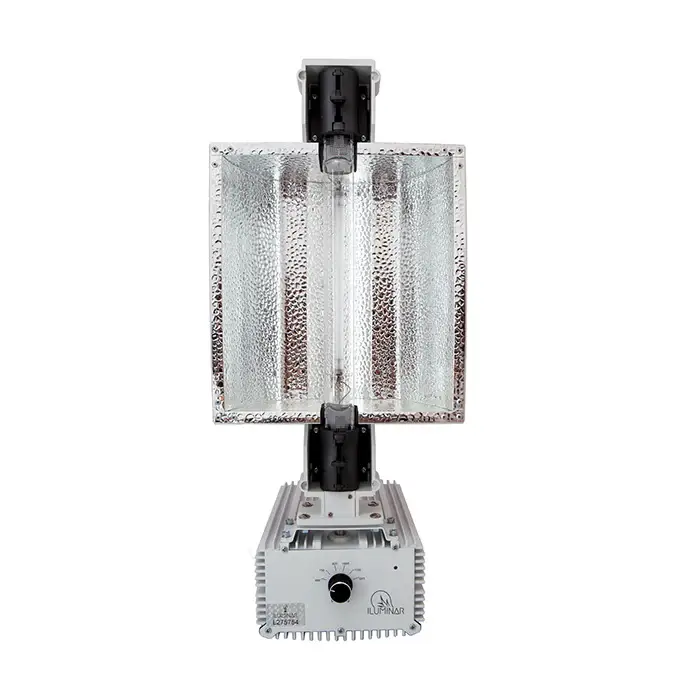
Iluminar 1000W Double-Ended Grow Light
The Iluminar 1000W DE is a commercial-grade fixture built around a high-frequency electronic ballast and matching DE HPS lamp. In common C-Series and related DE configurations, the included 1000W HPS bulb is rated at up to about 2,100 µmol/s PPF, putting it in line with other top-tier DE lamps at this wattage. The ballast is designed for stable operation and consistent output, which helps maintain uniform light across your flowering cycles when paired with appropriate replacement intervals.
Iluminar DE HPS fixtures are available in 120/240V versions and in dedicated 277V models, with each model including the appropriate power cable; this gives you flexibility to match the fixture to your facility’s electrical infrastructure rather than relying on adapters. Many configurations include built-in thermal protection and electronic safety features that shut down the fixture in abnormal conditions, which is important for commercial environments. This fixture does not include on-board dimming in all variants, which is an acceptable tradeoff for growers who prefer a straightforward, set-output design instead of variable ballast controls.
Best for: Growers who want a dependable, high-output DE HPS fixture at an accessible price point, from experienced hobbyists scaling a single room up to operators standardizing a simple, robust HPS layout without advanced controller integration.
DimLux Expert Series MKII 1000W Double-Ended HPS/MH
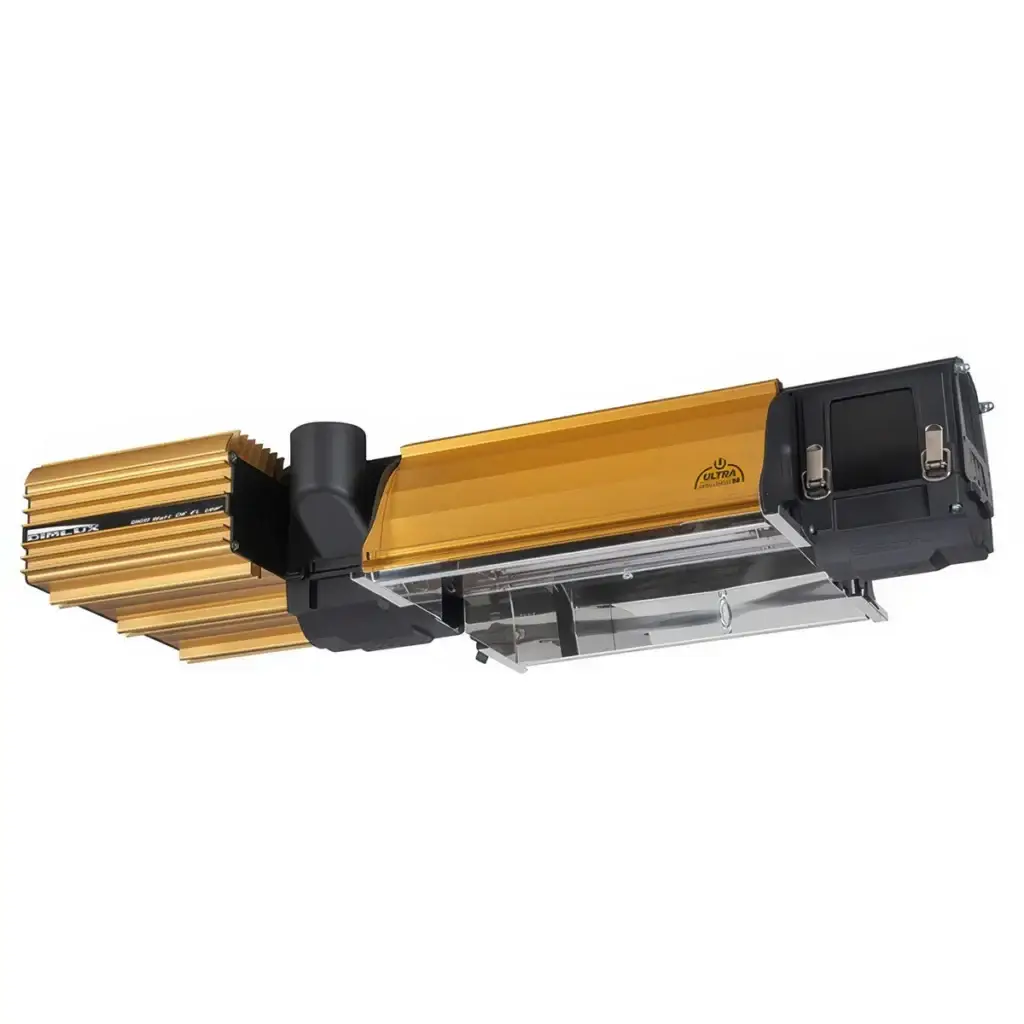
The DimLux Expert Series MKII is the precision option in this lineup, with a ballast and reflector system engineered specifically for high-efficiency DE operation. Its ballast offers multiple discrete power steps from 600W up to a 1,200W boost mode, giving you fine-grained control to reduce intensity during heat events, run vegetative stages at reduced wattage, or push a controlled overdrive setting at peak flower when your environment and genetics can handle it.
When paired with its specified Philips GreenPower or DXO DE lamp and Ultra Optics reflector, the MKII system is manufacturer-rated at approximately 2,107 µmol/s PPF at 1,000W and up to about 2,528 µmol/s PPF at the 1,200W boost setting, with very high reflector efficiency. DimLux integrates natively with the DimLux Maxi Controller via SmartPort, and can also pair with the TrolMaster Hydro-X Lighting Control Adaptor D for broader environmental automation. The fixture accepts both HPS and MH DE bulbs designed for electronic ballasts, which allows growers to run MH-spectrum lamps in vegetative phases and HPS in flower in the same hardware.
Best for: Serious indoor cultivators — from advanced hobbyists to commercial operations — who want full wattage control, deep automation integration, and the ability to push high light levels at peak flower while actively managing heat and room conditions.
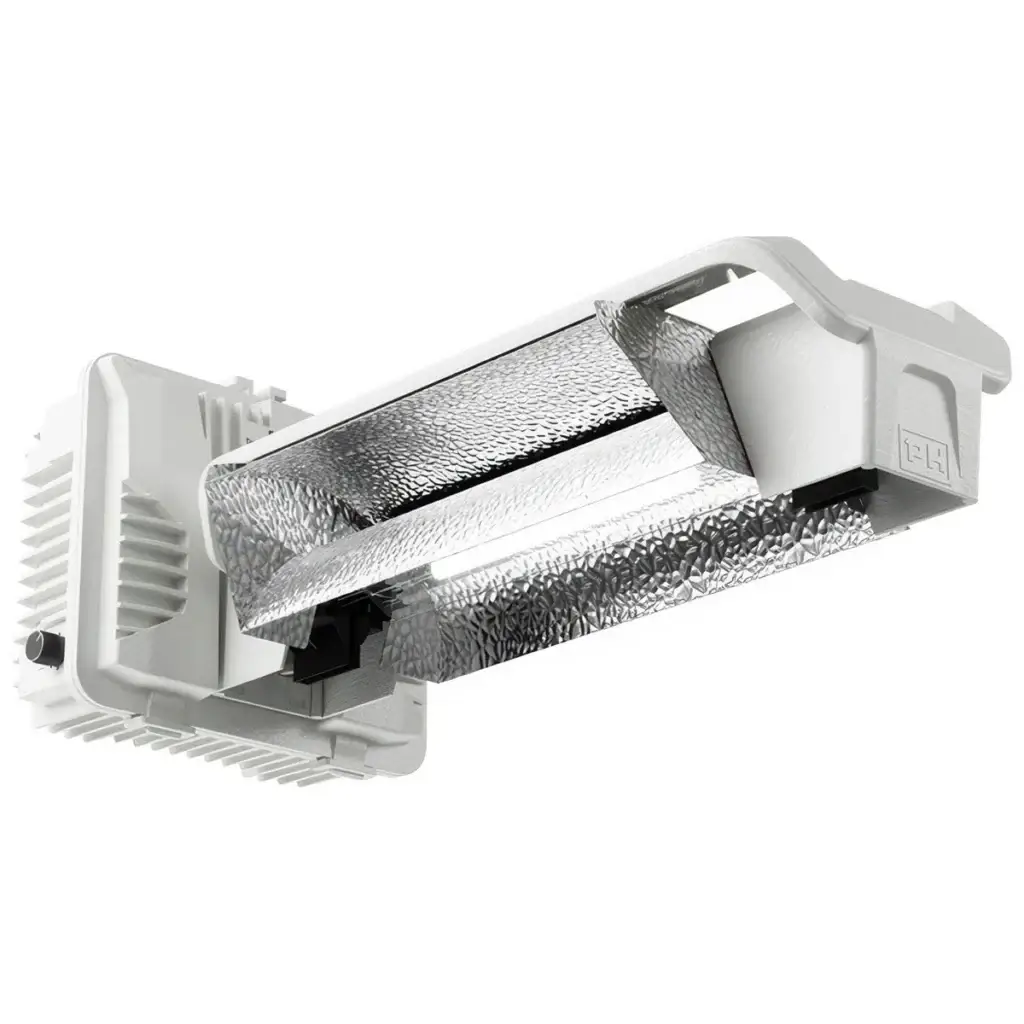
Phantom 60 Series 1000W Double-Ended Open HPS Lighting System
The Phantom 60 Series is a well-established commercial DE HPS platform with a six-stage dimming system and controller compatibility that make it a natural fit for multi-light rooms. The open, louvered reflector design is engineered to maximize horizontal light spread and help dissipate heat away from the lamp, which can support longer lamp life and more uniform coverage across a typical 4×4 to 5×5 ft flowering footprint when hung at appropriate height.
The onboard ballast typically supports multiple output settings such as 600W, 660W, 750W, 825W, 1000W, and 1150W, plus PX control mode, depending on the specific model. This enables staged dimming and overdrive when paired with the correct DE HPS lamp. The 120/240V dual-voltage design fits most small to mid-size facility power configurations, while selected models are also available for higher-voltage service. Phantom’s controller ecosystem can be integrated with the TrolMaster Hydro-X Lighting Control Adaptor P, allowing for centralized scheduling, group dimming, and temperature-triggered dimming logic in larger rooms.
An enclosed version with a glass shield is also available for air-cooled setups where capturing and ducting fixture heat is a primary design goal.
Best for: Commercial growers and serious hobbyists who want a field-tested DE HPS system with multiple dimming stages, open-reflector efficiency, and a clear path to centralized controller integration.
Matrix 1000W Double-Ended HPS Grow Light Fixture
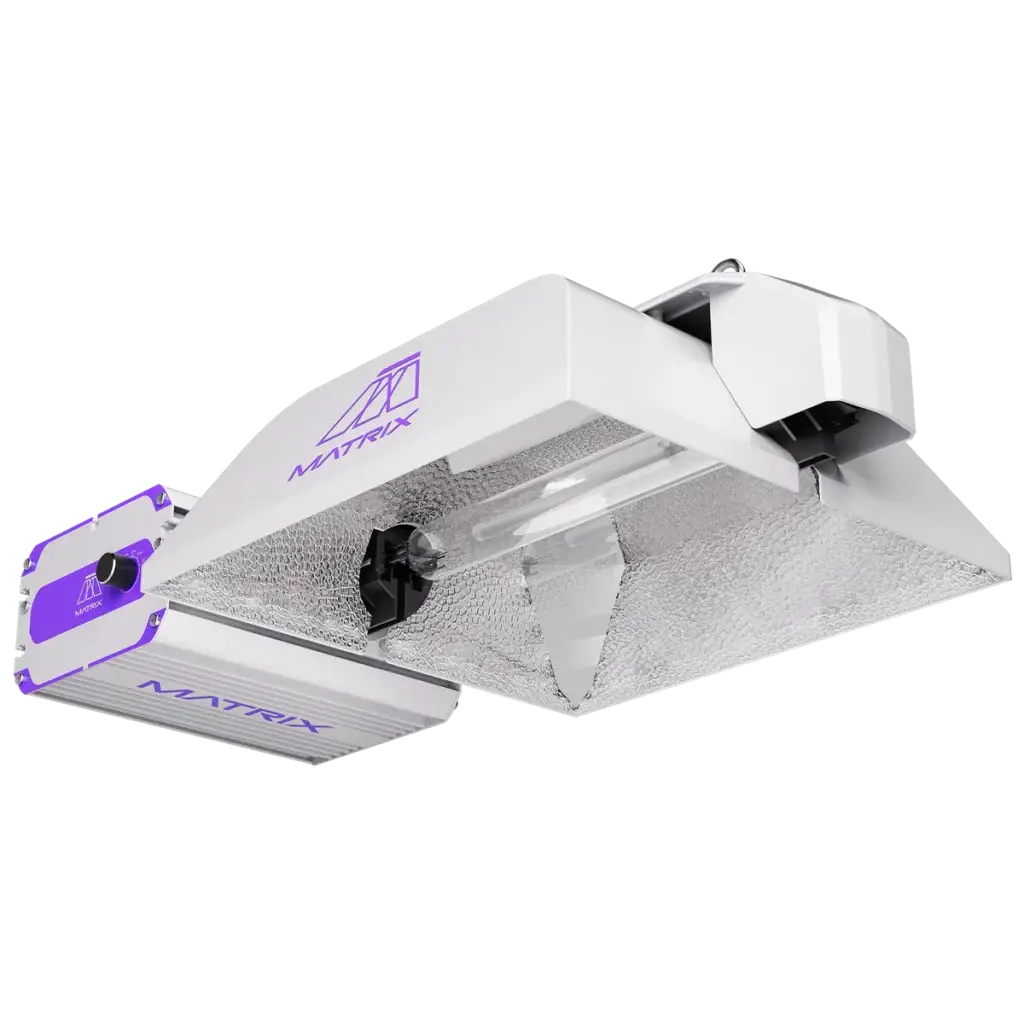
Matrix builds robust commercial HPS hardware, and the 1000W DE fixture is designed as a complete package that includes a matched HPS lamp in the box. Providing a correctly rated DE HPS bulb out of the gate eliminates a common new-build misstep where the wrong lamp type or spectrum is paired with a DE ballast. Output from the Matrix 1000W DE system falls in the same general performance class as other modern DE fixtures when run with a quality horticultural bulb and appropriate reflector height.
Where Matrix stands out in an HPS context is with their Matrix Hybrid 1000W HPS/LED fixture — a hybrid unit that combines a 1000W DE HPS lamp with an integrated LED supplement module in one chassis. This design leverages the intensity and canopy penetration of HPS while adding LED spectrum depth and improved photon efficacy, giving growers a practical way to reduce long-term operating costs and adjust spectrum over time without converting the entire room to LED in one step.
Best for: Growers who want a complete, ready-to-run DE HPS setup today, but also value a clear upgrade path to hybrid HPS/LED technology — or who want to deploy the Hybrid fixture from day one in rooms that need both intensity and efficiency.


Bulb Selection Matters as Much as Fixture Choice
The fixture provides the ballast and reflector; the bulb is where photon output, spectrum, and maintenance characteristics actually originate. Bulb quality strongly impacts PPF, spectrum distribution, color stability over time, and how long you maintain high performance before degradation forces a swap.
Matrix 1000 Watt Double Ended HPS Bulb
Shop Matrix 1000 Watt Double Ended HPS Bulb→
The Matrix DE HPS lamp runs at 1000W with a 2100K color temperature, placing its spectral output deep in the red range that drives aggressive flower development and dense canopy production. Designed for use in compatible double-ended fixture platforms, it delivers the high-intensity photon output that commercial flowering rooms depend on throughout the bloom cycle. That 2100K rating sits lower than most standard HPS lamps, pushing even more energy into the red wavelengths growers target during peak flower set and ripening.
This lamp fits standard 1000W DE HPS fixtures and serves as a straightforward replacement for facilities running HID-based flowering strategies. It’s a practical option for operations that want consistent light output and dependable lamp life without switching platforms. Growers maintaining double-ended HPS systems across multiple flower rooms can standardize on the Matrix DE HPS to keep fixture performance uniform throughout production cycles.
Philips GreenPower Plus DE HPS Bulb
Shop Philips GreenPower Plus DE →
The Philips GreenPower Plus series is a professional horticultural DE HPS bulb line designed for use with electronic (EL) ballasts, including those found in fixtures from DimLux, Phantom, and other high-end manufacturers. At approximately 2,000K, these lamps provide a warm red-orange spectrum optimized for flowering crops, with manufacturer-rated PPF levels in the low- to mid-2000 µmol/s range depending on the specific model. Philips horticultural DE lamps are widely used in commercial facilities due to their consistent output and documented maintenance curves over thousands of hours.
Ushio Pro Plus DE HPS Bulb
The Ushio Pro Plus DE HPS is a high-value 1000W bulb option at approximately 2,100K, designed for horticultural use with compatible DE fixtures. Manufacturer data place its PPF output in the same general class as other top-tier 1000W DE lamps, making it a solid choice for growers who want proven commercial performance and spectrum suited to flowering without paying a premium for extended-lifespan variants. Ushio’s horticulture line has a reputation for reliable performance in demanding grow environments.
Replacement cadence: Under typical 12/12 flower schedules, a practical guideline is to replace DE HPS bulbs approximately every 10,000 hours of operation — which works out to around once per year in many rooms — to maintain high PPF output and uniformity. Laboratory and manufacturer maintenance curves show that PPF begins to decline measurably as lamps age past this point, and running significantly degraded bulbs is one of the most common, subtle yield killers in HPS rooms.


Heat Management: The Variable That Makes or Breaks HPS Performance
A 1000W DE HPS fixture converts nearly all of its electrical input into heat and light, and the standard physics conversion is about 3,412 BTU/hour per 1,000 watts of electrical power, not including additional system loads. In a 5×5 ft tent or small room with good ventilation, this can be managed with a properly sized inline fan and carbon filter; in a multi-light room, the cumulative heat and moisture load become primary environmental design challenges.
Key thermal management principles for HPS rooms:
Air exchange rate. As a baseline for smaller, non-cooled rooms, plan for complete air exchange roughly every 1–3 minutes when using HPS, then adjust based on actual temperatures and humidity. Under-sizing your exhaust fan is a very common error, and sustained canopy temps well above target during flower directly reduce yield and quality.
Canopy temperature targeting. With HPS, many cannabis growers aim to hold canopy temperature in roughly the 75–82°F range during lights-on, with specific targets adjusted for genetics, CO₂ enrichment levels, and VPD strategy. Sustained canopy temperatures much above 85°F under HPS, especially without CO₂ supplementation, can stress upper bud sites that receive the most radiant heat and may reduce quality.
Supplemental under-canopy lighting. In rooms with solid overhead HPS coverage, under-canopy LED bars such as the Faven Chroma can add targeted spectrum to the lower canopy with minimal additional heat load, improving lower bud density and uniformity. This approach allows you to take advantage of HPS penetration at the top while using efficient, cool LED to support lower nodes. See our guide on under-canopy lighting for detailed setup strategies.
For a deeper look at grow room ventilation system design, see Indoor Grow Room & Tent Ventilation Setup.
Why Shop for HPS Grow Lights at Hydrobuilder?
Hydrobuilder carries the full HPS ecosystem — fixtures, bulbs, controllers, ventilation equipment, and the environmental management gear you need to run HPS rooms safely and effectively. Our grow reps have hands-on experience with the fixtures featured in this guide and can help you design a complete room build, not just pick a light model in isolation. We work directly with manufacturers such as Iluminar, Matrix, and others, which gives us direct access to up-to-date product information and technical support when you need it.
If you are planning a serious build or upgrade, our team can help you evaluate the tradeoffs between HPS, LED, and hybrid solutions for your specific climate, power costs, and facility constraints. Call us at 888-815-9763 or reach out via
Contact Us to talk through your project. Commercial accounts are available for operators running multiple rooms or growing commercially who need volume pricing and procurement support.
For Commercial Operations: HPS Lighting at Scale
At commercial scale, HPS economics look different than in a single-room hobby build, and decisions should be based on complete facility modeling rather than single-fixture rules of thumb.
Capital cost vs. operating cost. Because 1000W DE HPS fixtures generally cost less upfront per fixture than many commercial LED fixtures, it is often less expensive to build out a room with HPS on a pure capital basis. For example, a typical DE HPS fixture might land in the mid-hundreds of dollars, while a comparable-output LED fixture might be closer to or above four figures depending on brand and features. The operating cost gap — often modeled as a few hundred dollars per light per year in electricity savings for efficient LED at common power rates — depends heavily on actual fixture wattage, run hours, and local kWh pricing, so these numbers should be treated as scenario examples rather than universal values.
Bulb replacement as an operating line item. At approximately $30–$60 per DE bulb, replacing lamps on a roughly annual cycle becomes a recurring operating expense that should be built into your financial models from the beginning. Operators running Philips GreenPower and similar lamps in larger quantities can often reduce per-unit costs by purchasing case quantities, which helps offset the replacement burden.
HVAC sizing for HPS rooms. Rough guidelines such as “about 1 ton of cooling per 4–6 1000W fixtures in a well-insulated facility” can be useful starting points, but commercial operators should not rely on them as final designs. Because each 1000W fixture adds roughly 3,412 BTU/h of heat before accounting for other loads, you should work with a licensed HVAC engineer to calculate total heat and moisture loads, including lighting, dehumidification, building envelope, and occupancy, then size equipment with appropriate safety margins.
Automation at scale. Running 20+ HPS fixtures without centralized control and monitoring increases operational risk and makes it harder to maintain consistent quality. Systems such as the DimLux Maxi Controller and the TrolMaster Hydro-X ecosystem give you per-room lighting automation, remote monitoring, and the ability to synchronize schedules, dim on temperature events, and log performance over time — critical functions for modern commercial operations.
The HPS-to-LED transition path. If you are building with HPS now but intend to transition to higher-efficiency lighting over time, hybrid fixtures like the Matrix Hybrid 1000W HPS/LED
provide a clean way to phase in LED contribution without replacing your entire fixture infrastructure in one step. You can lean more heavily on HPS in early years and gradually increase the LED component as you refine your environmental controls and lighting strategy.
For a broader discussion of how HPS and LED compare at commercial scale, see our Best LED Grow Lights guide.
Best HPS Grow Lights: FAQs
Are HPS grow lights still worth buying in 2025 and beyond?
Yes, in the right contexts. For growers prioritizing lower upfront cost, strong canopy penetration, or colder-climate rooms where radiant heat can be beneficial, 1000W DE HPS fixtures remain highly competitive with many commercial LED options from a capital-cost and intensity standpoint. Where LED typically wins decisively is in power efficiency, integrated controls, and long-term operating costs, so your local power rate, facility scale, and HVAC strategy should drive the comparison.
What’s the difference between single-ended and double-ended HPS?
Single-ended (SE) HPS uses a screw-in mogul base — the format common to older or legacy fixtures — and generally produces less light per watt and has shorter optimal maintenance intervals compared to DE lamps. Double-ended (DE) HPS has electrical connections on both ends of the bulb and is designed for high-frequency electronic ballasts, which allows for higher PPF (often about 10–30% more than SE at the same wattage), better UV and IR distribution, and improved lamp lifespan when operated correctly. DE has become the standard in serious cultivation, while SE fixtures are primarily used in legacy or very low-budget setups.
How often should I replace my DE HPS bulb?
A common guideline is to replace DE HPS bulbs approximately every 10,000 hours of use in flowering rooms, which is roughly once per year under a standard 12/12 flowering schedule. Manufacturer data show that PPF declines gradually over time, and running bulbs well past their rated maintenance window is one of the most consistent ways to lose yield and quality without obvious visual signs. Plan annual lamp replacement as a standard operating cost and adjust based on PAR/PPFD measurements if you are monitoring intensity.
What size grow space does a 1000W HPS light cover?
A 1000W DE HPS fixture commonly covers about a 4×4 to 5×5 ft flowering footprint when hung at the typical 24–36 inch height above the canopy, but the exact area depends on reflector design, ceiling height, target PPFD, and plant density. Trying to stretch coverage significantly beyond that without supplemental lighting normally results in edge fall-off, uneven development, and lower yields around the perimeter.
Can I run an HPS ballast on 120V household power?
Yes — many 1000W DE HPS fixtures, including selected Iluminar and Phantom 60 Series models, are available in 120/240V versions that can run on standard household or small commercial circuits when properly wired, although 240V is generally recommended where available. Running on 240V reduces amperage draw for the same wattage, can help ballasts run cooler, and may extend component life compared to 120V operation, but you should always follow the manufacturer’s wiring instructions and consult a licensed electrician if you need to add or modify circuits.
How do I control multiple HPS fixtures from one system?
The two most common approaches for the fixtures in this guide are:
- Using the DimLux Maxi Controller with DimLux fixtures, which allows for group dimming, scheduling, sunrise/sunset functions, and integration with temperature sensors.
- Using the TrolMaster Hydro-X controller with the appropriate lighting control adaptor — Adaptor D for DimLux and Adaptor P for Phantom — to bring HPS fixtures into a larger environmental automation system.
For rooms with four or more lights, centralized control quickly becomes worth the investment in terms of consistency and risk reduction.
What’s the best bulb to use in a 1000W DE HPS fixture?
For professional horticultural applications, Philips GreenPower and GreenPower Xtra DE HPS lamps are often considered benchmarks for spectrum, PPF output, and documented maintenance, especially when paired with compatible EL ballasts. Ushio Pro Plus DE HPS lamps are an excellent value alternative with strong PAR output and proven reliability in commercial environments. Regardless of brand, avoid running bulbs significantly past their rated maintenance window (around 10,000 hours) and avoid mixing old and new lamps within the same uniform canopy.
Does HPS lighting work well with supplemental under-canopy LED?
Yes — combining overhead HPS with under-canopy LED bars is one of the most effective ways to improve yield and uniformity in HPS-dominant rooms. HPS delivers high-intensity light from above, while LED bars placed at mid- or lower-canopy level can add targeted spectrum and fill light where HPS penetration is weaker, typically without adding much heat. This hybrid layout is especially useful in tall, dense canopies where lower bud sites would otherwise develop more slowly.
How does heat from HPS affect plant quality?
Sustained canopy temperatures that run significantly above ideal ranges — especially above about 85°F in HPS rooms without CO₂ enrichment — can contribute to terpene loss late in flower, increase the risk of foxtailing in temperature-sensitive genetics, and stress upper buds closest to the lamp. Maintaining canopy temperature in a controlled range (often around 75–82°F lights-on for many cultivars) with adequate airflow, air exchange, and dehumidification generally produces better quality outcomes, but HPS rooms require more active heat and humidity management than comparable LED rooms.