

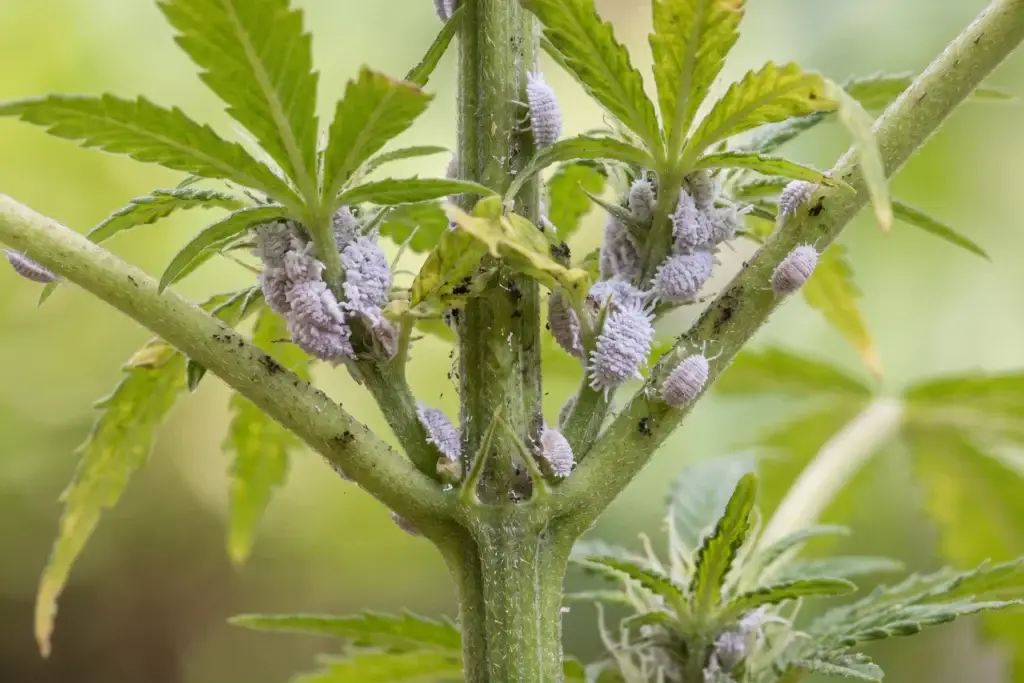
Mealybugs are one of the most stubborn soft-bodied pests in indoor growing — small, wax-covered insects that feed on plant sap, excrete sticky honeydew, and reproduce fast enough to overrun a canopy before you notice them. Whether you’re growing in a grow tent, an outdoor garden, or a greenhouse, learning how to get rid of mealybugs means understanding why a single spray rarely works — and building a treatment schedule that accounts for their life cycle.
This guide covers identification, causes, prevention, and proven organic control methods, including how to handle mealybugs in soil. These principles apply to home growers and professional cultivators alike.
What Are Mealybugs?
Mealybugs are sap-sucking insects in the family Pseudococcidae, which contains hundreds of species found across gardens, greenhouses, and indoor grow rooms. They thrive in warm, humid conditions — exactly the environment most indoor setups maintain — and they can attack crops at any stage, including a drying room post-harvest if they are carried in on plant material.
The feeding damage itself is significant: mealybugs deplete plant sugars and amino acids, causing yellowing, stunted growth, and leaf drop under heavy pressure. The secondary damage from their honeydew excretion is equally serious: it coats leaf surfaces, blocks stomata, and creates a growth medium for black sooty mold that further reduces photosynthesis. Honeydew also attracts ants and can coincide with other sap‑feeders like aphids, so a mealybug infestation frequently becomes a multi-pest problem if not caught early.
Mealybug Life Cycle — Why One Treatment Never Finishes the Job
Understanding the life cycle is the most important piece of mealybug control that many guides gloss over. Female mealybugs typically lay a few hundred eggs over their lifetime — often in the range of about 300–600 — deposited in waxy sacs tucked under leaves, in stem crevices, or carried with the female until hatching, depending on species. Eggs usually hatch into mobile nymphs (called crawlers) within roughly 7–14 days under warm conditions. In warm grow room environments (around 75–85°F), a full generation often completes in about a month or slightly longer, and indoors, overlapping generations mean reproduction can continue year-round.
The critical problem: most common contact sprays — including organic products — kill mobile nymphs and adult females on contact but don’t penetrate the waxy egg sac effectively. If you spray once and stop, the eggs that survive can hatch 1–2 weeks later and restart the population. Effective control in most grow rooms requires treatments spaced about 5–7 days apart for at least three consecutive cycles (and sometimes longer under heavy pressure), combined with scouting, to break the egg‑to‑adult cycle as thoroughly as possible.
How to Identify Mealybugs
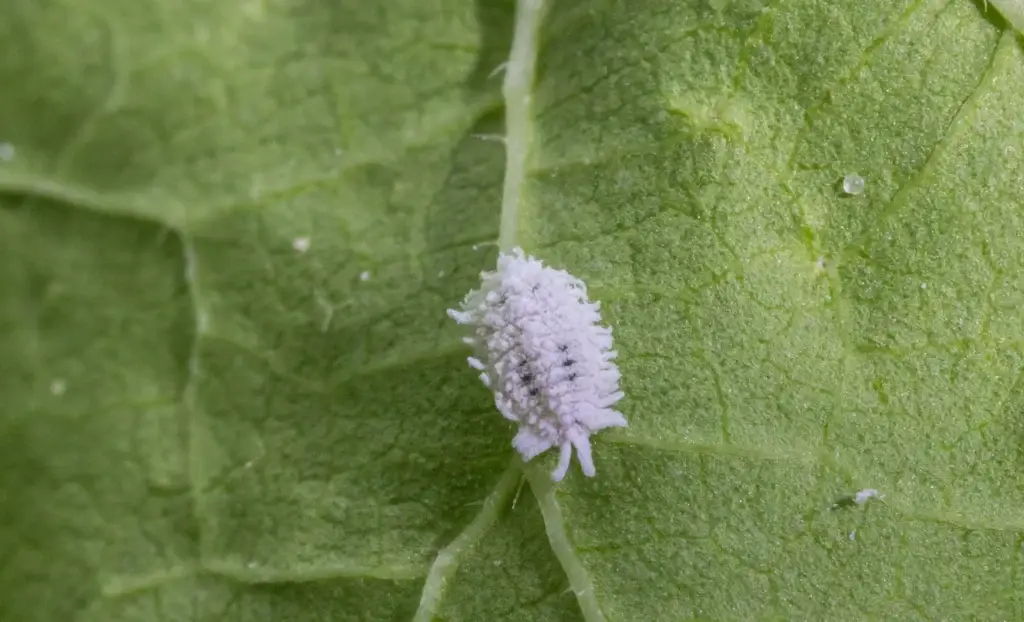
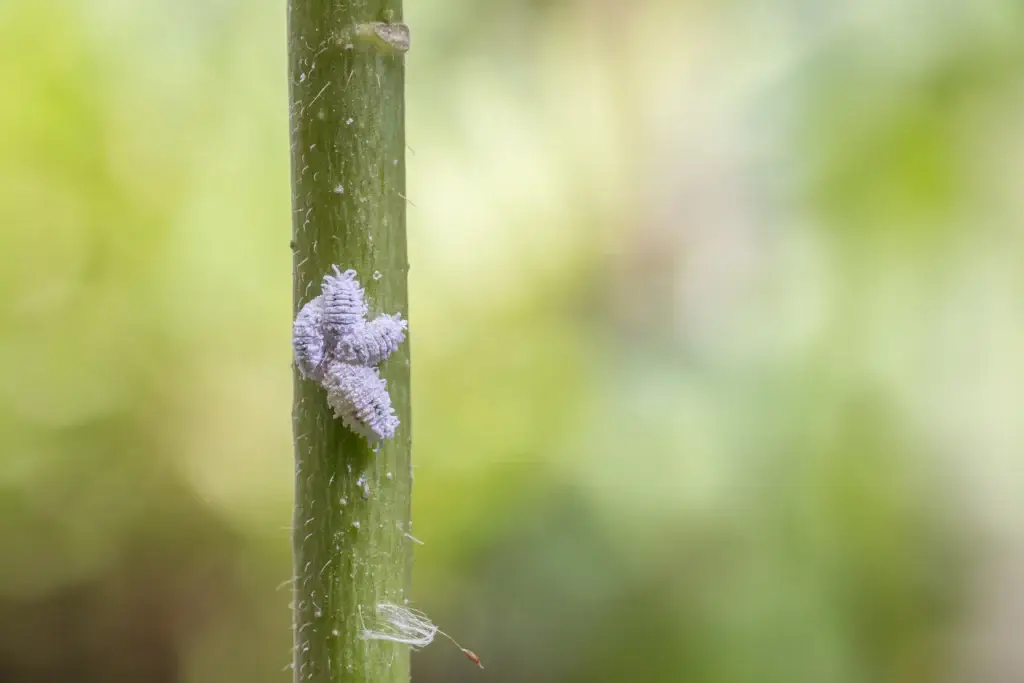
Mealybugs are usually between 1/16 and 1/4 inch in length, with soft, oval, segmented bodies covered in a powdery white wax that gives them their distinctive cotton-like appearance. They tend to cluster in colonies rather than spreading as isolated individuals, which makes their presence visually distinct once you know what to look for.
Your first detection is usually not the insects themselves — it’s the signs they leave behind:
White, cottony masses on stems, nodes, and leaf undersides. Unlike powdery mildew, these masses don’t wipe off cleanly; if you disturb them, you’ll see the segmented insects beneath.
Honeydew residue on leaves and surfaces, which may appear as a clear or amber stickiness.
Black sooty mold developing on leaf surfaces coated with honeydew.
A noticeable increase in ant or aphid activity, as ants are attracted to honeydew and may tend mealybugs, while aphids often arrive on similar plant material or conditions.
Where to look: Focus your scouting on branch crotches, the undersides of leaves, stem joints, and the root crown at the base of the plant. Root mealybugs — a related but distinct problem covered below — infest the root zone and aren’t visible above the soil line until damage is more advanced.
What Causes Mealybugs?
Mealybugs don’t spontaneously generate in a sealed grow room — they enter through specific vectors and then establish if conditions allow. Understanding these entry routes is the basis of effective prevention.
New plant material or clones: This is the most common introduction pathway for indoor growers. A single infected clone or mother plant can seed an entire room over the course of a generation. Nymphs in the crawler stage are small enough to be easily missed without close inspection, and egg sacs can hide in tight stem crevices and leaf axils.
Contaminated media or containers: Reusing soil, pots, or trays without proper sanitation between cycles can harbor eggs and crawlers that survived the previous crop. Root mealybugs in particular can persist in growing media and on residual root fragments if material is not discarded or sanitized.
Outdoor plants brought indoors: Plants that spent time outdoors — whether hardening off or overwintering — can carry active populations or fresh egg sacs on stems and leaves. Mealybugs and their crawlers can move between plants readily where foliage contacts, especially in tightly spaced canopies.
Grow room conditions: Hot, humid conditions (particularly above roughly 80°F and 60%+ RH) can accelerate mealybug development and reproduction relative to cooler, drier conditions. Cold temperatures below about 55°F are stressful or lethal to many species, which is why indoor grow room environments
that stay warm and humid can sustain ongoing population pressure if pests are introduced. Excessive nitrogen fertilization also produces the succulent new growth tissue that mealybugs and other sap‑feeders preferentially target.
How to Prevent Mealybugs
Prevention is far more efficient than treatment — a mealybug population caught when there are only a few insects requires a fraction of the intervention that a widespread canopy infestation demands.
Quarantine all new plant material.
Every clone, seedling, or vegetative plant entering your space should be isolated for 10–14 days before introduction to your main grow. Inspect stems, nodes, and undersides of leaves at days 3, 7, and 14 before clearing plants for introduction, and consider one light preventive spray according to label directions during quarantine.
Scout regularly with a monitoring system.
Visual scouting is most effective when combined with HBX Yellow Sticky Traps — deploy roughly one trap per 10–25 sq ft and check weekly. While mealybugs themselves are not strongly attracted to yellow sticky cards compared with flying pests, adult males (which are winged) and co-occurring pests like fungus gnats and whiteflies will register, helping you spot broader pest issues early. Early detection across your entire IPM program starts with consistent, documented monitoring.
Promote beneficial insects.
Beneficial insects such as lacewings, lady beetles, and the mealybug destroyer (Cryptolaemus montrouzieri) can provide meaningful biological control in greenhouse and outdoor settings where they can be released and maintained. In sealed indoor grows, these are often most practical in vegetative or propagation areas where access and environmental conditions better support releases.
Maintain environmental control.
Keep room temperature and humidity in range for your crop and growth stage — mealybug reproduction slows significantly in cooler, drier conditions compared with warm, humid rooms. Good airflow through the canopy discourages colonization in dense foliage and stem crevices by reducing microclimates of stagnant air. Avoid overfeeding nitrogen, which drives the lush new-tissue growth sap-sucking insects prefer.
Sanitize between cycles.
Clean and disinfect all surfaces, containers, and tools between crop cycles, especially in any room that had mealybug or other soft‑bodied pest pressure. Removing plant debris, old media, and residues reduces the chance that eggs, crawlers, or alternative hosts carry pests forward into the next run.
How to Get Rid of Mealybugs: Organic Treatment Options
If you detect an active infestation, act immediately. Mealybug populations can build rapidly because overlapping generations are common, so early intervention when most individuals are still in the crawler stage prevents exponential growth. Here’s a progression from light to heavy intervention.
Step 1 — Manual Removal for Early-Stage Infestations
For small, localized infestations, physical removal is the fastest first step. Remove and dispose of the most heavily colonized leaves or shoot tips, bagging them before they leave the room. Use isopropyl alcohol at 70% or below on a cotton swab to dab and kill individual visible insects — the alcohol dissolves their waxy protective coat on contact. Test any alcohol application on a small area first and observe for phytotoxicity before treating larger sections of the canopy.
A targeted spray of water (indoors, use a firm but controlled stream from a sprayer) can dislodge crawlers and adults from stems and leaf undersides into a catch container or onto a tarp. Follow up with a treatment spray the same day, according to label directions, to reduce the chance that dislodged insects simply recolonize plants nearby.
Step 2 — Insecticidal Soap and Plant Washes
Insecticidal soap works by physically disrupting the cellular membranes of soft-bodied insects on contact. It is most effective on the mobile nymph (crawler) stage before the waxy coat is fully developed and when spray coverage is thorough. For mealybugs, thorough coverage is everything — spray stems, undersides of leaves, branch crotches, and any crevice where colonies hide. Apply in the evening or with lights dimmed where possible to reduce phytotoxicity risk from heat and direct light.
Lost Coast Plant Therapy is a versatile plant wash using a proprietary emulsion of plant oils and sodium citrate. It is labeled for use against soft-bodied insects including mealybugs and works as a contact spray — saturate all plant surfaces and repeat according to the product label, typically every 5–7 days while pressure persists.
Repeat treatments every 5–7 days for a minimum of 3 applications (and longer if scouting still finds crawlers) to catch successive hatch cycles and newly exposed insects.
Step 3 — Azadirachtin-Based IGR Sprays
Azadirachtin is the primary active compound derived from neem seeds that acts as both an antifeedant and an insect growth regulator (IGR). It does not rely on a strong contact knockdown — instead, it disrupts molting and feeding behavior, causing nymphs to die before maturing and reducing egg production in adults. This mode of action makes azadirachtin especially effective as a scheduled preventive and suppression tool when alternated with contact‑kill treatments in an IPM rotation.
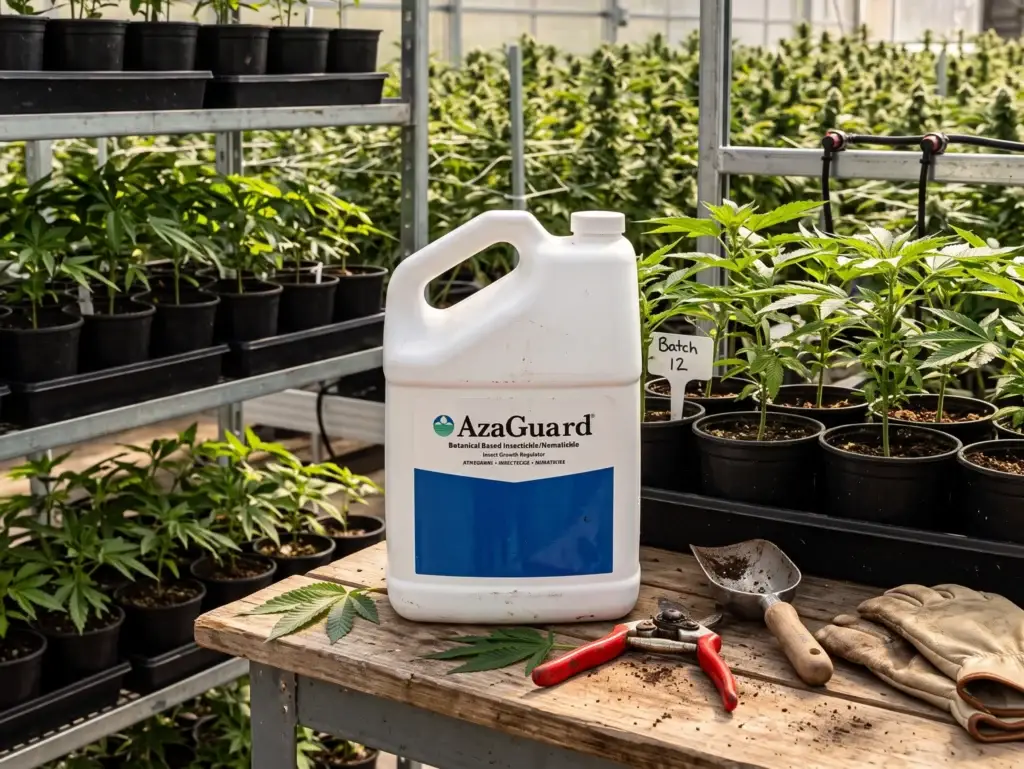
BioSafe AzaGuard delivers a 3% azadirachtin formulation in an EPA‑registered botanical insecticide/nematicide that is OMRI listed and labeled for mealybug control among many other pests. Use as a foliar spray at label‑specified rates (for example, commonly cited rates are in the 8–21 oz per acre range depending on crop and pest), and consider pairing with a root drench or chemigation application, where permitted by label, to target any root-zone mealybug populations simultaneously.
Product integration tip: Alternate BioSafe AzaGuard with Lost Coast Plant Therapy on a 5–7 day rotation rather than spraying the same product back to back, always following both labels for tank‑mix and interval compatibility. Rotating modes of action slows resistance development and ensures you’re hitting both the more protected adult stages (with contact and wash treatments) and the crawler/nymph stages and reproductive processes (with IGR disruption) across treatment cycles.
Step 4 — Diatomaceous Earth for Soil and Ant Management
Diatomaceous earth (DE) is a desiccant dust that damages the exoskeletons of insects that crawl over it, causing them to lose moisture and die. It will not reliably kill mealybugs already feeding on plant tissue, but it serves two useful IPM functions: applied as a ring around the base of stems or container edges, it creates a physical barrier that discourages ants from climbing to tend and protect mealybug colonies; and applied to the soil surface, it creates a desiccant environment that is less hospitable to root mealybug crawlers migrating through the top layer.


How to Treat Root Mealybugs in Soil
Root mealybugs are a distinct but related challenge. They colonize the root zone, feeding on root tissue and leaving white, waxy deposits that can be confused with perlite or vermiculite in soilless mixes. Signs include wilting that doesn’t respond to watering, slow or stunted growth without obvious aboveground symptoms, and — on inspection — white cottony deposits visible on roots or concentrated in the lower media column.
Treatment options:
Apply a neem oil or azadirachtin root drench — BioSafe AzaGuard is labeled for soil and chemigation applications and can be used as both foliar spray and drench where permitted, making it practical for addressing both above- and below-ground populations in the same treatment program.
Apply diatomaceous earth to the soil surface, following product directions, to intercept crawlers migrating near the top of the media.
For severe root infestations, repot into fresh media in a sanitized container, completely disposing of the infested soil according to local regulations. Inspect roots carefully, remove and discard the most colonized sections, and treat the repotted plant immediately with an appropriate soil drench, again following label rates closely.
When to Discard vs. When to Treat
Not every infested plant is worth saving, especially in a commercial environment. A plant with colonies spanning the entire canopy — every node, every internode, egg sacs on every leaf — will require weeks of repeated intervention during which it continues to shed crawlers onto neighboring plants. Heavily infested plants in commercial rooms are often best removed and destroyed rather than treated, to protect the rest of the crop. Isolate any borderline cases immediately and evaluate after a roughly 10-day treatment window; if the population is still expanding despite proper applications, removal is usually the right call.
For Commercial Grow Operations
Commercial operations running multiple rooms face a fundamentally different mealybug risk profile than hobby growers — a single missed inspection can cascade into a facility‑wide problem within roughly one generation cycle, affecting hundreds of plants before detection.
Weekly scouting protocol: Assign specific inspection routes through each room using a consistent path (aisle by aisle, trellis layer by trellis layer). Document observations per zone and per visit; patterns in a single hallway, irrigation zone, or bench often indicate a new introduction point that needs special attention.
IPM product rotation for commercial scale: Alternate between OMRI‑listed and facility‑approved treatments on a 5–7 day schedule, in alignment with labels and local regulations. A practical rotation for many licensed facilities might look like:
- Week 1: BioSafe AzaGuard foliar + root drench (azadirachtin IGR), at labeled rates and intervals.
- Week 2: Lost Coast Plant Therapy foliar (contact/wash) with thorough canopy coverage.
- Week 3: Athena IPM foliar (hydrogen peroxide and essential oils including peppermint oil as key actives for contact control), applied according to the most current product label.
- Week 4: Return to Week 1 and adjust frequency based on scouting data and label limits.
Athena IPM is positioned as a commercial‑scale IPM product that uses hydrogen peroxide and essential oils for broad‑spectrum contact control; always consult the current label and safety data sheets for exact active ingredients, crops, and use directions before application.
Between-cycle sanitation: After removing a crop from any room that experienced mealybug pressure, implement a thorough sanitation protocol before bringing plants back in. This should include mechanical cleaning, vacuuming, disinfection of hard surfaces, and appropriate treatment of environmental systems. As part of this program, some facilities use Prokure G according to label directions in empty, unoccupied rooms: Prokure G is a fast‑release chlorine dioxide gas system formulated to control odor‑causing bacteria, mold, mildew, and chemical odors and to improve air quality in enclosed agricultural environments between crops, not while plants or people are present. When used correctly between harvests, Prokure G’s gas can penetrate cracks, crevices, and equipment surfaces where microbial contamination can persist — complementing, but not replacing, insect‑focused sanitation work.
Propagation room protocol: The propagation zone is the most critical quarantine and risk‑management point in a commercial facility. All incoming clones should be inspected under magnification, treated with a light contact or IGR spray at intake where label‑allowed for young plants, and held in isolation from the main veg or flower rooms for about 14 days. Use the cleanest, most controlled room in the facility for propagation, and restrict access — especially from staff who also work in rooms with current or past pest issues — to limit cross‑contamination.
Final Thoughts
Mealybugs are manageable if you treat the life cycle rather than just the visible insects. One spray — even with a strong contact product — won’t clear a well‑established infestation; what clears it is consistent treatment timing, thorough coverage, and rotation between a contact‑kill and an IGR‑based product over several application cycles, combined with sanitation and scouting. Pair that with good quarantine hygiene, environmental control, and documentation and you’ll stop most introductions before they establish into a facility‑wide problem.
For a broader look at what else can show up in the grow room, see our complete guide to common grow room pests and diseases and our integrated pest management guide.
FAQ SECTION
Q: What are mealybugs and what damage do they cause?
A: Mealybugs are soft-bodied, wax-covered insects in the family Pseudococcidae that feed on plant sap, causing yellowing, stunted growth, and leaf drop under significant pressure. Their honeydew excretion coats leaf surfaces, promotes sooty mold growth, and attracts ants and sometimes other sap-feeding pests — compounding damage beyond what the feeding alone causes. Indoors, they can affect crops at any growth stage, including drying rooms, if they arrive on plant material or equipment.
Q: How do I identify mealybugs on my plants?
A: Look for white, cottony clusters at stem nodes, branch crotches, the root crown, and undersides of leaves. Unlike powdery mildew, these masses contain segmented insects beneath the wax when disturbed. Additional indicators include sticky honeydew residue, black sooty mold on leaves, and an increase in ant activity around affected plants.
Q: Why do mealybugs keep coming back after I spray?
A: A single contact spray typically kills exposed adult females and mobile crawlers on the plant surface but doesn’t penetrate the waxy egg sacs effectively. Eggs can hatch about 7–14 days after treatment, restarting the population. Effective control usually requires repeat applications every 5–7 days for at least three cycles, combined with sanitation and scouting, to disrupt the full egg-to-adult cycle.
Q: What kills mealybugs instantly?
A: Isopropyl alcohol at 70% or below, applied directly to insects via cotton swab, can rapidly dissolve their waxy coating and kill them on contact when used carefully. Insecticidal soap sprays and contact-kill plant washes like Lost Coast Plant Therapy also work on exposed crawlers and adults when applied thoroughly. Nothing kills the eggs inside waxy sacs instantly; breaking the life cycle requires scheduled applications of products such as azadirachtin-based IGRs in addition to contact agents.
Q: How do I get rid of mealybugs in soil?
A: Apply an azadirachtin-based root drench at labeled rates — BioSafe AzaGuard is labeled for both foliar and soil applications in many crops, allowing you to address above- and below-ground populations in the same program when permitted. For severe root infestations, repot into clean media in a sanitized container and discard infested soil; inspect and prune heavily colonized roots before treatment. Diatomaceous earth applied to the soil surface can help intercept crawlers migrating through the top layer when used as part of a broader IPM strategy.
Q: Will neem oil kill mealybugs?
A: Neem oil has limited ability to penetrate the waxy adult stage but can be useful against crawlers and as a preventive film when applied correctly. Products based on extracted azadirachtin (the key active compound in neem seeds) like BioSafe AzaGuard are significantly more concentrated and effective than raw neem oil for disrupting the molting and reproductive cycles of mealybugs. Raw neem oil is generally better suited as one component in a preventive rotation than as the sole curative treatment for established, heavy infestations.
Q: Do mealybugs spread from plant to plant?
A: Yes. Nymph crawlers are highly mobile in their early stage and move across leaf contact points, shared soil surfaces, tools, and your hands or clothing. In a grow room, a single infested plant can spread to adjacent canopy within days if not isolated. Isolate any plant with visible colonies immediately and inspect surrounding plants and equipment for crawlers before they establish.
Q: What are the best OMRI-listed products for mealybug control?
A: BioSafe AzaGuard (3% azadirachtin, OMRI-listed, EPA-registered) is a primary recommendation for indoor growers needing certified-organic treatment options that include IGR activity. Lost Coast Plant Therapy is also OMRI-listed and works as a contact wash and preventive against soft-bodied insects. Both are available at Hydrobuilder.com, and their OMRI status provides documentation many certified facilities require that synthetic options do not.
Q: Can mealybugs affect a drying or curing room?
A: Yes. Mealybugs can persist on harvested plant material and have been found in drying rooms, particularly on stems and dense bud sites where they were present before harvest. At harvest, inspect carefully and remove any visibly colonized material so it doesn’t enter the dry room. Between harvests, a Prokure G gas treatment used according to label directions in an empty, unoccupied dry room can help control odor‑causing bacteria, mold, mildew, and chemical odors on room air and surfaces, but standard insect sanitation and IPM measures are still required for mealybug control.
Q: How do I prevent mealybugs from entering my grow room?
A: The three most effective prevention steps are: (1) quarantine all incoming plant material for 10–14 days and inspect at days 3, 7, and 14 under good lighting and magnification; (2) deploy sticky trap monitoring so you catch flying pest stages early, which often correlate with broader IPM issues; and (3) sanitize containers, tools, and grow surfaces between every crop cycle to remove plant residues and potential egg masses. Environmental control also matters — cooler, well-ventilated rooms below about 80°F and with good airflow are significantly less favorable for rapid mealybug reproduction than hot, stagnant, high‑humidity environments.