
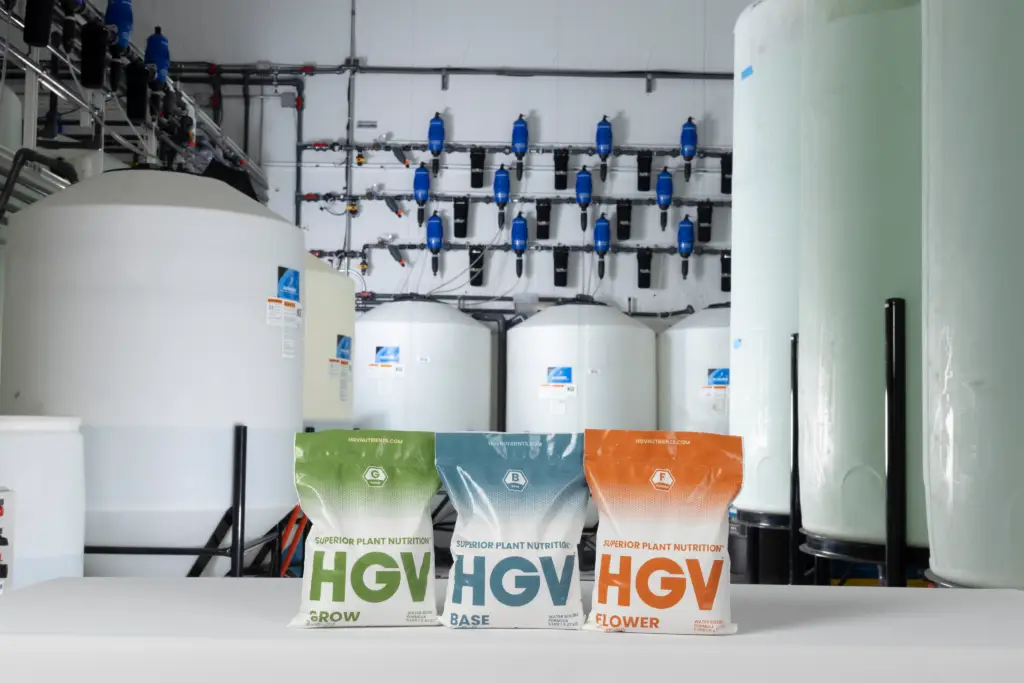
There’s a persistent assumption in indoor cultivation that fertigation automation belongs to large facilities — operations with dedicated irrigation staff, commercial plumbing infrastructure, and budgets that justify the complexity. That assumption is wrong, and it’s costing small teams more labor, more inconsistency, and more missed feeding windows than any other single workflow decision. A water-powered injector, a hose bib, and a bucket of nutrient concentrate are enough to get started — no electricity required, no dedicated technician, no enterprise contract.
Fertigation — the practice of delivering dissolved nutrients through your irrigation system — is one of the most effective tools in modern cultivation. A single water-powered injector, a hose bib, and a bucket of nutrient concentrate are enough to get started, and the same core approach scales to multi‑room facilities. For the solo grower or small team running one to four rooms, automated nutrient delivery addresses real daily problems: missed feedings, inconsistent EC, and labor time that does not scale as plant counts increase.
This guide covers what fertigation actually is, how proportional injection works, how to build your stock tank concentrate correctly, where pH adjustment fits in the system, what you need to get started, and how to choose the right system for your operation size. Whether you are running a 4×4 tent or a 2,000-square-foot canopy with a small crew, the underlying principles remain the same.
These strategies apply at any scale — from a home grow tent to a multi-room commercial facility. We will cover the foundational concepts first, then provide specific guidance on system selection for different operation sizes.
What Is Fertigation?
Fertigation is the process of mixing water-soluble nutrients directly into your irrigation water and delivering that solution to the root zone automatically. Instead of mixing a separate feed solution and hand-watering each plant or zone, your water supply carries the nutrients to the plants on every irrigation cycle.
The term combines “fertilization” and “irrigation.” The concept has existed in large-scale agriculture for decades, but it is increasingly accessible to smaller growers through water-powered injector technology and affordable zone controllers. The core principle is straightforward: maintain a consistent nutrient solution in every drop of water your plants receive, without manual intervention on each watering.
At its most basic, a fertigation system has four components: a nutrient concentrate, an injector that proportionally meters that concentrate into your water line, delivery hardware (drip emitters or stakes), and a timer or controller that triggers irrigation events. You can start with just those four elements and scale from there as your operation grows.
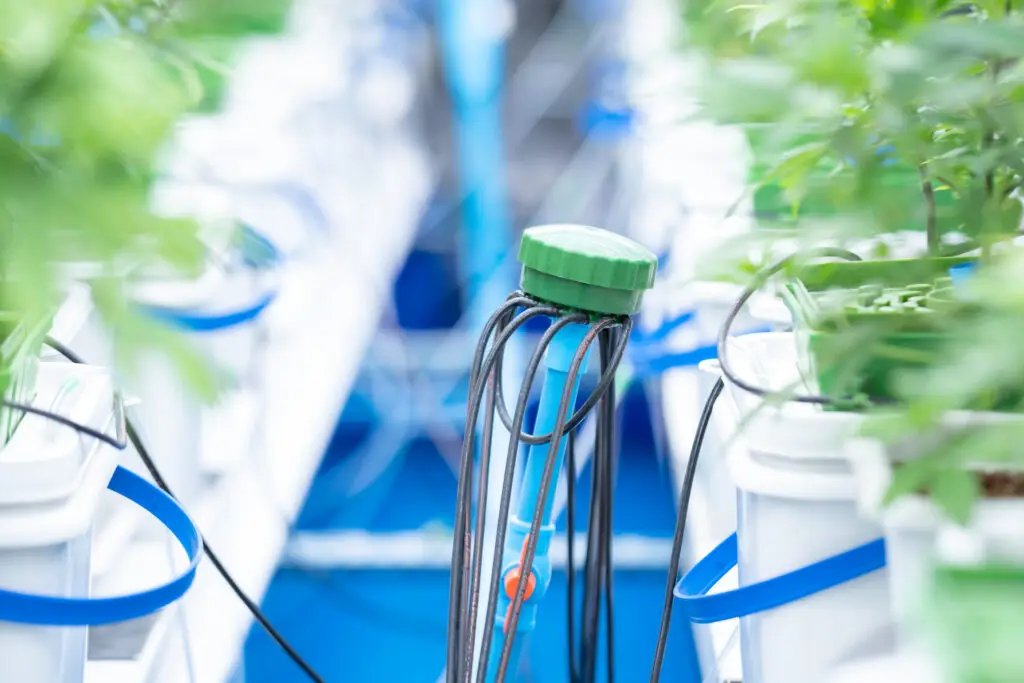
Why Fertigation Beats Hand-Watering for Consistency and Labor
The core advantage of fertigation is consistency — and consistency is the precondition for predictable yields. Hand-watering introduces variability at every step: how much concentrate you mix, how evenly you pour across containers, and how closely you stick to the schedule when other tasks compete for your time.
Automated delivery reduces those variables dramatically. Every plant in every zone receives the same EC, the same pH-adjusted solution, and the same approximate volume on the same schedule — regardless of whether you are physically in the room. For small teams running multiple rooms, this means plants can be fed at lights-on even when no one is on site, as long as the system is correctly configured.
The labor reduction is meaningful at any scale. Manual feeding for a 1,000-watt room with 16 plants in five-gallon containers can take 45–60 minutes per event, including mixing, watering, and cleanup, whereas a basic Dosatron setup reduces that same event to opening a valve and checking a timer or controller. For operations running two or more rooms on alternating schedules, the cumulative time savings over a full cycle can represent multiple full work days recovered in many cases, though actual results vary by operation size, crew structure, irrigation frequency, and starting workflow.
From a plant health standpoint, consistent automated delivery supports more stable root-zone EC and pH, which reduces the risk of nutrient lockout and deficiency symptoms that typically follow irregular hand-watering schedules. Plants fed consistently under stable temperature and media conditions have better access to nutrients at every growth stage, which supports more uniform canopy development and more predictable finishing times.
How Proportional Injection Works (No Electricity Required)
The most widely used fertigation technology for indoor growers is the water-powered proportional injector — specifically the Dosatron platform. Understanding how it works makes the system far less intimidating to set up and troubleshoot.
A Dosatron injector installs inline on your water supply line. When water flows through it, the water pressure itself drives a piston inside the unit, and that piston draws a precise amount of nutrient concentrate from a stock tank and injects it into the water stream at a fixed ratio. If your injector is set to 1:100, it draws one part concentrate for every 100 parts of water — automatically, every time water flows — with no electricity, no dedicated dosing pump, and no timer on the injector itself.
The injection ratio is adjustable on most units. This gives you control over delivered EC without reformulating your concentrate from scratch, provided you stay within the injector’s specified operating range. The key variables to match when selecting an injector are your water line’s flow rate in gallons per minute (GPM), the injector’s operating flow range and pressure requirements, and the concentration ratio your nutrient program requires.
For growers using HGV Nutrients, this system pairs well with the HGV dry formula platform. HGV Dry is designed to dissolve to a clean, high-purity stock solution when mixed correctly, which is what proportional injectors require. Water-soluble dry formulas are generally preferred for proportional injection because they fully dissolve without the sediment or suspended organic particles that can gradually foul suction lines, dosing pistons, and injection ports. Browse the full HGV nutrient line to find the right formula for your growth stage and system.


Building Your Stock Tank Concentrate Correctly
Getting your stock tank concentration right is where many first-time fertigation setups go wrong. The injector is only as accurate as the concentrate it is pulling from — so this step deserves more attention than most entry-level guides give it.
Your stock tank contains a highly concentrated version of your target nutrient solution. The injector dilutes it at a fixed ratio on every water pass, so your stock concentration and your injection ratio must be calculated together to hit your target delivered EC at the emitter while staying within the nutrient manufacturer’s recommended stock-solution practices.
A conceptual worked example using the D14MZ2 at 1:100:
If your target delivered EC is 2.0 mS/cm and your injector is set to 1:100, the injector is adding one part of stock for every 100 parts of water. In principle, that means the stock solution should be mixed to be approximately 100× the concentration of the final solution, but you should not attempt to multiply the EC reading itself to 200 mS/cm because EC does not scale linearly that way at such high concentrations and agricultural meters do not measure that range. In practice, follow your nutrient manufacturer’s directions for stock-tank mixing at a given injection ratio, then verify delivered EC at the emitters and fine-tune stock strength or ratio as needed.
In day-to-day operation, you mix your nutrient formula in the stock tank according to label or SOP, measure EC with a calibrated meter to ensure it is within the expected stock range, and then adjust the stock concentration or the injector setting until delivered EC at the emitters matches your target, accounting for your source water’s baseline EC. Avoid guessing: a stock tank that is 10% off in concentration means every plant in every zone is approximately 10% off target for the entire event — multiplied across every feeding in a cycle.
Practical stock tank rules:
- Always use fully water-soluble nutrients intended for fertigation. Insoluble particles and fillers accumulate in suction lines and injector components and can reduce dosing accuracy or cause clogs over time.
- Mix thoroughly before connecting the suction tube. Stratification in the stock tank creates EC drift between the beginning and end of an irrigation event, especially in larger tanks.
- Keep stock tank volume proportional to your feeding frequency and draw-down between refills. A five-gallon stock tank running a room twice daily will often need refilling every one to two days; moving to a 30- or 55-gallon container reduces refill frequency for multi-room operations and minimizes the risk of the injector drawing air from a near-empty tank.
- Label your stock tank with the mix date, formula, injection ratio, and target stock EC range, and rotate or discard stock that has been sitting more than three to five days. This is particularly important in warm environments where microbial growth can begin in nutrient-rich solutions.
pH Management in a Fertigation System
pH is the question every grower asks after their first automated feeding event: where does it get adjusted — in the stock tank, in the main line, or after delivery?
The correct answer for most proportional injection setups is: adjust pH in the mixed solution at or after the injection point, not in the concentrate stock tank, unless your nutrient manufacturer specifically directs otherwise.
Here is why. Nutrient concentrates are formulated and buffered at specific high concentrations. Adding pH-adjusting acids or bases to a highly concentrated stock tank can destabilize that buffering, and because the concentrate is then diluted tens or hundreds of times by the injector, a small pH shift in the stock tank can translate to unpredictable pH drift in the delivered solution. Additionally, concentrated phosphoric acid (the active in most pH-down products) behaves differently in a concentrated nutrient solution than in a dilute irrigation solution.
The recommended approach for inline systems:
- Mix your nutrient concentrate in the stock tank without pH adjustment, following manufacturer guidance for stock mixing.
- Run the injector inline so it doses into the main water supply at your chosen ratio.
- Test pH of the mixed solution at the emitter or at a test port downstream of the injector.
- If pH adjustment is needed, use a separate secondary injector, dosing pump, or compatible in-line pH control device dedicated to your pH-adjustment product, installed downstream of the nutrient injector and used according to the product instructions.
For small single-room setups where a secondary injector is not practical, the alternative is to adjust the pH of the entire stock tank carefully, account for how dilution affects the final pH, and verify at the emitter before running an event. This approach requires more calibration work upfront and closer monitoring, but it can be workable at small scale when manufacturer guidance supports it.
For operations using HGV’s nutrient system, the HGV Condition pH Down is formulated for compatibility with HGV nutrient lines and standard fertigation setups. It requires no dilution before use when applied according to label directions, which simplifies in-line adjustment workflows with dedicated pH dosing equipment.
What pH range to target at the emitter:
- Coco coir and rockwool: commonly targeted at 5.8–6.2.
- Soil: commonly targeted at 6.0–6.8, depending on media composition and organic content.
- Recirculating hydro: often targeted in the 5.5–6.0 range, with many systems operating successfully up to around 6.2 depending on crop, system design, and nutrient line.
Always verify pH at the emitter — not just in the reservoir or stock tank — on every recipe change and at least weekly during steady-state operation, and more frequently in high‑value commercial rooms.
What You Need to Get Started
A complete basic fertigation system requires five components. You likely have at least two of them already.
- Water source with pressure. A standard household hose bib in the 20–80 PSI range is sufficient for all Dosatron water-powered units when installed correctly within their specified pressure window. Municipal water pressure works for most small systems. If you are using an RO system, verify that post-filter pressure and flow meet your injector’s minimum specifications (for example, the D14MZ2 typically requires at least 7 PSI).
- A proportional injector. This is the heart of the system. Size your injector to your water line’s expected flow rate and stay within the injector’s published flow and pressure limits. Under-sizing restricts flow and creates back-pressure, while oversizing can reduce injection accuracy at very low flow rates or outside the optimal operating range.
- Nutrient concentrate in a stock tank. Any appropriate food-grade bucket or container works. Many growers use a five-gallon bucket for single-room applications; a 30- or 55-gallon container reduces refill frequency for multi-room operations. Use fully water-soluble nutrients designed for fertigation and mix to your calculated stock strength and target EC range before connecting the injector suction line.
- Delivery hardware. Drip emitters, stakes, or inline drippers route the fertigated solution to each container or substrate block. Emitter flow rate (measured in GPH) determines how much solution each plant site receives per irrigation event, and distribution uniformity is critical. Verify emitter uniformity across all plant sites before running automated events — variation above about 10% across emitters indicates a clogged or mismatched fitting that needs to be corrected.
- A timer or zone controller. At minimum, a programmable irrigation timer triggers your pump or zone valve on a schedule. More advanced zone controllers add substrate moisture feedback, allow multiple zones to run on independent schedules, and can log events for later review.
Once you have these five components assembled and connected according to manufacturer instructions and local code, your system delivers each feed automatically — at the times you set, whether you are physically present or not.
Choosing the Right System for Your Operation Size
Not every grower needs the same system. Here is how to match the right setup to your current scale, with realistic entry points at each tier.
Solo Grower / Home Tent (1–4 Plants, Single Space)
For a home grower or solo cultivator with one tent or small room, the right starting point is purpose-built rather than industrial. The Dosatron Hobby Cultivator Dosing System is designed specifically for this use case. It is a complete kit — injector, tubing, suction assembly — configured for low-volume applications where a full-size commercial unit would be excessive.
The Hobby Cultivator applies the same proportional injection principle as larger Dosatron units, at a flow range matched to small reservoir or hose bib setups. Setup time is typically under an hour for a single tent when installed per instructions. The system operates without electricity, which means the injector itself keeps working through minor electrical issues and does not add to your circuit load; you still need electrical power for any pumps or controllers in the system.
What automation buys you here: Plants can be fed on schedule during overnight or workday windows. A consistent EC is delivered every time the irrigation pump activates, reducing day-to-day variability. You spend less time mixing buckets and hand-watering between visits, and more time on training, scouting, and environment management.
Small Commercial / Small Team (1–4 Rooms, Up to ~1,000 sq ft Canopy)
For the small-team operation running one to four rooms, the Dosatron D14MZ2 is a common workhorse choice. It handles up to 14 GPM flow within its specified range, accepts 3/4-inch line connections, and covers an injection ratio range (approximately 1:500 to 1:50) that fits most commercial nutrient programs when stock tanks are mixed according to manufacturer directions.
The D14MZ2 features Viton seals, which are chemically resistant to the acidic nutrient solutions and pH adjusters commonly used in indoor cultivation. It installs inline on your main supply line and proportionally doses every room fed by that line on a shared recipe. If you run different recipes by room or by growth stage, you should install separate injectors or distinct dosing strategies per room so each pulls from its own concentrate tank and follows its own recipe.
This model is widely used across small-to-mid-size cannabis operations because it is reliable, field-serviceable, and supported with rebuild kits and documentation. It does not require a dedicated technician to maintain when you follow the recommended service intervals.
What automation buys you here: Potential labor reduction of a few hours per day across rooms in many operations (actual savings vary by operation size, staffing pattern, irrigation frequency, and how manual the starting process was). Plants are fed on precisely defined schedules regardless of crew size or shift coverage, and room-to-room EC stays much more consistent than with manual batching.
Multi-Room / Growing Team (4+ Rooms with Multiple Recipes)
Operations with four or more rooms running independent growth-stage recipes benefit most from zone-level control beyond a simple injector-plus-timer setup. The TrolMaster Aqua-X Irrigation Control System provides the upgrade path from strictly timer-based fertigation to substrate-responsive automation when installed and programmed correctly.
The Aqua-X can pair with compatible water content sensors to trigger irrigation events based on actual substrate volumetric water content (VWC) rather than a fixed schedule. This is particularly valuable in coco and rockwool systems where dryback management is part of a crop steering protocol. Instead of irrigating at the same time every day regardless of conditions, the system irrigates when the substrate reaches a defined dryback threshold, so plants are fed in a more precise target window rather than strictly by the clock — assuming sensors are placed, calibrated, and interpreted correctly.
For growers already running Dosatron injectors per room, the Aqua-X integrates as the zone trigger: the D14MZ2 remains inline to handle proportional mixing, while the Aqua-X controls when the irrigation pump or valves fire, closing the loop between substrate status and delivery timing.
This path — Dosatron for proportional mixing and TrolMaster for zone timing and substrate response — is a practical, scalable architecture for small commercial teams ready to move into data-driven fertigation without committing to enterprise-level irrigation control platforms.


Monitoring Your Fertigation System
Automated fertigation only works reliably if you verify what the plants are actually receiving. Two layers of monitoring keep the system honest: solution quality at the emitter and environmental conditions in the room.
EC and pH verification at the emitter is non-negotiable. Run a test event before any automated cycle goes live on a new recipe. Collect solution from three or more emitter points across the zone and measure EC and pH with a calibrated meter. Compare results to your targets and to your source water baseline. If EC is low, your stock concentration or injection ratio likely needs adjustment; if EC is high, you may need to reduce stock strength or change the ratio. If pH is drifting high or low, your downstream pH protocol or dosing setpoint needs correction before the event runs live.
For continuous inline monitoring on small commercial systems, the Bluelab Guardian Monitor with Wi-Fi tracks pH, EC, and temperature in your irrigation line or reservoir in real time and can log data remotely. This reduces the need for manual grab samples on every event and gives you a running record that makes recipe troubleshooting significantly faster. For a flexible spot-check tool across multiple rooms, browse the full Meters & Testing collection for portable EC and pH options at a range of price points.
Environmental baseline in the grow space provides the context that makes fertigation data interpretable. When VPD shifts between lights-on and lights-off, plant water demand changes, which affects how quickly your EC is consumed at the substrate level and what your media experiences between irrigation events. Without a temperature and humidity baseline, you are essentially running fertigation blind to the conditions that drive plant uptake.
Track minimum/maximum temperature and humidity at canopy height, and correlate environmental swings with observed substrate EC trends and leachate data. That feedback loop — delivered EC, substrate EC, leachate EC, and environmental conditions — is what makes automated fertigation genuinely controllable rather than simply automated.
Line Flushing and System Hygiene
Fertigation lines need active maintenance. Neglecting system hygiene is one of the most common reasons well-designed fertigation setups underperform or become inconsistent over time.
Between nutrient programs and at crop turnover, flush your lines thoroughly with clean water before switching to a new recipe. Residual nutrients from the previous program can interact with the incoming formula — particularly if you are transitioning from a veg to a bloom recipe with different phosphorus and calcium levels — and those reactions can generate precipitate that accumulates at emitters and reduces flow consistency.
Line biofilm can develop in irrigation tubing when nutrient solution sits stagnant between events, especially when lines run at warmer temperatures. As solution temperatures climb into roughly the upper 60s to low 70s°F and above, and residence time between cycles increases, biofilm risk rises and emitter performance tends to degrade unevenly across a zone — exactly the kind of inconsistency fertigation is meant to eliminate. Running appropriate line-cleaning protocols and avoiding unnecessary stagnation helps mitigate this.
The HGV Condition Clear (HGV Condition – Clear) is formulated specifically as a system cleaner for fertigation lines and reservoirs. When used as directed, it is designed to help remove accumulated mineral deposits, biofilm, and organic residues from tubing, injectors, and emitters. Run it through the system at the end of every crop cycle per label or SOP, then flush with clean water before bringing a new recipe online. Always validate cleanliness and emitter flow uniformity after cleaning.
Dosatron-specific maintenance: The injector itself requires periodic servicing. Viton seals and internal components degrade over time with exposure to acidic solutions and mechanical wear, which can cause dosing inaccuracy before obvious failure occurs. Full service is generally recommended on a multi‑year interval, often every three to four years under typical use, but heavy-use facilities may need more frequent rebuilds; rebuild kits are available and can be installed in the field. For a complete maintenance protocol and service intervals, see the Dosatron maintenance and best practice SOPs guide and the manufacturer’s service documentation.
Small Teams, Big Advantage: Why Automation Isn't Just for Large Facilities
The prevailing assumption — that fertigation automation belongs only to large operations with dedicated irrigation staff — does not hold up when you look at the current technology and price points. A Dosatron D14MZ2 can be installed in a typical small facility in a few hours with basic plumbing competence, and a Hobby Cultivator kit is designed to be installed without advanced plumbing experience. Neither injector requires electricity, an internet connection, or ongoing subscription costs to operate. If your plants need to be fed at 6 AM and your first team member doesn’t arrive until 8, that’s the case for automation — and it applies whether you’re running one room or ten. If your plants need to be fed at 6 AM and your first team member doesn’t arrive until 8, that’s the case for automation — and it applies whether you’re running one room or ten.
The real advantage for small teams is operational independence. A two-person cultivation team managing three rooms cannot realistically hand-water every room twice a day and also handle transplanting, training, scouting, IPM, and harvest tasks without risk of missed windows. Fertigation removes the most repetitive, time-sensitive task from that list and runs it according to schedule. Plants get fed at 6 AM even when your first team member does not arrive until 8, provided the system has been set up and tested in advance.
For operations building toward scale, automated nutrient delivery also creates the consistency record that matters for dialing in recipes. When your EC, pH, and timing are fixed and documented, you can more confidently interpret what you see in the plants. When hand-watering introduces day-to-day variation, it becomes much harder to separate cause from noise in your crop responses.
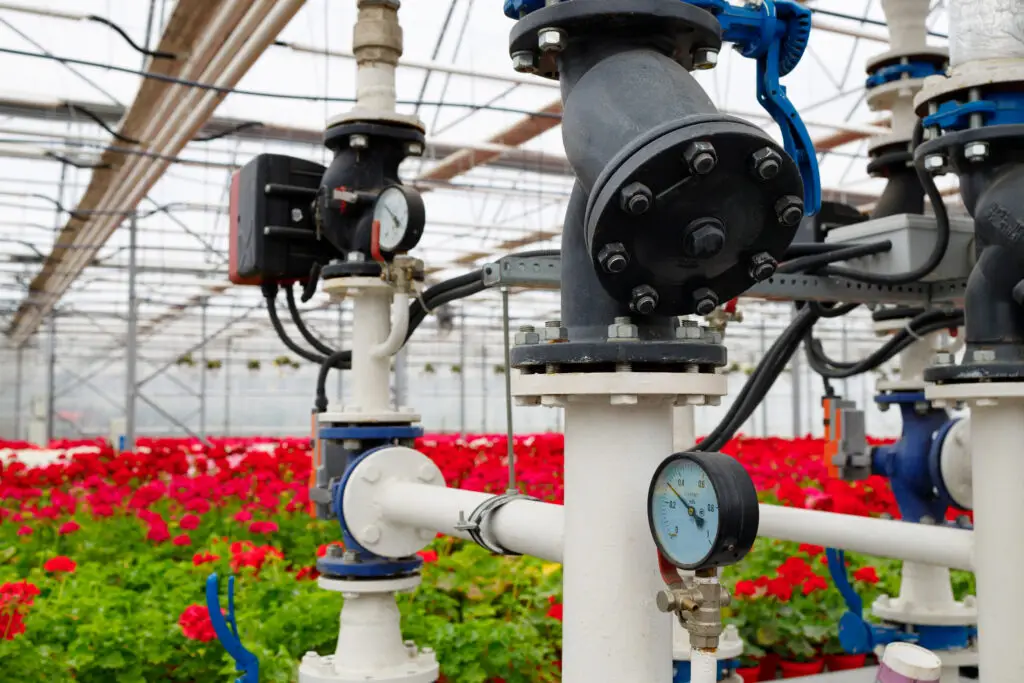
Building Your Fertigation Cluster: Next Steps
This article is the foundation. The next steps in the content cluster depend on where you are in your setup.
Sizing your injector correctly for your specific GPM and flow rate is covered in detail in our guide to how to choose a Dosatron system — including worked examples, injector spec charts, and ratio selection by nutrient program.
Keeping your system performing over multiple cycles is covered in Dosatron maintenance and best practice SOPs — with full service schedules, rebuild kit selection, and in-field procedures to keep dosing accurate.
Moving into substrate-level irrigation control and data-driven dryback management is covered in Irrigation Automation and Fertigation for Crop Steering — the advanced path for growers running coco or rockwool who are ready to move beyond simple timer-based schedules and into crop steering.
FAQs About Fertigation Systems for Grow Rooms
Q: What is fertigation in grow rooms?
A: Fertigation is the practice of delivering dissolved nutrients through your irrigation system so that every watering event also delivers a measured dose of nutrients. Instead of mixing and hand-applying nutrient solution separately, the irrigation water carries the feeding directly to the root zone. This improves consistency, reduces labor, and helps ensure plants receive the same nutrient concentration at every irrigation event. At facility scale, it also supports stage-specific recipe management across multiple zones when paired with appropriate controls.
Q: Do I need electricity to run a Dosatron injector?
A: No — Dosatron water-powered injectors operate entirely on line water pressure within their specified pressure and flow ranges. The water pressure drives an internal piston that draws nutrient concentrate from a stock tank and injects it at a fixed ratio, so no electrical connection is required for the injector itself. You will still need electricity for your irrigation pump, zone valves, or controllers if you use them, but the dosing mechanism functions without a separate power source, which increases reliability in environments with limited electrical capacity or occasional interruptions.
Q: What is the difference between fertigation and hand-watering?
A: Hand-watering requires manually mixing a nutrient solution and applying it to each plant or zone — a process that introduces variability in concentration, volume, and timing from event to event and from person to person. Fertigation automates that process by continuously dosing a precise ratio of nutrients into your irrigation water, delivering a more consistent EC and solution profile to every plant on every cycle. The functional differences are consistency and labor: fertigation maintains more stable root-zone conditions without daily manual intervention, while hand-watering quality depends heavily on the precision, consistency, and schedule adherence of whoever is doing it.
Q: How do I calculate my stock tank concentration for a Dosatron?
A: Start by determining your target delivered EC at the emitters and the injector’s dilution ratio (for example, 1:100), then use your nutrient manufacturer’s stock-mixing guidance for that ratio. Conceptually, the stock solution must be mixed significantly stronger than the final solution because the injector is adding only a fraction of stock to the water; for a 1:100 setting, the stock is on the order of 100× the concentration of the final solution, but you should not multiply EC readings literally to 200 mS/cm. Instead, mix the stock according to label directions, verify stock EC is in the expected range, then measure actual delivered EC at the emitters with a calibrated meter and fine-tune either stock strength or injector ratio as needed, subtracting your source water’s baseline EC when targeting your final number.
Q: Where do I adjust pH in a fertigation system?
A: In most proportional injection setups, pH should be adjusted in the mixed irrigation solution downstream of the injector — not in the concentrate stock tank — unless your nutrient and pH product manufacturers specify otherwise. Adding pH-adjusting acids or bases directly to a highly concentrated stock can destabilize buffering and create unpredictable pH in the delivered solution after dilution. The best practice is to test pH at the emitter after injection and correct with a secondary pH dosing line, injector, or compatible in-line controller installed downstream of the nutrient injector. For small single-room setups, carefully adjusting the stock tank pH and verifying at the emitter can be workable but requires more calibration and monitoring. Target pH at the emitter is typically 5.8–6.2 for coco and rockwool, 6.0–6.8 for soil, and roughly 5.5–6.0 (up to about 6.2 in some programs) for recirculating hydro, depending on system and nutrient line.
Q: What is the best fertigation system for a small grow room?
A: For a single tent or small room, the Dosatron Hobby Cultivator Dosing System is purpose-built for low-volume applications and is designed to be installed without specialized plumbing skills. For one to four rooms at small commercial scale, the Dosatron D14MZ2 is a common workhorse of small-facility fertigation — it handles up to 14 GPM within its operating range, uses a standard 3/4-inch connection, and proportionally doses without electricity when paired with correctly mixed stock tanks. Both systems can run reliably without a dedicated irrigation technician when maintained according to manufacturer recommendations and supported with periodic rebuild kits.
Q: How often should I flush my fertigation lines?
A: At minimum, flush lines at every crop turnover and whenever you switch nutrient recipes, especially for major transitions such as veg-to-bloom where nutrient profiles change significantly. Residual nutrients from the previous program can react with incoming formulas and create precipitate that clogs emitters unevenly. For ongoing maintenance, run a line-clearing product formulated for fertigation systems through the lines at the end of every crop cycle, then flush with clean water before bringing a new recipe online. Additionally, plan to replace drip stakes and emitters at crop turnover rather than trying to clean every piece back to original specification, since the labor cost of cleaning often outweighs the risk of inconsistency from partially fouled emitters.
Q: Can I use fertigation with soil, or only coco and rockwool?
A: Fertigation can be used with soil, coco, rockwool, and other substrates — the injector does not “know” which medium you are feeding. Coco and rockwool benefit most from automated fertigation because they are inert and typically fed with every irrigation event, making proportional injection ideal. Soil-based grows can also use fertigation, usually at lower irrigation frequency and often at slightly lower EC, since soil can provide buffering capacity and may contain organic nutrient reserves. Your medium choice influences your irrigation schedule and nutrient concentration more than it does the basic fertigation hardware.
Q: What is the TrolMaster Aqua-X and how does it work with a Dosatron?
A: The TrolMaster Aqua-X is a substrate-responsive irrigation control system that can trigger irrigation events based on actual substrate water content (VWC) or time-based programs rather than relying solely on a simple timer. When integrated with a Dosatron inline injector, the Aqua-X controls when your irrigation zone runs while the Dosatron handles proportional nutrient dosing whenever flow occurs. The result is a closed-loop fertigation system: the Aqua-X detects that the substrate is ready for the next irrigation event, triggers the pump or valves, and the Dosatron ensures that water carries the programmed nutrient ratio to the root zone, supporting crop steering protocols at small commercial scale without requiring enterprise-level software.
Q: How much labor time does fertigation save in a multi-room facility?
A: Labor savings depend on room count, container size, irrigation frequency, workflow, and the starting level of automation, so they vary significantly by operation. However, small teams consistently report recovering substantial daily labor after transitioning manual feeding rooms to automated fertigation, particularly in operations watering two or more times per day. The operational benefit that scales consistently, regardless of the exact hours saved, is schedule reliability: automated systems water at the programmed times (such as lights-on) even when no one is on site, reducing the risk of missed feedings that hand-watering operations regularly face and creating a more stable platform for recipe optimization.