

Choosing the right Dosatron system comes down to four measurable variables: your system’s total flow rate, the injection ratio your nutrient line requires, the chemical compatibility of the internal seals, and whether you need a single-injector or multi-injector configuration. Get those four right and, with proper pre-filtration, routine maintenance, and correct installation, a Dosatron can deliver consistent, proportional fertigation over many seasons — without electricity, without separate dosing pumps, and with stable performance across feeding zones.
Dosatron has become a de-facto standard in commercial fertigation across greenhouse, nursery, and cannabis operations for a reason. These water-powered proportional dosers inject concentrate at a fixed ratio relative to water volume, not water pressure, which means your nutrient EC can stay within target range whether you’re running one zone or twenty, as long as the injector is operating within its rated flow and pressure. Whether you’re setting up a hobby tent, a mid-size grow house, or a commercial greenhouse with thousands of emitters, the selection process is the same — only the numbers and capacity requirements change.
Already know your nutrient brand? Skip to Nutrient-Specific Dosatron Bundles for pre-configured systems built around HGV, Athena, Botanicare, and other major lines.
Step 1: Calculate Your System's Total Flow Rate
Your target flow rate in gallons per minute (GPM) is the single most important number in Dosatron selection. Select a unit whose rated capacity meets or slightly exceeds your maximum zone demand — running an injector continuously at or near its ceiling reduces accuracy, accelerates wear, and leaves you with less safety margin.
Most emitters, drip stakes, and spray heads are rated in gallons per hour (GPH). Convert to GPM by dividing by 60.
Formula:
(Number of emitters) × (emitter GPH rating) ÷ 60 = Required GPM
Worked Example: Single-Zone Greenhouse
- 2,000 emitters rated at 0.5 GPH each
- 2,000 × 0.5 = 1,000 GPH ÷ 60 = 16.6 GPM required
- Correct unit: D6MZ2 (26 GPM max rated flow in this series) — provides meaningful headroom above peak demand while staying within the manufacturer’s 0.44–26 GPM operating range.
Worked Example: Zoned System
The same greenhouse split into two zones of 1,000 emitters each:
- 1,000 × 0.5 = 500 GPH ÷ 60 = 8.3 GPM per zone
- Correct unit: Dosatron D14MZ2 (0.05–14 GPM rated operating range, 14 GPM max) — handles each zone individually with capacity to spare while staying comfortably below its maximum rating.
Important: Always size to your largest active zone, not your total system flow. If only half your emitters run simultaneously, the active zone flow is your design number, and that is the flow that must sit within the injector’s specified range rather than right at the top.
Dosatron Model Quick-Reference: Flow Rate by Series
| Model Series | Max Flow Rate | Pipe Connection | Best For |
|---|---|---|---|
| Hobby Cultivator | 1.3 GPM | ¾" | Tent/hobby — up to ~75 emitters (depending on emitter rate and schedule) |
| D14MZ Series | 14 GPM | ¾" | Small–medium grows, most indoor gardens |
| D6MZ2 | 26 GPM | ¾" | Mid-size greenhouse, multi-zone indoor |
| D40MZ Series | 40 GPM | 1½" | Large greenhouse, commercial indoor |
| D20SVFII | 100 GPM | 2" | Large-scale commercial, multi-building |
| D132MZ Series | 132 GPM | 2" | Institutional/warehouse-scale |
Full pressure, ratio, and connection specifications are available in the Dosatron product resources library, and growers should verify final sizing there or with the manufacturer before purchase.


Step 2: Match the Model to Your Required Injection Ratio
The injection ratio determines how much concentrate mixes into the water stream. Each Dosatron model family covers a specific ratio range — selecting a unit whose range includes your nutrient manufacturer’s recommended dilution rate is non-negotiable.
Understanding Ratios
- 1:100 = 1 part concentrate per 100 parts water (1% concentration)
- 1:500 = 1 part concentrate per 500 parts water (0.2% concentration)
- 1:3000 = 1 part concentrate per 3,000 parts water (0.033% concentration)
Higher dilution ratios (like 1:3000) are for highly concentrated stock solutions where only a very small amount of concentrate is needed per unit of water. Standard liquid nutrients typically fall in the 1:100 to 1:500 range. Concentrated dry nutrients dissolved at high stock solution strength — like HGV or Athena dry programs — often target the 1:500 to 1:3000 range depending on how you mix your A and B stock tanks and the EC targets in the manufacturer’s guidance.
Ratio Options by Model
| Model Designation | Ratio Range | Typical Application |
|---|---|---|
| MZ2 (e.g., D14MZ2, D40MZ2) | 1:500 to 1:50 | Standard liquid nutrients, pesticides, surfactants |
| MZ1000 (e.g., D14MZ1000, D40MZ1000) | 1:1000 to 1:100 | Medium-concentration dry nutrients, pH correction |
| MZ3000 (e.g., D14MZ3000, D40MZ3000) | 1:3000 to 1:333 | High-concentration dry nutrient stock solutions |
| MZ5 (e.g., D40MZ5) | 1:100 to 1:20 | Low-concentration liquid applications |
| MZ10 (e.g., D14MZ10) | 1:100 to 1:10 | Very low-concentration applications |
Most soil and coco growers using liquid nutrients are well-served by an MZ2-series unit (1:500 to 1:50), which matches the dilution ranges specified for many common liquid fertilizer programs.
Growers running dry nutrient programs with concentrated A/B stock tanks — particularly HGV, Athena Pro, or similar — typically need MZ1000 or MZ3000 variants depending on their target stock concentration and the EC they are aiming for at the emitter. If you’re mixing dry nutrients at 200–400 g/L stock, you’ll likely land in the MZ3000 range, but you should consult your nutrient manufacturer’s Dosatron-specific mixing guide or injector chart for the exact ratio.
Pro tip: When in doubt between two ratio ranges, go higher concentration capability (larger denominator) so you can run more concentrated stock at lower injection percentages. You can always dilute a stock tank or adjust the ratio setting; you can’t compensate for a unit that cannot physically reach your target ratio within its specified range.
Featured Models by Tier
Hobby/Small Indoor — Dosatron Hobby Cultivator Dosing System The entry point for automated fertigation. Rated to approximately 1.3 GPM on a ¾” line in this configuration, this complete kit includes the injector, mixing chamber, and hook-up hardware for small systems. Ideal for tent grows, small home gardens, and anyone new to proportional dosing. An expansion doser is available if you later want to inject a second solution (e.g., separate pH correction or a silica supplement).
Mid-Size Indoor/Greenhouse — Dosatron D14MZ2 The most widely used model in indoor cannabis and specialty crop operations. Its 0.05–14 GPM capacity covers most single-building grows up to a few hundred emitters per active zone when emitter GPH is typical for drip and stake systems. The MZ2 ratio range (1:500 to 1:50) handles the majority of liquid nutrient programs.
Concentrated Dry Nutrients — Dosatron D14MZ3000 When your dry nutrient program calls for highly concentrated stock solutions, the MZ3000 delivers the precision those ratios require within a 1:3000 to 1:333 range. It shares the same 14 GPM platform as the D14MZ2, just with a different ratio range. Also available in the 40 GPM D40MZ3000 for larger operations that need higher flow capacity in the same ratio band.
Large Commercial — Dosatron D40MZ1000 The D40 series handles up to 40 GPM through a 1½” line — appropriate for large single-building operations or when multiple grow houses share a fertigation header. The MZ1000 variant covers 1:1000 to 1:100, suitable for many commercial dry nutrient programs that run at moderate to high stock concentrations.
Extra-High Flow — Dosatron 100 GPM D20SVFII For large-scale greenhouse and commercial campus operations where a single injection point needs to supply multiple buildings or very high emitter counts through a 2″ main, the D20SVFII offers a 5–100 GPM operating range at 1:500 to 1:50.
Step 3: Verify Chemical Compatibility — Choosing the Right Seal Material
This is the step most growers skip — and the one that causes premature injector failure. Dosatron seals are not interchangeable across chemical types. The internal elastomers that create the piston seal determine which solutions your injector can handle long-term. Mismatching seals to chemistry degrades accuracy, accelerates wear, and can cause the unit to fail outright.
The Three Seal Types
Viton Seals — the standard option for many grow operations. Viton handles neutral to moderately acidic environments (commonly specified down to pH values around 4–5 in many irrigation contexts) and is compatible with a wide range of nutrients, fertilizers, pesticides, and many acids used for pH correction, surfactants, and foliar supplements, within manufacturer guidance. If you’re running a standard liquid nutrient program with conventional phosphoric or citric acid pH down and no strong oxidizers, Viton is often the default seal material specified by Dosatron for that chemistry.
Aflas Seals — for alkaline chemistry (pH typically 7–12 when used within manufacturer limits). Use Aflas when your injection solution is pH-neutral to basic: pH up products (commonly potassium hydroxide or potassium carbonate formulations), calcium hydroxide (liquid lime), calcium carbonate suspensions, or other alkaline additives, in line with Dosatron compatibility guidance. Note that Aflas is targeted toward the alkaline side of the curve — do not assume it is suitable for strong acids unless explicitly confirmed by the manufacturer.
Kalrez Seals — perfluoroelastomer seals specified by Dosatron for strong oxidizers, particularly peracetic acid (PAA) products, due to Kalrez’s broad chemical resistance. If you’re injecting BioSafe ZeroTol 2.0, SaniDate, or other PAA-based sanitizers through your Dosatron, Kalrez is the material Dosatron uses in their peracetic-acid rated injectors; other seal materials will degrade rapidly in contact with those oxidizers and are not recommended for that chemistry.
Running multiple solutions? Many commercial operations use two or three injectors in series — one for nutrients (commonly Viton), a second for pH correction (Aflas or Viton depending on the acid or base used), and optionally a third for sanitation (Kalrez). Each injector handles its specific chemistry, protecting seals from cross-contamination and optimizing life span.
Seal Selection Quick Guide
| Solution Type | Correct Seal | Examples |
|---|---|---|
| Standard liquid nutrients | Viton | Most common liquid nutrient lines (confirm with manufacturer) |
| pH down (phosphoric/citric acid) | Viton | HGV Condition pH Down, General Hydroponics pH Down (verify SDS) |
| pH up (potassium hydroxide) | Aflas | HGV Condition pH Up, similar KOH-based products |
| Calcium hydroxide / liquid lime | Aflas | Cal-hydroxide, liquid lime suspensions |
| Potassium carbonate / bicarbonate | Aflas | Alkaline buffer products (verify dose and SDS) |
| Peracetic acid sanitizers | Kalrez | BioSafe ZeroTol, SaniDate, other PAA sanitizers |
| Pesticides / fungicides (most) | Viton | Many IPM inputs (verify each product individually) |
Always treat this as a starting point rather than a complete compatibility list: cross-check each chemistry against Dosatron’s official compatibility resources and the chemical manufacturer’s SDS before committing to a seal choice for a commercial installation.
Step 4: Choose Your System Configuration
A single Dosatron covers many small to mid-size grows. Commercial operations often require multiple injectors configured in series or parallel — the decision depends on whether you need to inject multiple solutions or simply increase flow capacity.
Single-Injector Setup
The simplest and most common configuration. One Dosatron inline with your main water supply, one stock tank of nutrient concentrate. Works for:
- Hobby and small indoor grows
- Any operation running a single pre-mixed nutrient stock
- Some commercial operations with a simple A+B program where both parts are compatible in one stock tank (per manufacturer guidance)
Series Configuration (Multiple Injectors)
Two or more Dosatron units installed sequentially in the same water line. Each injector draws from its own stock tank. Used when:
- You need to keep A and B nutrient concentrates separate (prevents precipitation in the stock tank)
- You’re injecting pH correction as a separate step downstream of nutrients
- You’re adding a sanitizer (Kalrez-sealed unit) independently of your nutrient stream
Series placement matters: install injectors in the sequence you’d add them to a reservoir — typically nutrients first, then pH adjustment, then sanitation when applicable.
Parallel Configuration (Increased Flow)
Two or more identical Dosatron units installed side by side on the same line. The water flow is split between units and recombined downstream. Used when your required GPM exceeds a single unit’s capacity. This approach is less common in most indoor grows but relevant in large greenhouse mains where flow requirements are very high.
Important: Only use identical models (same series, same ratio range) in parallel installations to keep injection uniform, and plan for balanced flow between branches using properly designed manifolds or balancing hardware so that each injector sees comparable flow. For large, complex parallel systems, working with an engineer or experienced fertigation designer is recommended.
Lo-Flo Systems for Concentrated Dry Nutrients
Dosatron’s Lo-Flo platform is purpose-built for highly concentrated dry nutrient programs and other applications where stock solution strength demands precise, low-volume injection. The Dosatron Lo-Flo Nutrient Delivery System is a kit built around Organics Alive nutrients that uses a specialized low-flow doser paired with a mixing chamber to handle the micro-volume injections that concentrated A/B programs often require. If you’re running a high-concentration dry nutrient program similar to Organics Alive, Athena Pro, or HGV, a Lo-Flo-style configuration is worth evaluating before defaulting to a standard injector, especially at commercial scale.
Nutrient-Specific Dosatron Bundles
The fastest path to a correctly configured system is a pre-built bundle matched to your nutrient brand. HydroBuilder offers complete Dosatron kits configured for several of the most popular commercial nutrient programs — injector model, ratio range, mixing chamber, and plumbing hardware already selected for the specific chemistry.
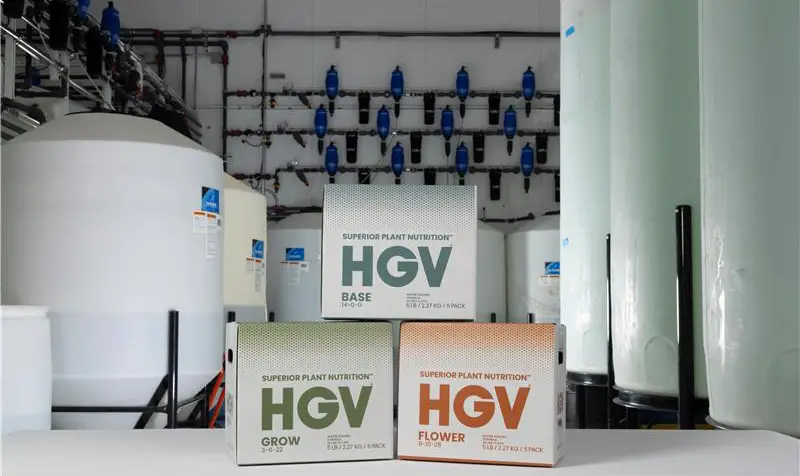
Configured specifically for the HGV dry nutrient program, which runs as a highly concentrated A/B system. This kit includes injectors with the appropriate ratio range for HGV’s recommended stock solution concentrations and the hardware to inject both parts separately — helping prevent precipitation in your stock tanks and maintaining independent control over each part.
Pre-configured for Athena’s two-part Pro program. Athena’s dry line runs at high stock concentration; this kit is sized to handle the ratio requirements for both Athena Pro Core and Bloom without requiring you to work through the injector math independently, assuming you follow Athena’s stock mixing and EC guidelines.
Matched to Botanicare’s liquid nutrient program. This variant includes the injector plus a monitoring kit for tracking injection performance over time — particularly useful in larger operations where catching drift early can prevent crop issues.


What Else You'll Need: Completing the Fertigation System
A Dosatron is the dosing engine — it works inside a larger drip or flood irrigation infrastructure that needs to be designed for uniform distribution and adequate filtration. Most operations will also need:
Drip Delivery: Netafim Drip Stake Assembly — a top-selling irrigation product at HydroBuilder. Netafim’s pressure-compensating drippers are designed so each emitter delivers the same volume across a range of pressures when installed correctly, which is essential for accurate Dosatron-based fertigation because uneven delivery can mask otherwise precise injection.
Monitoring: Dosatron Nutrient Delivery System Monitor Kit — adds monitoring instrumentation to your delivery system for tracking injection performance, particularly valuable when running multiple injectors in series or when your system scales beyond a single zone.
For deeper guidance on system design and scheduling, see our Fertigation 101: Automated Nutrient Delivery guide and Irrigation & Fertigation Automation for Crop Steering.
For Commercial Operations
Sizing for Multi-Zone Commercial Facilities
Commercial facilities operating 5,000–20,000+ sq ft typically run zoned irrigation with separate headers per bay or room. Each zone should be assessed independently:
- Calculate peak zone demand using the emitter formula above.
- Determine your largest active zone — this is your minimum injector capacity, subject to the injector’s rated flow and pressure.
- Decide between a single high-capacity unit on a shared main vs. per-zone injectors, taking into account how many different EC or recipe profiles you plan to run.
A single D40MZ or D20/D100-series unit on a building main simplifies maintenance and stock tank management but ties all zones to the same injection ratio. Per-zone injectors allow independent EC adjustment per room — useful when running multiple strains or crop steering profiles simultaneously in commercial cannabis and other high-value crops.
Multi-Part Dry Nutrient Programs at Commercial Scale
Running HGV, Athena, or similar two-part dry programs at commercial scale means managing very high stock concentrations with tight EC tolerances. At this level:
- Use separate injectors for Part A and Part B to prevent precipitation in the mix chamber and stock tanks.
- Install injectors in series, with Part A upstream and Part B downstream, following the order recommended by your nutrient manufacturer.
- Add a dedicated Kalrez-sealed injector if you’re running a PAA sanitizer like BioSafe ZeroTol through the same line, rather than combining sanitation chemistry with nutrient or pH stock.
- Install an inline filter upstream of each injector (200 mesh / 80 micron minimum is a common recommendation for fertilizer injection) and maintain it on a schedule appropriate to your water quality and solids load.
Maintenance Planning for Commercial Systems
Commercial Dosatron units should follow at least a quarterly maintenance schedule, including seal inspection and replacement as needed in high-usage environments. Dosatron rebuild and maintenance kits are available across all major series — keeping spares on hand prevents unexpected downtime when seals or check valves eventually wear.
For full commercial SOP documentation including priming, calibration verification against inline or handheld EC/pH meters, and preventive maintenance schedules, see Dosatron Maintenance & Best Practice SOPs.
Why Shop Dosatron at HydroBuilder
HydroBuilder is a Dosatron co-op partner and carries the complete Dosatron catalog — covering major model families, seal variants, accessory kits, and replacement parts needed for small to large-scale fertigation builds. Our commercial accounts team has worked with indoor cannabis, greenhouse vegetable, and specialty crop operations of every scale and can help you map your system requirements to the right Dosatron configuration.
If you need assistance sizing a system, working through a multi-injector series build, or identifying the correct ratio range for your specific nutrient program, contact our team directly at 888-815-9763 or through our Commercial Accounts page.
Choosing A Dosatron System: FAQs
How do I calculate the right flow rate for a Dosatron injector?
Multiply the number of emitters by their GPH rating, then divide by 60 to convert to GPM. For example, 1,000 emitters at 0.5 GPH = 500 GPH ÷ 60 = 8.3 GPM. Select a Dosatron model whose rated operating range includes that flow and ideally provides some headroom above it. Always size to your largest active zone, not your total system capacity.
For zoned systems, your design number is the flow demand of the single largest zone running simultaneously — not the cumulative total of all zones. Running a 14 GPM unit around 8.3 GPM gives it accurate operating headroom; regularly running it at 13.9 GPM pushes it near its ceiling, which can degrade precision and accelerate wear over time. Commercial operations with separate zone headers may prefer per-zone injectors rather than a single oversized unit on the main if they need different recipes or more redundancy.
Commercial application: Warehouse and greenhouse operations above roughly 20 GPM peak per active header should evaluate the D6MZ2 (26 GPM), D40MZ (40 GPM), or 100 GPM D20/D100 series depending on zone architecture and mainline sizing.
What is the injection ratio on a Dosatron and how do I know which one I need?
The injection ratio tells you how much concentrate mixes into the water. A 1:100 ratio delivers 1 part concentrate per 100 parts water (1%); a 1:3000 ratio delivers 1 part per 3,000 parts (0.033%). Your nutrient manufacturer’s Dosatron or injector mixing guide specifies the target ratio for their recommended stock solution concentration, usually tied to target EC at the emitter.
Standard liquid nutrients typically use an MZ2 unit (1:500 to 1:50 range). Concentrated dry nutrient programs — particularly those mixed at high stock solution strength — often require MZ1000 (1:1000 to 1:100) or MZ3000 (1:3000 to 1:333) units to achieve the correct delivered EC without unmanageable stock volumes. When your target ratio falls near the boundary of two ranges, choose the unit whose range centers on your target rather than one where your ratio sits at the extreme end, which gives you more usable adjustment and stability.
Commercial application: Two-part dry programs at commercial scale (HGV, Athena Pro) often use matched-ratio injectors per part to maintain independent EC control over A and B stock tanks, then fine-tune the panel based on inline EC readings as described in manufacturer best-practice videos and guides.
What is the difference between Viton, Aflas, and Kalrez seals in a Dosatron?
The three seal materials determine chemical compatibility. Viton fluoroelastomer seals handle most fertilizers, many pesticides, and a range of mineral acids and pH-down products in the neutral-to-acidic range when used within the manufacturer’s limits. Aflas is designed for alkaline chemistry — pH up products, calcium hydroxide suspensions, and potassium carbonate-based buffers — and is used where Viton would have reduced life due to strong bases. Kalrez perfluoroelastomer seals are specified for aggressive oxidizers like peracetic acid (PAA) sanitizers such as BioSafe ZeroTol or SaniDate, where other elastomers would degrade quickly.
Using the wrong seal accelerates wear, reduces injection accuracy, and can cause premature failure or leakage, particularly in high-cycle commercial systems. If you’re injecting more than one solution type, the rule is simple: each incompatible chemistry gets its own Dosatron with the appropriate seal documented for that chemical. Many commercial operations run a Viton nutrient injector, an Aflas pH correction injector, and a Kalrez sanitation injector in series for precisely this reason.
Commercial application: Sanitation injectors with Kalrez seals should typically be installed as the final unit in a series configuration, downstream of nutrient and pH injectors, in line with standard hygiene and materials compatibility practices.
Can I use a Dosatron for pH adjustment, not just nutrients?
Yes. Dosatron units are commonly used to inject pH correction solutions inline — but the seal material and ratio range must match the chemistry and the concentration you plan to run. Phosphoric acid or citric acid pH-down products are usually compatible with Viton-sealed units within specified concentration limits. Potassium hydroxide pH-up products, on the other hand, are matched to Aflas seals in Dosatron’s documentation. Injecting a strong pH-up solution through a Viton-sealed unit can degrade the seals significantly faster than intended.
For separate pH correction injection, a low-volume secondary injector positioned downstream of the nutrient injector is the standard commercial configuration. This keeps pH chemistry separate from nutrient stock tanks and allows independent ratio adjustment, helping you dial in both EC and pH at the header or inline meter.
Commercial application: Two-part acidification systems using both acid A and pH correction, or systems that combine alkalinity control with fertigation, typically use two separate injectors with appropriate seal selection for each solution to avoid cross-contamination and premature wear.
What is a Lo-Flo Dosatron system and when do I need one?
The Lo-Flo system is Dosatron’s platform for highly concentrated dry nutrient programs and other applications that require very low injection volumes per gallon of water. Standard injectors are optimized for liquid nutrients at moderate concentration; when you’re injecting highly concentrated dry nutrient stock at ratios toward the upper end of ranges like 1:3000, the Lo-Flo mixing chamber and low-flow doser can deliver better accuracy at those micro-volumes by operating in a more favorable part of their range.
Lo-Flo is most appropriate for operations running concentrated A/B dry programs — including Organics Alive and similar commercial dry lines — where stock solution concentration exceeds what standard injectors handle cleanly while staying within comfortable ratio settings. The pre-configured Lo-Flo bundle for Organics Alive nutrients on HydroBuilder is a turnkey option for those programs, and its design principles are similar to what high-density cannabis and CEA facilities often deploy around concentrated dry lines like Athena Pro or HGV.
Commercial application: Large multi-room operations running dry programs at uniform concentration throughout all zones benefit most from Lo-Flo systems, as consistent injection accuracy at low dosing volumes becomes more critical at scale and across many irrigations per day.
Do Dosatron injectors work without electricity?
Yes — that’s a core design feature. Dosatron units are water-powered proportional dosers. Water pressure drives an internal piston that draws concentrate from the stock tank and mixes it proportionally to water flow volume, not directly to water pressure alone, as long as flow and pressure remain within the injector’s specified range. This means injection accuracy is maintained across reasonable fluctuations in line pressure and is not affected by power outages to the facility, since no external power is required for the injector to operate.
Because there are no electrical components in the injector itself, Dosatron units are suitable for wet environments, are generally simpler with respect to electrical code requirements than powered injection equipment, and require no electrical installation for the injector body. This is one reason they are widely adopted in greenhouse, nursery, livestock, and cannabis cultivation applications worldwide.
Commercial application: Water-powered operation simplifies permitting for new facility builds and can reduce both initial installation cost and long-term electrical maintenance overhead compared to powered dosing pumps, especially when multiple injection points are required.
How many Dosatron injectors do I need for a two-part nutrient program?
Most two-part liquid programs that are designed to be mixed together at stock strength can be premixed in a single stock tank and injected through one Dosatron, if the nutrient manufacturer explicitly approves that approach. However, for dry nutrient programs or any two-part system where Part A and Part B would precipitate if combined in concentrated form, you need two separate injectors: one per part, configured in series on the same water line.
Each injector has its own stock tank and operates independently, so there is no interaction between concentrates until they meet the diluted water stream downstream of both injectors. This is the standard configuration for HGV, Athena Pro, and General Hydroponics FloraPro dry programs, as shown in manufacturer injector-panel guidance.
Commercial application: Series dual-injector builds with matched ratio units are standard practice in commercial cannabis. Adding a third Kalrez-sealed injector for PAA sanitation creates a three-stage inline fertigation system that handles nutrients, pH or alkalinity adjustment, and sanitation from a single water main while keeping chemistries separated until the distribution line.
Are there pre-configured Dosatron kits for specific nutrient brands?
Yes. HydroBuilder offers complete pre-built Dosatron systems matched to HGV, Athena, and Botanicare nutrient programs, among others, via dedicated bundles. These bundles include the injector model with the correct ratio range for the nutrient line’s stock solution requirements, a mixing chamber or similar blending hardware where applicable, and plumbing components — which greatly reduces the need to independently verify every detail of injector-to-nutrient compatibility for a first-time installation.
For growers who aren’t yet committed to a nutrient brand, the Dosatron Starter Kit provides a complete hardware system in a brand-agnostic configuration. Pre-configured kits are particularly valuable for first-time Dosatron installations because they remove one of the most common sources of setup error: mismatched injection ratio to stock concentration or seal type to chemistry.
Commercial application: Multi-room commercial builds often standardize on a single nutrient brand bundle or a small set of bundles to simplify inventory management for maintenance kits and replacement parts, and to keep injector settings consistent across facilities or rooms.