What Is Dissolved Oxygen?
Dissolved Oxygen (DO) refers to the amount of oxygen present in water, measured in milligrams per liter (mg/L or ppm). In hydroponics—and even in soil—oxygen dissolved in water is a critical driver of root health, nutrient uptake, and overall plant performance.
While plants absorb carbon dioxide through their leaves, roots require oxygen to function properly. Without enough oxygen at the root zone, plants struggle to grow—even if nutrients and light are dialed in perfectly.
Why Dissolved Oxygen Is Critical for Plant Roots
Plant roots rely on oxygen for cellular respiration, the process that converts sugars into usable energy (ATP). This energy fuels:
- Root growth and branching
- Nutrient and water uptake
- Beneficial microbial activity
- Resistance to disease and pathogens
Low oxygen levels force roots into anaerobic respiration, which is far less efficient and can quickly lead to stress, root rot, and stunted growth.
Ideal Dissolved Oxygen Levels for Hydroponics
While exact targets vary by crop and system, most hydroponic growers aim for:
System Type & Ideal DO Range
- DWC / RDWC: 6-9 ppm
- NFT: 5-8 ppm
- Ebb & Flow: 5-7 ppm
- Aeroponics: 7-10+ ppm
- Drain-To-Waste: 15-20 ppm
Pro tip: DO decreases as water temperature increases. Cooler nutrient solutions naturally hold more oxygen.
Dissolved Oxygen vs Water Temperature
Oxygen solubility drops rapidly as temperatures rise:
- 65°F (18°C): ~9.5 ppm
- 72°F (22°C): ~8.7 ppm
- 80°F (27°C): ~7.5 ppm
This is why warm reservoirs are one of the most common causes of root issues in hydro systems.
Best practice: Keep nutrient solution temps between 65–70°F whenever possible.
Signs of Low Dissolved Oxygen
Low DO often shows up as root problems first, then canopy symptoms:
Root Zone Symptoms
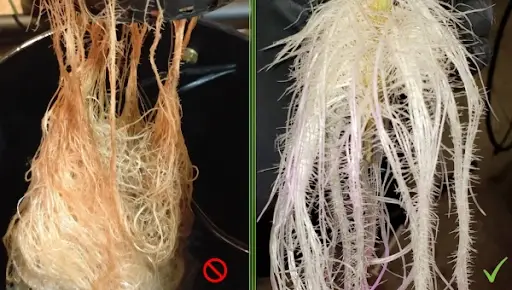
- Brown, slimy, or foul-smelling roots
- Poor root branching
- Increased pathogen pressure (Pythium, Fusarium)
Above-Canopy Symptoms
- Wilting despite adequate watering
- Slow growth
- Nutrient lockout or deficiencies
- Reduced yields
How Dissolved Oxygen Affects Nutrient Uptake
Oxygen and nutrients are closely linked. When roots are oxygen-starved:
- Ion transport slows
- Nutrients remain in solution but aren’t absorbed
- EC/PPM readings can look “fine” while plants decline
This is why growers sometimes chase nutrient adjustments when the real issue is oxygen availability, not feed strength.
Ways to Increase Dissolved Oxygen in Hydroponics
Air Pumps & Air Stones
A foundational solution for most systems. Fine-bubble diffusers increase surface area, allowing more oxygen to dissolve.
Water Movement & Recirculation
Flowing water naturally absorbs oxygen. RDWC and continuously circulating systems tend to maintain higher DO levels. Check out this guide on the Best Hydroponic Systems of 2026 for RDWC systems
Temperature Control
Chillers, insulation, and proper room climate management go a long way toward maintaining oxygen saturation.
Venturi Injectors & Oxygen Injectors
Used more commonly in commercial systems, these introduce oxygen directly into irrigation lines.
Beneficial Microbes
Healthy microbial populations can improve oxygen efficiency and protect roots—but they cannot replace oxygen.
Dissolved Oxygen in Soil & Coco (Yes, It Still Matters)
Even outside hydroponics, oxygen is essential:
- Compacted soil limits oxygen diffusion
- Overwatering displaces air pockets
- Poor drainage creates anaerobic zones
Practices like proper drainage, aerated media, and smart irrigation schedules help maintain oxygen availability in traditional grows.
Measuring Dissolved Oxygen
For growers who want precision, DO meters provide real-time insight into root-zone conditions. These are especially valuable for:
- Commercial facilities
- High-value crops
- RDWC and large reservoir systems
- Troubleshooting root issues
Key Takeaways for Growers
- Roots need oxygen as much as leaves need light
- Ideal DO levels improve growth, yield, and plant health
- Warm water = less oxygen
- Many “nutrient problems” are actually oxygen problems
- Better oxygenation leads to stronger, faster-growing plants
Built for Growers, Backed by Experts
Understanding DO is one of the biggest steps growers can take toward healthier roots and more consistent results—whether you’re running a single DWC bucket or a full-scale commercial facility.
At Hydrobuilder, we believe better grows start with better knowledge—and the right tools to support it.
FAQs for DO (Dissolved Oxygen)