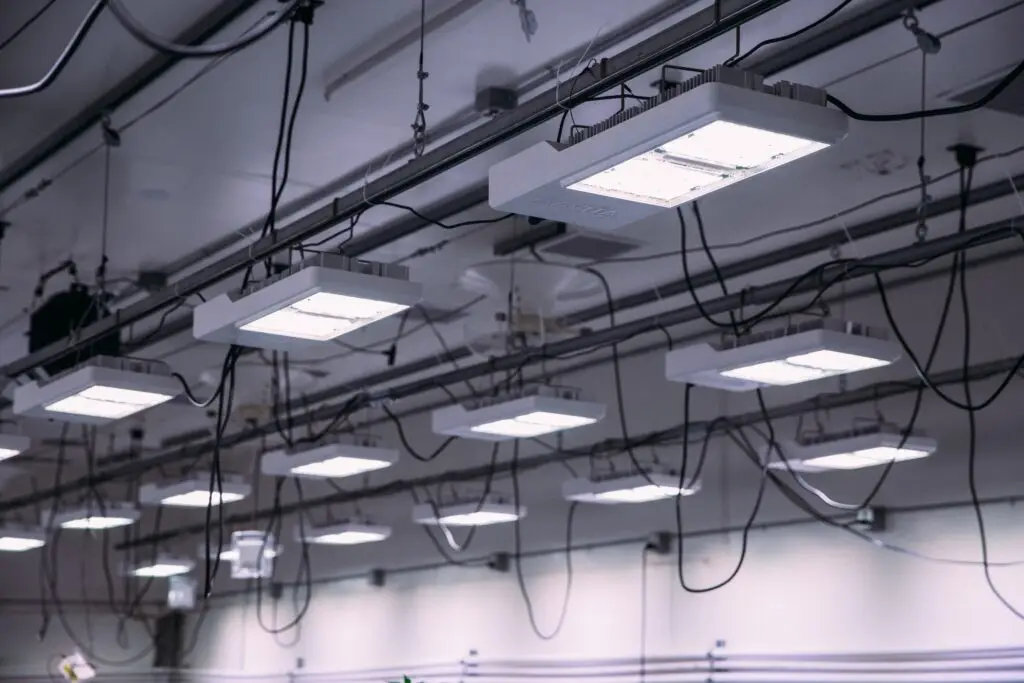
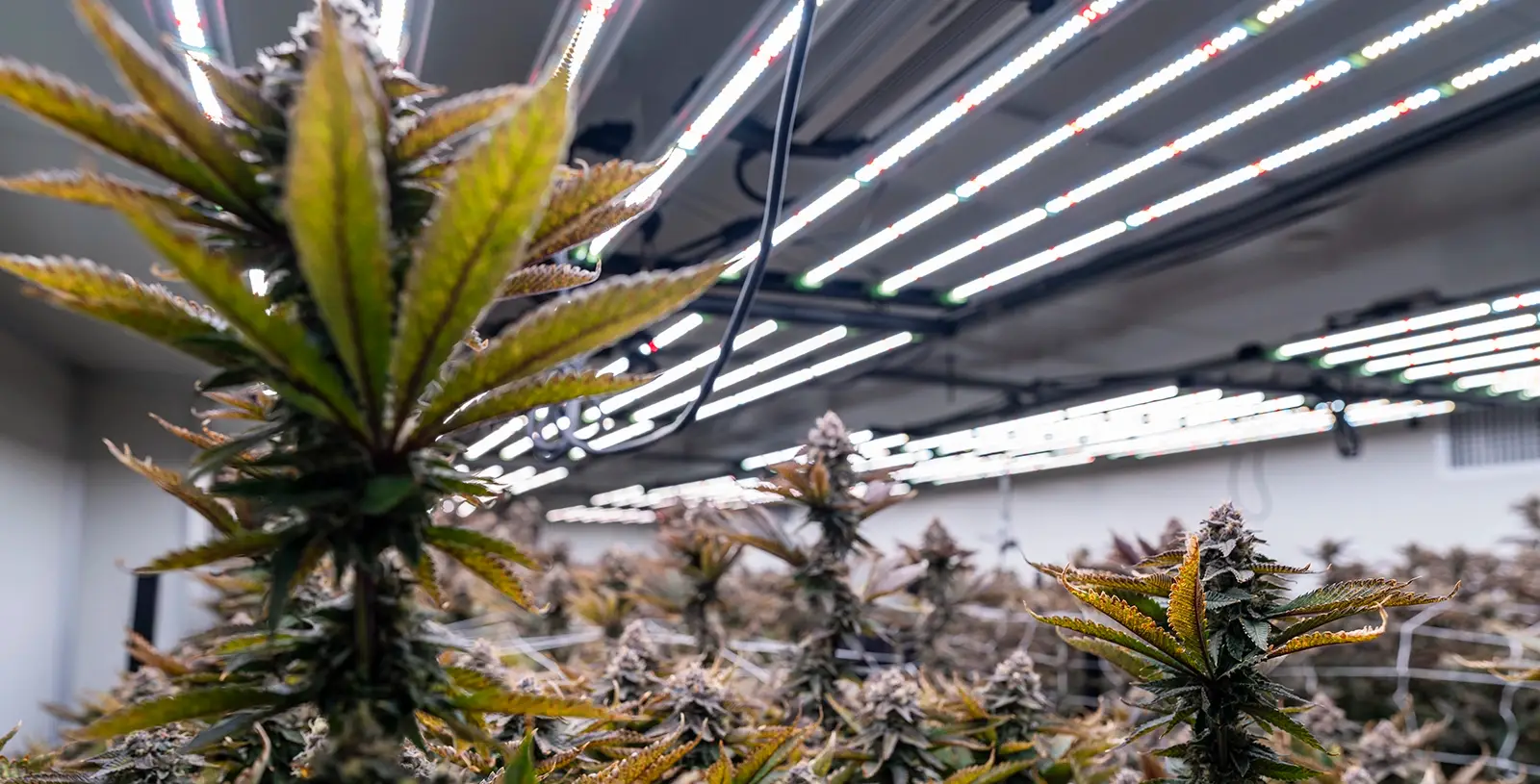
Setting up your cannabis grow room or tent is exciting—but one of the most important steps is also one of the most misunderstood: figuring out your lighting needs. While there’s a ton of info floating around about watts, lumens, and PPFD, what most growers really want to know is simple: How many grow lights do I need for my plants to thrive?
This guide breaks it down clearly and practically, combining expert advice, real-world examples, and the power of our Grow Light Coverage Calculator to help you light smarter and grow better—whether you’re in a 2′ x 2′ tent or managing a 200-square-foot commercial canopy.
Why Light Coverage Is the Foundation of a Successful Grow
Light is the single most important input for indoor cannabis cultivation. It drives photosynthesis, triggers flowering, and affects everything from bud density to terpene production. But just as too little light can limit your yield, too much light can bleach buds, stress plants, and spike your energy bill unnecessarily.
That’s why accurate light planning—matched to your specific canopy, not just your room size—is so essential. It’s not about lighting the walls or walkways. It’s about giving your plants exactly the amount of light they need, distributed evenly across their leaf surface.
Step One: Measure the Plant Canopy, Not the Room
A common beginner mistake is measuring the entire grow space when planning lighting. But your lights don’t need to illuminate empty corners—they need to focus on the plant canopy.
Example:
You have a 5’ x 5’ grow tent, but your actual canopy—where your plants are—only covers 4’ x 4’. That’s 16 square feet of grow area, not 25. If you calculate your lighting needs based on the full 25 square feet, you’ll likely overspend on equipment and create unnecessary heat and light stress.
Understanding Watts, PPFD, and DLI
To make informed lighting decisions, you need to know three core metrics:
🔌 Watts per Square Foot
This traditional rule of thumb still works well, especially for estimating LED needs:
Grow Stage | Recommended LED Wattage per ft² |
Vegetative | 20–30 watts |
Flowering | 30–40 watts |
For a 4’ x 4’ canopy (16 ft²), you’ll need approximately 480–640 watts during flowering.
💡 PPFD (Photosynthetic Photon Flux Density)
PPFD measures how much usable light hits your canopy, in µmol/m²/s. It’s a more precise way to measure light intensity than watts alone.
Grow Stage | Target PPFD |
Cloning/Seedling | 100–300 µmol/m²/s |
Vegetative | 300–600 µmol/m²/s |
Flowering | 600–1000 µmol/m²/s |
☀️ DLI (Daily Light Integral)
DLI represents how much light your plants receive over 24 hours. It’s calculated from PPFD and photoperiod length. Most cannabis strains require:
- Veg: 15–25 µmol/day
- Flower: 30–40 µmol/day
Our Grow Light Coverage Calculator includes automatic DLI estimation—just input your hours of light per day.
LED vs HPS: What Should You Use?
While high-pressure sodium (HPS) lights were the standard for years, LEDs now dominate the indoor cannabis space for both hobby and commercial growers.
Factor
|
LED
|
HPS
|
|
Efficiency (µmol/J)
|
2.2–3.5
|
1.0–1.7
|
|
Heat Output
|
Low
|
High
|
|
Lifespan
|
50,000+ hours
|
10,000–20,000 hours
|
|
Dimming Control
|
Usually included
|
Rare
|
|
Spectrum Options
|
Full spectrum available
|
Limited to red/orange
|
|
Cost (long-term)
|
Lower with energy savings
|
Higher with electricity/AC
|
LEDs may have a higher upfront cost, but their energy efficiency, full-spectrum light, and cooler operation make them the go-to choice for precision growing.
How to Use the Grow Light Coverage Calculator
Our calculator simplifies the process of lighting your grow. Here’s how it works:
- Enter canopy dimensions (length × width)
- Choose your light intensity (watts per ft² or PPFD target)
- Select or input your light fixture (actual wattage, PPF, coverage)
- Set the number of hours per day
- Adjust for overlap and hanging height in advanced mode
The calculator returns your total wattage requirement, average PPFD, DLI, and number of recommended fixtures.
🔗 Try the Grow Light Coverage Calculator here
Grow Light Setup Examples
Let’s look at a few common grow scenarios:
Canopy Size
|
Area (ft²)
|
Target Wattage
|
Example Setup
|
|
2’ x 2’
|
4 ft²
|
120–160 W
|
1 × 150W LED
|
|
4’ x 4’
|
16 ft²
|
480–640 W
|
1 × 600W or 2 × 300W LEDs
|
|
5’ x 5’
|
25 ft²
|
750–1000 W
|
1 × 1000W or 2 × 500W LEDs
|
|
8’ x 8’
|
64 ft²
|
1600–2300 W
|
4 × 600W LED or bar fixtures
|
|
10’ x 20’
|
200 ft²
|
5000–7000 W
|
8 × 800–1000W LEDs
|
As your grow expands, multiple fixtures provide better light spread and PPFD uniformity than a single oversized unit.
Optimizing Light Placement for Best Results
Even with the right wattage, how you place your lights is critical. Here’s how to optimize your layout:
- Fixture Height: Keep LEDs 12–24” above the canopy; adjust based on intensity and PAR maps.
- Overlap: Aim for 10–20% overlap between fixtures to eliminate low-light zones.
- Uniformity: Use bar-style LEDs or light movers in large grows to even out distribution.
- Reflection: Line walls with Mylar or use white paint to boost light bounce and efficiency.
- Dimming & Controls: Adjust intensity during different growth stages using dimmable drivers or smart controllers.