

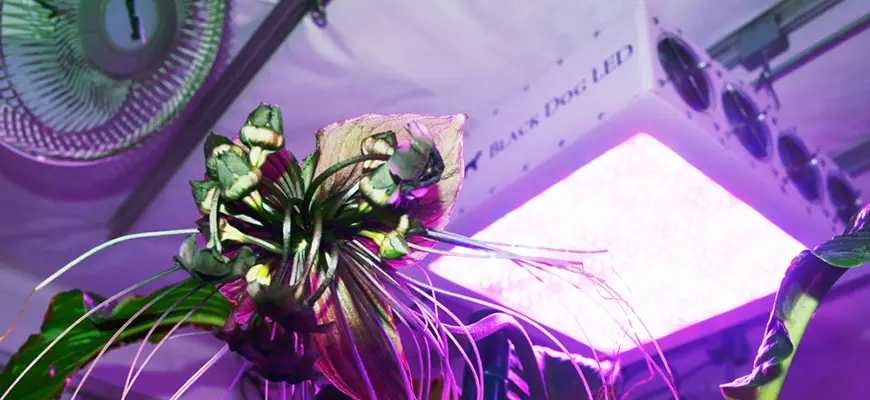
UV light for plants is one of the most misunderstood tools in the modern cultivator’s toolkit — underused by hobbyists and increasingly standard in high-performance facilities when the economics and genetics justify extra complexity. When applied carefully during the right growth stages, ultraviolet radiation can trigger plant defense responses that may alter terpene and resin production, influence canopy structure, and in some cases enhance aspects of potency in light-sensitive crops, although outcomes are strongly cultivar- and dose‑dependent.
This guide covers how UV light works at the plant biology level, the critical difference between UVA and UVB, how to dose it conservatively, and which lighting systems can deliver meaningful UV output in an indoor grow environment.
Whether you’re running a 4×4 tent or a commercial flower room, UV supplementation works on the same biological principles — the scale, level of control, and validation trials are what change.
What Is UV Light, and How Do Plants Respond to It?
UV light occupies the spectrum between 100–400 nanometers (nm), sitting just below visible light. For practical growing purposes, only two UV bands matter in most indoor cultivation scenarios:
UVA (315–400 nm) is the longer-wavelength, lower-energy band. Many full-spectrum LEDs emit some UVA, and it penetrates plant tissue more easily; plants tolerate moderate UVA well and use it primarily as a regulatory signal that can influence secondary metabolite production and morphology rather than as a major source of photosynthetic energy.
UVB (280–315 nm) is shorter-wavelength, higher-energy, and is often the primary driver of strong UV stress responses in plants. Outdoor cannabis grown at elevation receives higher natural UVB, and some legacy and newer studies have documented changes in trichome density and cannabinoid profiles under elevated UVB, although results vary and more recent work has questioned the consistency of THC increases across genotypes.
UV is not part of the standard PAR band (400–700 nm) used in most horticultural lighting calculations, and it contributes negligibly to conventional PAR‑based photosynthesis, but plants clearly perceive UVA and UVB as environmental signals that modulate secondary metabolism and stress physiology.


The Science Behind UV and Secondary Metabolite Production
When plants detect UVB radiation, they activate a cascade of defense mechanisms — a stress response similar to what is triggered by insect damage, drought, or intense direct sunlight. This is sometimes called an “elicitor response” because UV acts as a stressor that elicits protective chemistry such as increased trichome formation and pigment synthesis.
Documented plant responses to controlled UV exposure (UVA, UVB, or combinations) in cannabis and other light-sensitive species include:
- Increased trichome density on leaf and calyx surfaces in some cultivars and treatment regimes
- Shifts in concentrations of certain terpenes and other volatile compounds, particularly those associated with oxidative stress pathways
- Elevated flavonoid and anthocyanin production in some crops, which can influence color development and photoprotection
- Changes in leaf anatomy and internode spacing consistent with stress-adaptation responses, which can also modify canopy light interception patterns
Important caveat: These responses are real and measurable under controlled conditions, but the magnitude and direction (beneficial vs. detrimental) vary significantly by strain, growth stage, UV spectrum, intensity, and total daily exposure. UV is not a substitute for genetics, nutrition, or environmental control — it is an advanced optimization lever for crops that are already performing well and should always be validated in small A/B trials before broad commercial rollout.
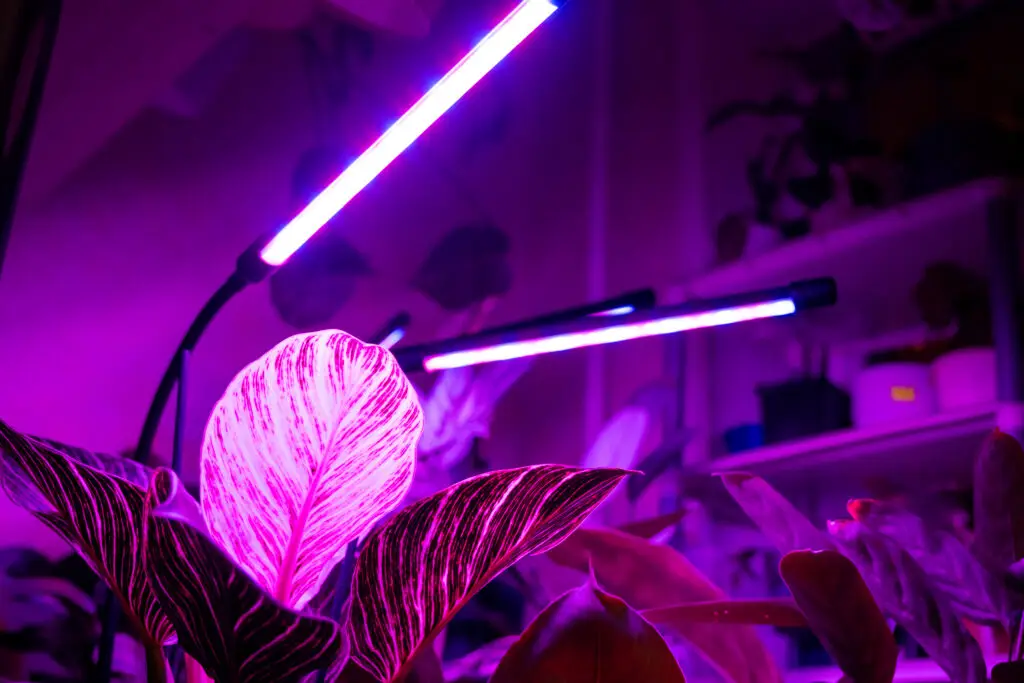
UVA vs. UVB: Which One Matters More?
Both UVA and UVB have value for growers, but they work differently and require different delivery and safety strategies.
UVA is broadly present in most quality full-spectrum LEDs and in natural sunlight, and many fixtures marketed as “full-spectrum” include some output down into the high-300 nm range. Its effects tend to be more diffuse and regulatory — contributing to secondary metabolite support and influencing morphology (such as internode spacing and leaf thickness) without necessarily producing dramatic one‑variable changes in potency.
UVB is where many growers report the most distinct qualitative responses, particularly for resin and terpene development, because its higher energy makes it a stronger stress signal. However, UVB is largely absent from standard white LEDs, and cannabis trials show that excessive or poorly timed UVB can reduce biomass or fail to increase cannabinoids in some genetics, which is why dedicated UV supplemental lighting and careful scheduling are common in high‑end production environments.
The practical takeaway: if you are using standard LEDs and want to experiment with UV stimulus, focus first on a controlled, measurable UVB and/or mixed UVA/UVB source, and plan to run structured side‑by‑side tests to confirm the cost‑benefit for your specific genetics and market.
Best Light Sources for UV in an Indoor Grow
Growers Choice ROI-E720 with UV-R Light Bars — Integrated UV in a Commercial LED
The Growers Choice ROI-E720 with Bloom Boost UV-R Light Bars represents an integrated solution for growers who want high-efficiency LED performance plus targeted supplemental spectrum (including UV and deep red) in a single system. The UV-R light bars are designed to deliver specific wavelengths associated with secondary metabolite stimulus without requiring a separate UV-only fixture and control chain.
For flower rooms running 4×4 to 5×5 footprints per light, this type of integrated system can simplify wiring and control compared to running separate UV strips, provided the grower still validates UV schedules and effects through trials. Running the UV-R bars during the final weeks of flower — when trichome development is most active — is a common protocol, with specific timing and intensity adjusted to genetics, environment, and desired quality targets.
At canopy temperatures between roughly 75–82°F (lights-on) with RH held below about 55% during late flower, many commercial growers find that combining high, uniform PAR with a moderate UV stimulus gives them the best balance of biomass and secondary metabolite development, though exact setpoints should be tuned for each facility.
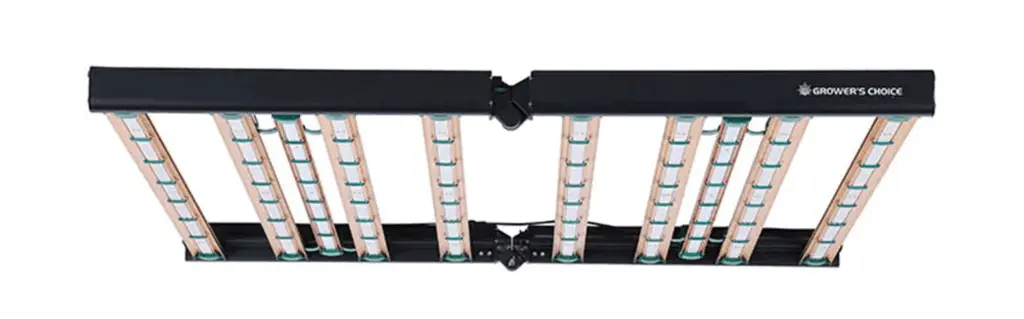
Growers Choice 315W CMH — Natural Full-Spectrum Including Some UV
The Growers Choice 315 Watt CMH All-in-One Fixture deserves a place in any UV discussion because ceramic metal halide (CMH/LEC) technology produces a broad, sun‑like spectrum that includes some UV content in addition to strong visible output. Many growers credit CMH with delivering “outdoor-like” quality in smaller rooms, in part because of this wider spectral distribution.
However, the actual UVB reaching the canopy depends on lamp design, glass shielding, mounting height, and room layout, and outer jackets or glass can significantly attenuate UVB, so these fixtures should not be assumed to deliver the same UV dose as a purpose‑built UVB bar. For smaller operations or growers transitioning from traditional HID, CMH is a straightforward way to introduce a more complete spectrum that includes some UV, with the option to add dedicated UVB only if later trials show a clear benefit.
Growers Choice ROI-FF 650W — Full-Spectrum Flowering LED
For operations that want broad-spectrum LED performance with solid coverage across the PAR band and into UVA, the Growers Choice ROI-FF 650 Watt Flowering LED anchors many serious flower rooms with a high-output, distributed-bar design. While it does not provide dedicated UVB output like the ROI-E720 UV-R system, it delivers a full photosynthetically active spectrum with some UVA, which is often sufficient for facilities that prioritize simplicity and efficiency and are not yet ready to manage separate UVB schedules.
PHOTOBIO Advanced Quantum PAR Meter — Measure What Matters
UV supplementation is only worth pursuing if your core PAR environment is optimized first, since PAR drives most of your biomass and base cannabinoid production. The PHOTOBIO Advanced Quantum PAR Meter gives you accurate PPFD readings across your canopy so you can confirm your primary fixture coverage, uniformity, and setpoints before adding UV into the mix.
Because most quantum sensors are calibrated for 400–700 nm, they will not directly read UV, so growers typically use PAR meters to dial in baseline PPFD and then reference fixture data, distance charts, or a UV‑specific meter to estimate UV intensity rather than trying to infer it from PAR readings.
How to Use UV Light Safely and Effectively
Timing: When to Introduce UV
UV stress is most useful when plants are healthy, well-fed, and already performing well within optimal VPD and environmental ranges. Introducing UV into a garden that is already struggling with nutrient issues, pest pressure, or climate instability typically compounds problems rather than triggering beneficial adaptive responses.
Recommended timing by growth stage (starting points for trials):
- Vegetative: Light UVA exposure is generally well-tolerated in many species, and some growers experiment with very limited UVB during veg to promote compact, stocky growth, but in commercial cannabis trials these inputs are usually kept to short windows (for example 1–2 hours per day at conservative intensity) until cultivar responses are documented.
- Early flower (weeks 1–3): This is a common period to begin introducing low-dose UVB or mixed UVA/UVB, allowing plants time to acclimate and begin upregulating protective and secondary metabolite pathways before peak trichome development.
- Late flower (weeks 4–harvest): Many growers concentrate their strongest UVB windows in approximately the final 2–4 weeks of bloom, sometimes extending UV exposure to several hours per photoperiod, but these more aggressive schedules should always be confirmed in side‑by‑side trials because some cultivars are sensitive and may show yield loss or bleaching at higher doses.
Avoid introducing relatively high UVB for the first time in the very last week of flower, because plants may not have time to respond productively and may instead exhibit acute stress without quality gains.
Intensity and Duration
UVB for horticulture is typically characterized in terms of irradiance at canopy (for example µW/cm²) and the daily exposure duration. There is no single universal standard for indoor cannabis, and recent peer‑reviewed trials show that both under‑ and over‑exposure can be counterproductive, so any numerical guidance should be treated as a conservative starting point rather than a rule.
Many plant UV studies operate in roughly the 10–40 µW/cm² UVB range at canopy for experimental treatments that aim to induce secondary metabolism without severe tissue damage, but cannabis-specific data show cultivar‑dependent responses within and outside this band, and some conditions have reduced yield or quality. In practice, “more is not better”: excessive UVB exposure can cause bleaching, necrosis on young growth, and suppression of photosynthesis, particularly if combined with already high PAR and suboptimal environment.
A practical workflow is to start at the low end of your fixture manufacturer’s recommended schedule (for example 1–2 hours per day at suggested hanging height during late flower), monitor the canopy closely for leaf whitening, bronzing, or tip damage, and only then consider gradual increases in exposure in a limited test area.
Monitor Your Environment
UV exposure amplifies overall plant stress and can compound issues related to VPD and transpiration, especially under high-intensity PPFD. Keeping temperature in the roughly 75–82°F range during UV-enhanced light cycles and maintaining RH between about 45–55% in flower helps prevent the combination of UV stress and high humidity from creating conditions favorable to pathogens like Botrytis or powdery mildew.
The HBX Thermo-Hygrometer tracks both temperature and humidity with Min/Max memory so you can see how your environment behaves between lights-on and lights-off — data that become even more important once you add UV into an already high‑intensity lighting program.


Does UV Light Harm Plants?
Yes, if misapplied. UV is inherently a stressor, and the goal in a professional grow is to stay in a “productive stress” zone instead of crossing into damage.
Signs of excessive UV exposure include:
- Bleaching or whitening on young leaves or shoot tips, which are typically the most UV-sensitive tissues
- Bronzing or purpling of older leaf tissue beyond what genetics and temperature would explain
- Stunted new growth that fails to recover between photoperiods
- Tip burn and margin necrosis that do not line up with known nutrient or VPD issues
If you see any of these signs after introducing or increasing UV, reduce UV duration first, then intensity, and allow at least several days for plants to recover before making additional changes.
UV Light and Pest Pressure
One secondary benefit sometimes discussed with UV is its interaction with pests and pathogens. Some research and industry experience suggest that certain UV wavelengths and doses can negatively affect soft-bodied insects (like some mites and thrips) and can reduce germination or viability of some fungal spores on leaf surfaces, especially when higher, sanitation‑level doses or shorter‑wave UVC are used.
However, the UV intensities and wavelengths used for disinfection and pest suppression are typically different from those used purely for quality optimization, and using UV as a stand‑alone pest or pathogen control strategy is not recommended. For a complete monitoring baseline alongside any UV program, deploy HBX Yellow Sticky Traps at canopy height — one per roughly 10–25 sq ft — so you can detect flying pest populations early, independent of UV status.
For Commercial Operations: Scaling UV Supplementation
In commercial flower facilities, UV supplementation is typically applied at the zone or room level rather than plant by plant, which makes uniformity, safety, and operational repeatability just as important as spectrum and intensity.
Commercial UV protocol framework:
- Fixture placement: Supplemental UVB bars are commonly mounted 18–24 inches above canopy, centered between primary fixture rows; in double-ended HPS or top-mounted LED rooms, add-on UV bars are often run perpendicular to primary fixtures to smooth out coverage, with spacing confirmed in mapping passes before full deployment.
- Scheduling integration: Many facilities program UV via their light controller on a sub-schedule that runs inside the main photoperiod, such as the final 3–4 hours of lights‑on, so that UV exposure is concentrated when plants are already photosynthetically active but not extended across the entire day-length.
- Staff safety: UVB is harmful to human eyes and skin with repeated or high-intensity exposure, and even UVA can contribute to eye strain in high‑output rooms. Establish a facility protocol that UV bars are off whenever staff are in the room without UV‑protective eyewear and skin protection, and use growroom‑rated eyewear such as Active Eye LED Growroom Lenses when working around high‑output lighting systems.
- Tracking ROI: Run UV-treated vs. untreated side-by-side trials before any facility-wide rollout, measuring not only terpene and cannabinoid profiles but also yield per square foot, trim quality, and labor implications to ensure that the added fixture cost, power draw, and safety complexity are justified for your specific genetics and buyers.
Why Shop at HydroBuilder for UV Grow Lights
HydroBuilder stocks a curated selection of full-spectrum LEDs, dedicated UVB supplemental fixtures, and CMH systems from brands that have proven their UV output claims in real growing environments. When you call or chat with our team, you’re talking to growers who can help you select the right UV delivery method based on your primary fixture, room size, crop type, and target outcome.
- Expert pre-sales support from experienced cultivators
- Commercial accounts with volume pricing available
- Full LED grow light catalog with UV-capable options clearly identified
- Fast shipping on in-stock fixtures with easy returns
Example: FAQs
Q: Does UV light help plants grow?
A: UV light does not directly drive the bulk of plant growth the way PAR (400–700 nm) does, and UV is not required for plants to complete their life cycle indoors. Its main value is as a signaling and stress input that can change secondary metabolite profiles — including trichomes, terpenes, and pigments — particularly in cannabis and other light‑sensitive crops during flower, with results that vary by cultivar and dose.
Growers seeking higher yields and more consistent quality should prioritize dialing in PPFD, spectrum in the PAR band, environmental control, and nutrition before adding UV, since these factors produce the largest gains. UV supplementation is most valuable once the foundational growing environment is tightly controlled; adding UV to an underpowered or unstable room will not compensate for more fundamental deficits and may even reduce yield if mismanaged.
Commercial note: Commercial operations running optimized full-spectrum LEDs or CMH fixtures with stable climate control are the most likely to see measurable, repeatable quality differences from UV, because all other variables are already tightly controlled and A/B trials can be run with proper sampling and lab testing.
Q: Is UV light good or bad for plants?
A: UV light is neither inherently good nor bad — it is dose-, spectrum-, and context‑dependent. Low-to-moderate UVA and UVB exposure during appropriate growth stages can elicit useful stress responses, while excessive or poorly timed UVB can cause bleaching, stunting, and photosynthetic suppression.
The goal in a commercial setting is productive stress, not damage, which means introducing UV gradually, monitoring canopy response, limiting UVB to conservative windows of the photoperiod based on cultivar response, and maintaining strong environmental conditions (proper VPD, temperature, nutrition, and airflow) so plants can convert UV stress into beneficial secondary metabolism rather than simple injury.
Commercial note: In multi-room facilities, it is best practice to formalize a UV SOP in one test room and track results across multiple harvests before scaling; genetics respond differently, and not every strain will justify the added operational complexity of UV.
Q: Do plants need UV light to grow?
A: No. UV is not required for plant growth or successful indoor cultivation. Plants can complete their full life cycle — from germination through harvest — without any intentional UV input, and many commercial cannabis facilities produce premium flower under HPS or standard LED systems with minimal UVA and essentially no UVB.
UV supplementation is an optional optimization lever for growers who have already mastered environmental control, nutrition, integrated pest management, and canopy training and are looking for additional, fine‑tuning levers for specific SKUs or genetics.
Q: What spectrum of UV is best for terpene production?
A: UVB (280–315 nm) has historically been associated with stronger trichome and cannabinoid responses in cannabis studies, but more recent work shows that both UVA and UVB can influence secondary metabolites and that results are not uniform across cultivars. UVA (315–400 nm) tends to act as a more moderate stress and signaling input, while UVB delivers a more intense stress that can either enhance protective chemistry or suppress growth depending on how it is applied.
If terpene enhancement is a primary goal, look for fixtures or supplemental sources that provide well‑characterized UVB output and consider mixed UVA/UVB rather than UVA alone, and always run lab‑verified side‑by‑side tests to confirm the net effect on both terpenes and yield for each genetic line.
Q: When should I turn on UV lights during flowering?
A: Many growers begin with low UVB or mixed UVA/UVB introduction around weeks 2–3 of flower and gradually ramp to their full test protocol by weeks 4–5, when trichome development is ramping up. Running UVB only in the final 2–4 weeks without any earlier acclimation phase can sometimes cause acute stress in sensitive cultivars, so it is safer to introduce it earlier at lower doses and step up gradually if plants respond well.
For the last 2 weeks before harvest, some growers choose to extend UV sessions to several hours per photoperiod during the lights‑on window, but this should be done within a structured trial framework and with close visual inspection to avoid bleaching or quality losses.
Q: Can UV lights damage my plants?
A: Yes. Excessive UVB exposure or poorly controlled UVC can damage plants by causing chlorosis, necrosis, and suppressed photosynthesis, especially on young, actively growing tissue. The risk is highest with dedicated UVB or UVC sources run at high intensity, at close distance, or for long durations relative to the plant’s acclimation level.
A conservative approach is to start with short UV windows (for example 1–2 hours per day), at the manufacturer’s recommended mounting height or greater, and to observe young leaves and shoot tips carefully; established fan leaves and calyxes usually tolerate moderate UVB better when overall conditions are optimized.
Q: Do LED grow lights emit UV?
A: Most standard white “full-spectrum” LEDs emit small amounts of UVA near the visible boundary but produce little to no meaningful UVB at the canopy compared to natural sunlight or dedicated UV fixtures. Many horticultural LED spectra are specified from around 380–780 nm, which includes some UVA but excludes UVB, and the exact amount of UVA reaching plants depends on fixture design and optic materials.
Purpose-built UV LED or fluorescent fixtures and UV-enhanced systems like the Growers Choice ROI-E720 with UV-R bars are designed to deliver measurable UVB and/or UVA for plants. CMH/LEC technology produces one of the broadest natural spectra among traditional grow lighting types, including some UV, but the actual UVB level at canopy still depends on bulb design and shielding.
Q: Is UV light from grow lights safe for humans?
A: UVB and UVC are harmful to human eyes and skin with repeated or high-intensity exposure, and UVA can contribute to cumulative eye and skin damage over long periods. The same high-energy photons that trigger protective responses in plants can cause sunburn, photokeratitis, or long‑term skin and eye issues in people if proper precautions are not taken.
Never work in a room with active UVB or UVC fixtures without UV‑rated eye protection and skin coverage, and in most commercial facilities UV bars are switched off automatically before staff enter or are locked to run only when rooms are unoccupied. Growroom‑specific eyewear like Active Eye LED Growroom Lenses can help protect eyes against intense visible and some UV light, but always follow the fixture manufacturer’s safety guidance.
Q: How do commercial growers use UV lighting differently than hobbyists?
A: Commercial growers typically integrate UV through programmable lighting controllers and written SOPs, using UV bars or integrated fixtures on timed sub-schedules within the main photoperiod rather than manually toggling them on and off. This allows precise control over UV duration and staging (for example only the last few hours of lights‑on), independent of the primary fixture’s PAR schedule, which is important for repeatability and safety.
Facilities also regularly run UV-treated vs. untreated side-by-side trials over multiple harvests, with third‑party lab testing and detailed yield tracking, before committing to facility-wide UV integration across all flower rooms. Hobbyists often experiment more informally, but commercial operations must quantify both upside and risk, including energy use, safety procedures, and impacts on post‑harvest handling.