

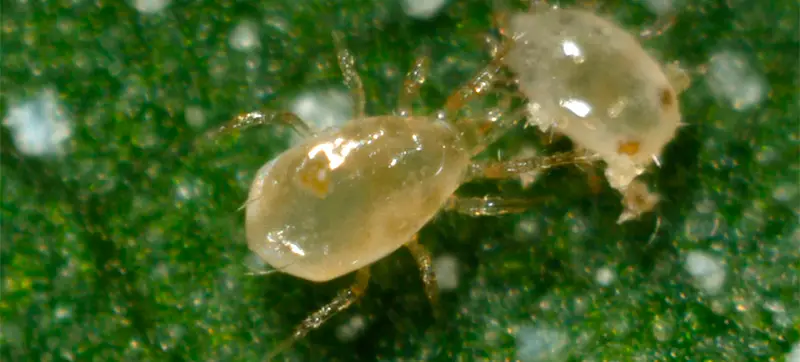
If you are dealing with fungus gnat or thrip infestation, the Stratiolaelaps Scimitus might be your solution.
Read our blog below to get more information about these beneficial mites, how they can help your pest issues, and how to purchase and use them in your garden.
What is the Stratiolaelaps Scimitus
The predatory mite Stratiolaelaps Scimitus, also known as Hypoaspis miles, is been widely used as a biological control agent to control fungus gnats and thrips.
This predatory mite typically inhabits the top inch of the soil surface. It feeds on soil-dwelling stages of fungus gnats, thrips, and other insect pests that cause serious damage to many important crops grown in greenhouses, nurseries, crop fields, and poultry.
These preventative control mites are so small that they are hardly visible to the naked eye. Adults are clear-brown to tan-colored and are about 0.8- 1.0 mm in size.
Hypoaspis consume 1-5 prey per day and can survive as a scavenger by feeding on algae and plant debris. These biological control mites can survive a variety of conditions besides flooding. They can endure mild winters but are inactive below 57 degrees F.
Benefits Of These Predatory Mites In The Garden
Stratiolaelaps scimitus is particularly appreciated for being a safe and environmentally friendly pest control method. Unlike chemical pesticides, these mites do not pose a risk to humans, pets, or beneficial insects such as bees.
These soil-dwelling mites are the ideal choice for organic farming and sustainable gardening practices.
Farmers and gardeners often introduce these fungus gnat predators into their soil to enhance the natural ecosystem and maintain a healthy balance. This practice not only helps in effective pest management but also promotes the growth of healthier, more robust plants.
By using these mites, growers can reduce their reliance on chemical treatments, contributing to a more eco-friendly and sustainable approach to agriculture.
Life Cycle Of The Stratiolaelaps Scimitus
The Stratiolaelaps Scimitus has a short but active life cycle, usually no longer than 13-15 days total.
Females generally lay oval-shaped eggs in the soil. In 2-3 days, these eggs hatch into young mites. Then, over about 7-11 days, they grow into adult mites. As adults, they start eating pests in the soil and laying their eggs.
Under a lens, in any given life stage, these predatory mites look similar. Populations of Hypoaspis include both males and females. However, the males are much smaller and seldom seen.
What Do Stratiolaelaps Scimitus Eat
These tiny helpful mites are like nature’s pest control. Their main food source is small insects and their larvae, especially fungus gnats and thrips.
These mites are great because they hunt down these pests in the soil, helping to keep your plants healthy and happy without using chemicals.
Target Pests:
Fungus Gnat Larvae, Thrips, Sciarid Flies, Shore Flies, Root Aphids, Bulb Mites, Springtails and Root Mealybugs.
Where To Purchase Beneficial Mites?
Look no further, here at Hydrobulder.com we sell Stratiolaelaps Scimitus as well as other Beneficial Mites from Tip-Top BioControl. These awesome beneficial bugs come in bottles of 12,500, 25,000, or 50,000.
**Live insects from Tip Top Bio & ARBICO Organics Are Expedited To Ensure Your Insects Arrive Quickly & Safely**
Release Rates For The Stratiolaelaps Scimitus
Generally, for smaller areas or light pest problems, use about 10,000 to 20,000 mites per 100 square feet. Furthermore, If the pest issue is more serious, or the area is larger, you might need up to 50,000 mites for the same space.
Remember, these mites work best when released early in the pest cycle and when the soil is a bit moist. This helps them settle in and start their pest-hunting job effectively.
How do you release Stratiolaelaps Scimitus?
First, you want to gently scatter them over the soil where you have a pest problem. These predatory mites love damp places, so make sure the soil is a bit moist.
Do this early on when you first notice pests, as these mites are great at preventing pests from growing in numbers.
Spread them out evenly, and they’ll start working on keeping those pesky pests away. This is a natural and effective way to protect your plants!
Final Thoughts On The Stratiolaelaps Scimitus Soil Mites
If you are having issues with large fungus gnat populations, western flower thrips, or spider mites, these beneficial soil mites might be the solution.
Preventative applications will protect against many of the most common pests that feed on plant roots or have a life cycle in the soil.
Here at Hydrobuilder.com, we sell these awesome little bugs in various amounts from different vendors. If you need help placing an order, call us at 888-815-9763 and one of our experienced growers will help you out.
FAQs: Stratiolaelaps scimitus (Beneficial Soil Mite Predator)
Q: What is Stratiolaelaps scimitus?
A: Stratiolaelaps scimitus (formerly Hypoaspis miles) is a beneficial, soil-dwelling predatory mite used for biological pest control. It targets common soil pests by feeding on their larvae and pupae, helping reduce infestations naturally without chemical pesticides.
Q: What pests does Stratiolaelaps scimitus control?
A: Stratiolaelaps scimitus feeds on a wide range of soil-dwelling pests, including fungus gnat larvae, thrips pupae, shore fly larvae, root aphids, bulb mites, and springtails. By attacking pests in the soil, it disrupts their life cycle before they can damage plants.
Q: How does Stratiolaelaps scimitus work in the soil?
A: These mites live in the top layer of soil or growing media, where they actively hunt pest eggs, larvae, and pupae. Both adults and nymphs are predators, providing continuous pressure on soil pest populations that foliar sprays often cannot reach.
Q: When is the best time to release Stratiolaelaps scimitus?
A: Stratiolaelaps scimitus is most effective when applied preventatively or at the first signs of soil pests. Early application helps stop pest populations from establishing and spreading, leading to more consistent long-term control.
Q: What growing conditions are ideal for Stratiolaelaps scimitus?
A: These beneficial mites perform best in moist, well-aerated soil with temperatures above approximately 59°F (15°C). Growing media with organic matter supports better survival and activity, helping them establish quickly.
Q: Can Stratiolaelaps scimitus be used in indoor grow rooms and greenhouses?
A: Yes. Stratiolaelaps scimitus is well-suited for indoor gardens, greenhouses, and controlled environment agriculture (CEA). It thrives in soil, coco coir, and other soilless media commonly used in indoor growing systems.
Q: Is Stratiolaelaps scimitus safe for plants, people, and pets?
A: Yes. These predatory mites are harmless to plants, humans, and animals. They only feed on small soil pests and do not bite or damage crops, making them a safe option for integrated pest management programs.
Q: How many Stratiolaelaps scimitus mites should I apply?
A: Application rates depend on pest pressure. Light infestations typically require lower release rates, while heavy infestations benefit from higher densities. Even distribution across the soil surface ensures better establishment and control.
Q: How long does it take to see results after releasing Stratiolaelaps scimitus?
A: Pest reduction is gradual rather than immediate. When released early and under proper conditions, noticeable suppression of soil pest populations often occurs within 1–3 weeks as the mites establish and reproduce.
Q: Can Stratiolaelaps scimitus be used in organic growing?
A: Yes. Stratiolaelaps scimitus is compatible with organic and sustainable growing practices. It provides effective pest control without synthetic chemicals and supports a healthier soil ecosystem.