Iron is a
micro-nutrient that all plants need to thrive. Many of a plant’s most important functions, such as chlorophyll production, nitrogen fixing, metabolism and overall development are dependent on the micro-nutrient iron.
Without the appropriate presence of iron, the plant will not be able to grow and function as well as it should.
Why Is Iron Important For Plants?
Even though plants only need a tiny amount of iron to thrive, that small amount is crucial. Iron is necessary for a plant to produce chlorophyll, which is responsible for giving a plant oxygen and color.
Iron helps to transport important elements throughout a plant’s circulatory system, much like bloodstream in a human body. It is also responsible for a lot of the enzyme functions in many plants.
It’s available to the roots in a soluble chelate form when grow medium pH is less than 6.5. Since plants cannot move iron from one part of the plant to another, it is considered an immobile nutrient.
Identifying Iron Deficiency In Plants
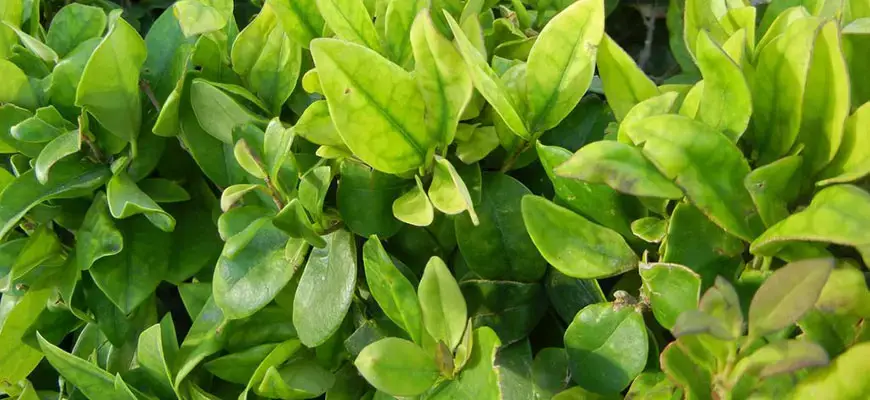
Iron deficiency symptoms appear on the upper, young leaves. Because iron is essential to the production of chlorophyll in the leaves, an iron deficiency is primarily revealed as yellowing between the veins of leaves.
Larger veins in the leaves will remain green. In time if not remedied, the leaves become pale and start to die back, eventually resulting in stunting and dying back of the entire plant.
High copper, manganese, and zinc can create an iron deficiency as well as water logged grow media.
- Younger, top leaves will yellow
- Necrosis appears as the deficiency advances
How To Correct Iron Deficiency
One of the first things to take a look at is pH balance, in both soil and hydroponic growing systems. A pH imbalance will block nutrient uptake through the plant’s roots.
It is important to regularly check the pH, and to be sure to keep the pH within the appropriate range for soil or hydroponics. The optimal pH range for most plants is between 5.5 and 6.5.
In this range, the nutrients present in the soil or water are soluble, and are easily taken up through the plant’s root system. When the pH level is outside of this range, even when appropriate levels of micro and macro nutrients are present, they are not able to be absorbed by the plant.
Oftentimes soil and water levels that have an elevated pH can cause plants to experience an iron deficiency.
Alternative methods for correct iron deficiencies
The use of foliar treatments on plants is often underestimated. Foliar applications are made directly on the leaves of affected plants throughout their growing stages. Foliar sprays produce a quick response, oftentimes in just a matter of days.
Constant applications of foliar sprays may be required if chlorosis symptoms persist or as new foliage begins to grow.
Because foliar sprays are only a short term and somewhat temporary solution, it’s important to also supplement the growing medium. This can be done by amending the soil and other growing mediums with compost teas and organic compost.
Both fertilizer products and compost teas can be diluted and applied to plants as a foliar spray, and also implemented as a feeding system at its roots.
Now that you know the benefits of monitoring the iron content in your soil and hydroponic growing systems, and what to do when you spot a deficiency, you can be sure to have the necessary tools on hand to keep your plants at their best.
Want to learn more about nutrient deficiencies?
Read our entire
nutrient deficiency series as well as learning about micro vs macronutrients.