

Starting a mushroom farm is one of the most accessible agricultural ventures available—whether you’re cultivating a few bags in a spare closet or building out a commercial grow room. Mushroom farming requires minimal space, no sunlight, and a shorter path from setup to harvest than most crops. This guide covers everything you need to know about how to start a mushroom farm: choosing the right species, selecting substrates, inoculating spawn, building a fruiting environment, and scaling to commercial production.
These principles apply at every scale—from a first-time home grower with a single grow kit to a professional operation running hundreds of substrate bags per week.
Can Mushroom Farming Be Profitable?
Yes—mushroom farming can be highly profitable when species selection, substrate cost, and market demand are aligned. Mushrooms grow indoors year-round, require minimal square footage compared to most crops, and produce multiple harvests from a single inoculated substrate block. The combination of fast growth cycles, low overhead, and strong consumer demand for specialty varieties creates favorable economics for growers at all scales.
Profitability depends on species choice, substrate sourcing, contamination rates, and your sales channel—farmers market, restaurant direct, or wholesale all carry different margin profiles.
What Is the Most Profitable Mushroom to Farm?
The most profitable mushroom to grow depends on your market, cultivation setup, and willingness to manage more demanding species. For most growers, oyster mushrooms and shiitake offer the best balance of profitability and ease.
Oyster Mushrooms (Pleurotus ostreatus)*
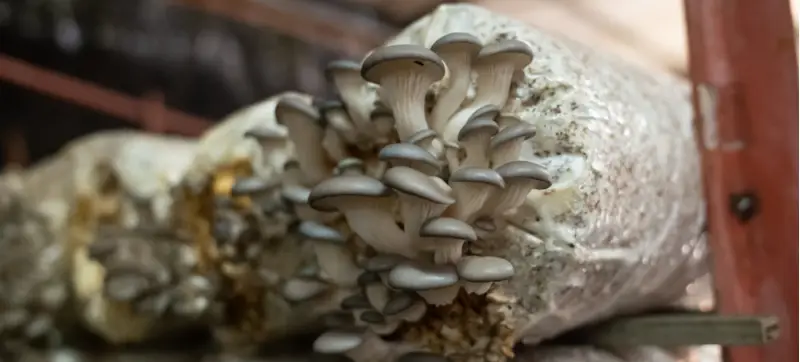
Oyster mushrooms are the go-to starting point for new and commercial growers alike. They colonize quickly, tolerate a wide range of substrates (straw, hardwood sawdust, coffee grounds, agricultural byproducts), and produce high yields relative to substrate weight. Growth cycles are fast—expect first harvest within 3–4 weeks of inoculation under optimal conditions (65–75°F fruiting temperature, 85–95% RH). Oysters command a premium at farmers markets and in restaurant supply chains due to their short shelf life and lack of commercial-scale availability in most grocery channels.
Shiitake Mushrooms (Lentinula edodes)*
Shiitake are the highest-value gourmet variety accessible to most cultivators. They’re traditionally grown on hardwood logs or compressed sawdust blocks and produce a rich, savory flavor that commands strong pricing—often 2–3x the price of button mushrooms. Colonization takes longer (4–6 weeks on supplemented blocks; months on natural logs), but yields per block are high and repeat fruiting cycles are reliable. Shiitake thrive at 55–65°F during fruiting and require a cold shock to trigger pinning.
Specialty Varieties: Lion's Mane, Maitake, and Reishi
Lion’s Mane (Hericium erinaceus) has surged in demand due to its nootropic reputation and seafood-like texture. It grows best on hardwood substrates at 65–75°F with very high humidity (90–95% RH) and is prone to aborting pins if CO₂ levels exceed ~1,200 ppm. Maitake and Reishi attract premium medicinal and supplement buyers but carry longer colonization cycles and more demanding grow parameters.
Button and Portobello Mushrooms (Agaricus bisporus)*
Button and portobello mushrooms dominate commercial grocery volume but require composted manure-based substrate and more precise environmental control. They’re best suited for established commercial operations with casing layer infrastructure.


Understanding the Mushroom Cultivation Process
Mushrooms are fungi—not plants. They grow from spores or spawn (colonized grain or substrate), not seeds, and they derive nutrition from organic matter rather than photosynthesis. This means no grow lights are required for fruiting, though indirect light (5–6 hours daily) can help trigger and orient fruiting bodies.
The cultivation process follows a consistent sequence regardless of species:
- Substrate preparation: Selecting and sterilizing or pasteurizing the growing medium
- Inoculation: Introducing spawn to the substrate in a clean environment
- Colonization (incubation): Mycelium spreads through substrate in a dark, warm environment
- Fruiting initiation: Environmental shift (lower temperature, higher humidity, fresh air exchange) triggers pinning
- Harvest: Mushrooms are harvested at maturity before caps fully open
- Rest and repeat: Substrate rests between flushes; multiple harvests are possible
Substrate is the growing medium and primary food source for your mushrooms—choosing the right one for your species is critical to yield and contamination resistance.
| Substrate | Best For | Preparation Method |
|---|---|---|
| Straw | Oyster mushrooms | Pasteurize at 160–180°F for 1–2 hours |
| Hardwood sawdust | Shiitake, Lion's Mane | Sterilize at 15 PSI for 2.5+ hours |
| Masters Mix (hardwood + soy hulls) | Shiitake, Lion's Mane | Sterilize at 15 PSI for 2.5+ hours |
| CVG (coco coir, vermiculite, gypsum) | Dung-loving species | Pasteurize or field capacity |
| Composted manure | Button, Portobello | Pasteurize; requires casing layer |
| Coffee grounds | Oyster (small scale) | Pasteurize; use fresh to avoid mold |
Sterilization at 15 PSI (typically requiring a pressure cooker for small batches) kills competing molds and bacteria that would otherwise outcompete your mycelium. Pasteurization at lower temperatures is sufficient for less contamination-prone substrates like straw.
Obtaining and Using Mushroom Spawn
Spawn is the “seed” of mushroom cultivation—mycelium that has already colonized a carrier material (typically grain, sawdust, or wooden dowels). Grain spawn is the most versatile and widely used format for indoor cultivation because it distributes easily throughout substrate and colonizes rapidly.
Types of spawn:
- Grain spawn: Rye, sorghum, or millet inoculated with mycelium; best for bag and jar cultivation
- Sawdust spawn: Lower-nutrient; preferred for supplemented hardwood block work
- Plug spawn: Wooden dowels; used for log inoculation
- Liquid culture: Suspended mycelium in nutrient solution; used for agar and grain inoculation in lab settings
For beginners, pre-inoculated all-in-one grow bags that combine sterilized substrate and spawn in a single package eliminate the inoculation step entirely, reducing contamination risk and simplifying the process significantly.


Methods of Cultivation for Mushroom Farms
Bag Cultivation
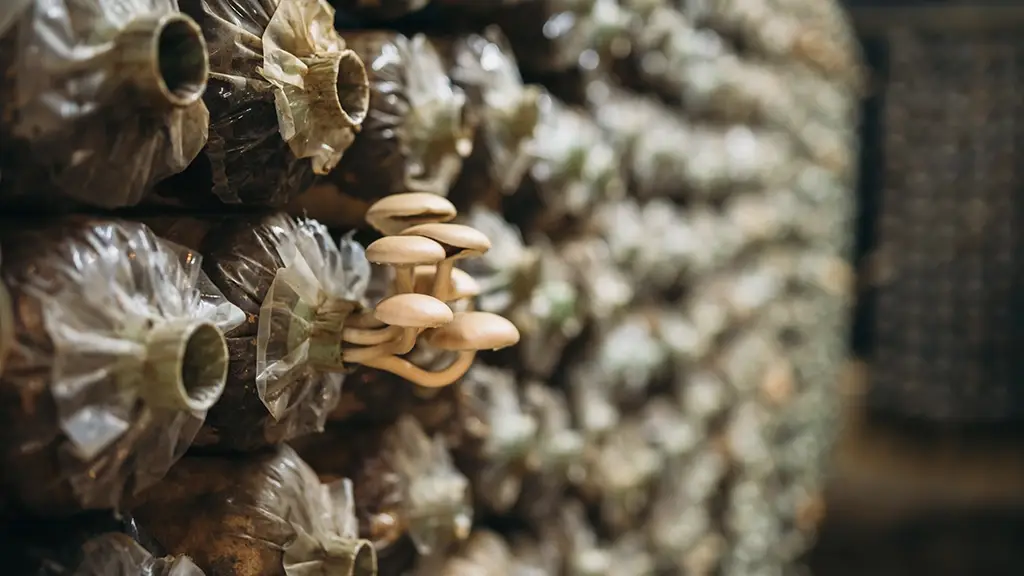
The dominant method for commercial indoor growing. Polypropylene bags filled with sterilized substrate are inoculated with grain spawn and sealed with filter patch lids that allow gas exchange during colonization. Bags are hung or racked in an incubation room, then moved to a fruiting chamber once colonization is complete. This method is highly scalable, efficient, and adaptable to most species.
Bin and Tray Cultivation (Bulk Monotub)
Colonized grain spawn is transferred to bulk substrate (typically CVG or coco coir-based mixes) in cultivation bins with modified lids for gas exchange. This is the most common approach for dung-loving species and produces high yields in a compact footprint. Cultivation bins with filter patches allow for passive FAE (fresh air exchange) without active ventilation.
Shelf Farming
The standard commercial method for button mushrooms. Substrate-filled trays or shelves are stacked vertically in climate-controlled grow rooms. Requires precise environmental automation—temperature, humidity, CO₂, and airflow—but maximizes spatial efficiency at scale.
Log Cultivation
A traditional outdoor method for shiitake production. Hardwood logs are inoculated with plug spawn and placed in a shaded, high-humidity outdoor area. Growth cycles are long (6–18 months before first fruiting), but logs can produce for 3–5 years with minimal inputs. Best suited as a supplemental production stream rather than a primary commercial method.
Using Mushroom Grow Kits
All-in-one mushroom grow bags and kits are the fastest path to a successful first harvest. These pre-inoculated blocks arrive colonized or partially colonized—you simply provide the fruiting environment (humidity, fresh air, indirect light) and harvest. Kits are ideal for testing new species, onboarding new growers, and producing in spaces where sterilization infrastructure isn’t available.
Once mycelium has fully colonized your substrate, it needs an environmental shift to trigger fruiting. The key parameters are:
| Parameter | Colonization Phase | Fruiting Phase |
|---|---|---|
| Temperature | 70–75°F (species-dependent) | 55–75°F (species-dependent) |
| Humidity (RH) | 85–90% | 85–95% |
| CO₂ | Elevated (~5,000–10,000 ppm) | Low (800–1,200 ppm) via FAE |
| Light | Minimal/none | Indirect, 5–6 hrs/day |
| Air Exchange | Minimal | Active (2–4 FAE per hour) |
Fresh air exchange (FAE) is one of the most critical—and most overlooked—fruiting variables. Elevated CO₂ causes elongated stems, deformed caps, and aborted pins. Ensure your fruiting chamber has adequate passive or active airflow without creating drying drafts directly on developing mushrooms. A grow tent with a small fan, humidity control, and a temperature probe provides a reliable fruiting chamber for small-to-medium scale production. Monitoring temperature and humidity with a reliable thermo-hygrometer ensures you stay within the fruiting window for your species.
Hydroponic Mushrooms: A Soilless Option
Mushrooms don’t form roots like plants, but they can be successfully grown in soilless setups—a technique sometimes called hydroponic mushroom cultivation. Rather than relying on soil, the mycelium colonizes an inert substrate (vermiculite, coco coir, sawdust) that is hydrated with water or dilute nutrient solution, then placed in a flood table, ebb-and-flow system, or reservoir-based setup.
The advantages of a soilless approach include consistent moisture delivery, easier contamination management, and the ability to integrate mushroom production into an existing hydroponic facility. For more detail on this technique, see our guide: Hydroponic Mushrooms: Growing Mycelium Without Soil.
You don’t need intense grow lighting—mushrooms thrive with indirect light or even just ambient room light. A hydroponic system adapted for mushroom production pairs naturally with controlled-environment cultivation.
Choosing the right species depends on your experience level, growing environment, and target market. Here’s a practical overview:
| Species | Difficulty | Substrate | Fruiting Temp | Market Value |
|---|---|---|---|---|
| Oyster (Pearl, Blue, Pink, Golden) | Beginner | Straw, hardwood, coffee | 55–75°F | Medium-High |
| Shiitake | Intermediate | Hardwood sawdust, logs | 55–65°F | High |
| Lion's Mane | Intermediate | Hardwood sawdust | 65–75°F | High |
| Button / Portobello | Advanced | Composted manure | 55–65°F | Medium |
| Enoki | Intermediate | Hardwood, wheat straw | 45–55°F | Medium |
| Reishi | Advanced | Hardwood | 75–85°F | High (medicinal) |
| Maitake | Advanced | Oak logs/blocks | 55–65°F | Very High |
Mushroom Supplies at HydroBuilder
HydroBuilder carries cultivation supplies across the full mushroom growing workflow—from agar and grain spawn to cultivation bins, sterilizers, still air boxes, and environmental monitoring equipment. Because mushroom cultivation equipment inventory fluctuates, we recommend browsing our complete selection directly:
Shop All Mushroom Growing Supplies
You’ll find:
- Sterilization equipment (pressure cookers, autoclaves)
- Substrate and grain spawn bags
- Cultivation bins and fruiting chambers
- Agar and liquid culture supplies
- Still air boxes and laminar flow hoods
- Environmental monitoring tools
For Commercial Operations: Scaling a Mushroom Farm
Infrastructure Planning
Commercial mushroom production requires dedicated spaces for each phase: a clean room or sterile work area for inoculation, a separate incubation room held at 70–75°F, and fruiting rooms with independent environmental controls. Contamination cross-over between phases is one of the most common failure points at commercial scale—physical separation between incubation and fruiting is not optional.
Environmental Automation
At commercial scale, manual misting and monitoring gives way to automated humidification systems, CO₂ controllers, and programmable timers for FAE fans and lighting. TrolMaster and similar environmental control platforms allow multi-room management with remote monitoring. Maintaining CO₂ below 1,200 ppm in fruiting rooms during lights-on periods is critical for cap development and yield.
Substrate Sourcing and Sterilization Throughput
Commercial operations need sterilization capacity matched to production targets. Larger autoclave or sterilizer units allow high-volume bag processing. Supplemented hardwood blocks (Masters Mix, soy hull/sawdust blends) increase yields but raise contamination risk—contamination management protocols, including laminar flow hoods and sterile inoculation technique, become essential at volume.
Yield Benchmarks
Under optimized conditions:
- Oyster mushrooms: biological efficiency of 80–150% (800g–1,500g fresh mushroom per kg dry substrate) across 2–3 flushes, depending on substrate and strain
- Shiitake (supplemented blocks): 100–150g per flush, 3–4 flushes per block
- Lion’s Mane: 200–400g per block, typically 2 flushes
Actual yields vary based on substrate quality, species strain, environmental precision, and contamination rate.
Channels and Market Positioning
Specialty mushroom growers typically target farmers markets, restaurant direct accounts, and CSA boxes at launch. Wholesale accounts with natural grocery chains require consistent volume, clean packaging, and food safety compliance. Dried mushroom products (shiitake, reishi) extend shelf life and open e-commerce channels.
Mushrooms in the Garden: A Note on Wild and Outdoor Growth
For growers encountering mushrooms appearing naturally in garden beds or lawns, this is typically a sign of healthy soil biology—mycelial networks breaking down organic matter and supporting plant root systems. Wild mushrooms in garden soil are generally not a cultivation concern, but if you want to understand the ecology or manage unwanted growth, see: Why and How Mushrooms Grow in Gardens.
Why Shop at HydroBuilder for Mushroom Supplies?
HydroBuilder is one of the largest online retailers for controlled-environment cultivation equipment, carrying products across the complete mushroom growing workflow from sterilization through harvest. Our team includes experienced cultivators who can help you select the right supplies for your scale and species. Call us at 888-815-9763 and one of our growers will assist you directly.
Final Thoughts on Starting a Mushroom Farm
Whether you’re starting with a single all-in-one grow bag or planning a multi-room commercial facility, the fundamentals of mushroom cultivation remain the same: clean technique, appropriate substrate, correct environmental parameters, and patience during colonization. The reward is a fast-cycling, space-efficient crop with strong market demand and high culinary value.
HydroBuilder carries supplies for every stage of the process. Explore our full mushroom growing supplies collection or call 888-815-9763 to speak with our team.
How to Start a Mushroom Farm: FAQs
Q: How long does it take from inoculation to first harvest?
Typical timelines run 3–5 weeks for oyster mushrooms, 8–12 weeks for shiitake on supplemented blocks, and 12–16 weeks for shiitake on natural logs. Total time depends on species, substrate type, colonization temperature (70–75°F optimal), and fruiting environment. Consistent conditions at 85–95% RH accelerate pinning once colonization is complete. Commercial application: Multi-room facilities stagger inoculation dates to maintain a continuous harvest schedule. A 4-week rolling inoculation cycle produces weekly harvests for oyster production.
Q: What mushrooms are easiest to grow for beginners?
Oyster mushrooms—particularly Pearl and Blue varieties—are the most forgiving for first-time growers. They colonize aggressively, tolerate substrate variation, and fruit reliably across a broad temperature range (55–75°F). Lion’s Mane and Shiitake are good intermediate steps. Button mushrooms require composted manure substrate and are more demanding for beginners. Commercial application: Most commercial operations start with oyster production to generate revenue while learning environmental management before expanding to higher-value, higher-complexity species.
Q: Can you grow mushrooms hydroponically?
Yes. Mushrooms don’t use photosynthesis, so they don’t need soil or light. In soilless setups, substrate (sawdust, coco coir, vermiculite) is hydrated via ebb-and-flow, flood tables, or reservoir systems. Mycelium colonizes the inert media and fruits normally with proper humidity and FAE. See our full guide: Hydroponic Mushrooms: Growing Mycelium Without Soil.
Commercial application: Soilless mushroom production integrates well into existing hydroponic facilities, allowing multi-crop operations without dedicated mushroom infrastructure.
Q: What substrate is best for growing mushrooms?
The best substrate depends on species. Oyster mushrooms thrive on pasteurized straw, hardwood sawdust, or coffee grounds. Shiitake and Lion’s Mane need sterilized hardwood sawdust, ideally supplemented with wheat bran or soy hulls for higher yields. Button mushrooms require composted manure. CVG (coco coir, vermiculite, gypsum) is the standard for dung-loving species like cubensis. Commercial application: Supplemented hardwood blocks (Masters Mix—50% hardwood sawdust, 50% soy hulls) are the commercial standard for high-yield shiitake and Lion’s Mane, but require full sterilization at 15 PSI for 2.5+ hours.
Q: How do I start a small mushroom farm at home?
Start with an all-in-one mushroom grow bag or kit for your first grow—these arrive pre-inoculated and only require a fruiting environment (humidity ~85–95%, indirect light, fresh air exchange). Once comfortable, advance to bag cultivation: sterilize substrate, inoculate with grain spawn in a sterile environment, incubate, then fruit. A clean workspace, a pressure cooker for sterilization, and environmental monitoring are the core requirements. Commercial application: Many successful commercial farms began as home operations that scaled substrate throughput and added environmental automation incrementally.
Q: How much space do I need to start a mushroom farm?
A meaningful small-scale operation can run in 50–100 square feet with proper vertical racking. A single 4×8 foot shelf unit can hold 20–30 substrate blocks in fruiting. Home growers can produce several pounds per week in a closet, basement corner, or garage with appropriate environmental control. Commercial operations typically require 500–2,000+ square feet with separate incubation and fruiting rooms for consistent year-round production. Commercial application: Plan at minimum 3:1 incubation-to-fruiting ratio by space—for every 100 sq ft of fruiting room, maintain 300 sq ft of incubation capacity to sustain continuous production cycles.
Q: What environmental conditions do mushrooms need to fruit?
Fruiting requires lower temperatures than colonization (55–75°F depending on species), high relative humidity (85–95%), CO₂ below 1,200 ppm via fresh air exchange, and indirect light for 5–6 hours daily. CO₂ above ~1,200–1,500 ppm can produce elongated stems; sustained levels above 2,000 ppm cause aborted caps. A reliable thermo-hygrometer and regular air exchange are non-negotiable for consistent harvests.
Q: Can I grow mushrooms outdoors in my garden?
Some species, particularly shiitake, can be grown on inoculated hardwood logs placed in shaded, humid outdoor environments. Log cultivation produces for 3–5 years but has long lead times before first fruiting. Wild mushrooms that appear naturally in garden beds are usually beneficial—they indicate active mycelial networks improving soil structure and nutrient availability. For details on managing wild garden mushrooms, see: Why and How Mushrooms Grow in Gardens.
Q: Is mushroom farming a good business?
Mushroom farming offers favorable economics compared to most agricultural ventures: low startup costs, fast production cycles, year-round indoor production, and strong demand for specialty varieties from restaurants and farmers market buyers. The primary challenges are contamination management (which directly impacts yield and profitability) and consistent sales channel development. Most successful small commercial farms focus on 1–2 species for their first growing season before expanding their variety lineup.
Q: What is mycelium and why does it matter for growing mushrooms?
Mycelium is the vegetative network of the fungus—a dense mass of thread-like hyphae that colonizes the substrate and forms the biological foundation from which mushroom fruiting bodies emerge. When you harvest a mushroom, you’re harvesting the reproductive organ of the mycelium, not the organism itself. Strong, healthy mycelium (white, ropey, with a faint mushroom smell) is the single best indicator of a contamination-free, productive substrate block. Anything green, black, or pink indicates mold contamination.