

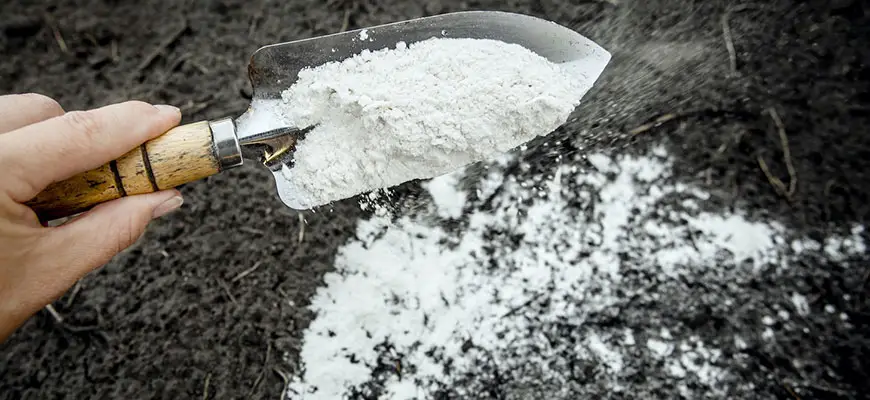
Dolomite lime is one of the most effective and affordable soil amendments for raising pH and supplying magnesium in acidic soils — when a soil test shows that your conditions actually call for it. Used correctly, this calcium magnesium carbonate compound raises soil pH, corrects calcium and magnesium deficiencies, and creates a more hospitable root environment for a wide range of crops. Used incorrectly — without a soil test, in the wrong growing medium, or on acid-loving plants — it can lock out nutrients and harm the very plants you’re trying to help.
Whether you’re managing an outdoor vegetable bed, a container grow, or an established orchard, dolomite lime delivers measurable results when it is matched to what your soil test says you actually need.
If you’re a hydroponic or coco grower managing pH with liquid solutions, keep reading — we’ll cover where dolomite fits and where it doesn’t in your workflow.
What Is Dolomite Lime?
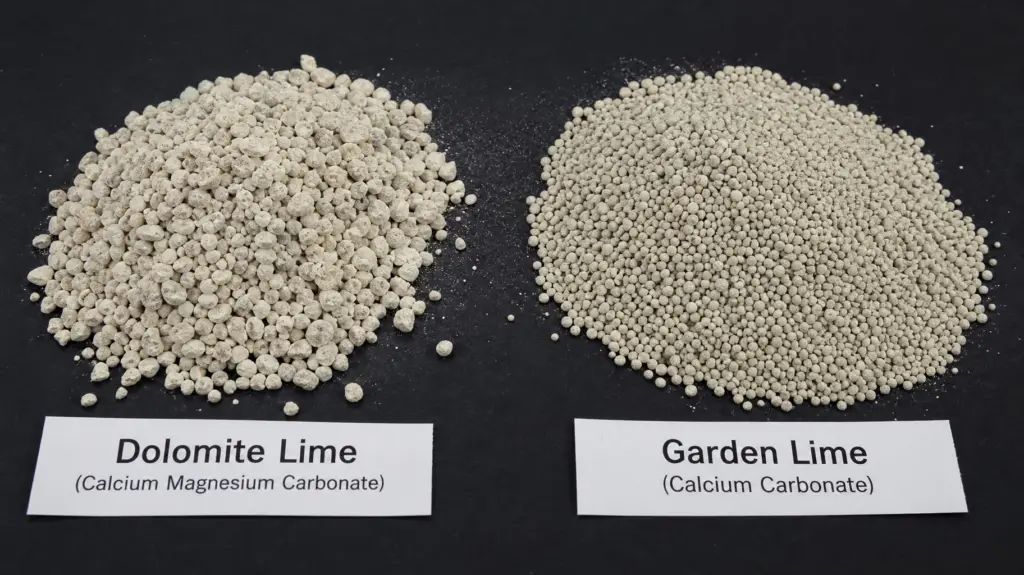
Dolomite lime (calcium magnesium carbonate, CaMg(CO₃)₂) is a naturally occurring limestone mineral ground into powder or prilled into granules for agricultural use. It differs from standard agricultural lime (calcium carbonate) in one critical way: dolomite contains significant magnesium alongside its calcium content.
Quality dolomite lime commonly contains around 20–25% calcium and 8–12% magnesium, with a calcium-to-magnesium ratio near 2:1. This dual-mineral profile is what makes it valuable beyond simple pH correction — it simultaneously addresses two of the most common deficiencies in depleted or acidic soils when both calcium and magnesium test low.
Forms available:
Dolomite comes in fine powder, coarse granules, and prilled (pelletized) forms. Fine powder reacts fastest in soil — useful when you need a relatively quick correction over weeks rather than days. Coarse grades release more slowly and can take a full growing season or longer to fully integrate. Prilled or pelletized forms offer the best balance of reactivity and spreadability for most garden applications, especially when applying with broadcast spreaders.
Dolomite lime vs. standard garden lime: Standard agricultural lime (calcitic lime) provides primarily calcium carbonate with little or no magnesium. If your soil is deficient in magnesium — common in some sandy soils, high rainfall regions, and soils with a history of certain fertilizer regimes — dolomite can be the superior choice because it supplies both calcium and magnesium. If your magnesium levels are already adequate or high, calcitic lime or a calcium source like gypsum may be the better option to avoid over-applying magnesium and potentially disrupting the calcium-to-magnesium balance.
What Does Dolomite Lime Do for Plants?
Dolomite lime performs two distinct functions in the soil: it raises pH, and it supplies calcium and magnesium. These are related but separate benefits, and understanding which one you need determines whether dolomite is the right amendment.
Raising Soil pH
Most garden vegetables, fruits, and flowering crops thrive in soil with a pH between 6.0 and 7.0. Below pH 5.5, critical nutrients including phosphorus, potassium, calcium, magnesium, and molybdenum become chemically less available to roots even when physically present in the soil — a phenomenon called nutrient lockout.
Soil acidifies naturally over time through several mechanisms: repeated fertilizer applications (especially nitrogen-heavy and sulfur-based fertilizers), the natural leaching of alkaline minerals in high-rainfall climates, decomposition of organic matter, and the slow removal of plant-available nutrients through harvesting. Dolomite’s calcium and magnesium carbonates react with hydrogen ions in acidic soil, neutralizing acidity and raising pH toward the near-neutral range.
One important constraint: while the dolomite material itself is alkaline (often with a measured pH around 8–9 in pure form), in practical field use it is applied to acidic soils to bring them up into the agronomically optimal 6.0–7.0 range instead of pushing soils far into the alkaline zone. If your target is near-neutral soil (around 6.0–7.0) for crops like asparagus or many brassicas, dolomite can help get acidic soils into that range when you follow soil test–based recommendations; if your soil is already near neutral, adding more lime will not improve crop performance and may increase the risk of micronutrient lockout.


Supplying Calcium and Magnesium
Even if your soil pH is already in range, dolomite lime can correct deficiencies in Ca and Mg when both are low in the soil analysis. Both are secondary macronutrients with significant roles in plant physiology:
Calcium drives cell wall integrity, regulates cell division, and is critical for tip growth in roots and shoots. Calcium deficiency manifests as tip burn on lettuce and leafy greens, blossom end rot in tomatoes and peppers, and distorted new growth across many species.
Magnesium is the central atom in the chlorophyll molecule — without it, photosynthesis degrades. It also activates enzymes involved in energy transfer. Magnesium deficiency typically appears as interveinal chlorosis on older leaves, where leaf tissue between veins turns yellow while veins remain green.
Dolomite is a slow-release source for both minerals, providing season-long buffering rather than immediate correction. If you’re dealing with an active deficiency mid-season, a liquid cal-mag supplement like Botanicare Cal Mag Plus will address it faster. Dolomite is better suited as a preventive amendment and pH management tool applied before the season begins.
Which Plants Benefit from Dolomite Lime?
Plants that respond well:
Most vegetables prefer near-neutral pH and can benefit from dolomite in moderately acidic soils when calcium and magnesium test low. Calcium-hungry crops like tomatoes, peppers, squash, and members of the brassica family (broccoli, cabbage, Brussels sprouts, cauliflower) are particularly responsive when grown in soil that is both acidic and low in these nutrients. Alliums — garlic, onions, leeks — appreciate the slightly less acidic conditions dolomite helps create in low-pH soils. Asparagus, beets, parsnips, beans, and apple trees all benefit in acidic soils when pH is corrected into their preferred range and calcium and magnesium are brought into sufficiency.
Plants to avoid treating with dolomite:
Acid-loving plants have evolved for low-pH environments and struggle when soil becomes more neutral or alkaline. Do not apply dolomite lime to blueberries (target pH 4.5–5.5), azaleas, rhododendrons, camellias, gardenias, Japanese maples, or magnolias, because raising pH can severely reduce nutrient availability for these species. Raspberries, strawberries, and grapes prefer slightly acidic conditions as well — check the specific pH preference of your variety before applying any liming agent.
The soil test rule:
No plant benefits if you’re applying dolomite to soil that doesn’t need it. Over-liming alkaline or near-neutral soils, or soils already high in calcium and magnesium, can actively block nutrient uptake and cause more problems than the amendment solves. Always test before you amend.
How to Test Your Soil Before Applying Dolomite Lime
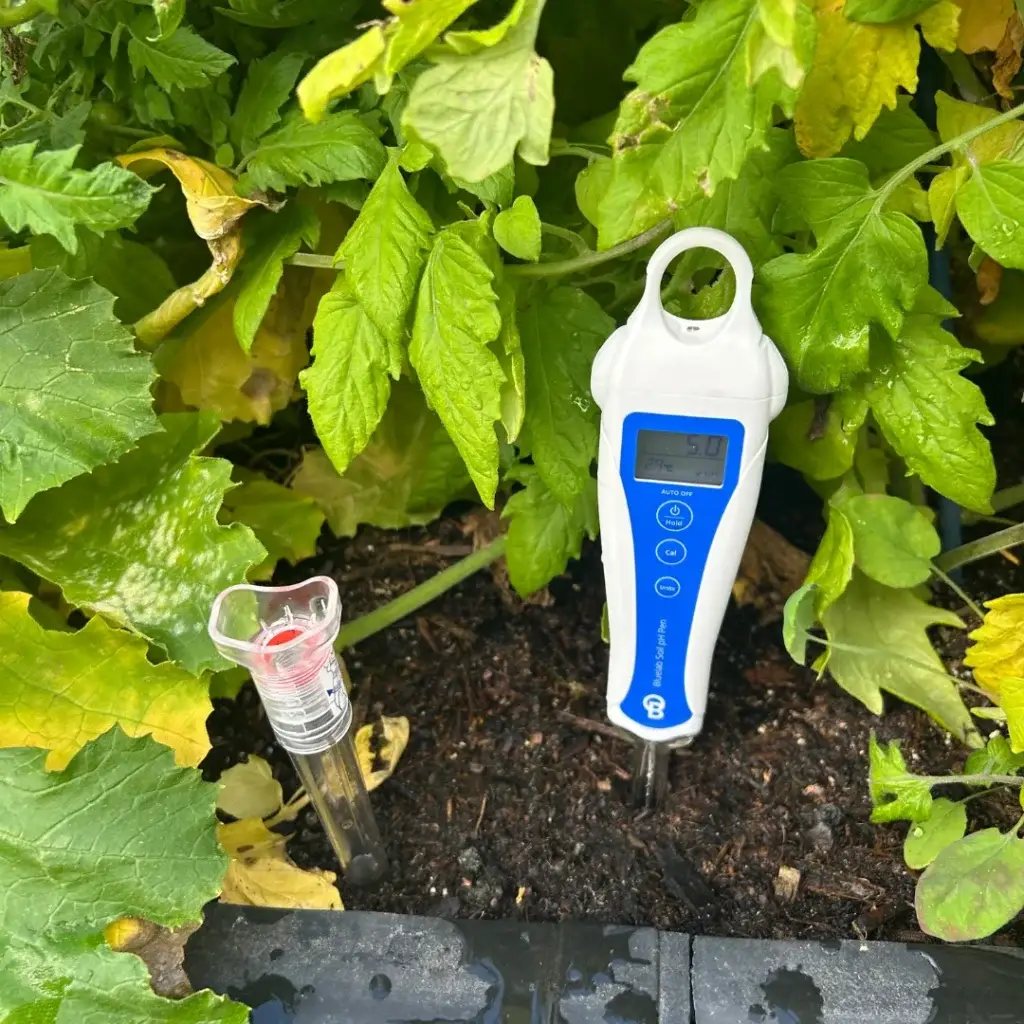
Knowing your soil’s current pH and magnesium levels before reaching for dolomite is not optional — it’s the difference between a targeted fix and an expensive mistake. The Bluelab Soil pH Pen gives you instant, accurate soil pH readings directly in the root zone without sending samples to a lab.
For a full soil nutrient profile including calcium, magnesium, and pH together, our guide on garden soil nutrient testing walks through when to use home kits versus lab submissions and how to interpret results.
Key indicators that dolomite lime is warranted:
- Soil pH below 6.0 (confirmed by test, not estimated)
- Visual signs of calcium or magnesium deficiency alongside acidic readings
- Sandy soils or soils in high-rainfall climates where leaching has occurred
- Long history of high-nitrogen or sulfur-based fertilizer use with no liming
Indicators that dolomite is NOT the right move:
- Soil pH already 6.5 or higher
- Soil calcium and magnesium already at adequate or high levels
- Growing acid-loving species regardless of pH
- Hydroponic or coco systems where soil pH management doesn’t apply (see section below)
How to Apply Dolomite Lime
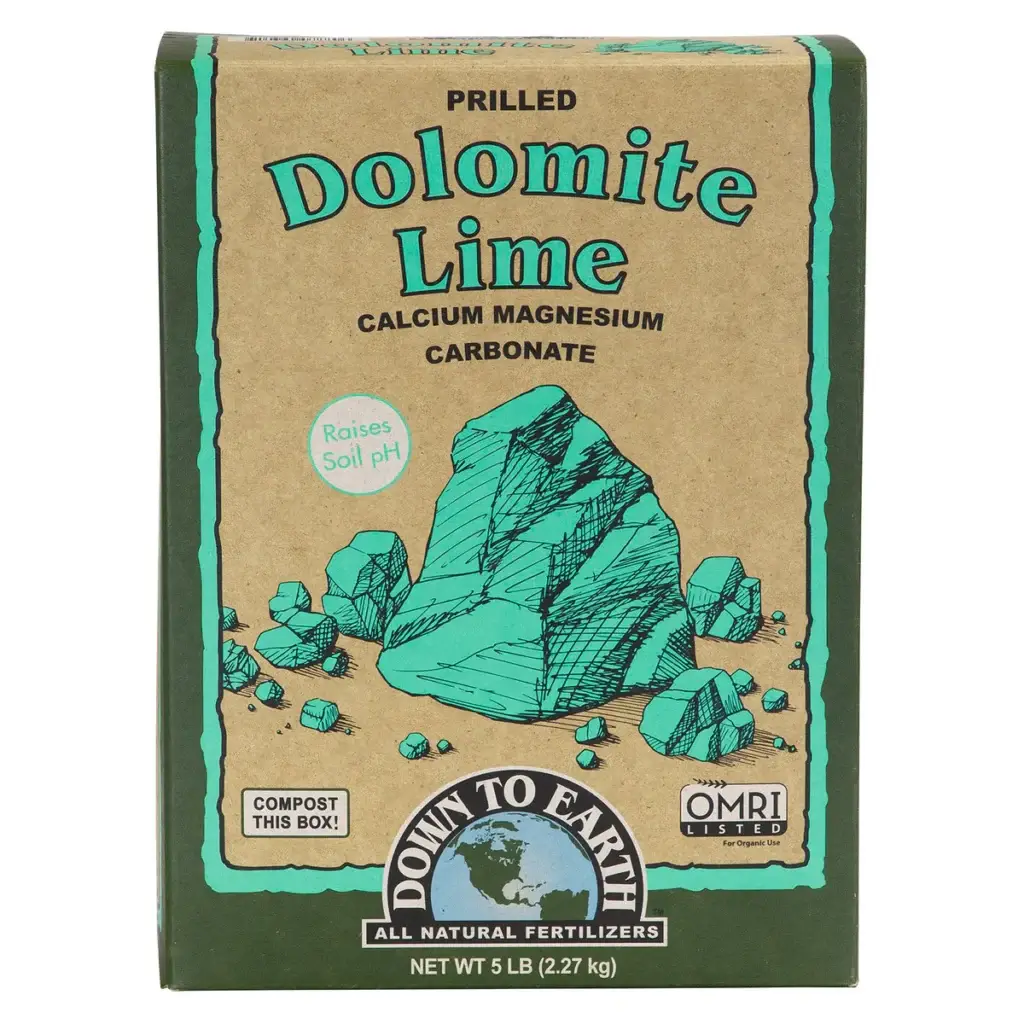
Down To Earth’s Dolomite Lime is a benchmark product for hobby growers and smaller-scale operations — natural dolomite ground to a fine powder then prilled into uniform granules that spread easily and react relatively quickly once watered in. It’s OMRI Listed for organic use and supplies both calcium and magnesium in plant-available form over time from the first application.
Timing
Apply dolomite lime in fall after harvest or in early spring before planting whenever soil is unfrozen and not saturated with water. Fall application is ideal — the amendment has the entire winter to integrate before root systems activate. Spring application works well if done 2–4 weeks before transplant or seeding to allow pH to begin shifting before seedlings are in the ground.
Avoid applying immediately before a heavy rain event — while dolomite is relatively stable, surface runoff before it incorporates can reduce effectiveness and waste product.
What to Expect After Application
New garden beds (soil pH 5.5–6.0, target around 6.5):
As a very general example for moderately acidic loam soils, applying approximately 4–5 lbs per 100 square feet may raise pH by about one point, but actual rates should always follow soil test lime requirement recommendations and will vary by soil texture, buffer pH, and lime quality. Broadcast evenly and work into the top 6 inches of soil with a rake or tiller before watering in. If pH needs a larger correction (more than one full point), split applications across two seasons or follow lab guidance rather than over-applying at once.
Established beds (pH maintenance):
Test annually or biannually. Light topdress applications of 1–2 lbs per 100 square feet, worked in shallowly, can help maintain buffering capacity without overshooting when guided by soil test results.
Lawns:
Although this article focuses on beds, manufacturer guidance for dolomite products typically recommends on the order of 2.5–5 lbs per 100 square feet in spring and fall for many lawns, with specific rates based on current pH and soil tests.
Trees and shrubs:
Apply 0.5–1 lb per inch of trunk diameter, spreading from the base out to the drip line. Water in thoroughly after application.
Containers and indoor grows:
Work 1–2 tablespoons of dolomite per gallon of soil mix into your medium before potting, unless the mix is already pre-buffered with lime as indicated on the label. For long-season container grows in large pots, a light topdress and water-in midseason can help maintain buffering as fertilizer acidification accumulates over time. Do not apply dolomite to coco coir or hydroponic systems — those mediums require liquid pH management tools and targeted cal-mag supplementation, not mineral soil buffers (see below).
Application Rates by Setting
Dolomite lime is not instant. Prilled forms typically begin shifting pH within a few weeks; full integration and a measurable pH change may take 30–60 days depending on soil moisture, temperature, and microbial activity. Apply ahead of when you need the correction, not in response to an active deficiency — if your plants are showing deficiency symptoms now, reach for a fast-acting liquid supplement instead.
Dolomite Lime vs. Liquid pH Adjusters: Knowing When to Use Each
Many Hydrobuilder customers use liquid pH management products in addition to or instead of dolomite, and the choice depends entirely on your growing system and goals.
Dolomite lime excels when:
- You grow in mineral soil or compost-amended beds
- You want a slow-release calcium and magnesium buffer that works passively over a season
- Your soil pH requires a sustained upward correction over multiple weeks
- You’re building soil biology — dolomite supports beneficial microbial populations that prefer near-neutral pH
Liquid pH Up/Down excels when:
- You’re managing a hydroponic or coco system where solution pH must be dialed in per-watering
- You need fast, precise, incremental pH adjustment
- Your plants are already in the ground and pH correction needs to happen in days, not weeks
For hydroponic and nutrient solution-based growers, HGV Condition – pH Down and HGV Condition – pH Up are purpose-formulated for compatibility with nutrient concentrates — they don’t introduce conflicting minerals and work precisely at the solution level where dolomite cannot.
For growers who want to add liquid calcium to supplement deficiencies in soil or coco alongside their dolomite program, BioSafe CalOx pH Liquid Lime serves as a liquid complement that raises pH gently while delivering soluble calcium — a good bridge tool for mixed organic/liquid feeding programs.
When Dolomite Lime Is Not the Answer
The most important thing to understand about dolomite lime is that it does exactly one thing directionally in the field: it raises soil pH and adds calcium and magnesium. If your soil doesn’t need these things, dolomite makes your situation worse.
Over-liming raises pH beyond the optimum range for most crops — above about 7.5, iron, manganese, boron, and zinc become increasingly unavailable. Plants that seemed deficient in one nutrient can develop a cascade of secondary deficiencies after over-liming.
Calcium and magnesium excess can compete with potassium, boron, and other cations for uptake, creating induced deficiencies even when those elements are present in the soil.
In containers with already-buffered potting mixes, many commercial mixes include limestone as a standard component. Adding additional dolomite on top of a pre-buffered mix can push pH too high quickly, especially in smaller containers where mineral accumulation happens faster.
In coco coir, dolomite lime is not appropriate — coco requires liquid calcium and magnesium supplementation and liquid pH management because it does not buffer pH the way soil does. See our guide on coco vs. soil growing for a full breakdown.
For Commercial Operations: Soil Amendment at Scale
Soil-based commercial operations — nurseries, outdoor cultivation facilities, indoor organic soil programs — face unique challenges in managing pH and secondary nutrients across large acreage or high-throughput container programs.
At commercial scale, dolomite lime is typically purchased in bulk agricultural bags (often 50 lb or larger) and applied via broadcast spreader with subsequent tillage. Application rates are determined by certified lab soil testing, not home kits — a county extension lab or private agricultural testing service provides the CEC (cation exchange capacity) data and buffer pH readings needed to calculate precise lime requirements that account for your soil type, not just current pH.
For high-intensity indoor soil programs where pH drift from nutrient applications is a constant challenge, combining a dolomite lime pre-amendment with ongoing liquid pH management through a dosing system gives you both a baseline mineral buffer and the precision to adjust per-watering. Dosatron injection systems are a standard solution for commercial operations delivering pH-adjusted, nutrient-dosed water at consistent ratios to large plant populations. The critical insight at commercial scale: dolomite is a soil investment, not just a crop-cycle input; it should be budgeted into your soil prep program and applied based on test results every season.
Why Shop at Hydrobuilder
Hydrobuilder carries a full selection of soil amendments, soil testing tools, and pH management products for growers at every scale. Whether you need granular dolomite lime for a seasonal outdoor bed, a professional-grade soil pH pen for accurate field readings, or liquid pH management tools for your hydroponic or coco system, it’s all in one place with the technical knowledge to back it up.
From hobby gardens to commercial cultivation, Hydrobuilder is the grower’s supply partner that understands both the agronomy and the operational side of your business.
Example: FAQs
Q: What is dolomite lime and how does it differ from regular garden lime?
A: Dolomite lime is calcium magnesium carbonate — a naturally occurring limestone mineral that contains both calcium (commonly around the low‑20% range) and magnesium (around 8–12%). Standard agricultural lime (calcitic lime) contains primarily calcium carbonate with little or no magnesium. The key difference is magnesium: if your soil tests low in both calcium and magnesium, or if you grow heavy-feeding crops prone to Mg deficiency, dolomite is the more complete amendment; if your magnesium levels are adequate, calcitic lime or gypsum avoids the risk of over-supplying it.
Q: How do you know if your soil needs dolomite lime?
A: A soil test is the only reliable way to know. Look for a soil pH below about 6.0 combined with low calcium or magnesium readings, or visual deficiency symptoms (interveinal yellowing for Mg, tip burn or blossom end rot for Ca) in crops growing in soil confirmed to be acidic. Do not apply dolomite based on plant symptoms alone — the same symptoms can appear in neutral or alkaline soil for entirely different reasons, and adding dolomite to already-adequate soil will make things worse by driving pH too high or upsetting nutrient balance.
Q: How much dolomite lime do you add per gallon of soil for containers?
A: For container growing in soil, a standard starting rate is 1–2 tablespoons of dolomite lime per gallon of soil mix, worked in evenly before potting, unless the mix already includes lime as indicated on the label. This provides a baseline calcium and magnesium buffer and mild pH stabilization over the season. In pre-buffered commercial potting mixes, check the label — many already include limestone and may not require additional dolomite.
Q: Can dolomite lime hurt plants if you add too much?
A: Yes. Over-liming raises pH beyond the optimum range for most crops, which can lock out iron, manganese, boron, and zinc even when those elements are physically present in the soil. Excess calcium and magnesium can also compete with potassium for uptake. Always test before applying, and split large applications across two seasons rather than applying a single large dose when major pH correction is needed.
Q: Can you use dolomite lime in hydroponics or coco coir?
A: No. Dolomite lime is a mineral buffer for soil-based growing — it works by slowly dissolving into acidic soil to raise pH over weeks. In hydroponic systems and coco coir, you control pH with liquid adjusters per-watering because those mediums don’t buffer pH the same way soil does. Use liquid pH Up and pH Down solutions for hydro/coco applications.
Q: How long does dolomite lime take to work?
A: Prilled and fine-grind dolomite typically begins measurably shifting soil pH within 2–4 weeks after watering in, with full integration and stabilization taking 30–60 days depending on soil moisture, temperature, and biological activity. Coarse grades can take considerably longer — sometimes a full growing season. Apply 4–6 weeks ahead of your target date for best results, not in response to an already-active deficiency.
Q: Is dolomite lime safe for organic growing?
A: Yes. Down To Earth Dolomite Lime is OMRI Listed and approved for certified organic production. It’s a mined natural mineral with no synthetic components, making it compatible with many organic certification programs and soil health-focused growing methods.
Q: What is the best time of year to apply dolomite lime?
A: Fall after harvest is ideal — the lime integrates over winter and the soil is closer to its corrected pH when spring planting begins. Early spring application, 2–4 weeks before transplanting, also works effectively. The key is applying before your plants are in the ground, not as a reactive measure during the growing season.
Q: Does dolomite lime replace cal-mag supplements?
A: For soil-based grows, dolomite can serve as a preventive long-term source of calcium and magnesium — reducing or sometimes eliminating the need for liquid cal-mag in soils that are already pH-appropriate and well supplied. However, dolomite is slow to act. If you’re managing an active mid-season calcium or magnesium deficiency, a liquid supplement like Botanicare Cal Mag Plus works much faster and should be your first response. Think of dolomite as soil prep, and liquid cal-mag as in-season correction.
Q: Which vegetables benefit most from dolomite lime?
A: Calcium-demanding crops see the biggest benefit: tomatoes, peppers, squash, and zucchini (all prone to blossom end rot from calcium insufficiency), plus brassicas like broccoli, cabbage, and Brussels sprouts. Alliums — garlic, onions, leeks — and heavy magnesium users like corn also respond well in acidic soils when pH and Ca/Mg are brought into range. Fruit trees, including apple, pear, and plum, benefit from dolomite when soil pH drops below about 6.0 and tests show a need for both calcium and magnesium.