
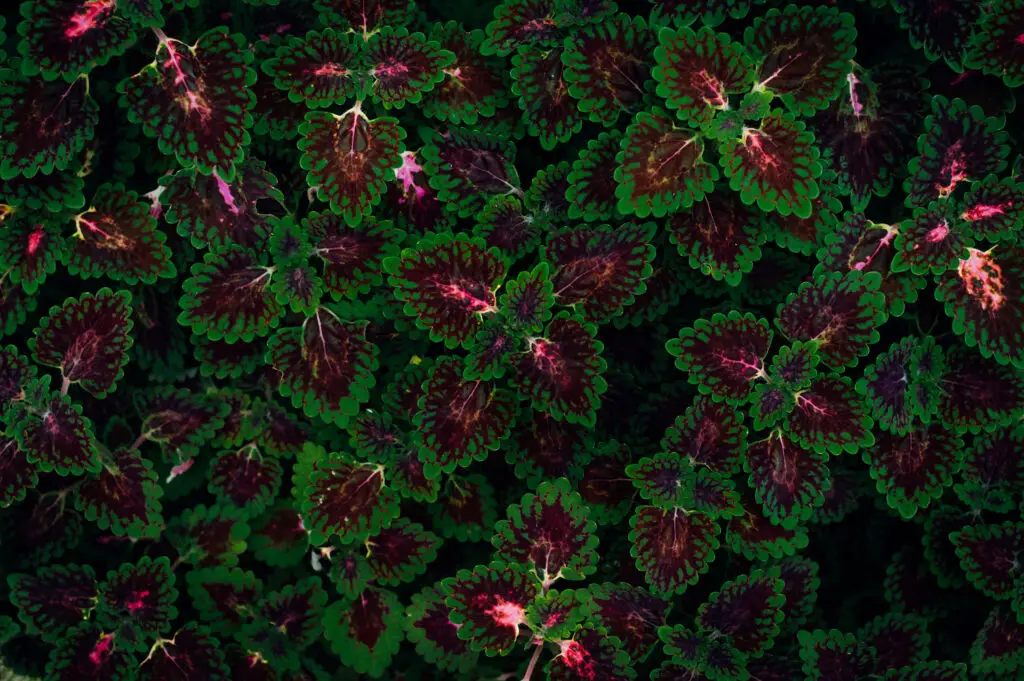
Coleus (botanical name Plectranthus scutellarioides, formerly Solenostemon) is a fast-growing foliage favorite for beds, borders, and containers. Use this expert coleus plant care guide to dial in light, water, soil, feeding, pinching, propagation, pest prevention, and overwintering—indoors and out.
Coleus at a Glance
- Light: Partial shade to bright indirect; many modern varieties tolerate full sun with adequate moisture.
- Water: Keep soil evenly moist, not soggy. Water when the top 1–2 inches are dry.
- Soil: Rich, well-draining mix; slightly acidic to neutral.
- Fertilizer: Light, regular feeding in containers; slow-release at planting outdoors.
- Temperature: Plant or move outside when nights are consistently ≥60°F; protect below 50–55°F.
- Humidity: Average to high preferred.
- Hardiness: Tender perennial in USDA 10–11; grown as an annual elsewhere.
- Growth habit: Mounded or trailing, 6–36 inches depending on cultivar.
Pro tip: Pinch often, flower spikes included, to keep plants compact and focus energy on foliage.
Light Requirements
- Outdoors: Morning sun with afternoon shade suits most types. Newer sun-tolerant series can take more direct light if kept evenly moist.
- Indoors: Bright, indirect light or a quality full-spectrum grow light 12–14 hours daily. Rotate weekly for even growth.
- Signs of too much sun: Scorched or faded patches on leaves.
- Signs of too little light: Leggy stems, stretched internodes, dull coloration.
Watering
- When to water: Check daily in hot weather. Water when the top 1–2 inches of media are dry. Containers may need watering daily during heat waves.
- How to water: Drench thoroughly until water exits drainage holes, then empty saucers.
- Avoid extremes: Repeated dry-downs cause leaf edge browning; chronic saturation invites root rot.
Soil & Potting Mix
A rich, airy blend prevents compaction and keeps roots happy.
- DIY mix for containers: 2 parts high-quality potting mix or coco/peat base + 1 part perlite or pumice + 1 part fine bark.
- Amend in-ground beds: Work in compost to improve structure and fertility; ensure sharp drainage in clay-heavy sites.
- Containers: Always use pots with drainage holes. Refresh the top 2 inches of mix midseason if growth slows.
Fertilizing
- In ground: Mix a balanced, slow‑release ferilizer at planting. Overfertilizing can wash out leaf color.
- In containers: Feed monthly with a balanced water‑soluble fertilizer at ½ strength during active growth.
- Leach salts: Flush containers with plain water every 4–6 weeks.
Temperature, Humidity, and Climate
- Warmth first: Wait to plant out until nights are reliably ≥60°F. Bring containers indoors ahead of the first frost.
- Humidity: Average room humidity is fine; higher humidity keeps foliage lush. Avoid cold AC drafts indoors.
- Zones: Treat as a tender perennial in 10–11; in cooler zones, grow as an annual or overwinter indoors.
Pinching, Pruning, and Flower Removal
- Pinch early and often: Snip soft tips above a node every 2–3 weeks to promote branching and a fuller silhouette.
- Remove flower spikes: Cut them off as they appear so plants put energy into foliage, not seed.
- Midseason refresh: If stems get leggy, cut back by one-third; plants rebound quickly in warm weather.
Overwintering & Indoor Care
- Bring in containers before temperatures dip below the low 50s°F.
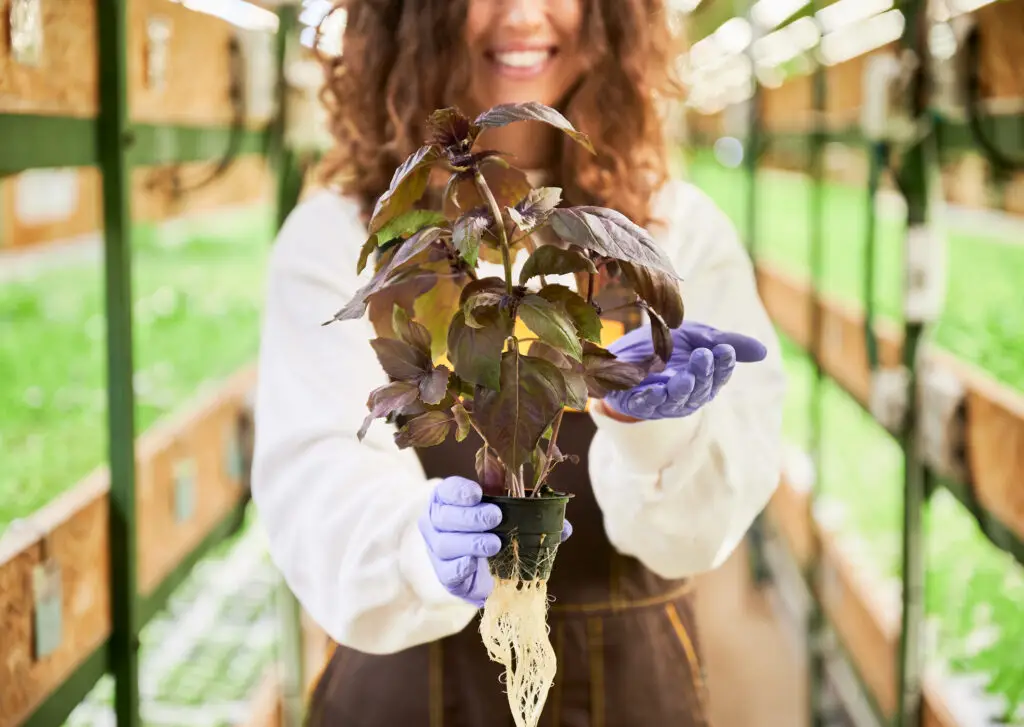
- Take insurance cuttings in late summer. Root in water or a sterile, moist mix; pot up once roots reach 2–3 inches.
- Indoors: Bright light, moderate watering, and occasional pinching keep plants compact. Expect slower growth in winter; reduce feeding accordingly.
Propagation
Stem Cuttings (fast and reliable)
- 1.) Cut a 4–6 inch non-woody tip with 2–3 nodes.
- 2.) Strip lower leaves; optional dip in rooting hormone.
- 3.) Root in water or a light mix (50% peat/coco, 25% perlite, 25% bark). Keep 70–75°F and evenly moist.
- 4.) Pot up when roots are 2–3 inches.
From Seed (best for classic seed lines)
- Start 8–12 weeks before last frost. Sow on the surface (light aids germination), keep 70–75°F, and maintain gentle moisture. Prick out to cell packs once true leaves form.


Pests & Diseases
Common pests: aphids, mealybugs, spider mites, whiteflies.
- Control: Spray with insecticidal soap or neem oil, repeating every 7–10 days as needed. Rinse foliage first to knock back populations. Quarantine new plants.
Downy mildew (serious for coleus): angular or irregular leaf spots, yellowing, leaf drop, and gray-purple fuzz on undersides in humid conditions.
- Prevention & action: Improve airflow, avoid overhead watering, space plants, remove and discard infected plants (do not compost), and consider preventive fungicide where disease pressure is high.
Root rot: a risk in compacted or waterlogged media. Use a chunky mix and right-size watering.
Landscape & Container Uses
- Beds & borders: Mass color blocks with complementary varieties for contrast.
- Containers: Use upright types as thrillers and trailing types as spillers. Pair with impatiens, begonias, calibrachoa, or ornamental grasses.
- Shade solutions: Light up dim corners with chartreuse or patterned cultivars.
Popular Series & Sun/Shade Notes
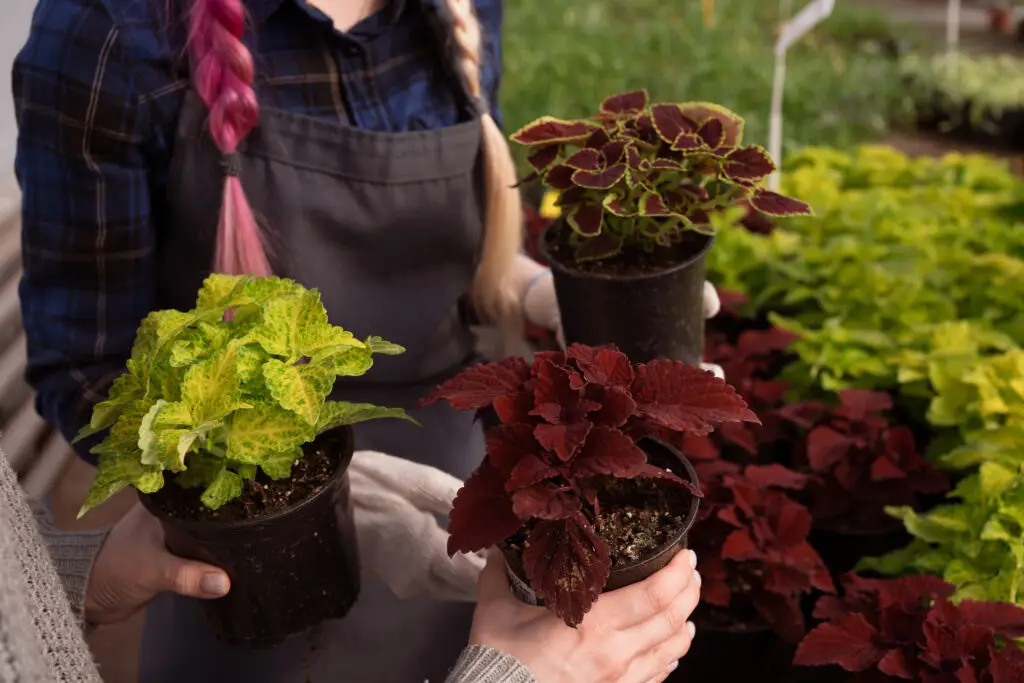
- ColorBlaze® (Proven Winners): Sun–shade versatile; holds bold color in bright light with steady moisture. Examples: ‘Golden Dreams’, ‘Rediculous’, ‘Wicked Witch’.
- Premium Sun (PanAmerican Seed/Ball): Seed-grown for full sun in humid climates; in arid regions, give part shade. Examples: ‘Crimson Gold’, ‘Mighty Mosaic’, ‘Coral Candy’, ‘Lime Delight’.
- Wizard (PanAmerican Seed): Compact, classic seed line for partial shade and containers. Examples: ‘Wizard Rose’, ‘Wizard Sunset’, ‘Wizard Coral Sunrise’.
- Kong (PanAmerican Seed/Sakata): Extra-large leaves for full to bright shade; also available as Kong Jr. for smaller spaces. Examples: ‘Kong Red’, ‘Kong Mosaic’.
Troubleshooting Cheatsheet
Symptom | Likely Cause | Fix |
Leaf edges crisp and brown | Repeated dry-downs or strong sun | Increase watering frequency; provide afternoon shade |
Colors look washed out | Overfertilizing or excessive sun | Reduce feeding; shift to morning sun/afternoon shade |
Leggy, stretched stems | Not enough light or missed pinching | Move to brighter light and pinch tips |
Sudden collapse, mushy stems | Root rot from saturation | Repot into airy mix; reduce watering; ensure drainage |
Yellowing, leaf drop with gray fuzz | Downy mildew | Remove infected plants; improve airflow; avoid overhead watering |
Sticky residue, curled leaves | Aphids/whiteflies | Rinse, then apply insecticidal soap; repeat as needed |
Safety Notes (Pets & People)
Coleus species vary. Some types are reported toxic to pets if chewed (gastrointestinal upset), while others are listed as non‑toxic. When in doubt, keep plants out of reach of pets and children and consult a veterinarian if ingestion occurs.
FAQ's for Coleus Plant Care
Q: Is coleus a sun or shade plant?
A: Most thrive in partial shade; many modern cultivars tolerate full sun with enough moisture.
Q: How often should I water coleus in containers?
A: Water when the top 1–2 inches feel dry. In hot weather, daily watering may be needed.
Q: Do I need to pinch coleus?
A: Yes. Regular pinching promotes branching and keeps plants dense and colorful.
Q: Should I remove coleus flowers?
A: Yes. Removing flower spikes keeps energy focused on foliage and prevents legginess.
Q: Can I grow coleus indoors year‑round?
A: Yes, with bright light or grow lights, warm temps above 60°F, and moderate watering.
Q: How do I overwinter coleus?
A: Bring containers indoors before the first frost, or root stem cuttings and grow them as houseplants until spring.
Q: What causes the colors to fade?
A: Too much fertilizer, intense sun, or inadequate light indoors. Adjust light and reduce feeding.
Q: Are coleus plants toxic to pets?
A: Some species are reported toxic to cats and dogs if ingested. Keep out of reach and consult a vet if ingestion occurs.