
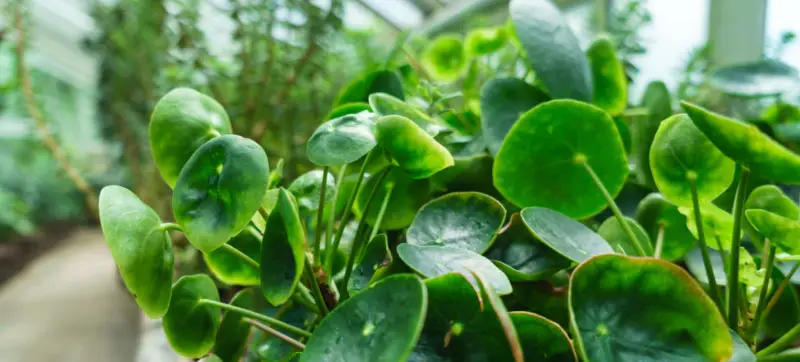
The Chinese money plant, also called Pilea Peperomioides, is a unique and popular houseplant in the world of indoor greenery.
Growing a money plant indoors will not only enhance the aesthetics of your living space but also is believed to attract positive energy and good fortune.
This guide contains answers to common questions about giving proper care to the money plant. It will help you provide the best care possible for your Chinese Money Plant.
What is a Money Plant
This popular houseplant is renowned for its unique, round, and flat green leaves that resemble coins.
Hailing from the Yunnan region in Southern China, its quirky, coin-shaped leaves have made it a hit in homes everywhere. It’s not just a looker though. Its low-maintenance needs make it a darling among both newbie plant lovers and seasoned green thumbs.
The Pillea is also well known by other names like the UFO Plant, Pancake Plant, or the Coin Plant. All of these additional names are based on the flat, round shape of its leaves.
Chinese Money Plant Quick Facts
-
- Common Names: Pancake plant, UFO plant, friendship plant, coin plant
-
- Botanical Name: Pilea peperomioides
-
- Family: Urticaceae
-
- Type: Perennial
-
- Mature Size: 12 inches tall, 8 to 12 inches wide
-
- Sun Requirements: Partial
-
- Soil Preference: Well-draining
-
- Ideal Soil pH: Acidic to Neutral
-
- Bloom Period: Spring
-
- Flower Color: White
-
- Native Region: China
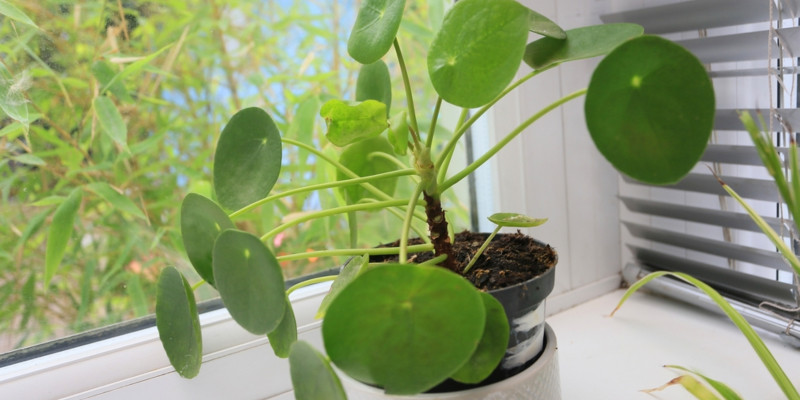
Chinese Money Plant Care
To provide proper care and maintenance for your beloved Pilea Peperomioides, it is best to keep it simple. Don’t overthink it, this easy-to-grow indoor plant doesn’t need much maintenance.
Like any plant, know its lighting, watering, fertilizing needs, and re-potting instructions. As you will see, this awesome plant is very easy to care for.
How Often Should I Water My Chinese Money Plant
Watering the Chinese money plant is more about quality than frequency. It’s best to give it a good soak when the top inch of the soil feels dry. Watering too much can be a big issue. It is essential to let those roots breathe and wait for the right point to quench their thirst.
This evergreen perennial generally has medium watering needs. Allow your Pilea plant to nearly dry out between waterings and then water well.
The leaves of Pilea Peperomioides will droop when it is too dry, which usually means its time for a watering.
What Kind of Light Does A Pilea Peperomioides Need
The Pilea Peperomioides thrives in bright indirect light, making it perfect for well-lit indoor spaces. Direct sunlight can be harsh on its delicate leaves, so a spot with filtered light keeps it happy and radiant.
While it can tolerate minimal direct sun, especially in the morning, prolonged exposure isn’t ideal. Harsh direct sunlight can cause its leaves to scorch or fade.
A location near a window with sheer curtains or a location that receives spotted sunlight is ideal for this plant. If placed in too low light, its growth might slow down, and the iconic coin-shaped leaves might not develop as fully.
What Type of Soil Is Best For a Pilea
For a thriving Pilea, a well-draining potting mix is essential to prevent root rot and ensure healthy growth. Combining a standard houseplant mix with a bit of perlite or sand provides the perfect balance, giving your Pilea the foundation it needs to flourish.
How Often Should I Fertilize My Pilea
For a Chinese Money Plant, you should fertilize it approximately every 4-6 weeks during its active growing season (spring and summer).
As for the type of fertilizer, a diluted balanced liquid houseplant fertilizer works well. It’s always a good idea to use half the recommended strength to avoid over-fertilizing, as Pileas are sensitive and can get burned by too strong a concentration.
Always ensure the soil is moist before applying any fertilizer to avoid root burn.
How Often Should I Repot My Pilea
Repotting your Pilea every 2-3 years can give its roots room to grow and refresh its soil environment. If you notice its roots peeking out from the drainage holes or the growth slowing down, it’s a good sign your Pilea is ready for a new home.
Other Types of Money Plants
The term “money plant” is a typical name that can refer to several different plant species. Each of these is believed to bring wealth and prosperity according to various cultural beliefs.
Here are some plants commonly referred to as “money plants” or associated with the concept of prosperity:
Jade Plant (Crassula Ovata): Often called the “money tree” or “lucky plant,” this succulent has thick, glossy green leaves. It’s popular in many households and is commonly associated with Feng Shui practices as a bringer of wealth.
Money Tree (Pachira Aquatica): Recognized by its braided trunk and palmate leaves, the money tree is often used in Feng Shui to enhance financial luck.
Golden Pothos (Epipremnum Aureum): Often referred to as a money plant, especially in parts of India. This popular houseplant is known for its heart-shaped, variegated leaves.
Silver Dollar Plant (Lunaria Annua): This plant gets its name from its seed pods, which are round, flat, and shiny, resembling silver coins.
By now you should have everything you need to grow a healthy and beautiful Pilea plant in your own home. If you have any additional questions, please give our growing staff a call at 888-815-9763.
We are happy to help diagnose any potential issues and provide some guidance to get the most out of your Chinese Money Plant!