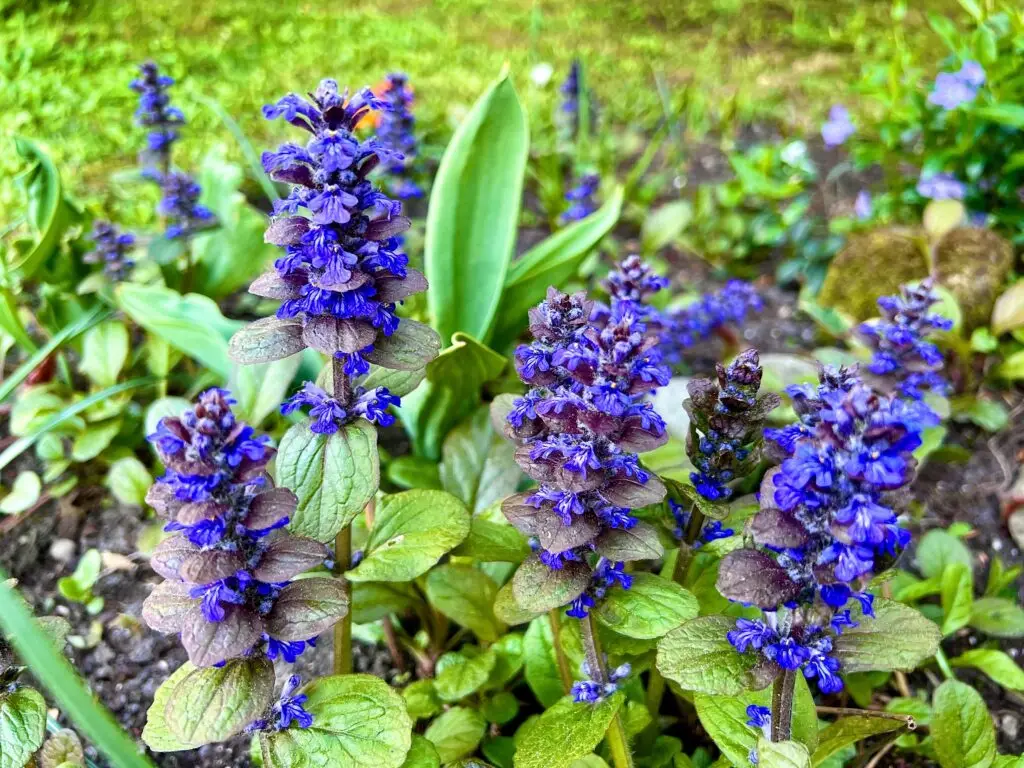
Ajuga (aka bugleweed, carpet bugle; typically Ajuga reptans and close relatives) is a fast‑spreading, colorful groundcover for paths, slopes, and shady beds. This expert guide distills exposure, soil, watering, spacing, division, disease prevention, and containment tips—plus cultivar picks and an SEO‑ready FAQ.
Ajuga at a Glance
- Light: Partial shade to bright shade; many cultivars tolerate morning sun or even full sun in cool climates if soil stays evenly moist. Provide afternoon shade in hot regions.
- Water: Keep soil evenly moist while establishing; once rooted, average moisture is fine. Avoid waterlogged sites.
- Soil: Moist, well‑draining, humus‑rich. Tolerates clay, loam, or sandy soils with organic matter.
- pH: Acid to neutral; adaptable.
- Temperature/Hardiness: Perennial in USDA Zones 3–10 (variety dependent).
- Height/Spread: Typically 4–8 in. tall; spreads via stolons to form dense mats.
- Bloom time: Mid to late spring (blue/purple spikes; some pink/white).
- Wildlife: Pollinator‑friendly; generally deer and rabbit resistant.
Caution: Can be aggressive in ideal conditions; use edging and routine maintenance to contain.
Pro tip: In hot summers, site Ajuga where it receives bright morning sun and afternoon shade. Consistent moisture preserves foliage color and prevents scorch.
Where Ajuga Shines (Use Cases)
- Living mulch & weed suppression under shrubs and open shade trees
- Erosion control on banks and slopes
- Between stepping stones and along paths (tolerates light foot traffic)
- Container “spiller” with upright perennials or small shrubs
Light Requirements
- Best: Partial shade or dappled light.
- Sun tolerance: Many selections handle 3–4 hours of direct morning sun; in cooler coastal or northern climates some can manage more if soil moisture is reliable
- Too much sun: Washed‑out foliage, crispy margins, or stunted rosettes—move to afternoon shade and improve watering.
- Too little light: Loose mats and reduced flowering—open the canopy or shift to brighter shade.
Soil Prep & Planting
- Bed prep: Work in 2–3 inches of compost to improve drainage and moisture retention. Avoid chronically soggy spots.
- Spacing: 10–12 inches apart; plants will knit together within a season or two.
- Planting depth: Set crowns at soil level; do not bury.
- Containers: Use a well‑draining potting mix (peat/coco base + perlite + fine bark). Ensure drainage holes.
Watering
- Establishment (first 6–8 weeks): Keep soil evenly moist. Water deeply when the top inch is dry.
- Established plants: Average garden moisture is sufficient; increase frequency during heat waves, especially in sunnier exposures.
- Avoid: Waterlogging and poor airflow around crowns—these conditions invite crown rot.
Feeding
- Low feeders: Ajuga rarely needs heavy fertilizer.
- At planting: Mix a small amount of balanced, slow‑release fertilizer into the backfill or top‑dress lightly in spring.
- Containers: Feed monthly at ½ strength during active growth if leaves pale.
Pruning, Pinching, and Containment
- After bloom: Shear spent flower spikes to tidy and encourage fresh foliage.
- Runners: Edge beds seasonally; lift and redirect or remove stolons that jump borders.
- Leggy patches: Mow high (4–5 in.) or shear lightly, then water and top‑dress with compost.
- Barriers: Use edging, pavers, or mow strips to contain spread where lawn meets bed.
Division & Propagation
Best time: Early spring or early fall.
- Division: Lift clumps, tease apart rosettes with roots attached, and replant at 10–12 in. spacing. Water in well.
- Runners: Pin down rooted stolons, then separate and transplant.
- Seed: Possible but slower and variable; most gardeners propagate vegetatively to keep cultivar traits.
Pests & Diseases (Prevention‑First)
- Generally trouble‑free, but watch for:
- Crown/root rot in wet, stagnant sites (brown, mushy crowns; foul smell). Improve drainage, thin mats for airflow, avoid overhead watering late in the day, and remove heavily infected plants.
- Aphids or foliar chewers occasionally; rinse with water, then treat with insecticidal soap or neem oil as needed.
- Cultural defenses: Good air circulation, proper spacing, and moderate watering are the best safeguards.
Landscape Pairings
- Shade companions: Hosta, heuchera, ferns, astilbe, foamflower (Tiarella), hellebores.
- Spring bulbs: Daffodils, grape hyacinths, and species tulips emerge through Ajuga for layered color.
- Textures: Mix large‑leaf types with fine grasses or sedges for contrast.
Popular Varieties (Choose by Look & Use)
- ‘Burgundy Glow’ — Variegated cream‑pink‑burgundy leaves; excellent for bright shade.
- ‘Black Scallop’ — Glossy, near‑black scalloped leaves; striking contrast in containers.
- ‘Chocolate Chip’ (tenorii ‘Valfredda’) — Petite leaves and low habit for tight edging and between stones.
- ‘Catlin’s Giant’ — Larger leaves and bolder presence for quick coverage.
- ‘Bronze Beauty’/‘Blueberry Muffin’ — Durable color blocks for massing.
Regional & Invasiveness Notes
- Ajuga can be aggressive in ideal conditions. Contain with edging, regular runner removal, and seasonal thinning.
- Check local guidance before planting near natural areas. Consider regional native groundcovers if Ajuga is discouraged in your area.
Seasonal Care Calendar
- Early spring: Divide or plant; top‑dress with compost; spot‑feed if needed.
- Late spring: Shear spent flower spikes; water during warm, dry spells.
- Summer: Maintain even moisture; edge beds; thin dense patches for airflow.
- Fall: Divide again if needed; root runners for transplants; clean up debris to reduce rot risk.
- Winter: Mostly hands‑off; ensure beds drain and do not pond.
Safety & Pets
- Generally pet‑safe landscaping choice; ingestion can still cause mild GI upset in sensitive animals. When in doubt, prevent nibbling and consult a veterinarian.
Recommended Gear
- Soil & amendments: Compost, coco/peat, perlite/pumice, fine bark.
- Planting: Hand trowel, edging spade, mulch.
- Care: Insecticidal soap, neem oil, bypass pruners, hose nozzle with gentle shower.
- Containment: Steel or plastic edging, paver mow strip.
FAQs Bugleweed