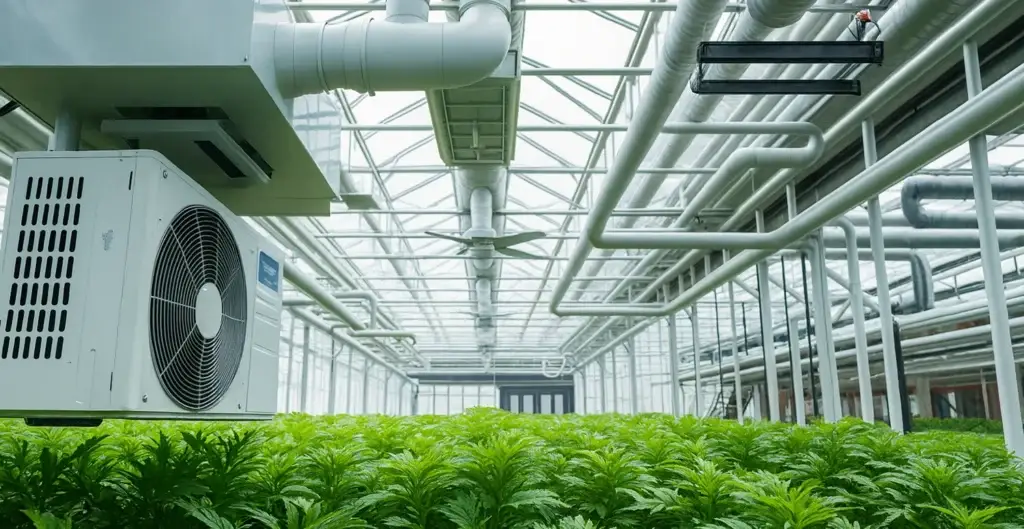
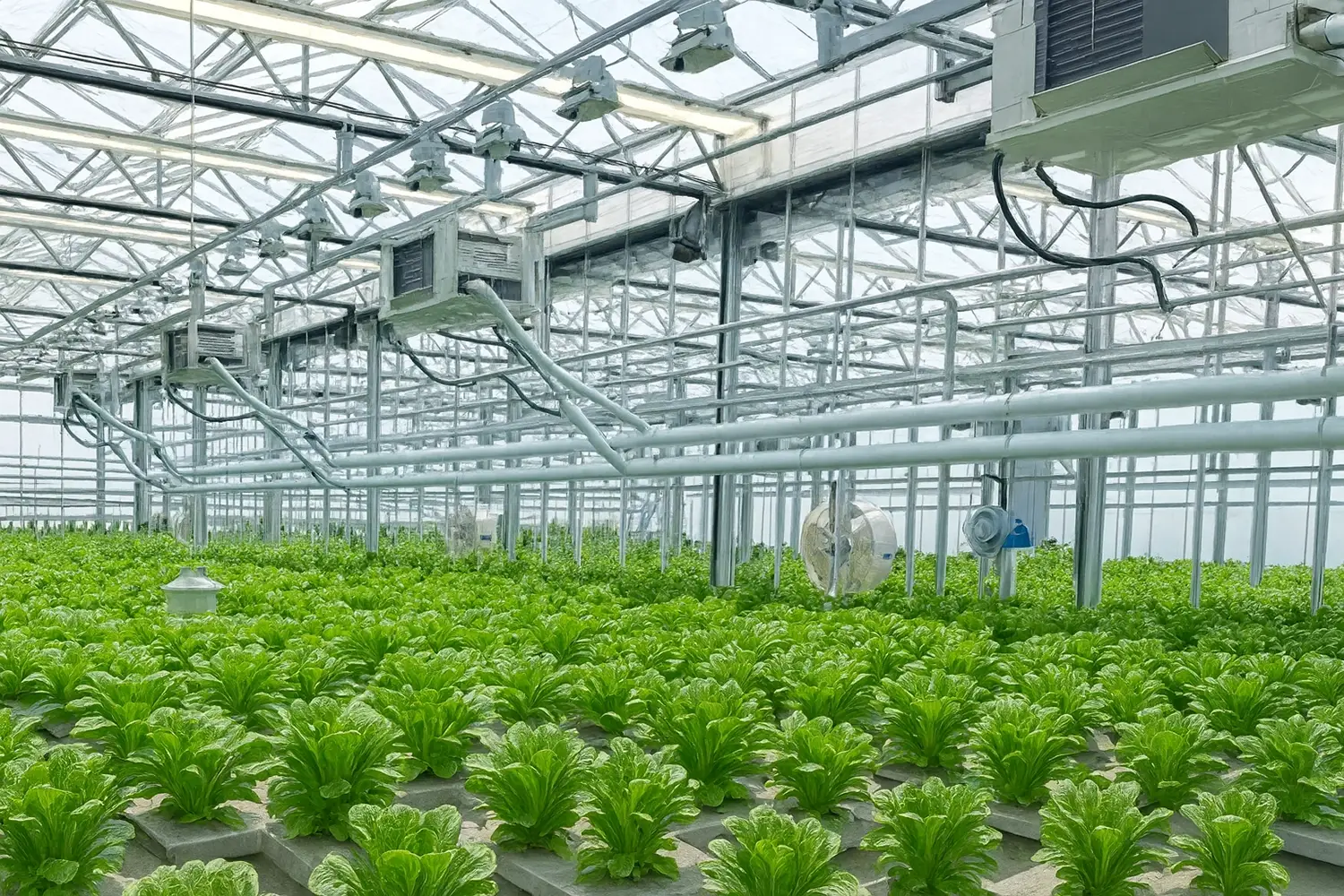
Indoor growers know that a successful grow room is more than just lights and nutrients — it’s about creating a stable, consistent environment. And when it comes to controlling temperature, nothing is more critical than the right air conditioner.
Whether you’re managing a 4×4 tent or a multi-zone commercial facility, your grow room’s performance hinges on the ability to maintain ideal temps. At Hydrobuilder, we help growers of all scales build smarter spaces — and this guide is your complete roadmap for choosing, sizing, and buying the perfect air conditioner for your needs.
Let’s dive into what makes a grow room AC effective, how to calculate your cooling needs, and how to pick the right unit for your setup.
Why You Need the Right AC for Your Grow Room
Lighting systems, CO₂ burners, dehumidifiers, and even your own presence generate heat in a closed grow environment. Without sufficient cooling, your grow room can quickly become a hotbox — leading to slowed growth, wilting, poor yields, or even plant death.
On the flip side, using an oversized AC unit might cool the room too quickly, causing temperature swings and inefficient energy use. That’s why it’s essential to size your AC accurately — and why Hydrobuilder created the Grow Room BTU Calculator to help you dial it in fast.
Sizing Your Grow Room AC with Hydrobuilder's BTU Calculator
If you’ve ever wondered “How many BTUs do I need to cool my grow room?”, our calculator takes out the guesswork. It’s built specifically for indoor growers — whether you’re cultivating cannabis, leafy greens, or herbs in a CEA environment.
In Simple Mode, just enter your room dimensions, total lighting wattage, and a few other variables. If you want precision, Advanced Mode lets you include ventilation CFM, outside air temperature, dehumidifier wattage, CO₂ generator BTUs, and more.
After inputting your data, the calculator gives you:
- Your total BTU/hr requirement
- A suggested safety buffer (usually 20%)
- Recommended cooling capacity in tons (1 ton = 12,000 BTU/hr)
From there, it’s easy to match your results with one of our recommended AC units.
➡️ Try the BTU Calculator now
How Grow Room Equipment Affects Your Cooling Needs
Every watt of power you bring into your grow room eventually turns into heat. That includes your grow lights, pumps, ballasts, and fans. Lighting tends to be the largest contributor, especially if you’re running multiple high-intensity HPS fixtures. Even with LEDs, which are more efficient, you’ll still generate considerable thermal load.
CO₂ burners, which use combustion to enrich the environment, can produce thousands of BTUs per hour. Dehumidifiers add heat as they remove moisture from the air. And if you’re pulling in warm outdoor air through ventilation, that introduces a whole new layer of thermal energy to manage.
Add in the heat from people working in the room (about 400 BTU/hr per person), and it becomes clear: your AC unit is doing a lot more than just “cooling the lights.”
Types of Air Conditioners for Grow Rooms
At Hydrobuilder, we carry every major type of AC unit used in indoor growing — each designed for different grow sizes, installation preferences, and budgets.
Portable Air Conditioners
Best for tents and small-scale grows, portable ACs are a simple, plug-and-play solution. They’re ideal if you’re not ready to commit to permanent installation or if you’re growing in a rental space. These units typically handle loads up to 14,000 BTU/hr and require venting out a window or similar space.
Popular option: Active Air 14,000 BTU Portable AC
Mini-Split (Ductless) Systems
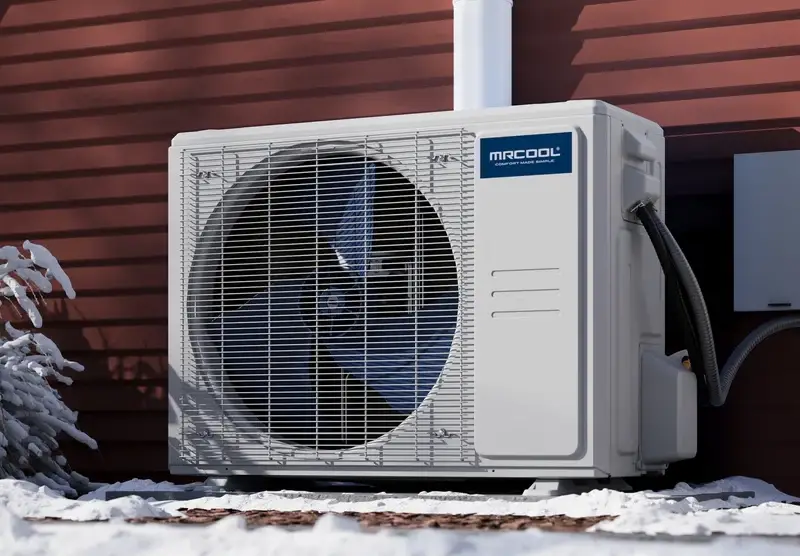
Mini-splits are the go-to choice for serious hobbyists and commercial growers alike. These systems offer quiet, efficient cooling with indoor wall-mounted units connected to an outdoor compressor. They’re more energy-efficient than portables and handle much larger loads — typically 12,000 to 48,000 BTU/hr or more.
DIY options like the MRCOOL series are incredibly popular among Hydrobuilder customers due to their straightforward setup.
Customer favorite: MRCOOL DIY Gen 5 24,000 BTU Mini-Split
Choosing the Right AC for Your Grow Style
Here’s a quick overview to help you match your setup with the right type of AC:
Grow Space | Recommended AC | BTU Range |
2×4 Tent | Portable | 5,000–8,000 |
4×8 Tent | Portable or Mini-Split | 8,000–14,000 |
10×10 Room | Mini-Split | 18,000–36,000 |
Multi-Room Grow | Multi-Zone Mini-Split | 36,000–60,000+ |
Warehouse Grow | Packaged HVAC System | 100,000–250,000+ |
If you’re not sure where to start, our product specialists are always available to walk you through options based on your environment, insulation, climate, and long-term plans.
Real-World Sizing Example
Let’s say you’re running a 10×10 grow room with:
- 4 × 1,000W HPS lights = 13,648 BTU/hr
- CO₂ generator = 4,526 BTU/hr
- Other gear = 1,000W = 3,410 BTU/hr
- One grower = 400 BTU/hr
- Ventilation bringing in warm air = 3,000 BTU/hr
- Add 10% for room overhead
That adds up to ~27,000 BTU/hr, and once you include a 20% buffer, you’re looking at a target of 32,400 BTU/hr, or 2.7 tons of cooling.
In this case, a 3-ton mini-split would be the perfect choice — and we carry several options in stock.
Building for Efficiency: Cost & Control
Energy efficiency matters — not just for your electric bill, but for keeping your environment dialed in. At Hydrobuilder, we recommend:
- Choosing units with high SEER ratings (16 or higher)
- Considering inverter compressors for variable-speed cooling
- Integrating with controllers (like TrolMaster or AC Infinity)
- Pairing your AC with a dedicated dehumidifier to manage VPD
- Using sealed or semi-sealed room designs to minimize thermal loss
You can even calculate your estimated cooling cost with this formula:
(BTU/hr ÷ EER) = watts → (watts ÷ 1,000) × $/kWh × hours/day
Example: A 24,000 BTU AC with EER 11 running 18 hours/day at $0.13/kWh = ~$5/day
Hydrobuilder’s Top AC Picks for 2025
We’ve tested, reviewed, and stocked the most reliable grow room AC units on the market. Here are a few of our customer favorites:
Need help choosing? Just Contact Us or speak with a Hydrobuilder specialist.
Final Thoughts: Don’t Let Heat Undermine Your Harvest
Sizing and selecting the right grow room AC isn’t just a technical decision — it’s an investment in the health and productivity of your entire operation. At Hydrobuilder, we’re here to help you get it right the first time, with tools, gear, and support made for growers.
Start with the BTU Calculator, explore your AC options, and don’t hesitate to reach out with questions. We’ve helped thousands of growers stay cool — and we’ll do the same for you.
➡️ Use the BTU Calculator
➡️ Shop All Grow Room Air Conditioners
➡️ Speak to a Hydrobuilder Expert