
Hypochlorous Acid, Keeping Drip Tables & Irrigation Systems Clean
Hypochlorous acid, also known as HClO and HOCl, is a weak acid solution, widely used in applications ranging from food processing facilities to hospital surgical units to keep things hygienic and kill pathogens and other harmful bacteria, etc.
What is Hypochlorous Acid?
Hypochlorous acid is the strongest oxidizing and anti-microbial agent generated when chlorine gas dissolves in water. Often used in a hypochlorous acid spray, HClO has been used since the first world war. It is a powerful non-toxic disinfectant and sanitizer. This proven formula has been shown to be much more effective than bleach as a biocide, fungicide, and viricide.
Aside from these industrial applications, It’s also very well suited to keeping mineral salts and biofilms from collecting. This is especially important for growing surfaces such as irrigation systems and tanks. Fortunately, Hypochlorous acid (HOCl-) is available in stable concentrates specifically for drip applications that can be injected directly into fertigation systems or added into hydroponics reservoirs.
Substances such as biofilms and other naturally occurring residues, if left unchecked in hydroponics systems, can lead to crop failures. In extreme circumstances, it can require irrigation system removal and replacement. Both are expensive prospects and important considerations for the professional as well as a residential grower.
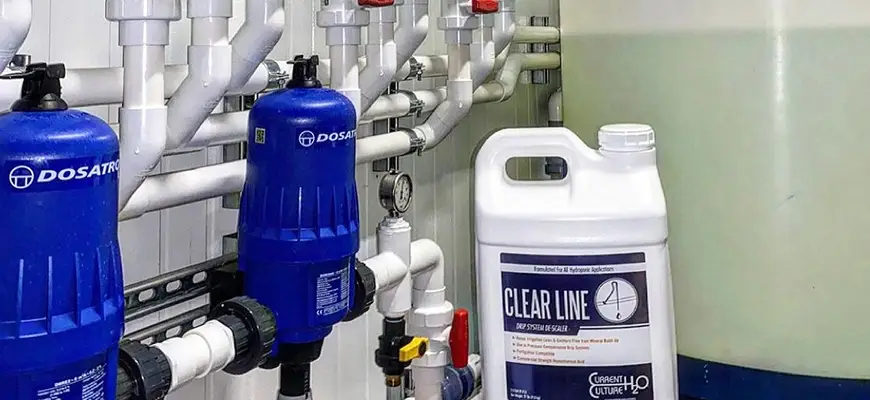
Fortunately, HOCl- concentrates like HGV Clear, Clear Line or UC Roots can also be added to water storage systems, for example, RO product water tanks to help keep water supplies hygienic.
Our Favorite Ways to Use Hypochlorous Acid In The Greenhouse & Garden
- Line Clearing – Removed biofilms and mineral build-up from water lines without harming plants or equipment.
- Recommended dosing: 2-4 ppm constant flow or 500ppm flush
- Root Zone Optimizer – Add Hypochlorous acid to RDWC and NFT systems to keep the root zone clear from pathogens and biofilm buildup.
- Recommended dosing: 2 ppm in a re-circulating system
- Prevent Algae Growth – Keep algae blooms under control, especially during periods of excess heat.
- Recommended dosing: ppm constant flow or 500ppm flush
- Propagation – Improve strike rates and germination by soaking seeds or dipping cuttings in hypochlorous acid before propagating.
- Recommended dosing: 2 ppm soak and rinse
- Growing Media Rinse – Soak or rinse growing media in HOCl before use to kill any residual pathogens and reduce the risk of disease spread.
- Recommended dosing: 200 ppm soak and rinse
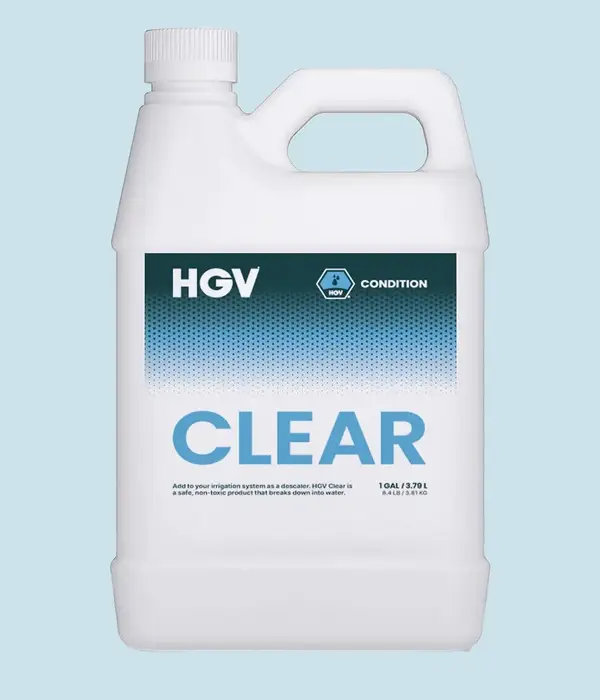
Our Preferred Hypochlorous Acid – HGV Clear
HGV Clear is a 0.028% Hypochlorous Acid solution designed to support clean, healthy growing environments as part of the HGV Nutrient Program.
It helps reduce biofilm, control microbial buildup, and maintain clean irrigation lines and reservoirs without disrupting nutrient balance or plant health. Safe for use in all stages of growth, HGV Clear enhances system cleanliness and efficiency, supporting optimal nutrient delivery and root zone integrity in both recirculating and drain-to-waste systems.
Features & Benefits
- Maintains clean irrigation lines and root zones by controlling biofilm and microbes
- Safe for continuous use during all stages of growth
- Improves nutrient delivery and system efficiency without harming the plant
Available in 1 and 5 gallon bottles as well as 55 gallon drums.
HGV Clear is part of the HGV Condition Line which includes pH Up, pH Down, and HGV Level.
What Are Biofilms
Biofilms form as complex collectives of exudate and microorganisms, competing with roots for resources like minerals and oxygen, often serving as a vector for various crop infections. Studies demonstrate that as soon as the water comes into contact with surfaces, especially irrigation pipes in warm well illuminated places, these films begin to form.
Over time, they can develop at faster rates. With a higher level of persistence, there needs to be a constant source of moisture and microbial food source. Organic debris, nutrients, aerobic and aerobic microbes, among others, are key contributors to the existence and formation of biofilms.
HGV Clear vs Clear Line vs UC Roots: What’s the Difference?
HGV Condition – Clear – HGV Clear is a 0.028% Hypochlorous Acid solution designed to support clean, healthy growing environments as part of the HGV Nutrient Program. It helps reduce biofilm, control microbial buildup, and maintain clean irrigation lines and reservoirs without disrupting nutrient balance or plant health. Safe for use in all stages of growth, HGV Clear enhances system cleanliness and efficiency, supporting optimal nutrient delivery and root zone integrity in both recirculating and drain-to-waste systems.
Clear Line – is a highly concentrated form of HOCl- designed for use in a variety of applications, including fertigation injection systems. Its concentrated form makes it more cost-effective to utilize at scale. When added into a feeding program, dosage rates are typically 0.25 to 1ml per US Gallon to reach optimal ORP values. Clear Line is 5 times as concentrated as the competition, at only 3 times the cost!
UC Roots – is a more diluted and easier to apply in recirculating water culture systems such as the Current Culture Under Current or HPAC (high-pressure aeroponic cloner) systems. Typical dosage rates range from 3 to 5 ml per US Gallon of nutrient solution.


It is worth noting that not all HOCl- solutions are created equal, and here’s why:
- If not intended as a growing solution, HOCl- may contain unacceptable levels of Sodium (Na) that can be toxic to plants.
- Clear Line or UC Roots are pH neutral and will not affect the PPM or pH of nutrient solutions in any significant way when used as directed.
- Clear Line and UC Roots have a stable shelf life of one year; at which point they will remain effective but begin to diminish in potency.
- Most other available HOCl- solutions need to be used very quickly after manufacture to be effective.
*Note – Always follow the manufacturer’s directions for best results and to maximize both the effectiveness and economy of hypochlorous acid solutions intended for use in cultivating crops.
Benefits of Using Hypochlorous Acid
- Predictable Results – Reduces mineral build-up and biofilms in pressure compensating drip emitters, assuring precision delivery of the nutrient solution.
- Improve ROI – Increases the operational life span of irrigation plumbing saving money on maintenance and replacement equipment.
- Crop Consistency – Ensures nutrient solution remains highly soluble, providing optimal availability for plant uptake.
- Enhanced H2O – Improves overall water quality by increasing Oxidation Reduction Potential (ORP).
- Neutral Chemistry – Compatible with all nutrient and fertilizer programs, without affecting the pH of the nutrient solution.
- Safe to Use – Non-corrosive and non-hazardous to handle, creating a safer work environment for cultivation staff. It is also safe to handle and use at all plant stages.
- Cost-Effective – Highly concentrated Hypochlorous Acid with the lowest cost of use, ideal for commercial-scale facilities. It costs only $0.01 per gallon, doesn’t get much less than that!
How Hypochlorous Acid Compares to Traditional Chemicals
Now that we know how hypochlorous acid can benefit facilities, how does it compare to traditional disinfectants? These are the most important differences between the three typical types of disinfecting solutions and hypochlorous acid:
Hydrogen peroxide. Hydrogen peroxide can inactivate and kill bacteria as well as many viruses. However, the typical 3% hydrogen peroxide commonly sold in stores, can cause discoloration or break down marble or granite surfaces. Also, when applied with vinegar or bleach, it can produce toxic chemicals that irritate eyes, skin, and lungs.
Bleach. HOCI (Hypochlorous acid) can be up to 80 times more effective than bleach.
This is because its neutral charge allows it to effortlessly infiltrate and attack pathogens in lower concentrations. Bacteria and bleach both have a negative charge.
As a result, bacteria can repel themselves from the bleach. To overcome the cell’s defenses, you need to apply more bleach, which creates more risks.
Quats. Quaternary ammonium compounds (Quats) are disinfecting chemicals normally found in disinfecting wipes, sprays, and other household cleaners. Often, commercial products that claim to be “antibacterial” contain quats. They can cause skin rashes, irritate the lungs, contribute to asthma, and exacerbate breathing problems.
Final Thoughts On Hypochlorous Acid
Using a premium highly concentrated hypochlorous acid for disinfecting is a must-do, especially in large commercial growing facilities and outdoor growing to help fight bacteria. Not only will it save you thousands in irrigation lines, drip emitters, auto-dosing and fertigation pumps, and more, but it will also help keep your hydroponic set-ups using coco or Rockwool productive and operating smoothly. All you have to do is inject it into your drip fertigation system or add and dosed into reservoirs.
Hypochlorous Acid Growing Applications - FAQs
Q: What is hypochlorous acid and why is it used in plant growing?
A: Hypochlorous acid (HOCl) is a weakly acidic oxidizer that forms when chlorine dissolves in water. It acts as a broad-spectrum antimicrobial agent that is safe for plants and humans, rapidly breaking down into water after use. It effectively kills bacteria, fungi, viruses, and biofilms without harming plant tissue
Q: How is HOCl applied in hydroponic and greenhouse systems?
A: HOCl is used to clear biofilm and mineral buildup in irrigation lines, optimize the root zone, prevent algae growth, improve propagation success, and sanitize growing media. Common usage rates include 2 ppm in circulating systems, 500 ppm for flushing lines, and 200 ppm to soak media or cuttings
Q: Is HOCl safe for plants and people?
A: Yes. HOCl is biodegradable, non-toxic, non-flammable, and considered safe for humans, soil, and plants when applied at recommended concentrations. Unlike harsh bleach or hydrogen peroxide, it disinfects effectively while minimizing chemical residues .
Q: Can HOCl support seed germination and disease prevention?
A: Yes. HOCl is used in seed disinfection to eliminate pathogens on seed surfaces and cuttings, improving germination and strike rates. When applied at correct concentrations such as 200 ppm, it reduces disease risk without harming seedlings
Q: What are the limitations or precautions when using HOCl?
A: HOCl degrades quickly in light and heat, so it should be produced and used immediately for effectiveness. Precise concentration control is essential, too high concentrations may stress roots or foliage. It is also not acceptable in certified organic production unless currently approved by the National Organic Program