

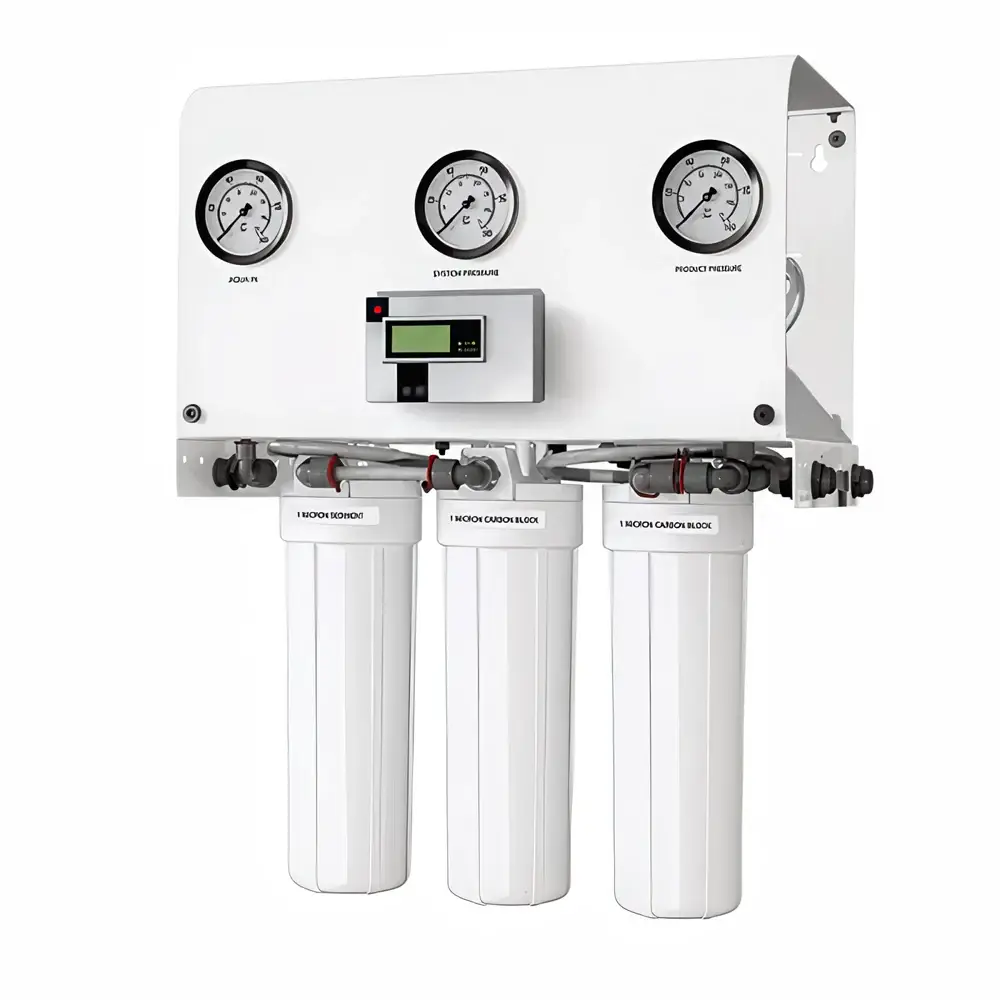
Replacing RO filters on schedule is one of the cheapest, highest-impact maintenance tasks in a hydroponic operation — and one of the most commonly skipped. A clogged sediment filter strains your carbon block. A saturated carbon block lets chlorine reach your membrane. And a fatigued membrane raises your permeate TDS, meaning every batch of nutrient solution starts from compromised water.
In drinking water applications, a slightly elevated TDS is a taste issue. In a grow room, it’s a precision issue. If your RO filter replacement schedule slips, your EC readings drift, your nutrient ratios become unreliable, and you’re troubleshooting crop problems that trace back to water quality — not inputs.
This guide covers how often to replace each stage under horticulture conditions, the variables that accelerate wear in a grow environment, how to verify performance with a TDS meter, and which AXEON replacement kits pair with the most common systems in the field.
Running a commercial facility? The fundamentals below apply at every scale. Scroll to the commercial section for high-throughput SOP structure, antiscalant injection, and deionization polishing.
RO Filter Replacement Schedule: Quick Reference
Filter life is driven by two variables: feed water quality and daily output volume. These ranges reflect horticulture conditions on municipal water at typical hobby-to-mid-commercial throughput:
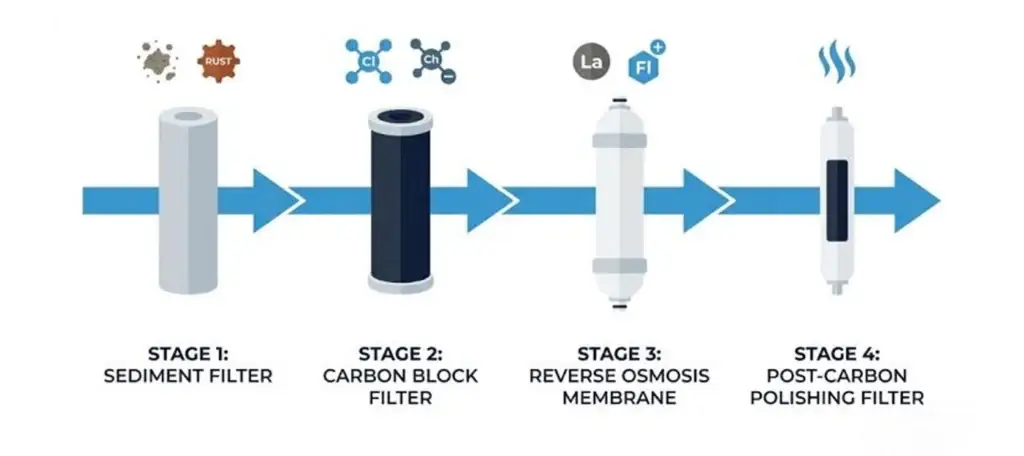
| Filter Stage | What It Removes | Replacement Interval |
|---|---|---|
| Sediment pre-filter | Silt, rust, sand, particulates | Every 6 months (inspect at 3) |
| Carbon block pre-filter | Chlorine, chloramines, VOCs | Every 6–12 months |
| KDF/GAC filter (if equipped) | Chlorine, heavy metals, scale | Every 12 months |
| RO membrane | Dissolved solids — 94–99% rejection | Every 12–24 months (grow room use) |
| Post-carbon / polishing filter | Residual organics, taste | Every 12 months |
| UV sterilizer bulb (if equipped) | Bacteria, algae | Every 12 months |
The critical relationship in this table: the sediment and carbon pre-filters exist to protect the membrane. If either stage exhausts or clogs without replacement, chlorine and suspended particulates pass directly to the membrane surface — accelerating degradation that turns a $30 filter problem into a $150+ membrane replacement.
What Drives Filter Wear in a Grow Room
using before selecting filter media. Understanding your source water is the foundation of any nutrient program, as covered in our guide to RO systems for growing plants.
Daily output volume. Filter life is measured in gallons processed, not calendar days. A hobby grower running a 100 GPD system at 30% capacity reaches replacement milestones much later than a facility running the same system at maximum throughput to fill 100-gallon reservoirs daily. If volume is high, default to the shorter end of every interval.
Feed water temperature. Cold inlet water reduces membrane rejection efficiency and slows flow rate, meaning the system runs longer to produce the same output volume. In unheated utility areas during winter, this compounds wear and is worth accounting for when setting replacement intervals. Our guide on hydroponic water temperature explains how temperature affects both system performance and reservoir biology.
System pressure. Low inlet pressure (under 40 PSI) degrades membrane efficiency and shortens membrane life by altering the pressure differential the membrane operates under. If you’re on well water or a low-pressure supply, factor this into both your replacement schedule and your system design.
Signs Replacement Is Due Before the Schedule
Rising permeate TDS. If your filtered water TDS has crept 10–15+ ppm above your established baseline, the membrane is losing rejection efficiency. Test monthly and log the number. An upward trend across three consecutive readings warrants membrane inspection and likely replacement.
Reduced flow rate. Slower fill times, longer tank recovery, and noticeably weak output pressure indicate a clogged sediment filter or a partially scaled membrane. Inspect the sediment filter first — it’s the cheapest and most likely culprit.
Discolored or compressed sediment media. Pull the sediment cartridge at the 3-month mark and examine it. Brown, rust-red, or heavily compressed media means you’re in a high-particulate environment and should switch to a 3-month sediment rotation rather than 6.
Unexpected EC drift in final water. If your nominally 0 ppm RO output suddenly reads 30–50+ ppm, the carbon pre-filter may be exhausted — allowing chlorine to reach and degrade the membrane over time without any visible warning.
Verifying Performance: TDS Testing and Rejection Rate
Replacing filters on schedule matters. Confirming they’re working matters more. Two tests every grower should log:
Feed water TDS — your source water before it enters the system. This is your working baseline.
Permeate TDS — filtered output after the membrane. A healthy system should deliver 0–30 ppm. Creeping toward 50+ ppm is a clear signal.
Rejection rate — the number that tells you whether the membrane is doing its job. Calculate it as:
Rejection Rate (%) = (1 − Permeate TDS ÷ Feed TDS) × 100
A healthy RO membrane rejects 94–99% of incoming dissolved solids. Below 90% means replacement is overdue. Log both numbers after every filter service — this creates a performance trend that predicts membrane failure months in advance, rather than discovering it mid-crop.
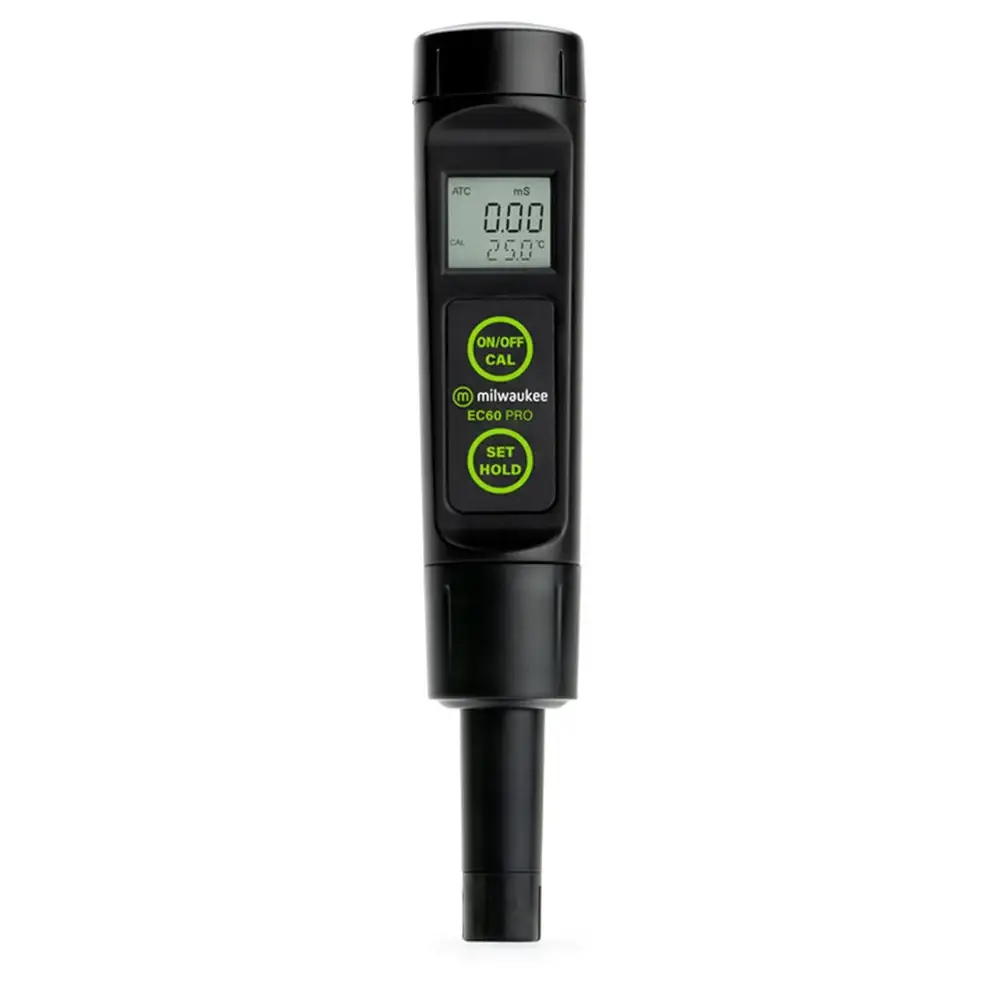
The Milwaukee EC60 PRO 3-in-1 Waterproof EC/TDS/Temp Tester delivers simultaneous EC, TDS, and temperature readings with a replaceable probe — the three numbers that tell you what your source water is actually delivering to your nutrient mix. For a deeper look at interpreting water quality numbers for hydroponics, see our guide on EC vs. PPM.
AXEON Replacement Filter Kits: Matched to Your System
As one of the industry leaders in hydroponic water treatment, their replacement water filter kits are engineered to pair directly with the most common horticulture RO systems on the market. Keeping a kit on hand before filters are due eliminates sourcing delays and protects the most expensive component in the system — the membrane.
Hydro Logic Stealth-RO150 — Most Common Mid-Range System
AXEON Replacement Filter & Membrane Kit for Hydro Logic Stealth-RO150
The Stealth-RO150 is one of the most widely deployed mid-range horticulture RO systems, and this kit includes both pre-filters and an AXEON TE-Series NSF-58 certified membrane — a complete annual service in one order. Growers running the Stealth-RO150 at higher daily output, filling 50–75 gallon reservoirs several times per week, should plan pre-filter replacement every 6 months while the membrane extends to 18–24 months with consistent water quality.
Hydro Logic smallBoy — Entry-Level and Hobby Systems
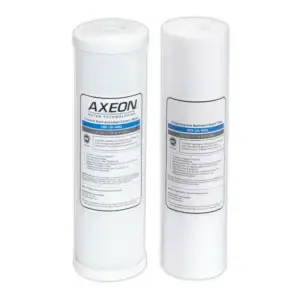
AXEON Replacement Filter Kit for Hydro Logic smallBoy
This kit includes the coconut carbon block and sediment cartridge that need the most frequent service on entry-level systems. Hobby growers on clean municipal water typically service this kit once per year, inspecting the sediment cartridge at six months. If you’re seeing any yellowing or compression at that check, swap it early.
Hydro Logic TALLBoy — Large-Scale Hobby and Light Commercial
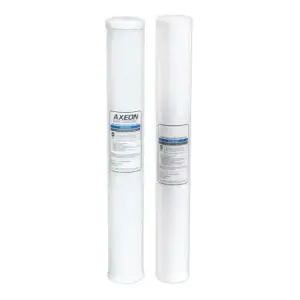
AXEON Replacement Filter Kit for Hydro Logic TALLBoy
TALLBoy-class systems handle higher daily output and see proportionally faster pre-filter wear. Inspect the sediment cartridge every 3 months under continuous use and plan pre-filter replacement at 6-month intervals. If your feed water is particularly hard or high in particulates, schedule a sediment check every 6 weeks.
Hydro Logic BIGboy — Mid-Commercial Workhorse
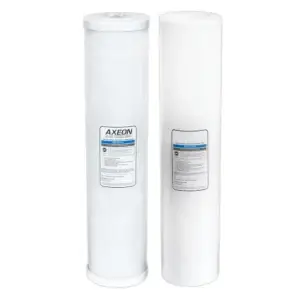
AXEON Replacement Filter Kit for Hydro Logic BIGboy
BIGboy systems run hard in mid-sized commercial facilities. High-capacity carbon and sediment cartridges are included in this kit. At commercial throughput, run a formal filter log — record the date of each replacement and pre/post-filter TDS at ever
Browse the full AXEON Water Technologies collection for additional standalone membranes, individual cartridges, and system components.
Extending Filter Life Without Cutting Corners
Several practices legitimately extend filter intervals without compromising water quality:
Flush the membrane regularly. If your system has a flush valve, a 30-second flush at the start of each fill session pushes concentrated brine off the membrane surface and significantly extends membrane life. This feature is built into GrowoniX systems; it can be added to other setups with an inline flush kit.
Shut down during extended downtime. RO membranes don’t benefit from sitting in static water for weeks. If your facility has an off-season or extended break between runs, drain the membrane housing or store the membrane in a food-safe preservative solution.
Add antiscalant in hard water regions. High-calcium, high-magnesium feed water deposits scale on the membrane surface, reducing rejection efficiency and flow over time. AXEON S-200 Membrane Antiscalant is a liquid scale inhibitor formulated for continuous low-dose injection ahead of the membrane — a practical solution for operations in hard water service areas where membrane life is consistently shorter than expected.
Don’t conflate “looks clean” with “is clean.” Carbon filters exhaust at the molecular level — they show no visible contamination when spent. A carbon block that looks pristine after 14 months has almost certainly lost its capacity to adsorb chlorine. Replace on schedule regardless of appearance.
RO System Upgrades Worth Considering
If you’re already ordering replacement kits, this is a good time to evaluate whether your system is fully optimized for your current operation.
UV sterilization. An RO membrane rejects dissolved solids but doesn’t eliminate bacteria or algae. Stored post-RO water in large tanks, or systems that have experienced recurring reservoir-borne pathogen issues, benefit from a UV sterilizer installed inline post-membrane. The AXEON UV Sterilizer Light, 1 GPM is a compact point-of-use unit designed for inline installation — it sterilizes without chemistry, leaving water quality unaffected.
Booster pumps. Low inlet pressure (below 40 PSI) reduces membrane efficiency, slows output, and shortens membrane life. A booster pump restores rated system performance and pays for itself in extended membrane intervals. If fill times are slower than when the system was new and pressure is confirmed low at the inlet, a booster pump is the correct fix.
Deionization polishing. Specialty crop applications and programs requiring a true zero-TDS baseline benefit from a DI polishing stage installed post-RO. AXEON’s mixed bed deionization systems reduce permeate TDS from the typical 5–30 ppm RO output down to under 1 ppm — as clean as lab-grade water for precision nutrient formulation.
For Commercial Operations
Commercial grows running AXEON HF-Series, NL-Pro, or multi-skid configurations should integrate filter replacement into formal SOPs rather than relying on symptom-based maintenance. Filter failure in a commercial water system doesn’t announce itself gracefully.
Recommended commercial filter service protocol:
- Maintain a filter service log with pre- and post-membrane TDS readings at every replacement
- Inspect sediment cartridge at 45 days for high-throughput systems
- Replace pre-filters at 90 days under continuous operation
- Test membrane rejection rate at 6-month intervals and document results
- Keep one spare pre-filter set on the shelf at all times to eliminate delay
For antiscalant injection programs, chemical injection system sizing, or custom multi-stage system design, the Hydrobuilder commercial team can provide a full system review and parts consultation — contact us at hydrobuilder.com/pages/commercial.
Understanding how source water quality integrates with automated nutrient programs at scale is covered in our fertigation and nutrient delivery guide. Clean, consistent source water is the foundation that makes precision EC dosing reproducible.
Why Shop at Hydrobuilder
Hydrobuilder carries one of the broadest selections of horticulture-grade water treatment parts in North America, including AXEON replacement kits matched to the most common grow room RO systems by model. We only sell genuine AXEON components at competitive pricing, with technical support for system troubleshooting, filter selection, and upgrade planning.
If you’re unsure which kit fits your system, or if you’re evaluating a system upgrade, our team is available by phone or through our commercial contact page. We’re not going to push you to a kit that doesn’t fit your setup.
Visit the AXEON Water Technologies collection to browse replacement kits, standalone membranes, individual filter cartridges, and accessories.
RO Filter Replacement Guide for Grow Rooms: FAQs on Membrane Life, TDS, and Maintenance Schedules
Q: How often should I replace reverse osmosis filters in a grow room?
A: Pre-filters (sediment and carbon) should be replaced every 6–12 months depending on feed water quality and daily output volume. Inspect the sediment filter at 3 months — if it shows significant discoloration or compression, you’re in a high-particulate environment and should shorten your rotation. RO membranes in active grow room use typically need replacement every 12–24 months, confirmed by rejection rate testing rather than calendar alone.
Q: How do I know when my RO membrane needs to be replaced?
A: Test permeate TDS monthly and calculate your rejection rate: divide permeate TDS by feed water TDS, subtract from 1, and multiply by 100. A healthy membrane rejects 94–99% of incoming dissolved solids. When rejection rate drops below 90% — or when permeate TDS climbs 15+ ppm above your established baseline — replacement is overdue. Reduced flow rate and slower tank recovery are also early indicators.
Q: What happens if I don't change my RO filters on schedule?
A: A clogged sediment filter forces the carbon block to work harder, reducing its contact time and effectiveness. An exhausted carbon block allows chlorine or chloramines to reach the RO membrane, causing accelerated degradation of the thin-film membrane material. A failed membrane passes dissolved solids, heavy metals, and other contaminants that directly affect your nutrient solution’s EC baseline and crop health. The cascade typically ends in an expensive membrane replacement that a timely pre-filter swap could have prevented.
Q: My RO water used to read 5 ppm. Now it reads 30 ppm. What's wrong?
A: Two possibilities: the RO membrane is losing rejection efficiency from age, scale buildup, or chlorine damage, or the carbon pre-filter has exhausted and is allowing chlorine to degrade the membrane. Start by testing your feed water TDS, calculating current rejection rate, and inspecting the pre-filters. If pre-filters are within their service window and rejection rate is below 90%, the membrane needs replacement.
Q: What's the difference between a sediment filter and a carbon filter in an RO system?
A: The sediment filter (typically 5-micron polypropylene) physically captures particulates — silt, rust, sand, fine debris — before they can clog or abrade downstream components. The carbon block removes dissolved chemical contaminants, primarily chlorine and chloramines, through adsorption. Both stages run before the RO membrane, and both must be in good condition for the membrane to function at its rated rejection rate and lifespan. Sediment filters wear by physical clogging; carbon filters exhaust chemically and show no visible signs of spent capacity.
Q: Do I need a booster pump for my RO system?
A: If your incoming water pressure consistently runs below 40 PSI, yes. RO membranes are rated at standard inlet pressure (typically 60 PSI), and reduced pressure directly reduces both rejection efficiency and output flow rate. Symptoms of low pressure include slow fill times and permeate TDS higher than expected for your membrane. A pressure gauge at the system inlet confirms whether a booster pump is needed or whether other maintenance should be addressed first.
Q: Can I extend my RO membrane life?
A: Yes — several practices make a real difference. Regularly flushing the membrane pushes concentrated brine off the surface, reducing scale accumulation. Replacing pre-filters on schedule prevents chlorine exposure to the membrane. In hard water areas, antiscalant dosing ahead of the membrane inhibits scale deposition. Shutting down and draining the system during extended downtime avoids biological growth in standing water. Consistent pre-filter maintenance is the single highest-leverage factor.
Q: Does a UV sterilizer replace the RO membrane?
A: No. UV sterilization and RO filtration address different problems. The RO membrane rejects dissolved solids — minerals, metals, salts. The UV sterilizer inactivates biological threats — bacteria, algae, protozoa. Neither replaces the other. In operations where post-RO water is stored in large tanks before use, or where biological contamination of the reservoir is a recurring issue, UV sterilization post-membrane adds a layer of protection that filtration alone can’t provide.
Q: Which AXEON replacement kit fits my Hydro Logic system?
A: AXEON makes model-specific kits: the smallBoy kit for entry-level systems, the Stealth-RO150 kit (which includes both pre-filters and the membrane for a complete annual service), the TALLBoy kit for higher-throughput systems, and the BIGboy kit for commercial-scale use. If you have a GrowoniX or another brand, contact our team for parts guidance — we can confirm which AXEON membrane and filter dimensions are compatible with your system’s housings.
Q: What's a good TDS meter for monitoring my RO system?
A: For grow room use, a meter that reads both EC and TDS simultaneously is most practical. The Milwaukee EC60 PRO measures EC, TDS, and temperature with a replaceable probe — giving you the numbers needed to calculate rejection rate, confirm source water quality, and verify that your nutrient solution EC is accurate before adding inputs. Log readings consistently after every filter service to build a baseline trend.