

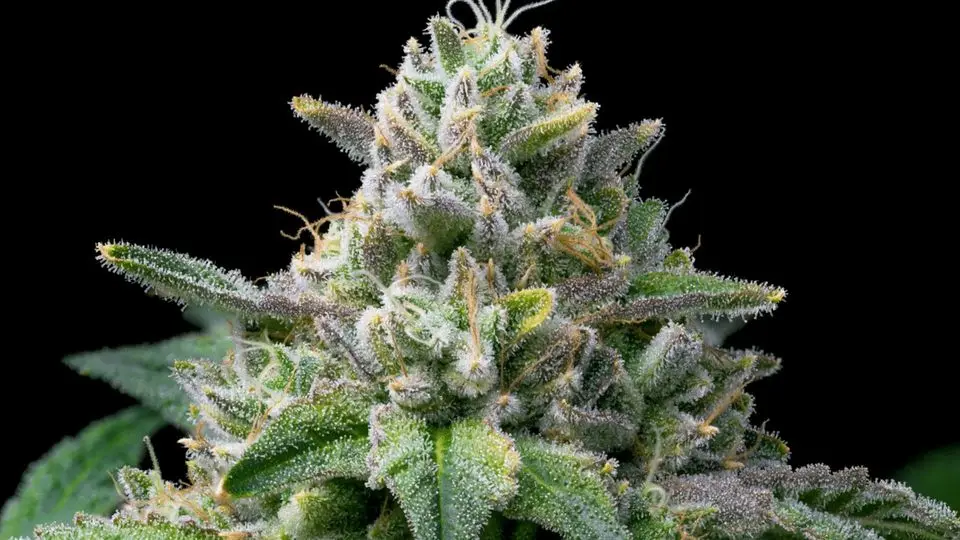
Terpenes are responsible for much of the aroma, flavor, and perceived character that separates a decent harvest from truly standout flower. If you’ve been growing for a season or two and you’re getting acceptable yields but flat, muted flower, the limiting factor is often how you managed terpene production and preservation — not just the cultivar you ran.
This guide covers eight techniques that can meaningfully support higher terpene concentration, from choices you make before you plant to how you handle the drying room. Whether you’re running a home tent or a multi-light commercial facility, the biological principles are the same even if the equipment scales up.
Home growers and commercial cultivators can both benefit from these strategies. If you’re scaling up to a dedicated facility, the commercial applications are addressed at the end of each section and in the commercial workflow section below.
What Are Terpenes, and Why Do They Matter?
Terpenes are aromatic organic compounds produced in the trichomes — the resin glands covering your flower. Many plants produce them, but cannabis expresses an exceptionally wide range, with more than 100 identified terpenes contributing to distinct sensory and potential entourage effects. Myrcene is associated with earthy, musky notes, limonene with citrus, and pinene with sharp, pine-like aromas.
From the plant’s perspective, terpenes play defensive and protective roles — helping deter some herbivores and insects and contributing to protection from environmental stresses such as high light and UV exposure. That evolutionary biology is something growers can leverage strategically with light, nutrition, and environmental control.
What’s the difference between terpenes and terpenoids? Terpenes are the volatile hydrocarbons produced by the living plant, while terpenoids are oxidized derivatives that form as plant material is dried, cured, and stored. For practical growing purposes, you’re mainly influencing terpene production during the grow cycle, while post-harvest handling influences how those terpenes convert and are preserved.
Technique 1: Start with Genetics Built for Terpene Expression
No technique in this guide will overcome a genetically low-aroma starting point. Terpene potential is largely determined at the genetic level — the ceiling is set before you plant a seed or rooted cutting. Choosing cultivars bred and selected for distinct, complex aromatic profiles is often the single most impactful decision you make.
Look for cultivars with documented third‑party terpene test data where possible, not just marketing language. Reputable breeders and producers often publish lab‑verified terpene profiles, even though exact percentages can vary by grower and environment. If a strain repeatedly tests in the 2–3% total terpene range in well‑run rooms, that is a useful signal of potential, but real‑world outcomes will still depend on your environment and post‑harvest process. If the information isn’t available, ask growers in your network for firsthand feedback — aroma and flavor are traits people tend to remember and discuss.
For commercial growers, this also means deliberately building a genetic library with variety. Consumers are not all seeking the same profile, and having strains that anchor different terpene expression — myrcene‑dominant, limonene‑dominant, terpinolene‑heavy, etc. — gives you broader market coverage and more flexibility with product tiers.
Technique 2: Build the Nutrient Profile That Supports Secondary Metabolite Synthesis
Most grow guides treat nutrition as background context for terpene production, but mineral balance and timing have a direct influence on secondary metabolite capacity. Terpenes are secondary metabolites — compounds the plant tends to invest in once primary growth and structural needs (nitrogen, phosphorus, potassium, calcium, and others) are adequately met. Driving vegetative growth too aggressively into late flower, especially with excess nitrogen, can reduce the plant’s emphasis on resin and terpene production.
During flowering, the plant typically benefits from relatively higher potassium and phosphorus to support floral development, along with sufficient sulfur, which plays a role in several secondary metabolite pathways, including those that influence aroma compounds. This underlying chemistry is one reason some bloom formulations and feeding strategies tend to correlate with better aroma and flavor when managed correctly.
HGV Dry – Flower is formulated as a sulfate‑based bloom nutrient, which supports robust flower formation and provides sulfur-containing anions that can contribute to secondary metabolism; many commercial operations report strong terpene performance with this style of program, though final results still depend heavily on environment and technique. It is a professional dry nutrient line often run through dosing systems at scale, and the same underlying chemistry is applicable to small home gardens when dosed appropriately.
Avoid overfeeding nitrogen through late flower. Elevated nitrogen inputs during the generative phase tend to push vegetative growth and protein synthesis at the expense of dense, resinous flowers and can lead to harsher smoke if nutrients remain in plant tissue at harvest. Transitioning cleanly to a bloom‑specific formula at the appropriate stage is not only about the NPK ratio — it’s about creating the conditions where the plant can allocate more resources toward the compounds you care about in the finished product.
For organic soil grows, supplementing with carbohydrate sources during flowering supports microbial activity and feeds the soil food web, which in turn can improve nutrient cycling and support more complex terpene expression in living soils.
Rhizoflora Terpinator is a purpose‑built additive marketed to support essential oil production; many growers use it in both soil and hydroponic systems as part of a broader strategy to enhance aroma and resin, though results, as with all additives, can vary by cultivar and program.


Technique 3: Use Low-Stress Training to Maximize Light Exposure and Trigger Defense Responses
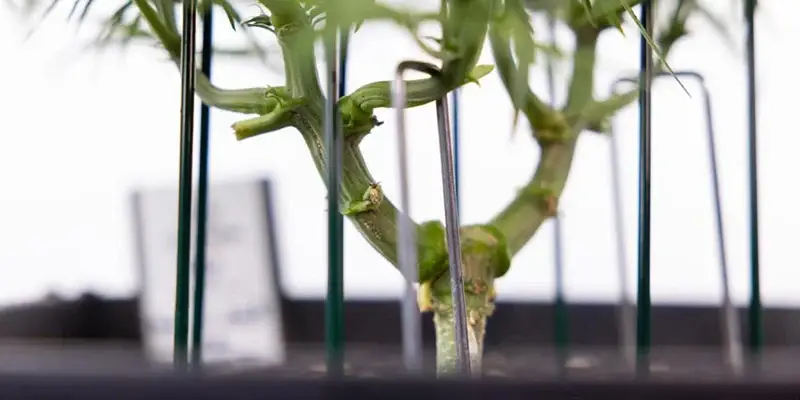
Low‑stress training (LST) can support terpene production through two main mechanisms: improved light distribution and controlled stress signaling. Both influence trichome development, which is where terpenes are synthesized and stored.
Light distribution: Trichomes and the cannabinoids and terpenes within them are influenced by light exposure and intensity. A plant with a flat, open canopy where more bud sites receive quality light typically produces denser and more uniform resin coverage than one with a tall, untrained structure where lower sites remain heavily shaded. Branch pinching, bending, and tying techniques flatten the canopy and can help more of the plant benefit from your primary light source.
Stress signaling: When you gently pinch or bend a branch, the plant experiences a mild mechanical stress and responds by redirecting hormones and often increasing local resin production as part of its defense response. Outdoor plants, which encounter more variable wind, light, and temperature conditions, often show strong terpene expression under good management, and controlled indoor training seeks to tap into some of that same biology without causing damage.
Defoliation of lower, light‑starved branches during early flower helps remove unproductive tissue that drains energy, opens up airflow, and can provide a modest stress cue that shifts the plant’s focus to well‑lit tops. Learn more about the full range of techniques in our guide to plant training methods.
The key word in “low‑stress” is low. Excessive or late stress — especially heavy training or defoliation deep into flower — can slow development, stunt yield, and physically damage trichomes you have already grown. Apply training techniques mainly during veg and very early flower, and ease off during the final 3–4 weeks so you are not disrupting ripening.
Technique 4: Dial in Your Flowering Environment for Terpene Production
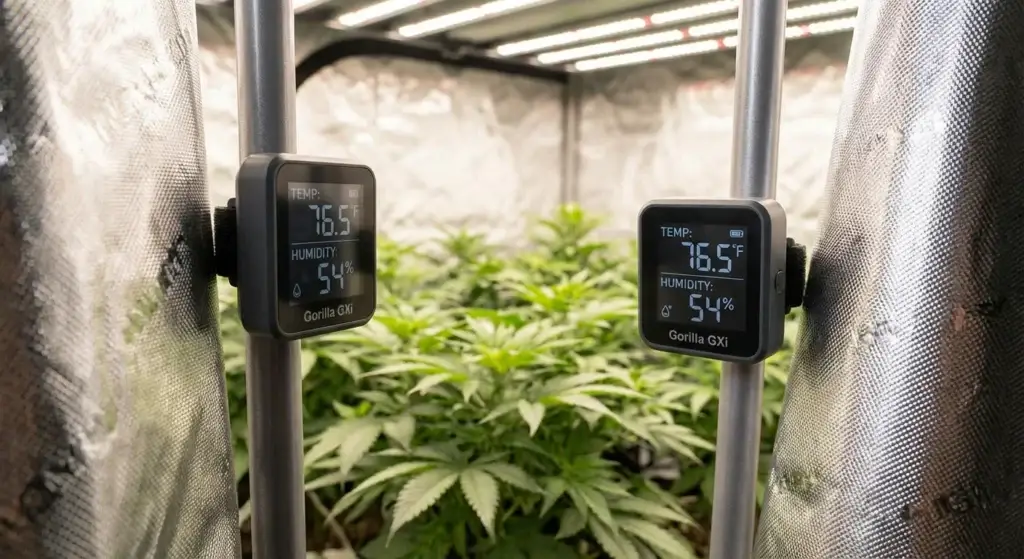
High temperatures and poor humidity control are major risk factors for terpene loss. Terpenes are volatile organic compounds and will gradually evaporate faster as temperature rises, with different molecules volatilizing at different thresholds. Keeping your canopy and dry‑room environment on the cooler side during late flower helps preserve what you have produced.
It is common practice among quality‑focused growers to keep late‑flower room temperatures in the upper 60s to low 70s Fahrenheit to protect delicate volatiles, even though specific “cutoff” temperatures for compounds like myrcene are much higher in terms of boiling point. Rather than focusing on a single exact number, the goal is to avoid sustained hot conditions that accelerate evaporation and to maintain stable, moderate temperatures.
Temperature targeting during late flower:
- Day temperatures: 68–75°F
- Night temperatures: 60–65°F (final 4 weeks)
- A modest 5–15°F day‑night differential can provide a mild “cool‑night” signal that is associated anecdotally with richer color and aroma in many indoor and outdoor programs, provided overall plant health remains strong.
Humidity for terpene production:
- Maintain 50–60% RH through most of flowering
- In the final 2–3 weeks, some growers deliberately drop humidity to 30–40% to stress the plant and trigger additional resin production. This requires a capable dehumidifier — you need to be able to hold the lower target without swings
- Do not drop humidity below 30%, which risks tip burn and can create conditions hospitable to late-stage powdery mildew
Vapor pressure deficit (VPD) management ties temperature and humidity together. Running stage‑appropriate VPD helps keep stomata functioning optimally and supports efficient metabolism without creating excessive stress that could reduce quality. Read our VPD guide for stage‑by‑stage targets.
Technique 5: Leverage Light Spectrum — Including UV-B
Full‑spectrum lighting is more than a marketing phrase when it comes to secondary metabolites. Cannabis and other plants evolved to produce resin and terpenes partly in response to higher‑energy wavelengths, including ultraviolet radiation, as a protective mechanism against UV damage. Standard HPS and some broad‑spectrum LEDs provide limited UV, so targeted supplementation has become a tool in many advanced rooms.
Several controlled studies have reported that supplemental UV, particularly UV‑B, can increase trichome density and, in some cases, THC concentration, although the effects on total yield and full terpene profiles can vary with dose, duration, and cultivar. The response is dose‑dependent: too little UV has minimal effect, while too much can stress or damage plants.
Practical parameters for UV supplementation:
- Delivery: Many growers aim for relatively low UV‑B flux, introduced gradually during late flower; some research trials have tested modest UV‑B doses over 2–4 weeks to observe effects on cannabinoids and morphology.
- Avoid UV‑B during early veg — seedlings and young plants are more sensitive and can be damaged by high‑energy UV.
- Many modern LED fixtures include dedicated UV channels; always follow your light manufacturer’s recommendations and start at the low end of any suggested UV intensity range to gauge plant response.
Our UV light for plants guide covers this topic in more detail, including how different light technologies deliver UV and what to consider when shopping.
Technique 6: Flush Before Harvest
Flushing — feeding only plain, pH‑adjusted water (or a low‑EC finishing solution) for the final days before harvest — is widely used by growers to help reduce residual nutrients in the root zone and plant tissue. Many cultivators report that an appropriate flush leads to smoother smoke and a cleaner expression of the plant’s inherent terpene profile, particularly in salt‑based systems, though formal research on terpene and flavor outcomes is still evolving and somewhat mixed.
This practice applies most directly to synthetic nutrient programs, where mineral salt accumulation in growing media and plant tissue can be more pronounced. For living organic soil, nutrient release is more gradual and biologically mediated, so flush periods are often shorter or, in some regenerative systems, minimal, depending on how “hot” the soil is and how close you are to senescence.
During the flush, use pH‑stabilized water in your normal range (approximately 5.8–6.2 for hydroponics and soilless media, and around 6.2–6.8 for soil‑based systems) so you maintain root function while EC declines. Products like Athena Blended Cleanse are enzyme‑ and oxidizer‑based flushing agents designed to help break down biofilm, salt, and mineral deposits in irrigation lines and media, which can support a more thorough clean‑out when used as directed.
Scientific trials have shown that varying flush duration may have limited impact on measured cannabinoid and terpene levels in some scenarios, but sensory tests sometimes still favor flushed samples for taste and ash quality. Our dedicated guide on flushing plants covers the full methodology by medium type.
The debate about whether flushing is universally necessary or scientifically “required” is ongoing, but the practical argument for many growers is straightforward: reducing excess nutrient levels near the end improves burn quality and lets the plant’s own chemistry come through more cleanly.
Technique 7: Harvest at Peak Trichome Maturity
Timing your harvest to peak trichome ripeness is one of the most direct ways to capture maximum terpene and cannabinoid content. Terpenes and cannabinoids are concentrated in the glandular trichome heads, so harvesting too early leaves development on the table, while harvesting too late increases oxidative degradation.
The standard practical tool is a loupe or microscope with at least 60x magnification. You are looking for trichomes that are predominantly cloudy or milky, with only a small proportion beginning to turn amber — this window is widely associated with peak terpene and cannabinoid content before significant degradation to compounds like CBN begins. Heavy ambering generally indicates that THC and terpenes have been breaking down, often correlating with a more sedative effect and less vibrant aroma.
The Growers Edge Illuminated Microscope (60–100x) provides enough magnification to clearly see trichome head color and structure on both calyxes and sugar leaves. Checking multiple parts of the plant helps you build a more complete picture of overall ripeness instead of relying on a single cola.
For in‑depth guidance on reading trichomes and timing your cut, see our complete harvest guide.

Technique 8: Dry Low and Slow — Terpene Preservation Doesn't Stop at Harvest
Everything you did in the grow can be compromised in the dry room. Post‑harvest is where many growers lose a large fraction of their terpene content through excess heat, aggressive airflow, or rushed timelines.
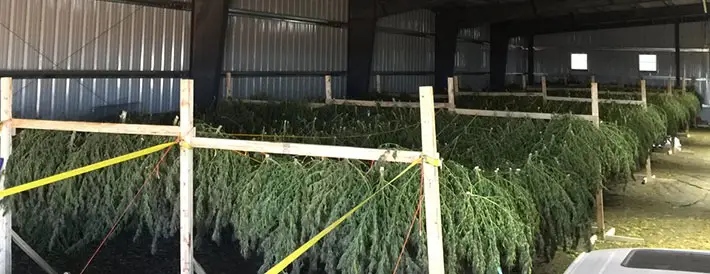
Terpenes are volatile organic compounds, so both temperature and airflow matter. Warm, dry conditions with direct air on the flowers will drive off volatiles quickly and produce a faster, harsher dry. A slower dry — often in the 10–14 day range for whole‑plant hang drying under controlled conditions — is widely favored for preserving aroma and achieving an even moisture gradient, even though exact timing will vary with bud size, density, and environment.
Optimal drying conditions:
- Temperature: 60–65°F
- Humidity: 55–65% RH
- Airflow: gentle, indirect circulation — fans should move air in the room but not blow directly on hanging flower.
- Light: complete darkness or very low light, as light exposure also contributes to terpene and cannabinoid degradation over time.
- Duration: often 10–14 days for whole‑plant hang dry, with the understanding that denser canopies or very humid climates may take longer and small branches will snap rather than bend when the dry is complete.
After drying, transfer to sealed containers and begin curing — this is where terpenoids continue to develop as residual moisture equalizes across the flower. Burp containers regularly at first (often daily for the first couple of weeks) to release built‑up moisture and gases while keeping conditions within a gentle, stable range. Read our full guide on drying and curing for complete methodology.
Building a Terpene-Forward Program: For Commercial Operations
Commercial cultivators face a different optimization challenge than home growers — the biology and physics are the same, but the stakes are higher and processes need to be repeatable across rooms and cycles.
Environmental control at scale: Achieving consistent day‑night temperature and humidity targets across many lights and plants requires robust HVAC and dehumidification. Systems such as mini‑splits, VRF, or dedicated grow room air handlers, paired with appropriately sized dehumidifiers, allow you to maintain cooler late‑flower conditions and stable RH in the 40–60% range depending on stage. The Quest Hi-E Dry 195 Pint Dehumidifier is an example of a mid‑size unit that can help maintain lower humidity setpoints in flowering rooms; its 115V configuration makes integration easier in many existing facilities.
Nutrition at scale: Commercial operations running HGV Dry – Flower through proportional injector systems like Dosatron can take advantage of both the sulfate‑rich flowering formula and the efficiency of a concentrated dry nutrient program, which generally lowers cost per gallon compared to many liquid bloom lines at high volume. The combination of a well‑designed bloom nutrient, consistent EC and pH management, and careful environmental control supports repeatable terpene and cannabinoid results across rooms.
Genetic library management: At the commercial level, terpene data should inform strain selection as directly as yield and cannabinoid data. Work with independent lab testing to build a performance history for each cultivar you run in your specific environment, noting not just total terpene percentage but also the profile composition and how it responds to your standard operating procedures. Terpene results from other facilities are useful reference points, but your own R&D runs and in‑house data are what ultimately matter.
Post-harvest handling: Terpene preservation extends through drying, curing, trimming, packaging, and storage. Designing drying rooms with adequate airflow, dehumidification, and gentle temperature control is essential to scaling quality. Consult our guide on how to increase cannabis yield for the broader cultivation picture, including environmental design and workflow considerations alongside terpene‑focused quality goals.


Shop Terpene-Enhancing Products at Hydrobuilder
Ready to put these techniques into practice? Browse our curated selection of organic nutrients and terpene enhancers, sweeteners and carbohydrate supplements, flushing agents, and trichome microscopes to build out a terpene‑conscious program suited to your grow. Have questions about dialing this in for your situation?
Contact our grow experts at 888-815-9763 for personalized support.
FAQs on How to Increase Terpenes
What are the best nutrients to increase terpene production?
A: Bloom‑phase nutrients that emphasize appropriate potassium and phosphorus while supplying sufficient sulfur support the plant processes behind flower formation and secondary metabolite production, including terpenes. During flowering, gradually reducing nitrogen relative to the vegetative phase and shifting to a formula engineered for generative development helps the plant prioritize dense, resinous buds instead of excess leaf. A sulfate‑based bloom nutrient provides sulfur in forms the plant can use and can support terpene biosynthetic pathways when paired with good environmental control.
For soil growers, supplementing with carbohydrate sources feeds beneficial microbes, which can improve nutrient availability and contribute to more complex terpene expression in living or biologically active media. Purpose‑built terpene enhancers like Rhizoflora Terpinator are formulated and marketed to support essential oil production and can be integrated into late‑flower nutrient programs in both soil and hydroponic systems, though performance will depend on your overall setup and genetics.
Q: How does temperature affect terpene production?
A: Temperature affects terpenes primarily through synthesis efficiency and volatility. During the final weeks of flowering, many quality‑focused growers run daytime temperatures around the upper 60s to low 70s Fahrenheit and allow nighttime temperatures to drop several degrees, which can support color and aroma while keeping volatilization in check. Sustained canopy temperatures well above the mid‑70s accelerate the evaporation of volatile terpenes, and very hot environments can significantly reduce what remains in the dried flower even if the plant survives.
Q: Does UV light increase terpenes?
A: Supplemental UV, particularly UV‑B, can stimulate resin and secondary metabolite production by triggering protective responses similar to those seen in high‑UV outdoor environments, although responses vary by cultivar and intensity. Research and grower experience suggest that modest UV‑B exposure for a limited period during late flower can increase trichome density and sometimes cannabinoid concentration without severely stressing plants when carefully managed. Always start conservatively, follow fixture‑specific guidelines, and avoid strong UV‑B on young plants.
Q: Does flushing actually improve terpene expression?
A: In synthetic nutrient programs, flushing with low‑EC, pH‑balanced water for a period before harvest is widely used to reduce residual nutrient levels in the medium and plant tissue, and many growers report smoother smoke and cleaner flavor after an appropriate flush. Controlled trials have shown that different flush durations may not dramatically change measured terpene concentrations in all cases, but there can still be perceived differences in taste and ash quality between flushed and non‑flushed samples. Organic programs in well‑balanced living soil often rely on shorter or minimal flush periods, because nutrient availability is naturally tapering as the plant senesces.
Q: Can you increase terpenes during drying and curing?
A: You cannot create new terpenes after harvest, but you can strongly influence how many are preserved and how they transform. The drying environment is where most post‑harvest terpene loss occurs, especially when temperatures are high, humidity is low, or airflow is directly on the buds. Slow drying at around 60–65°F and 55–65% RH over 10–14 days, followed by a controlled cure in sealed containers, helps preserve the terpene profile that was present at harvest far better than a rapid, hot dry.
Q: What is the difference between terpenes and terpenoids?
A: Terpenes are the aromatic hydrocarbons synthesized by the living plant, while terpenoids are modified molecules formed when those terpenes undergo oxidation and other chemical changes during drying, curing, and storage. For cultivation, the primary goal is maximizing healthy terpene production on the plant; the conversion to various terpenoids occurs naturally afterward and is influenced by how you dry, cure, and store your flower.
Q: How does low-stress training increase terpenes?
A: LST can support higher terpene levels through better light exposure and controlled mechanical stress. Opening the canopy exposes more bud sites to productive light, which tends to increase trichome formation where terpenes are produced. Gentle bending and pinching also create mild stress that can up‑regulate protective resin production without the severe setbacks seen with heavy damage, so long as it is done early and not overdone late in flower.
Q: Do organic nutrients produce more terpenes than synthetic nutrients?
A: Organic, living soil systems often produce notably rich and complex terpene profiles, likely because of the diverse soil microbiome and more gradual nutrient availability, which can support robust secondary metabolism. However, well‑managed synthetic programs with appropriate bloom ratios, clean irrigation, and tight environmental and post‑harvest control are also capable of excellent terpene expression. The nutrient type is less important than overall plant health, balanced fertility, and protecting terpenes with good environmental and post‑harvest practices.