

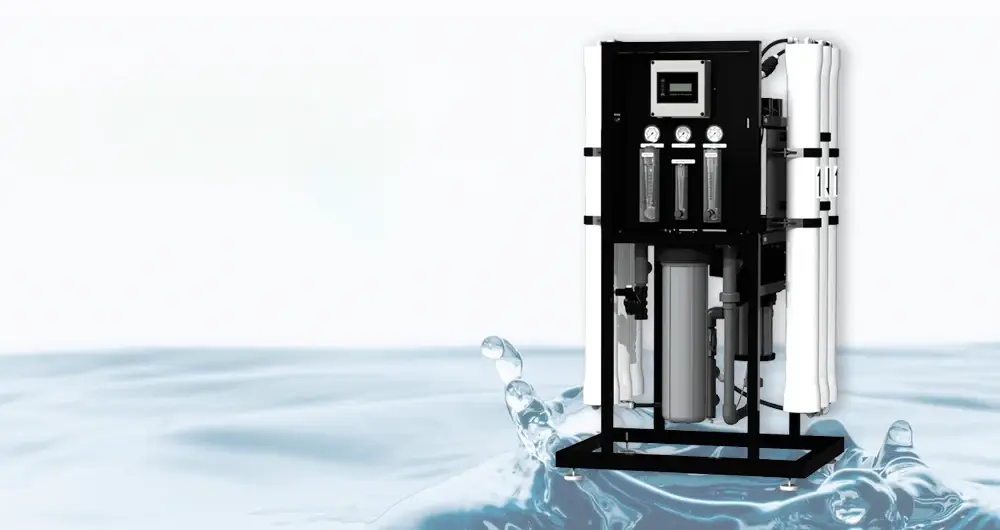
Water quality is the foundation of every nutrient program — and the best RO system for growing plants is the single most impactful equipment decision many growers overlook. Reverse osmosis removes chlorine, chloramines, heavy metals, and dissolved solids that interfere with nutrient uptake, giving you a verified clean slate every time you mix a reservoir or fill an irrigation system.
Whether you’re running a single grow tent or managing a multi-room commercial facility, there’s a purpose-built RO system for your scale. This guide covers every tier — from 150 GPD hobby filters to 16,000+ GPD hyperfiltration systems — with sizing logic, efficiency benchmarks, and honest tradeoff assessments.
Hobby growers benefit from consistent, predictable water that makes nutrients perform as labeled. Commercial operators require systems that sustain multi-room irrigation cycles, maintain efficiency ratios under continuous load, and integrate with automated fertigation infrastructure.
Why Water Quality Matters More Than Most Growers Realize
The Case Against Tap Water in Controlled Growing
Tap water isn’t designed for precision agriculture. Municipal water supplies routinely contain chlorine and chloramines (added for pathogen control), fluoride, sodium, carbonates, and — depending on your region — significant calcium and magnesium from hard water geology.
None of these compounds are inherently dangerous to humans, but several directly interfere with plant physiology at the concentrations used in hydroponic nutrient programs. Chlorine inhibits beneficial microbial activity in the root zone. Chloramines are harder to off-gas than chlorine and require active filtration to remove. Hard water calcium and magnesium displace other nutrient cations at root uptake sites, causing apparent deficiencies even when your feed chart looks correct.
Starting with tap water means adding an unmeasured variable to a system where precision is the whole point.
The Nutrient-Control Argument
When you grow in coco coir or a recirculating hydroponic system, you’re dialing in nutrients to parts-per-million accuracy. Tap water in many regions comes in at 150–400 PPM before you add a single nutrient — meaning your target EC is a different number depending on your water source, your municipality’s treatment schedule, and the season.
An RO system brings source water to near-zero PPM (typically under 15–25 PPM when functioning correctly), which means every nutrient you add is fully accounted for. This is the only way to run a repeatable, data-driven grow — especially when using precision programs like HGV Nutrients that are calibrated for clean water inputs.
RO vs. Dechlorinator: What's the Actual Difference?
Sediment and dechlorinator filters remove particulates and chlorine but do not reduce dissolved solids. Your PPM stays largely the same — you’ve removed the most reactive compounds, but the mineral load remains. For growers dealing primarily with chloramine or sediment issues and running relatively soft municipal water, a dechlorinator may be sufficient.
For most growers — especially those in hard water regions or running hydroponic systems — RO is the right call. It accomplishes everything a dechlorinator does while stripping dissolved minerals to near-zero, giving you full control over water chemistry from the first gallon.
How to Size an RO System for Your Grow
GPD Is a Rating, Not a Promise
Every RO system is rated in gallons per day (GPD) under standardized test conditions: 77°F feed water temperature, 77 PSI inlet pressure. Real-world output is typically 25–40% lower depending on feed water temperature and pressure. Cold water significantly reduces membrane throughput — a 150 GPD system may deliver significantly lower output in a cold utility room during winter.
When sizing your system, use this framework:
| Operation Size | Daily Water Need | Recommended System |
|---|---|---|
| 1–4 plant hobby setup | 5–15 gallons/day | 150–300 GPD |
| Small commercial (4–8 lights) | 30–80 gallons/day | 400–870 GPD |
| Mid-size commercial (8–20 lights) | 80–200 gallons/day | 1,000–1,200 GPD |
| Large commercial facility | 200–500+ gallons/day | 2,000–4,500+ GPD |
| Multi-building / industrial | 500+ gallons/day | N-Series / custom |
Efficiency Ratio: The Number Most Buyers Ignore
Every RO membrane produces two output streams: permeate (the purified water you use) and concentrate (the rejected waste stream). The ratio between these matters — both for operating cost and water stewardship.
Older or lower-end systems operate at 3:1 or 4:1 waste-to-product ratios, meaning for every gallon of purified water you get, three to four gallons go down the drain. Modern purpose-built horticultural systems have improved this significantly — the best commercial units achieve 2:1 or better, and some operate near 1:1 under optimal conditions.
When running a system eight-plus hours per day, this ratio compounds quickly. Calculate your expected daily waste volume before buying.
Our Recommended RO Systems by Scale
Hydrobuilder partners with AXEON Water Technologies as our preferred RO brand — an engineering-driven manufacturer with USA-based production, NSF-certified components, and a full range from entry-level to large commercial. We’ve selected additional systems from Hydro Logic and GrowoniX where they offer meaningful differentiation by scale or application.
AXEON RF-5000 — Best Entry-Level System for Hobby Growers
Best for: 1–4 plant setups, grow tent environments, growers new to RO filtration
The AXEON RF-5000 is a compact 5-stage system that delivers clean, low-TDS water for hobby growers without the complexity or footprint of a high-flow commercial unit. The 5-stage filtration process handles sediment removal, carbon pre-filtration, the RO membrane, and post-filtration in a simple wall-mount package.
At this scale, you’re not running the system continuously — you’re filling a reservoir or mixing concentrate periodically throughout the week. The RF-5000 handles this cleanly and pairs well with a small storage tank or float valve setup.
Key features: 5-stage filtration, compact wall-mount design, automatic shut-off valve, push-fit fittings
Hydro Logic Stealth-RO150 — Best Mid-Range Hobby System
Best for: 4–8 plant setups, tent growers scaling up, soil and coco grows with hard water
The Hydro Logic Stealth-RO150 is one of the most established purpose-built horticultural RO systems available. At 150 GPD, it produces enough water for a small multi-light setup without the infrastructure requirements of a commercial unit.
It filters up to 98% of contaminants and operates at either a 2:1 or 1:1 waste-to-clean ratio depending on feed water quality. The optional KDF/CAT filter upgrade is particularly valuable for growers dealing with chloramines, heavy metals, or iron — contaminants standard carbon pre-filters handle inconsistently.
Available add-ons include a deionization kit, booster pump, UV sterilizer, and TDS meter. The DI upgrade is worth considering for growers targeting sub-5 PPM input water for sensitive strains or demanding nutrient programs.
AXEON LP Series — Best Light Commercial System
Best for: Small commercial grows, 4–12 light rooms, retrofit installations, operations needing scalable GPD
The AXEON LP Series is engineered specifically for light commercial applications where a hobby filter is undersized but a full industrial unit is overcomplicated. Available in 350 GPD, 500 GPD with pump, and 700 GPD configurations, the LP Series uses AXEON TF-3012 500 membrane elements, Pentair Slim Line filter housings, and a full pre-filtration stage with both sediment and carbon block filters.
The wall-mount or free-standing design is practical for utility rooms and equipment corridors common in converted commercial spaces. Push-pull fittings with locking safety clips simplify maintenance without specialized tools. The automatic shut-off valve protects the system during idle periods.
At 500–700 GPD, this system supports irrigation for small commercial facilities where continuous low-volume delivery is the norm rather than batch-filling reservoirs.
Available models: 350 GPD | 500 GPD with pump | 700 GPD
AXEON Hydro RO 750 — Best High-Flow Mid-Commercial System
Best for: Mid-size commercial rooms, 8–20 light facilities, operations prioritizing efficiency and smart monitoring
The AXEON Hydro RO 750 is built around the principle that efficiency and output should scale together. Using advanced membrane technology, it achieves greater than 96% contaminant rejection at 750 GPD.
The onboard smart controller with integrated monitoring makes this a significantly more capable unit than most systems at this price point. Growers can track system performance, monitor output TDS, and catch filter degradation before it affects water quality. A compact footprint keeps it practical for commercial spaces where equipment real estate is at a premium.
Need more than 750 GPD? The optional RO-1250 Booster Pump Kit upgrades this system to 1,250 GPD output — a grow-with-you investment rather than a fixed-capacity purchase.
Key specs: 750 GPD base output, >96% contaminant rejection, smart controller with integrated monitoring, upgradeable to 1,250 GPD
Hydro Logic Evolution-RO 1200 GPD — Best Value Commercial System
Best for: Commercial growers prioritizing output per dollar, operations upgrading from a hobby filter
The Hydro Logic Evolution-RO delivers 1,200 GPD at as low as 1:1 efficiency under optimal feed water conditions — genuine commercial output at a price point accessible for operators making their first commercial-scale purchase. The included Chlorashield carbon filter provides effective chlorine removal with a 7,500-gallon filter life, keeping maintenance cycles infrequent enough to fit into normal facility schedules.
The Evolution-RO supports the full Hydro Logic upgrade ecosystem: deionization kits, UV sterilizers, booster pumps, manifold systems, TDS monitoring, pressure gauges, and float valves. This modularity lets you start with the base system and expand rather than buying a fully-loaded unit upfront.
GrowoniX EX800-HF — Best Mid-Commercial System for KDF/CAT Filtration
Best for: Mid-size commercial rooms, operations with chloramine-heavy municipal water, growers who want premium carbon filtration built in at the system level
The GrowoniX EX800-HF sits in a useful gap between the 700 GPD and 1,200 GPD tiers, producing 870 GPD with tall filter housings and a KDF/CAT premium carbon pre-filter included as standard — not an upgrade. KDF/CAT media handles chloramines, heavy metals, hydrogen sulfide, and iron more effectively than standard carbon block alone, making this the right call for operations on municipal water with complex chemistry.
The EX800-HF uses heavy-duty locking casters for repositioning, integrated pressure gauges for monitoring, and supports the full GrowoniX upgrade ecosystem including booster pumps and membrane flush kits. For commercial operations where filtration quality is the priority and the 1,200 GPD class is more than needed, this is a strong mid-tier option.
Hydro Logic HYDROID 4,500 GPD — Best Large Commercial System
Best for: Large multi-room commercial facilities, vertical farms, established CEA operations
The Hydro Logic HYDROID is a self-contained commercial water plant — 4,500 GPD output at 2:1 product-to-waste efficiency in a compact enough format to install without structural modification. It requires no pre-treatment of feed water chemistry or temperature adjustments that comparable systems often demand.
Standard equipment includes onboard TDS monitoring, input and output pressure gauges, a concentrate water recycle loop, product blend valve, and heavy-duty locking casters for repositioning during facility expansion. This is the right system when you’ve outgrown the 1,200 GPD class and need production capacity that keeps pace with a full commercial grow schedule.

For Commercial Operations: Large-Scale and Custom Systems
When standard catalog systems can’t meet your capacity or water chemistry requirements, purpose-built commercial units are the path forward. For grows requiring consistent output above 4,500 GPD, or where feed water has unusual chemistry — high iron, silica, or TDS above 2,000 PPM — a custom-engineered system delivers better long-term performance than an oversized standard unit.
AXEON N-Series and NL-Pro
The AXEON N-Series scales from 2,000 to 16,000 GPD with configurations for standard commercial through large industrial applications. The AXEON NL-Pro offers 2,000–4,000 GPD in 115V or 220V electrical configurations, making it practical for facilities where 480V service isn’t available. Both are engineered for continuous-duty commercial operation with commercial-grade components throughout.
For requirements outside standard catalog sizes — specific recovery rates, unusual feed water conditions, or integration with automation systems — contact our commercial team for a system specification and quote.
Integrating RO with Automated Fertigation
Commercial operations running high-volume RO systems typically connect output to a holding tank, then feed treated water into a dosing system for nutrient delivery. This pairing — RO plus automated fertigation — creates a fully automated water treatment and nutrient delivery chain that removes manual reservoir mixing from daily operations entirely.
Verify your RO system’s pressure output against your dosing equipment’s inlet requirements before plumbing. Most Dosatron units operate on line pressure without a separate pump, but flow rate compatibility matters for continuous-run configurations.
RO System Add-Ons Worth Considering
Deionization (DI) Kits
A DI stage polishes RO output to near-zero PPM by exchanging remaining ions. Most valuable for sensitive crops, tissue culture work, or when your RO membrane has aged and is passing more dissolved solids than ideal. The color-changing DI resin provides a visual exhaustion indicator — when it shifts from blue/green to amber, replacement time is clear.
UV Sterilizers
An inline UV sterilizer eliminates biological contaminants from purified water before it reaches your plants. Most relevant for facilities drawing from well water, those who have had bacterial reservoir issues, or operations where purified water sits in a holding tank for extended periods.
TDS Monitoring
A TDS meter at the output lets you verify membrane performance in real time. Rising output TDS is the earliest reliable indicator of membrane fouling or failure — catching this before it affects nutrient accuracy saves a crop. Several AXEON systems include onboard TDS monitoring; for systems without it, an inline meter is a low-cost addition with real practical value.


What to Look For in a Hydroponic RO System
When evaluating any RO system for growing, five criteria actually matter in practice:
- GPD output matched to real need. Always size with 30–40% headroom to account for cold water conditions and membrane aging over time.
- Waste-to-product ratio. Systems claiming 1:1 efficiency represent meaningful water savings at commercial volumes — model this against your expected daily demand before buying.
- Membrane quality and certification. NSF-certified membranes ensure rated rejection percentages are independently verified, not marketing claims.
- Upgrade ecosystem. A system with a strong add-on library — DI, UV, pump, manifold — grows with your operation instead of being replaced when your needs change.
- Serviceability. Filter housing access, replacement part availability, and documented maintenance intervals determine real long-term cost of ownership.
If you want to learn more about building a complete hydroponic operation, our Hydroponics 101 guide covers system types, feeding strategies, and environmental fundamentals. If you’re troubleshooting nutrient issues that may trace back to water quality, our guide on diagnosing nutrient deficiencies is a useful companion.
Looking for All Water Filtration Products?
By treating your water, you prevent contaminants from entering your system and give yourself a clean, repeatable starting point for every nutrient program.
Looking for Reverse Osmosis Systems Only?
Looking for All Hydroponics Products?
RO Systems & Water Filter: FAQs
Do I need an RO system for hydroponics, or will tap water work?
Tap water works in some circumstances, but it introduces variables — chlorine, chloramines, dissolved minerals, and fluctuating PPM — that undermine nutrient precision. Hard water regions are especially problematic: excess calcium and magnesium compete with other nutrients at root uptake sites, causing apparent deficiencies even on a correct feed chart. RO removes these variables entirely. At commercial scale, inconsistent source water makes data-driven nutrient programs unreliable across rooms and cycles — an RO system is a prerequisite for repeatable production outcomes.
How many gallons per day do I need for my grow?
Size your system to your daily water consumption with 30–40% overhead. Small hobby setups (1–4 plants) typically need 5–15 GPD — a 150 GPD system provides significant buffer. Small commercial rooms (4–8 lights) generally consume 30–80 gallons daily. GPD ratings are measured at 77°F and 77 PSI — cold conditions and low inlet pressure both reduce real-world output meaningfully. For operations running irrigation on timers, calculate your peak daily demand across all zones and size your RO system to refill your storage tank within an 8-hour window at reduced output.
What is the difference between an RO system and a dechlorinator?
A dechlorinator removes chlorine and sediment but leaves dissolved minerals — calcium, magnesium, sodium, carbonates — largely intact. TDS levels stay similar to your tap water. An RO membrane removes up to 96–99% of dissolved solids in addition to chlorine and organics, producing near-pure water under 25 PPM. For hard water areas or any hydroponic application where nutrient precision is the goal, RO is the correct choice.
Do RO systems waste a lot of water?
Older systems do — 3:1 or 4:1 waste-to-product ratios were common in first-generation horticultural RO. Modern purpose-built systems have improved significantly: the Hydro Logic Evolution-RO achieves 1:1 under optimal feed water conditions, and the AXEON Hydro RO 750 uses advanced membrane technology that reduces wastewater relative to older systems in its class. Calculate your expected annual waste volume before purchasing if water cost or conservation is a priority.
How often do I need to change the filters in my RO system?
Pre-filters (sediment and carbon blocks) typically need replacement every 6–12 months, with heavier sediment loads shortening that interval. RO membranes generally last 2–3 years depending on feed water quality and total gallons processed. Monitor output TDS regularly — a rising reading is the most reliable early indicator that your membrane needs attention before it affects grow outcomes.
Can an RO system help with hard water problems?
Yes — this is one of its primary use cases for growers. Hard water contributes unmeasured calcium and magnesium loads that compete with intentionally added nutrients at root uptake sites. An RO system removes these minerals so you can add a controlled cal-mag supplement at a known, precise rate rather than guessing at what your tap water is already contributing.
What upgrades are worth adding to a hydroponic RO system?
The most impactful additions: a deionization (DI) kit for sub-5 PPM output, a TDS meter to monitor membrane performance over time, and a booster pump if your inlet pressure runs below 50 PSI — common in upper-floor or rural installations. UV sterilizers add value in environments with biological contamination risk. Most of these are available through the Hydro Logic and AXEON add-on ecosystems, making it straightforward to expand an existing system rather than replace it.
What is the best RO system for a commercial grow operation?
The right answer depends on daily water volume, facility voltage availability, and whether you need a standard or custom system. For operations up to 1,200 GPD, the Hydro Logic Evolution-RO is a strong value entry point. From 750–1,250 GPD with smart monitoring, the AXEON Hydro RO 750 is purpose-built for commercial use. Above 4,500 GPD, the Hydro Logic HYDROID and AXEON N-Series units are designed for continuous-duty large-facility operation.
How does water quality affect nutrient uptake in plants?
Water quality affects nutrient uptake in two primary ways. First, competing dissolved minerals — particularly calcium and magnesium in hard water — bind to root uptake sites and block intended nutrients even when reservoir concentrations appear correct. Second, chlorine and chloramines inhibit beneficial microorganisms in the root zone that assist with organic nutrient breakdown and mineral chelation. RO water eliminates both interference pathways, allowing nutrients to perform as the feed chart intends.
Is an RO system worth the investment for small growers?
Absolutely. Even hobby growers benefit from consistent, pure water. A small 150 GPD system is an accessible investment that can dramatically improve plant health, nutrient efficiency, and yield consistency — especially for anyone growing in a hard water region or running a nutrient-dense program where input water variables cause persistent, hard-to-diagnose problems.